Artwork
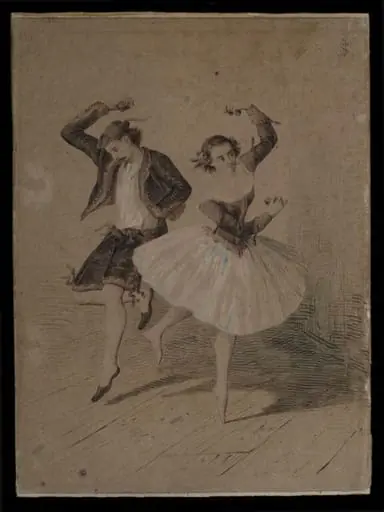
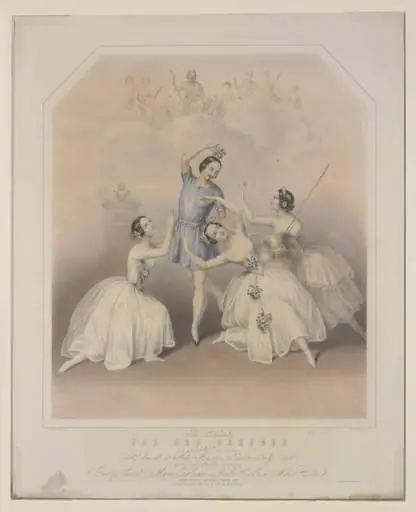
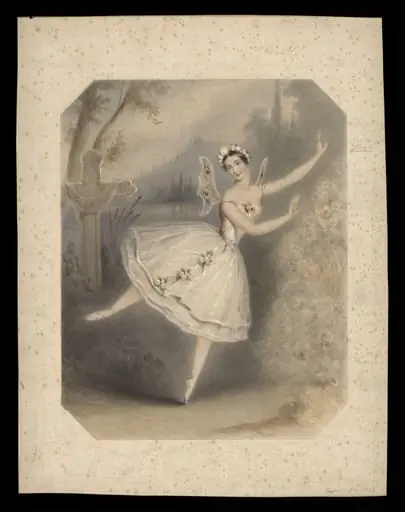
Madle Cerito & Sigr Guerra. In the favorite Ballet of, "Le lac des Fées." By Guerra. Fanny Cerito. A Guerra
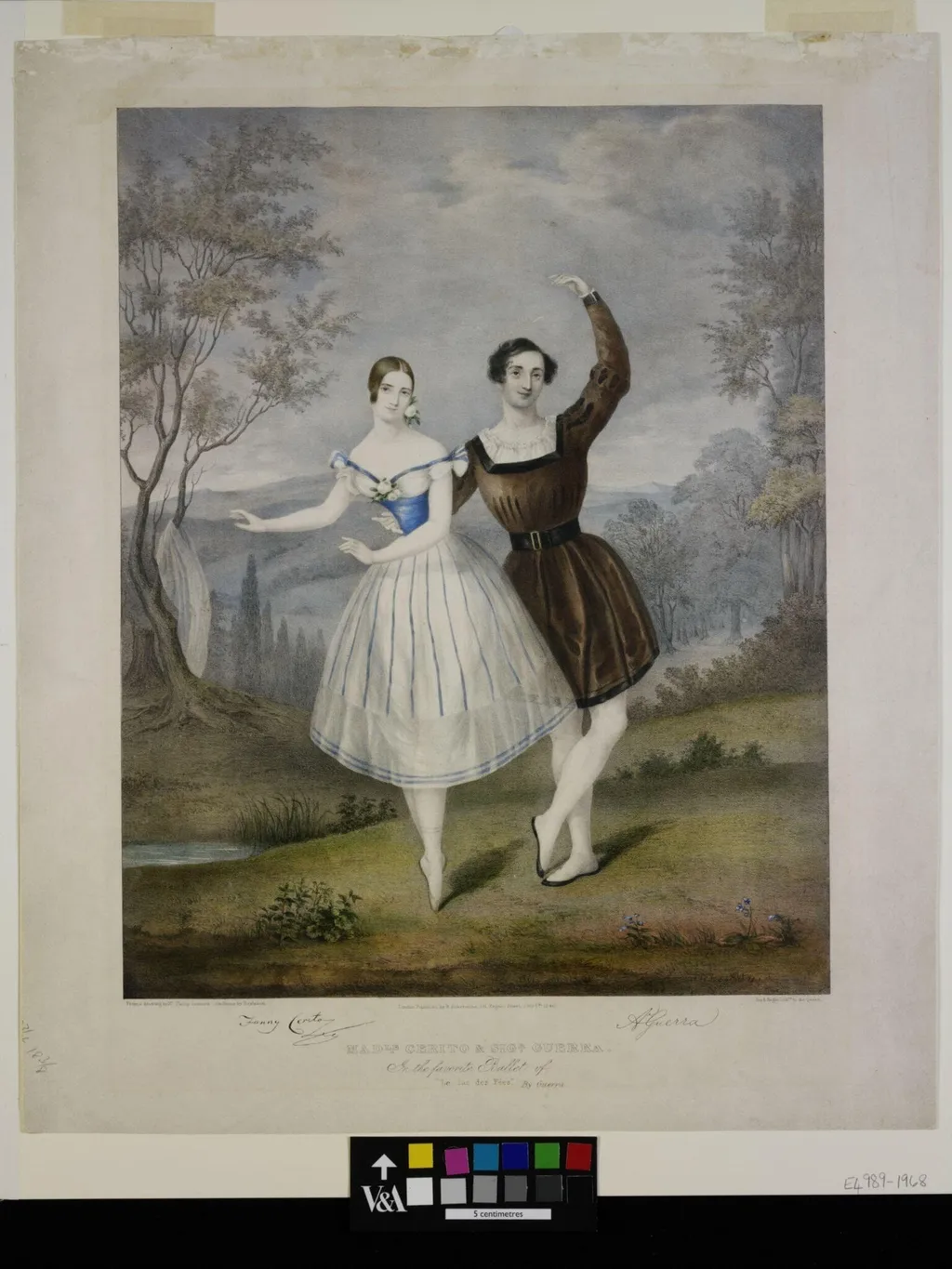
Madle Cerito & Sigr Guerra. In the favorite Ballet of, "Le lac des Fées." By Guerra. Fanny Cerito. A Guerra is a print by the Romanticist artist Hebe Saunders. It dates from 6 and is held in the collection of the Victoria and Albert Museum.
About this work
The scene is from the story where a man steals a fairy’s scarf and takes away her immortality.
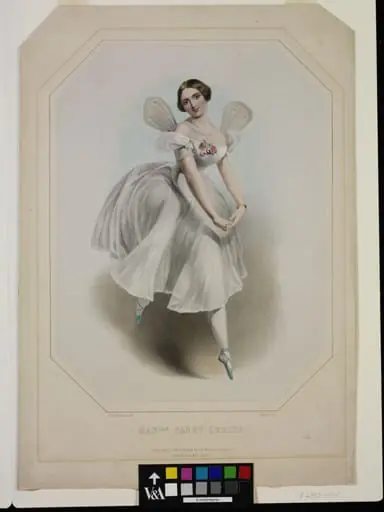
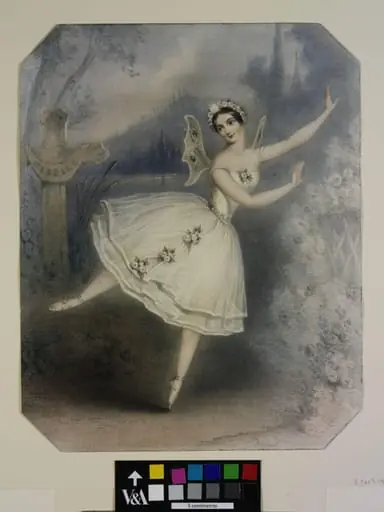
This print captures a famous London ballet moment. It shows Fanny Cerrito dancing in *Le Lac des Fées* in 1840. The scene is from the story where a man steals a fairy’s scarf and takes away her immortality.
Queen Victoria loved the show. She cheered loudly at the second performance. Critics, though, called the effects “of the stamp that are seen in the fi...”
Look up the Victoria and Albert Museum next.
Overview
This 1840 print depicts a scene from the London ballet *Le Lac des Fées*, choreographed by Antonio Guerra for the celebrated dancer Fanny Cerrito. The image captures the moment when the fairy Zéïla is seen bathing, a pivotal episode in the work’s narrative.
Subject & Meaning
In the ballet’s story, the fairy Zéïla’s immortality is symbolised by a magical veil. The male character Albert, portrayed by Guerra, steals her scarf while she bathes, thereby stripping her of that immortality. The scarf is shown hanging from a tree on the left, underscoring the loss.
Technique & Style
The print employs the conventions of mid‑nineteenth‑century theatrical illustration, with fine line work and a focus on stage composition. Figures are rendered with a lightness that mirrors contemporary descriptions of Cerrito’s ethereal movement, emphasizing the illusion of floating dancers.
History & Provenance
The ballet premiered in London in 1840, marking Cerrito’s first appearance on the British stage. Her reception was extraordinary; Queen Victoria attended the second performance and expressed marked approval. Contemporary critics, however, dismissed the production’s visual effects as typical of pantomime spectacle.
Context
*Le Lac des Fées* reflects the Romantic fascination with supernatural beings and the era’s penchant for elaborate stage machinery. The work’s success contributed to the growing popularity of ballet in Victorian England, even as reviewers questioned its artistic depth.
Artist & collection
Artist
This 1840 print captures Fanny Cerito and Sigr Guerra in their ballet "Le lac des Fées." You'll see two figures in costume, posed mid-dance—Cerito in a gauzy skirt, Guerra in a tight jacket—all etched in firm black lines on paper.