Artwork
Marie Taglioni (facsimile signature)
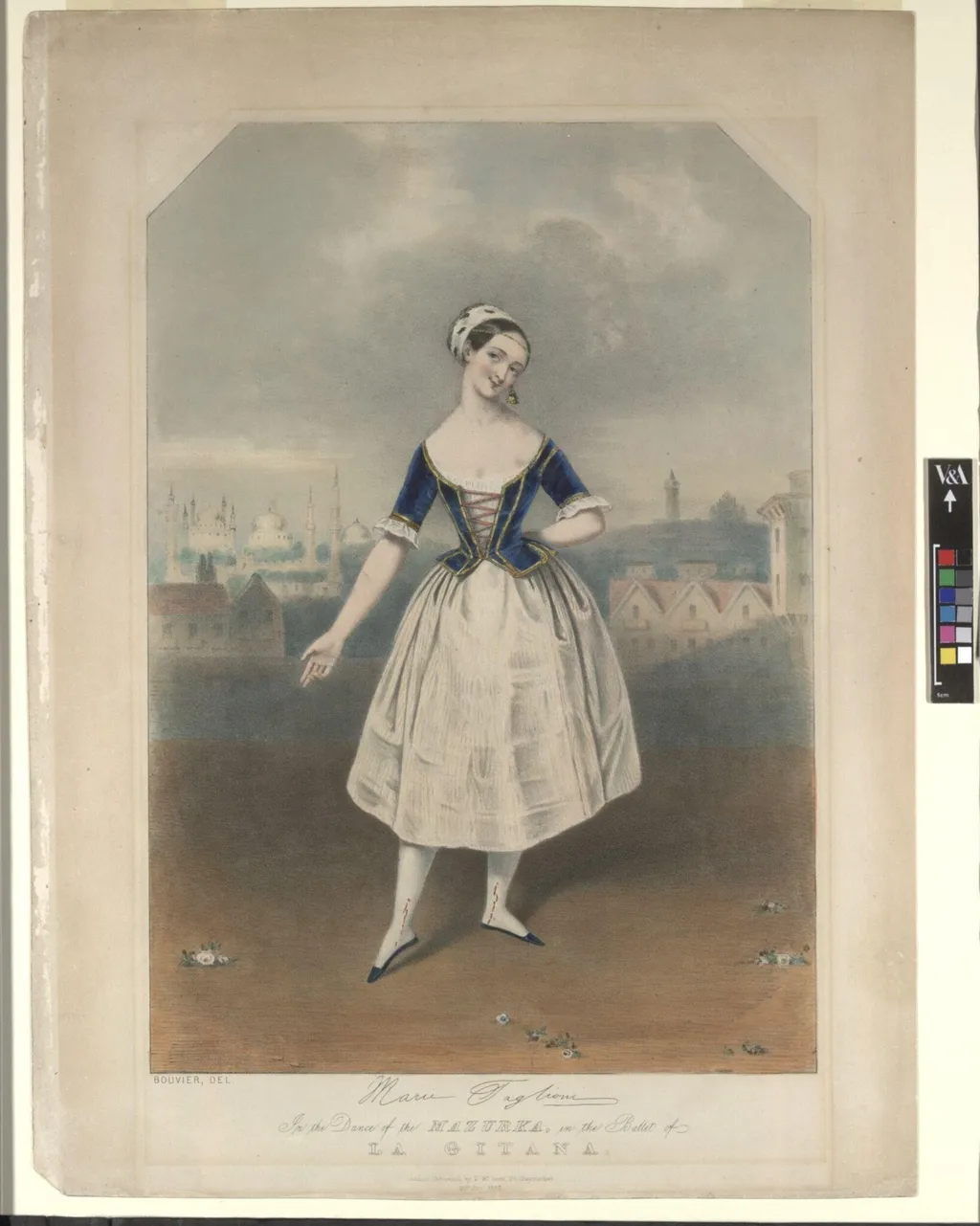
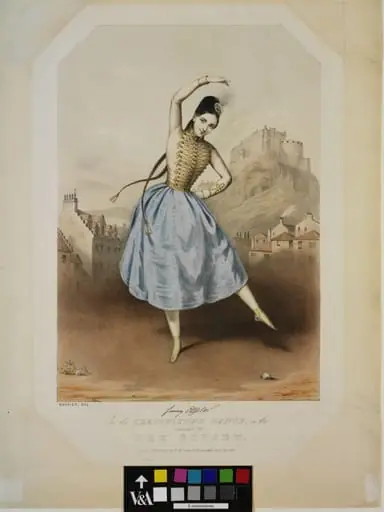
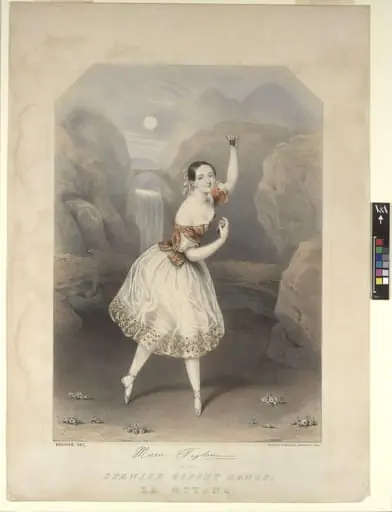
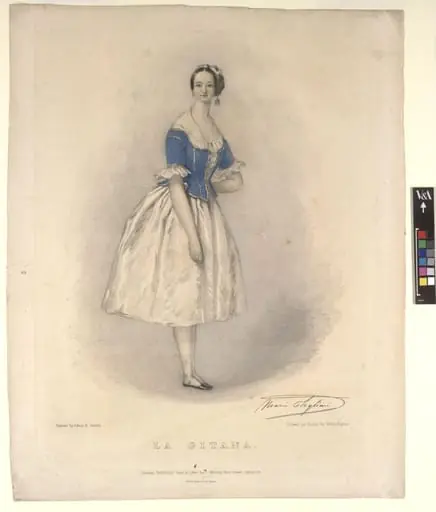
Marie Taglioni (facsimile signature) is a print by the Romanticist artist Jules Bouvier. It dates from 20 and is held in the collection of the Victoria and Albert Museum. This 1839 print captures Marie Taglioni in motion during a performance of La Gitana, a Romantic-era ballet.
About this work
This print shows Marie Taglioni dancing the mazurka on stage. It’s from 1839 and fits the Romantic style.
She played a gipsy in the ballet La Gitana, mixing Polish and Spanish dances.
The scene happens at a fair, with buildings that feel mixed up.
Famous for her light, airy roles, Taglioni could also play human parts.
Here she shows off her skill in a national dance.
Look up Bouvier, Jules next.
Overview
Though best known for ethereal supernatural roles, Taglioni demonstrated versatility by portraying a gypsy character who performs national dances.
This 1839 print captures Marie Taglioni in motion during a performance of La Gitana, a Romantic-era ballet. Though best known for ethereal supernatural roles, Taglioni demonstrated versatility by portraying a gypsy character who performs national dances. The image records her execution of the Polish mazurka in the ballet’s opening scene, set at a bustling fair. The print reflects the period’s fascination with cultural specificity in dance and costume.
Subject & Meaning
Taglioni portrays a gypsy woman raised apart from aristocratic origins, a common Romantic trope of lost identity and emotional depth. Her performance of the mazurka—rooted in Polish folk tradition—serves both narrative and cultural function, signaling the character’s hybrid background. The ballet’s plot, involving displacement and restoration, allowed Taglioni to convey human vulnerability alongside technical precision, contrasting her more spectral earlier roles.
Technique & Style
The print renders Taglioni in the standardized Romantic ballet costume: a fitted bodice, layered tarlatan skirt, and translucent upper fabric. Her posture and drapery suggest lightness and fluidity, consistent with her signature style. The stage setting blends architectural elements from Istanbul and Italy, reflecting the era’s loose, imaginative geography rather than historical accuracy. The composition emphasizes motion, capturing the mazurka’s rhythmic steps through dynamic lines and flowing fabric.
History & Provenance
Created in 1839, the print documents Taglioni’s performance in La Gitana, which premiered in Paris that year. It was likely produced as a promotional or commemorative image, circulating among dance enthusiasts and collectors. The artist, Jules Bouvier, specialized in theatrical subjects and was known for his precise renderings of dancers in costume. The print’s survival offers rare visual evidence of Taglioni’s non-supernatural roles and the staging conventions of mid-19th-century ballet.
Context
La Gitana emerged during a period when European ballet increasingly incorporated folk dances to evoke exoticism and national character. Taglioni’s participation in such roles marked a shift from purely supernatural heroines toward more grounded, culturally inflected characters. The fair setting at Nijni Novgorod, though visually conflated with Mediterranean architecture, reflects the Romantic tendency to fuse distant locales into a single evocative stage world, prioritizing mood over realism.
Legacy
This print preserves a moment when ballet began to expand its expressive range beyond the ethereal. Taglioni’s ability to embody both otherworldly and earthly roles influenced later dancers to embrace emotional and cultural complexity. The image also documents the evolution of ballet costume as a tool for character definition. As one of the few surviving visual records of her non-Sylph roles, it contributes to a fuller understanding of her artistic range and the broader theatrical culture of the time.
Artist & collection
Artist
Jules Bouvier made 19th-century lithographs that turned leading ballet dancers into star prints.