Artwork
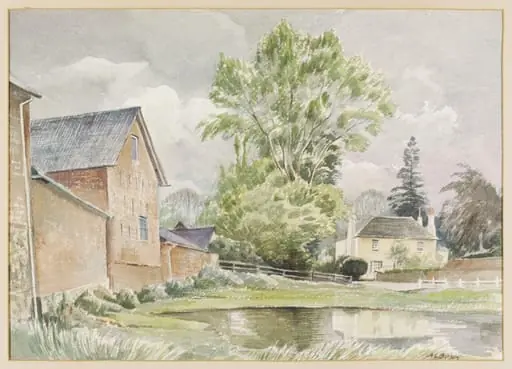
Stream Acre, Holybourne, Alton
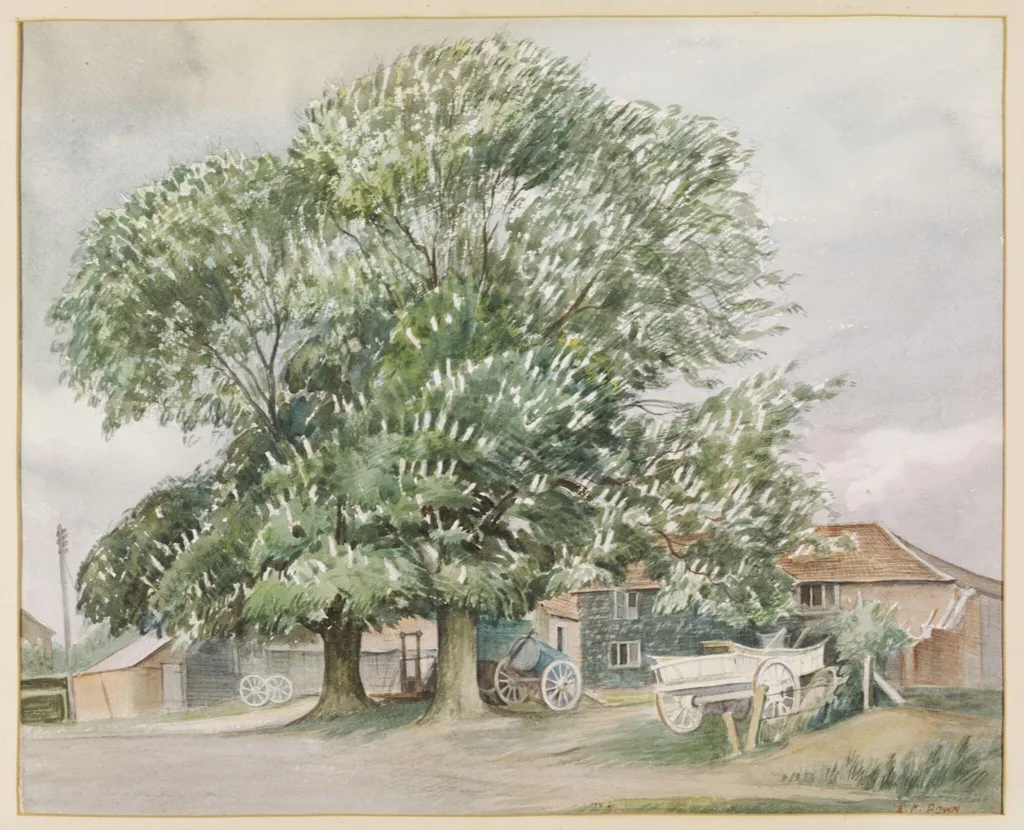
Stream Acre, Holybourne, Alton is a watercolor work on paper by Bown. It dates from 1942 and is held in the collection of the Victoria and Albert Museum.
About this work
Overview
Created in 1942, *Stream Acre, Holybourne, Alton* is a watercolour by the artist Bown, produced as part of the *Recording Britain* initiative.
Created in 1942, *Stream Acre, Holybourne, Alton* is a watercolour by the artist Bown, produced as part of the *Recording Britain* initiative. The work captures a quiet rural scene in Hampshire, focusing on the interplay between natural and built elements. It was made during the Second World War, a time when Britain sought to preserve visual records of its vanishing landscapes amid the pressures of conflict and modernization.
Subject & Meaning
The painting centers on two towering horse chestnut trees, their dense foliage partially concealing modest stone and brick buildings. Below, a white cart and a blue carriage suggest quiet agricultural activity. The scene conveys a sense of stillness and continuity, emphasizing the endurance of rural life even amid wartime uncertainty. The trees act as both frame and barrier, symbolizing nature’s resilience against encroaching change.
Technique & Style
Bown employed transparent watercolour washes to render the dappled light filtering through the tree canopy. Delicate brushwork defines the leaves and branches, while the buildings are rendered with restrained detail, suggesting their humble function. The sky is softly graded in pale blues, enhancing the atmospheric clarity. The composition balances foreground foliage with distant structures, creating depth without dramatic perspective.
History & Provenance
The painting was commissioned under the *Recording Britain* project, initiated in 1940 by Sir Kenneth Clark to document threatened vernacular landscapes. Bown was among 97 artists who contributed over 1,500 works between 1940 and 1943. This piece entered the Victoria and Albert Museum’s collection as part of the project’s archive, preserved for its historical and topographical value rather than artistic novelty.
Context
During the war, Britain faced rapid urban development and the risk of cultural erasure from bombing and land use shifts. The *Recording Britain* project responded by directing artists to rural and semi-rural sites before they disappeared. Bown’s depiction of Holybourne reflects this mission: a quiet, unassuming corner of the countryside, preserved not for grandeur but for its ordinary, lived-in character.
Legacy
The *Recording Britain* collection remains a vital archive of mid-20th-century English rural life. Bown’s watercolour contributes to this record by capturing a specific moment in time — a pastoral scene untouched by major disruption, yet implicitly marked by the war’s shadow. Its value lies in its quiet fidelity, offering a visual testament to places that no longer exist in the same form.
Artist & collection
Artist
This British watercolorist captured quiet corners of southern England between 1940 and 1942.

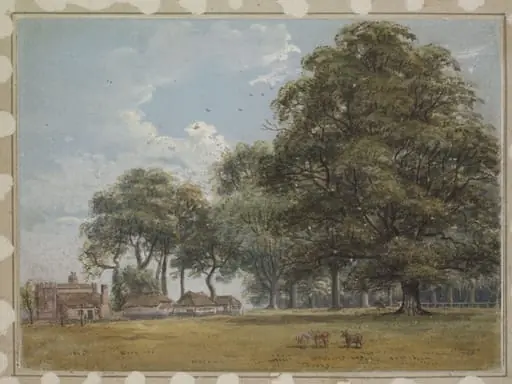 Easton Park
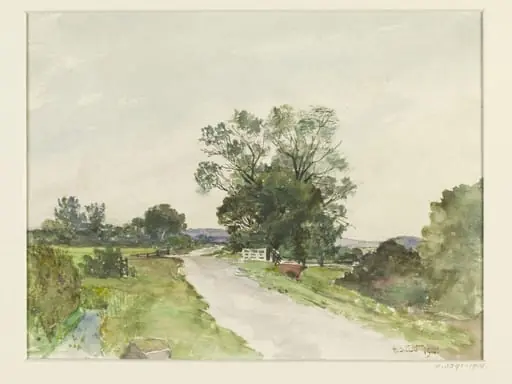 Landscape with road in flat country
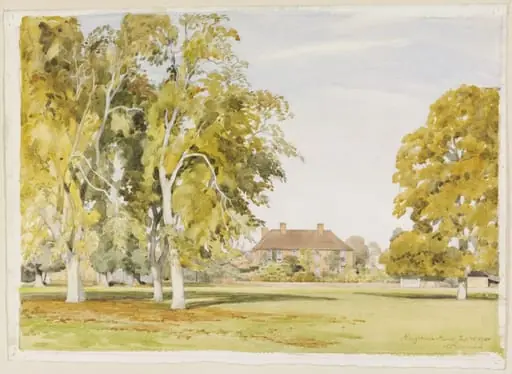 Knightwick Manor
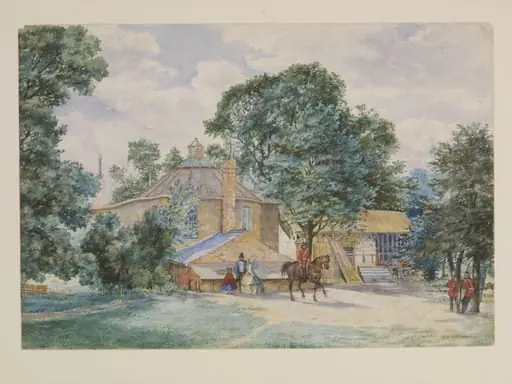 The first lecture theatre at the South Kensington Museum, later the Victoria and Albert Museum
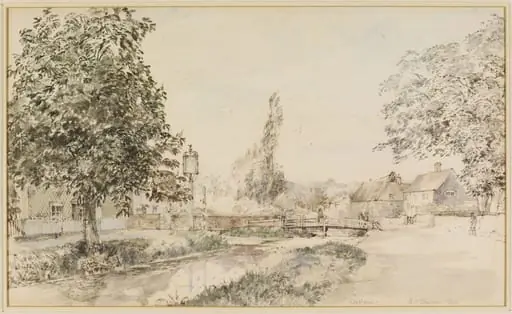 Dalham (the footbridge)
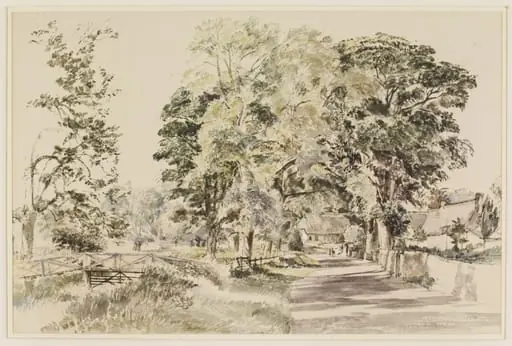 Dalham
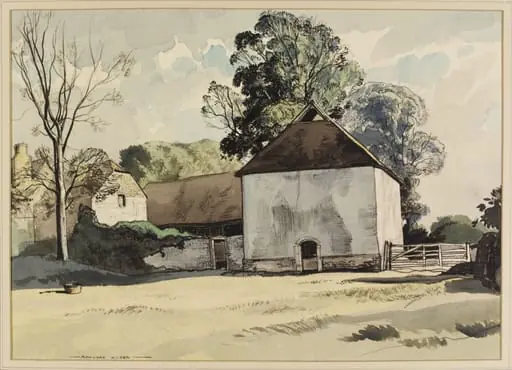 Saxon Dovecote, Lullington, near Alfriston, Cuckmere Valley
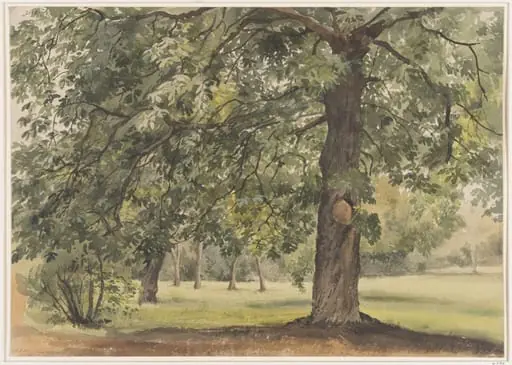 Landscape with Chestnut Tree in the foreground
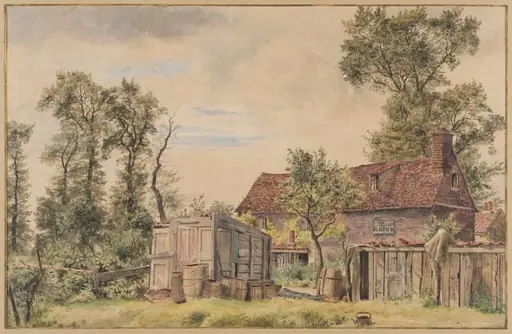 Study from Nature, South K
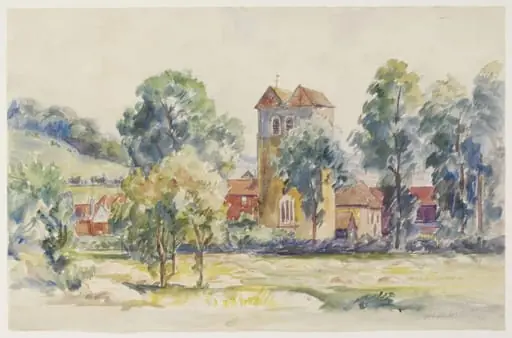 St. Bartholomew's Church, Fingest
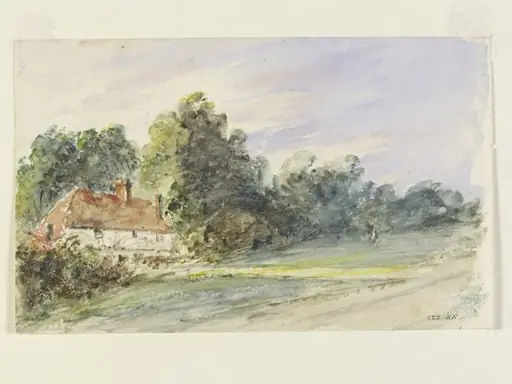 A cottage with a red-tiled roof, by a wood