Artwork
Grotesque Heads
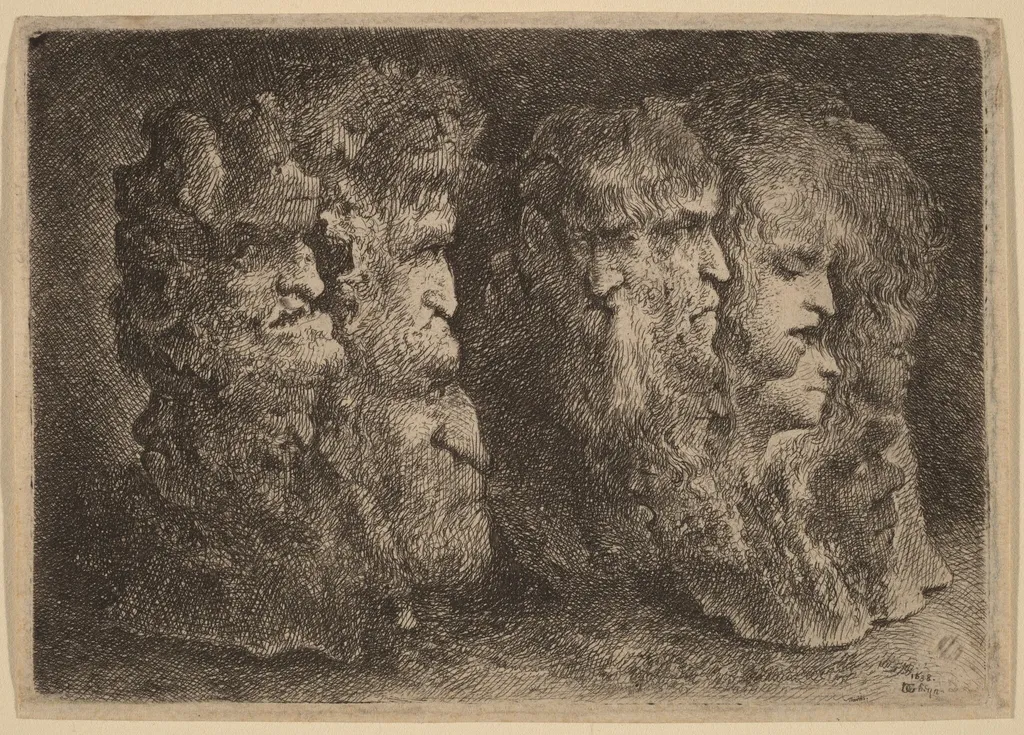
Grotesque Heads is an ink print by the Baroque artist Bartholomeus Breenbergh. It dates from 1638 and is held in the collection of the National Gallery of Art.
About this work
Overview
Bartholomeus Breenbergh’s print ‘Grotesque Heads,’ executed in 1638, is an etching on laid paper. The composition presents a pair of contorted faces positioned closely together, their exaggerated features dominating the limited pictorial space.
Subject & Meaning
The two heads display enlarged noses, tangled hair and sharply angular contours, evoking the tradition of grotesque caricature. Their distorted physiognomy suggests a focus on the uncanny, inviting viewers to contemplate the tension between human likeness and exaggerated deformity.
Technique & Style
Created with the etching process, Breenbergh incised the design into a metal plate, then employed acid to bite the lines, producing a texture that appears rough and uneven, reminiscent of scratched metal. The stark, dark background isolates the figures, emphasizing the stark linear quality of the work.
History & Provenance
The print dates to the late period of Breenbergh’s career, a time when he explored printmaking alongside his more familiar landscape paintings. While specific ownership records are sparse, the work is catalogued among his known prints and appears in several 17th‑century collections of Dutch etchings.
Context
In the early 17th century, Dutch artists often employed the grotesque motif to explore moral and allegorical themes. Breenbergh’s choice of a stark, two‑headed composition aligns with contemporary interests in the bizarre and the expressive potential of line in print media.
Artist & collection


![The Fantastic Rocks and Castle at Bomarzo [verso], by Bartholomeus Breenbergh](https://artifactworldgallery.com/img/bartholomeus-breenbergh--the-fantastic-rocks-and-castle-at-bomarzo-verso--5a96047e30ba1d0f-w320.webp)
![The Fantastic Rocks and Castle at Bomarzo [recto], by Bartholomeus Breenbergh](https://artifactworldgallery.com/img/bartholomeus-breenbergh--the-fantastic-rocks-and-castle-at-bomarzo-recto--e05f03da6f1f9c0a-w320.webp)
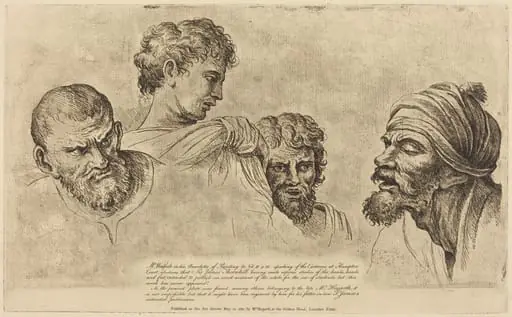 Four Heads from the Raphael Cartoons at Hampton Court
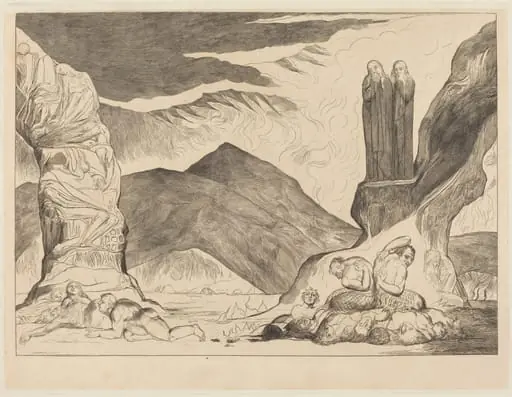 The Circle of the Falsifiers: Dante and Virgil Covering their Noses because of the st
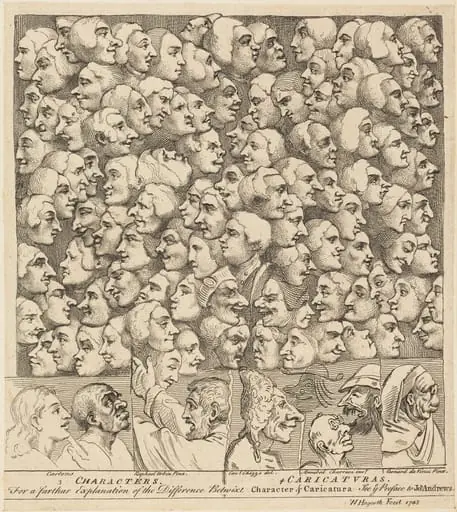 Characters and Caricaturas
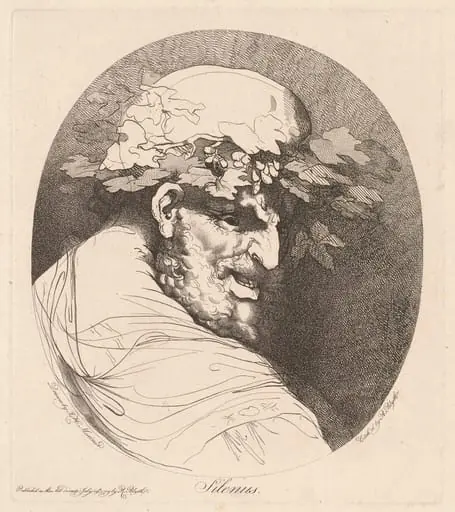 Silenus
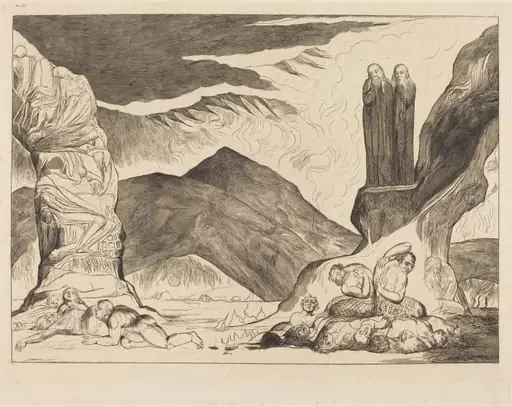 The Circle of the Falsifiers: Dante and Virgil Covering their Noses because of the st
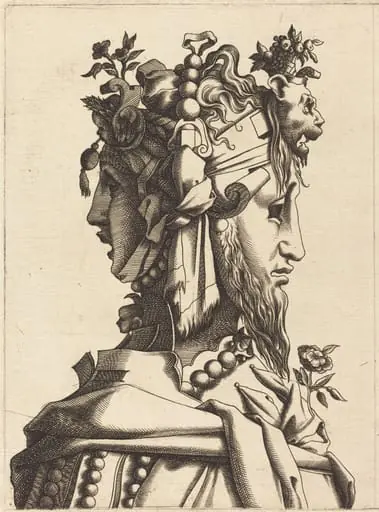 Bust of a Woman in an Extravagant Costume
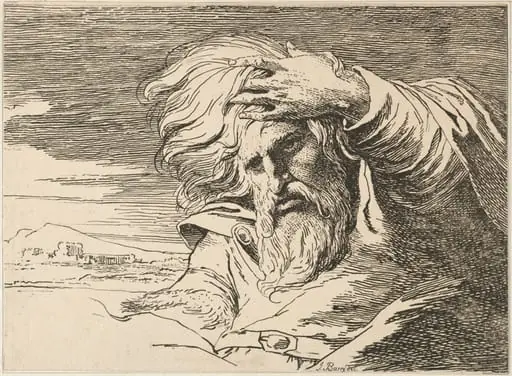 Eastern Patriarch
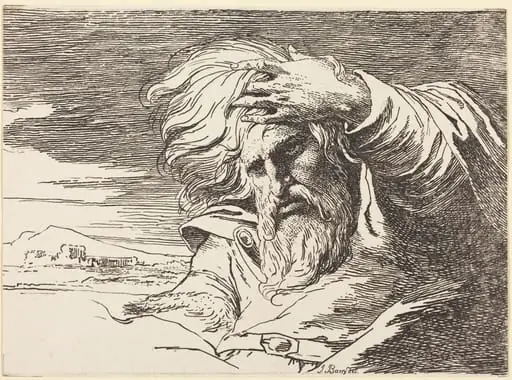 Eastern Patriarch
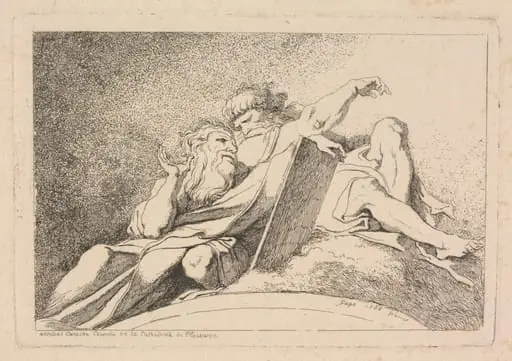 The Two Prophets