Artwork
Characters and Caricaturas
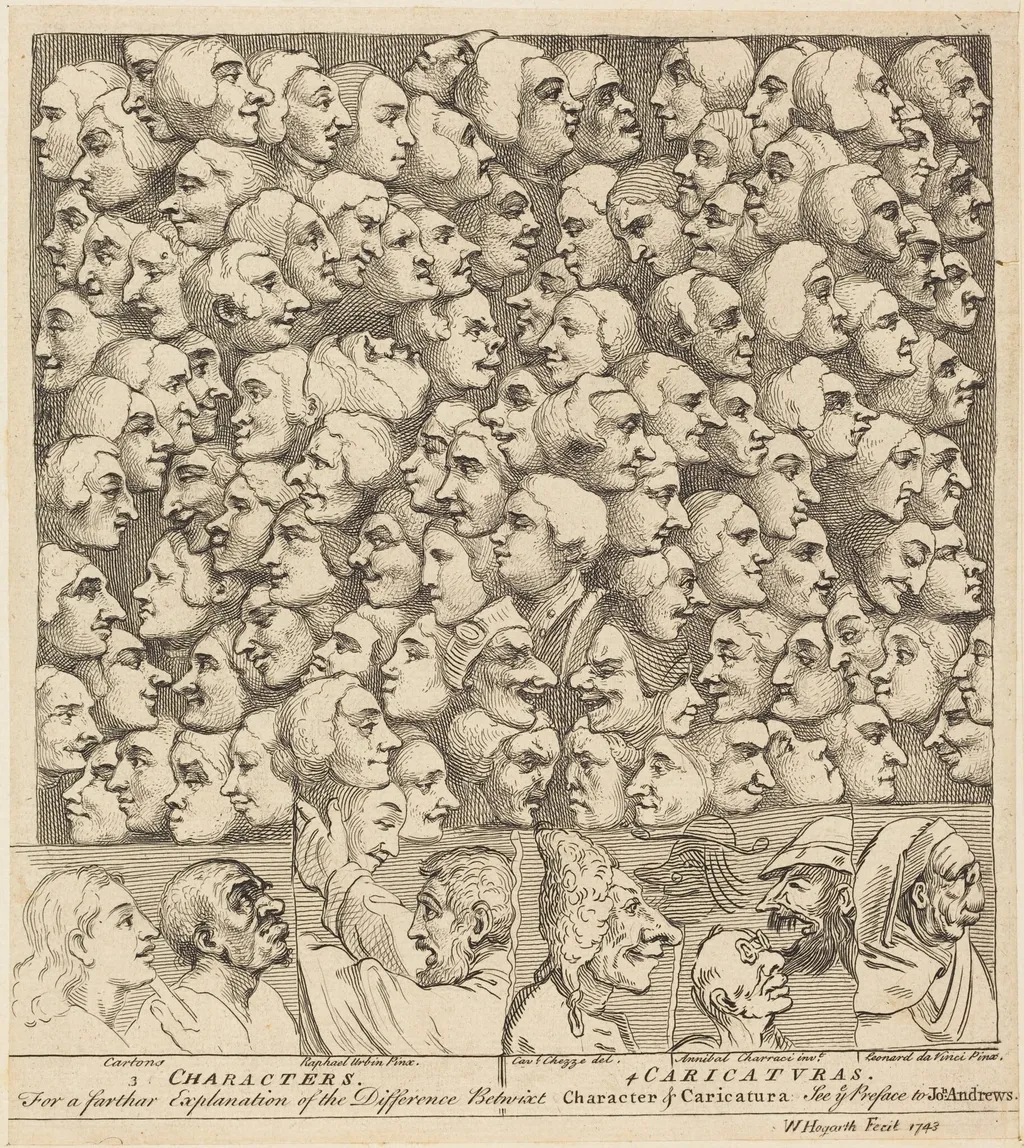
Characters and Caricaturas is an ink print by the Baroque artist William Hogarth. It dates from 1743 and is held in the collection of the National Gallery of Art.
About this work
Overview
William Hogarth’s 1743 etching *Characters and Caricaturas* presents a dense array of facial types, arranged to explore the spectrum of human expression.
William Hogarth’s 1743 etching *Characters and Caricaturas* presents a dense array of facial types, arranged to explore the spectrum of human expression. Created as a study in visual variation, the work functions as both an artistic exercise and a commentary on representation. Hogarth, trained as an engraver, used this format to examine how identity and character might be conveyed through line and exaggeration, distinct from his narrative series but aligned with his broader interest in human behavior.
Subject & Meaning
The print gathers a multitude of distinct faces—some grotesque, others mundane—without narrative context, inviting comparison rather than storytelling. Hogarth contrasts naturalistic portraiture with caricature, suggesting that all human features can be read as expressions of inner disposition. The absence of bodies focuses attention on the face as a site of social and psychological signaling, reflecting Enlightenment-era fascination with physiognomy and the visible markers of character.
Technique & Style
Executed in fine, controlled etching lines, the work demonstrates Hogarth’s mastery of engraving. Facial features are rendered with deliberate distortion—bulging eyes, elongated noses, receding chins—yet each retains a sense of individuality. The uniformity of style across diverse types underscores his intent: not to mock individuals, but to reveal patterns in how society perceives and categorizes appearance through artistic convention.
History & Provenance
Created during Hogarth’s most active period as a printmaker, *Characters and Caricaturas* was likely produced for private circulation or as a teaching tool. It was never issued as part of a public series, suggesting a more personal or pedagogical purpose. The plate survives in a limited number of impressions, held in institutional collections, and was not widely reproduced in Hogarth’s lifetime, reflecting its role as an experimental study rather than a commercial product.
Context
In mid-18th-century England, debates flourished over the legitimacy of caricature as art and the moral implications of exaggerating human features. Hogarth’s work engaged with these discussions, positioning caricature not as mere ridicule but as a tool for understanding human nature. His approach resonated with contemporary scientific and philosophical inquiries into expression and emotion, aligning his art with broader intellectual currents of the time.
Legacy
Though less famous than his narrative sequences, this etching influenced later satirists who sought to capture social types through stylized portraiture. Its emphasis on facial variation as a subject in itself prefigured 19th-century studies of physiognomy and contributed to the development of graphic satire as a distinct genre. Hogarth’s method—treating the face as a field of cultural meaning—remains a touchstone for artists examining identity through visual distortion.
Artist & collection
Artist
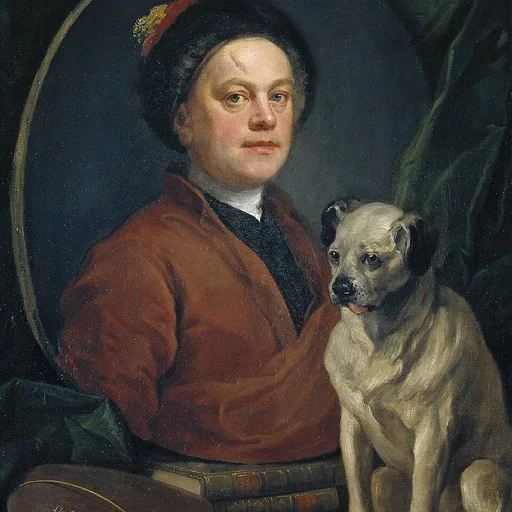
William Hogarth (; 10 November 1697 – 26 October 1764) was an English painter, engraver, satirist, cartoonist and writer.

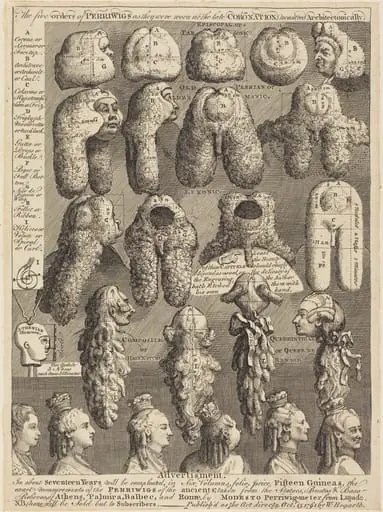 The Five Orders of Perriwigs as They Were Worn at the Late Coronation, Measured Architectonically
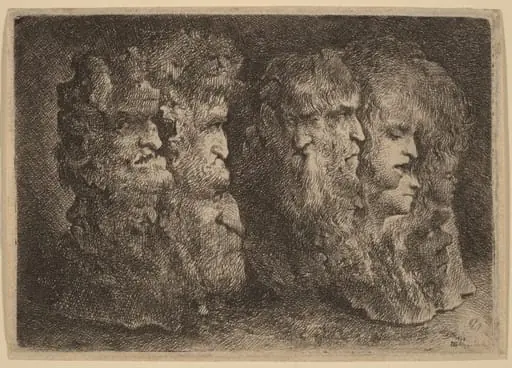 Grotesque Heads
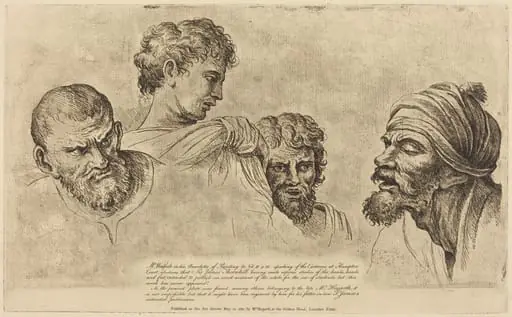 Four Heads from the Raphael Cartoons at Hampton Court
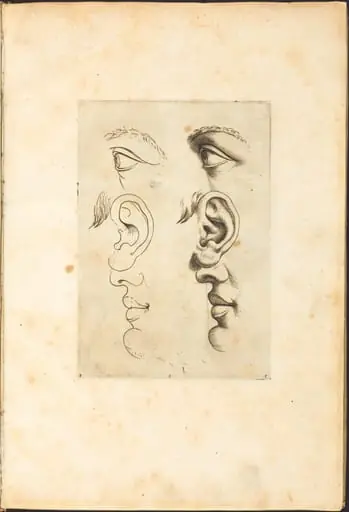 Print from Drawing Book
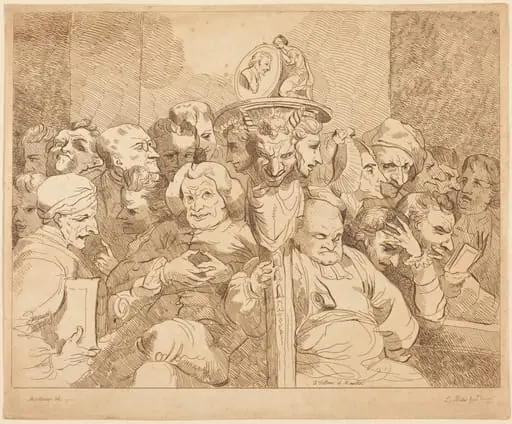 A Fellow of Maudlin
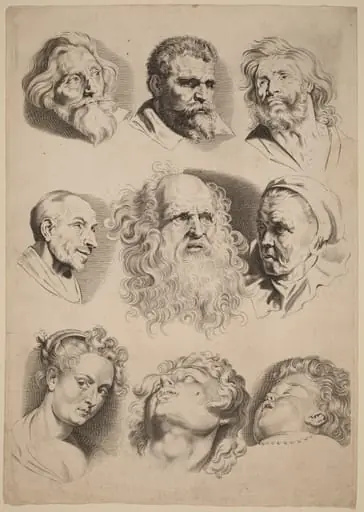 Nine Heads
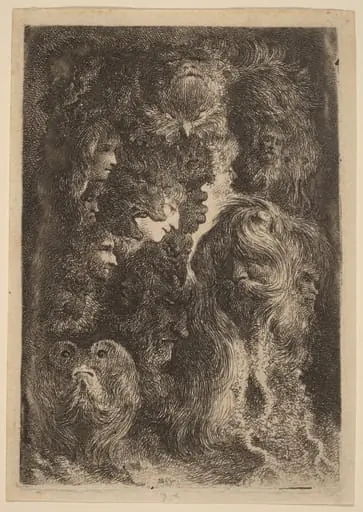 Fantastic Heads
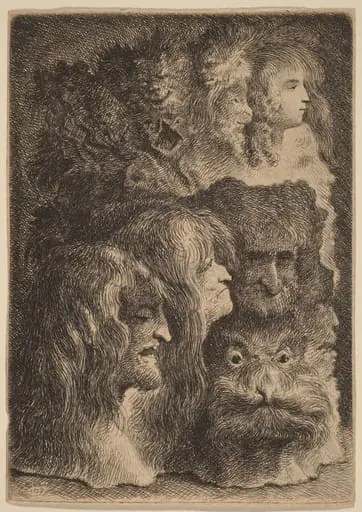 Fantastic Heads
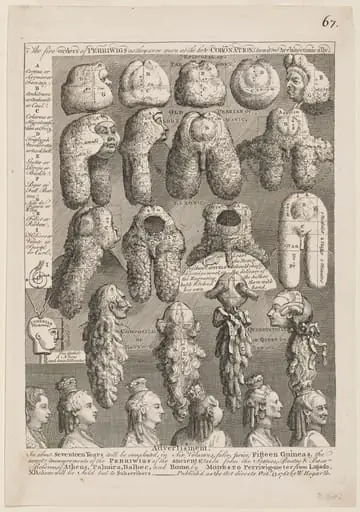 The Five Orders of Perriwigs as They Were Worn at the Late Coronation, Measured Architectonically