Artwork
Cite Lointaine
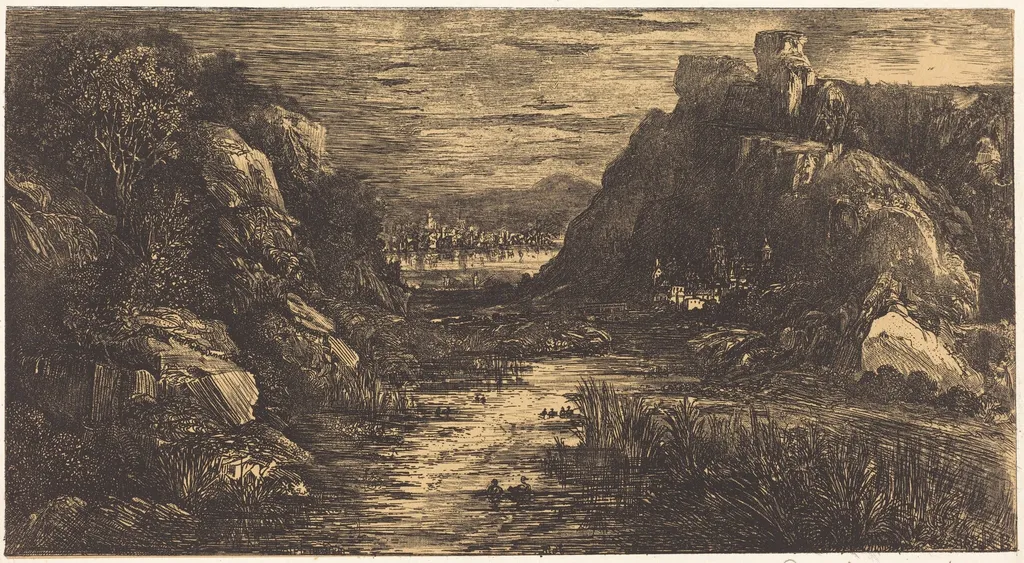
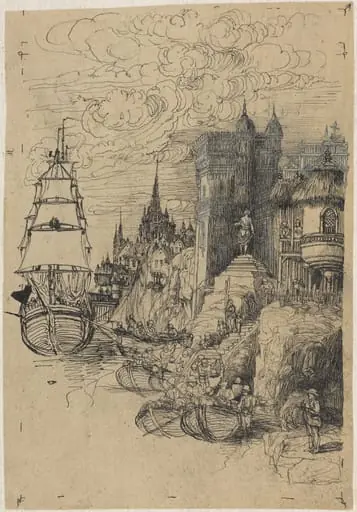
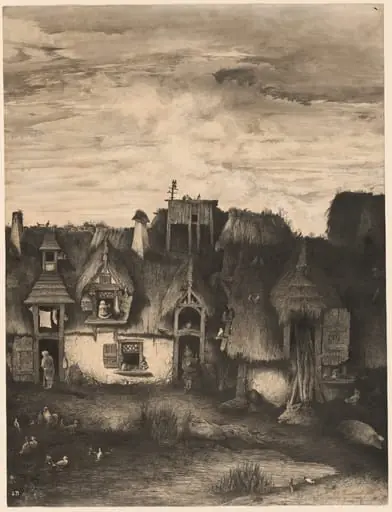
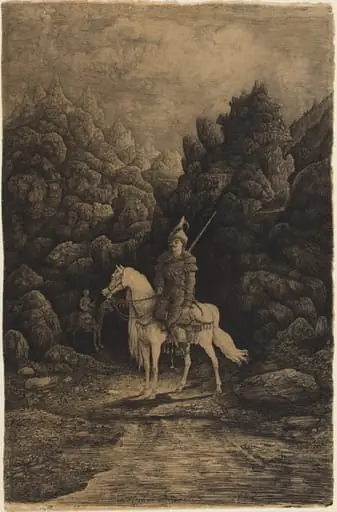
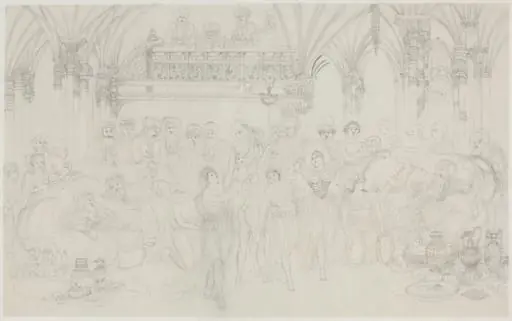
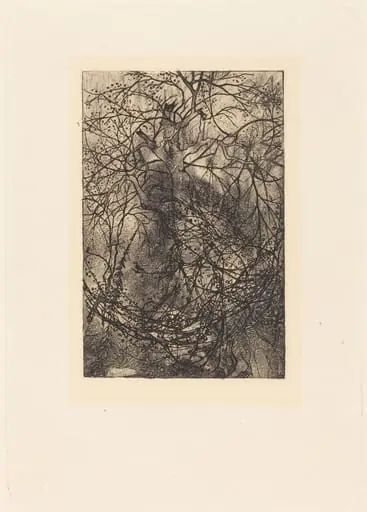
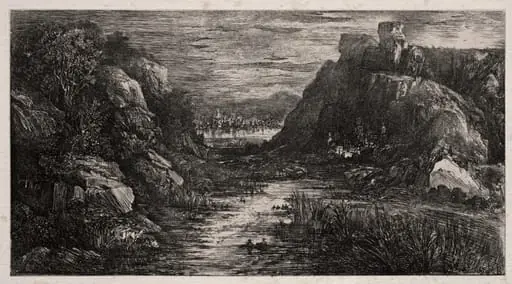
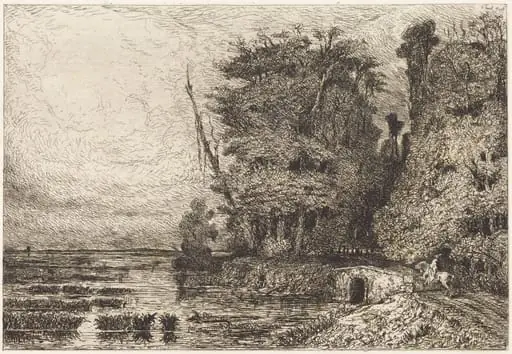
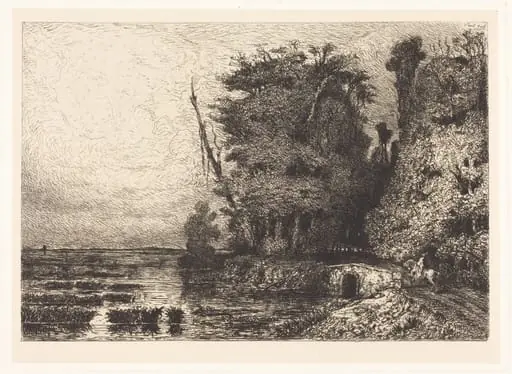
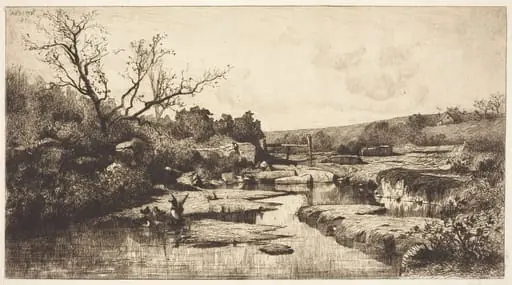
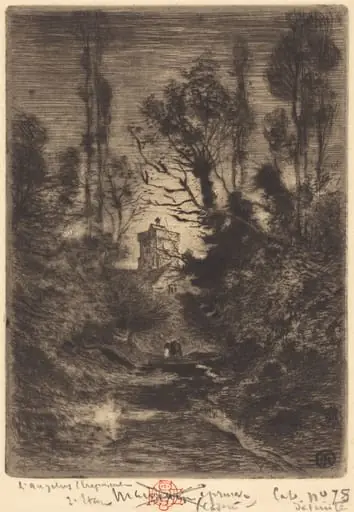
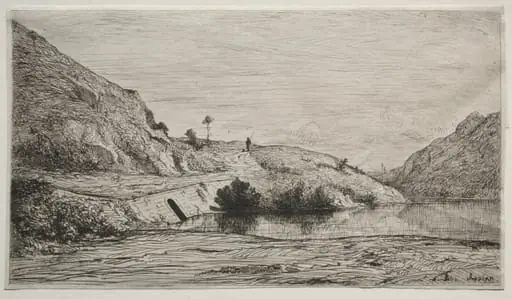
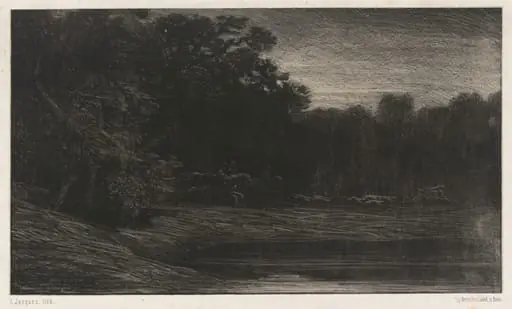
Cite Lointaine is an ink print by the Impressionist artist Rodolphe Bresdin. It dates from 1868 and is held in the collection of the National Gallery of Art.
About this work
Overview
Cite Lointaine is a lithograph created by French artist Rodolphe Bresdin in 1868. Characterized by intricate details and elaborate imagery, this work reflects Bresdin's distinctive style, blending realism with a sense of the fantastical.
Subject & Meaning
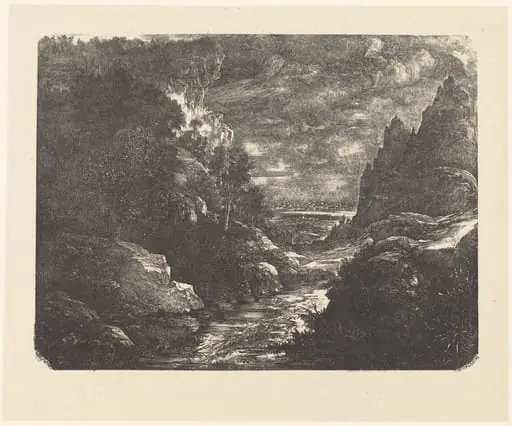
The print depicts a serene, misty valley with a winding river, steep cliffs, rolling hills, and a distant town with a church spire. The scene conveys a quiet, atmospheric quality, evoking a peaceful countryside moment.
Technique & Style
Bresdin employed fine lines and tiny strokes to achieve textured effects, notably in the woven appearance of the water. The lithographic technique allowed for the precise rendering of his detailed, dreamlike landscape.
History & Provenance
Created in 1868, Cite Lointaine is part of Bresdin's later work. His life, marked by wandering and hardship, paralleled the social and political turmoil of 19th-century France, though the print's direct connection to these events is not explicitly thematic.
Context
Bresdin's association with Paris's bohemian circle, including literary figures like Baudelaire and Hugo, situates his work within a broader cultural movement valuing expressive and often unconventional art.
Legacy
While specific legacy details of *Cite Lointaine* are not highlighted, Bresdin's overall body of work, with its meticulous and imaginative approach, has contributed to the appreciation of detailed lithographic prints in the history of French art.
Artist & collection

Artist
Rodolphe Bresdin (12 August 1822 – 11 January 1885) was a French draughtsman and engraver.