Artwork
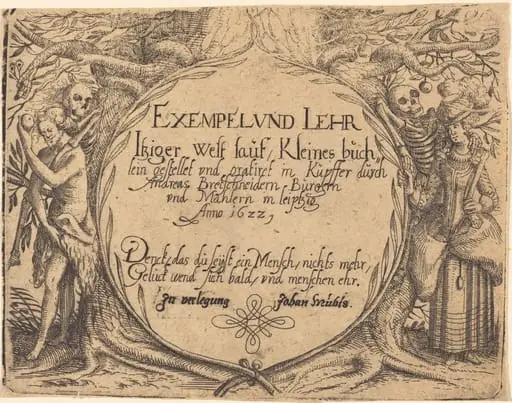
Exempel und Lehr Jetziger Welt Lauf
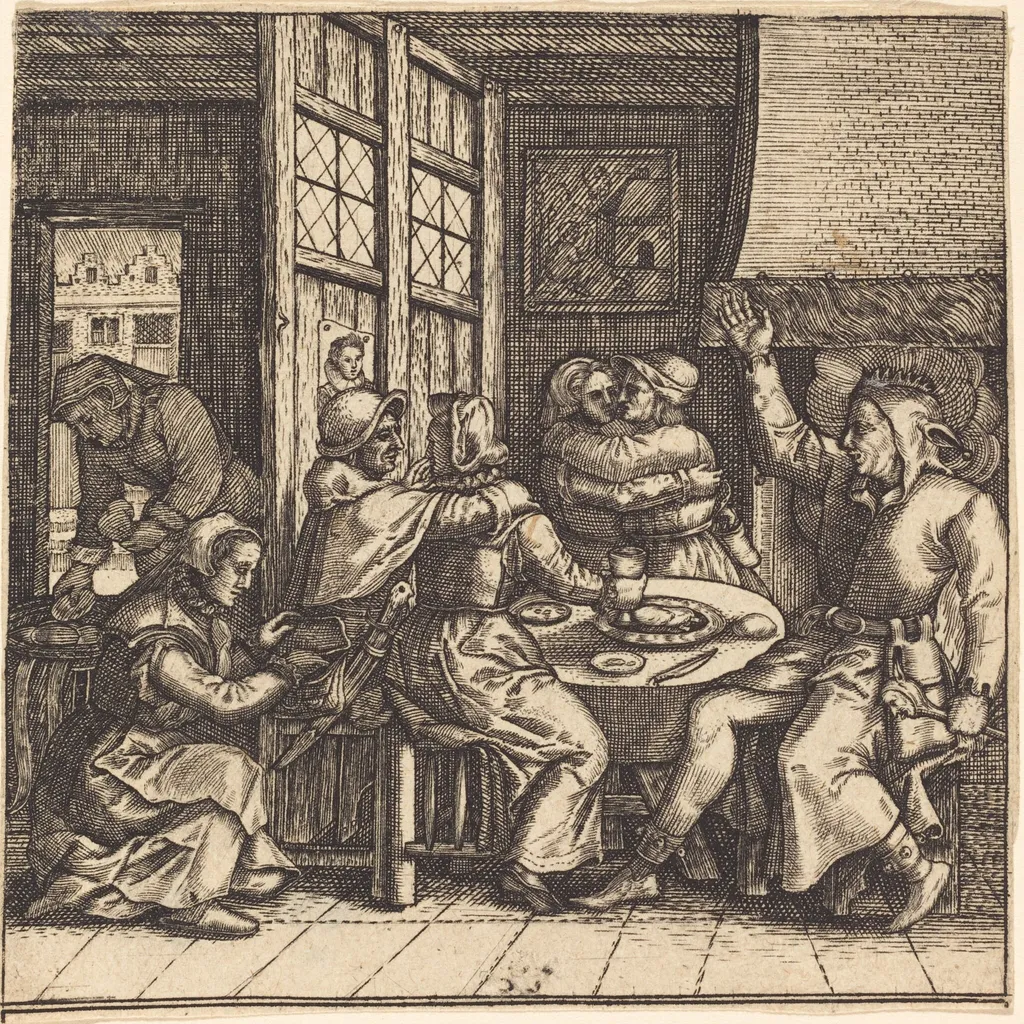
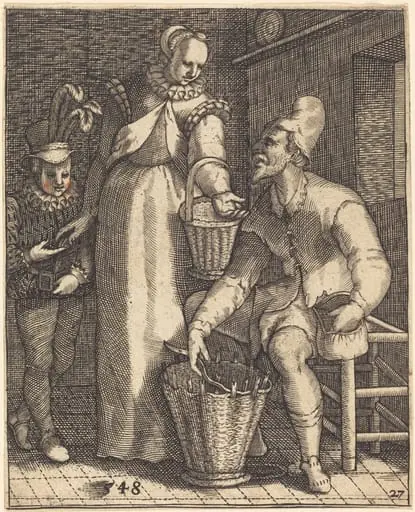
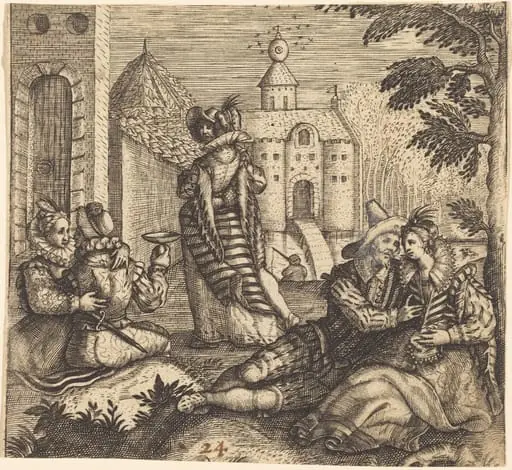
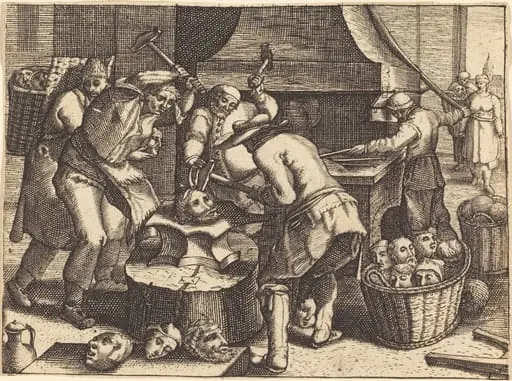
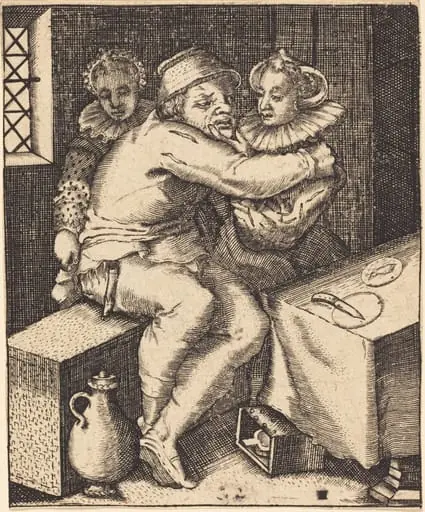
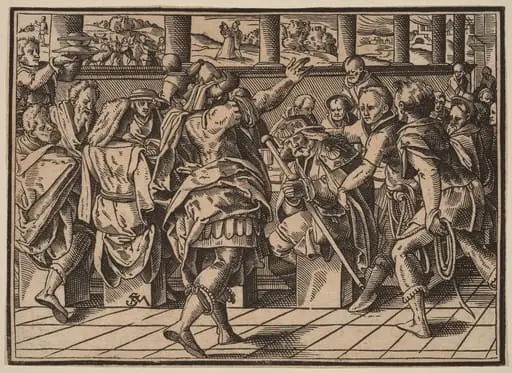
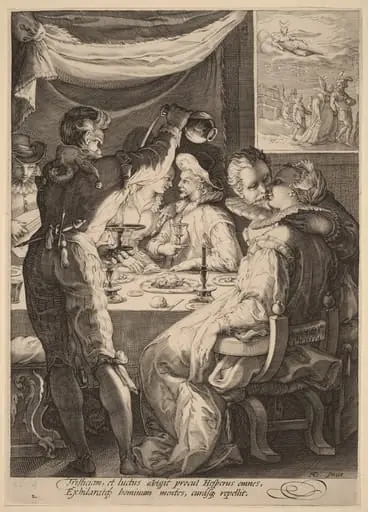
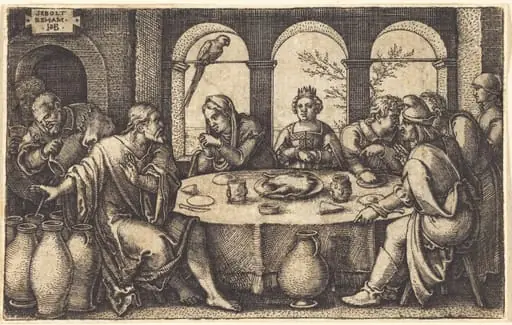
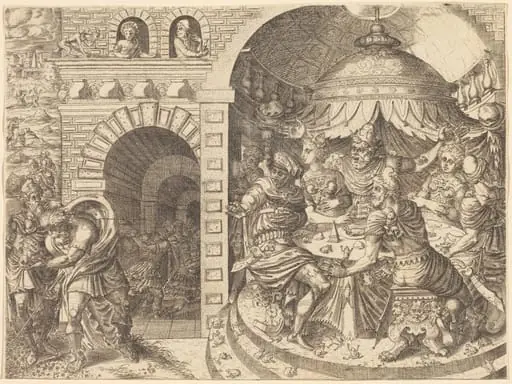
Exempel und Lehr Jetziger Welt Lauf is an ink print by the Baroque artist Andreas Bretschneider III. It dates from 1622 and is held in the collection of the National Gallery of Art.
About this work
Overview
Andreas Bretschneider III’s 1622 etching, Exempel und Lehr Jetziger Welt Lauf, presents a densely populated interior where figures sit, stand, eat, converse, and one individual plays a lute. Light filters through a diamond‑pane window, revealing an urban street scene beyond. The composition is tightly packed, conveying a sense of bustling activity within a confined space.
Subject & Meaning
The crowded room functions as a visual allegory, illustrating the disorder and excess of contemporary life. By juxtaposing domestic merriment with the view of bustling streets, the work suggests a moral lesson about the chaos that can arise when societal norms are neglected, serving as a cautionary tableau for viewers.
Technique & Style
Executed as an etching, the image relies on fine line work and varied hatching to render texture, depth, and the play of light through the window. The artist’s meticulous detailing creates a layered effect, allowing numerous figures and objects to coexist without losing clarity, characteristic of early 17th‑century Northern European printmaking.
History & Provenance
Created in 1622, the print is attributed to the third generation of the Bretschneider family of artists, known for their work in the German lands. While specific ownership records are scarce, the piece has been documented in several early modern print collections, indicating its circulation among connoisseurs of the period.
Context
The work emerges from a period when etching was increasingly employed for didactic and moralizing subjects. Its crowded interior reflects contemporary concerns about social order and the moral implications of indulgence, themes common in the post‑Reformation cultural climate of early 17th‑century Germany.
Artist & collection