Artwork
Velvet Duck
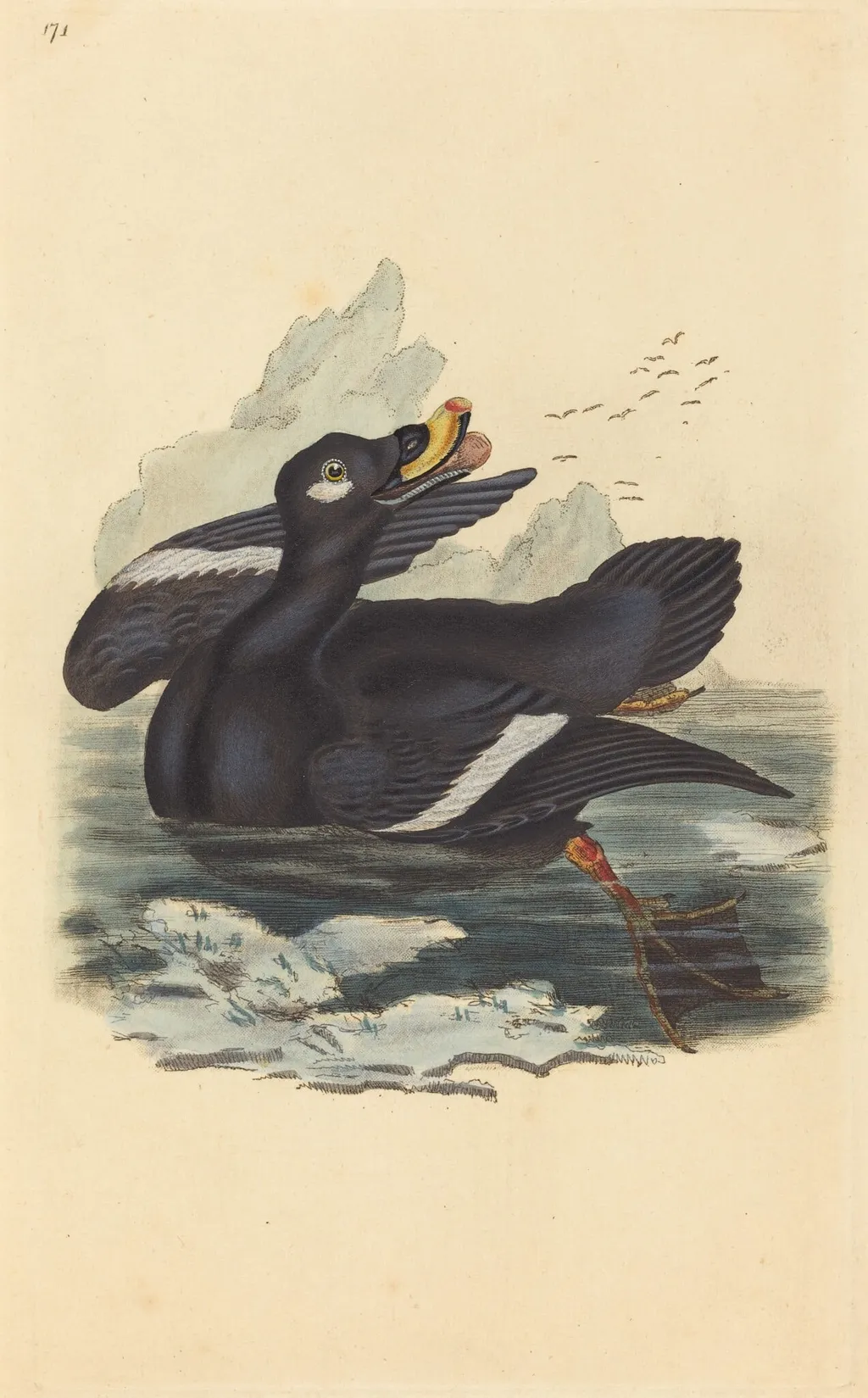
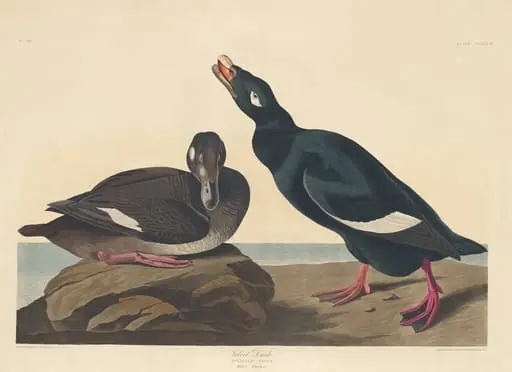
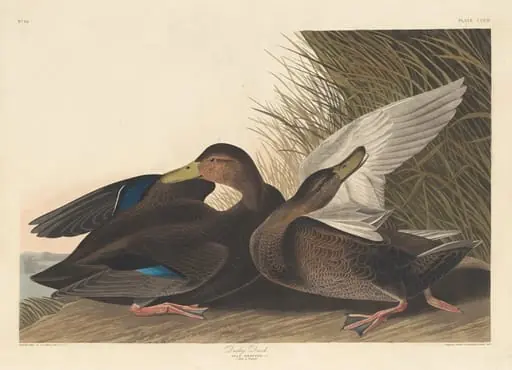
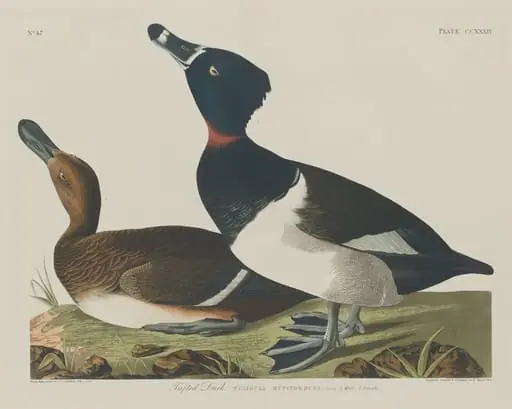
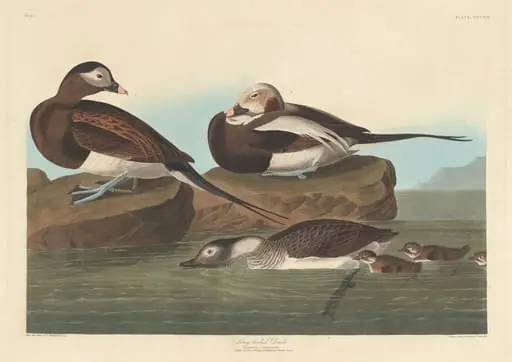
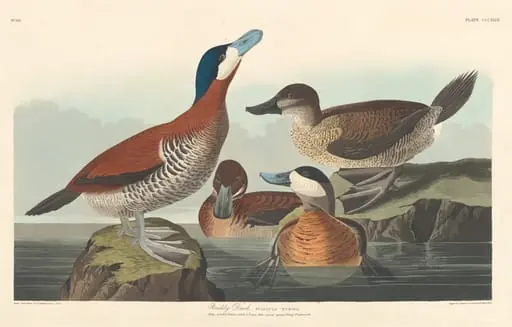
Velvet Duck is an ink print by the Romanticist artist British 19th Century. It dates from 1850 and is held in the collection of the National Gallery of Art. This hand-colored etching depicts a duck resting on still water, rendered with fine linework and delicate color washes.
About this work
Overview
The image is accompanied by descriptive text, reflecting a tradition where natural history and visual art converged in printed volumes.
This hand-colored etching depicts a duck resting on still water, rendered with fine linework and delicate color washes. The image is accompanied by descriptive text, reflecting a tradition where natural history and visual art converged in printed volumes. The paper’s textured surface indicates use of a heavy, durable stock, suggesting the print was intended for long-term preservation rather than ephemeral display.
Subject & Meaning
The duck is portrayed with anatomical precision, emphasizing its plumage and aquatic behavior. The accompanying text provides observational details about its habitat and habits, aligning the image with scientific documentation. Rather than idealizing the subject, the work treats the bird as a specimen worthy of careful study, blending aesthetic care with empirical intent.
Technique & Style
The image was produced through etching, a method allowing fine detail in the feather textures, then enhanced by hand-applied watercolor to mimic natural hues. The rough paper surface captures the ink’s grain, reinforcing the tactile quality of the print. Text is integrated directly beneath the image, functioning as an essential component of the visual record rather than a mere caption.
History & Provenance
Created during a period when illustrated natural history books were gaining popularity, this print likely appeared in a published volume aimed at educated audiences. Its production method and material quality suggest it was part of a series meant for reference, not decoration. Similar works by Thomas Bewick reflect the same interdisciplinary approach to documenting wildlife.
Context
In the late 18th and early 19th centuries, artists frequently collaborated with naturalists to produce illustrated guides to flora and fauna. These publications bridged the gap between scientific inquiry and public education. Hand-coloring was standard practice before chromolithography, ensuring each copy retained a unique, artisanal character.
Legacy
This print exemplifies a transitional phase in natural history illustration, where artistic skill served scientific accuracy. Its survival in original condition offers insight into how knowledge was visually communicated before mass reproduction. The integration of text and image influenced later field guides and remains a model for combining observation with craftsmanship.
Artist & collection

Artist
This artist’s short life left behind a quiet obsession with water—whether the churn of a mill wheel, the choppy waves off England’s south coast, or the way light bounces off pond lilies.