Artwork
Canvas-backed Duck
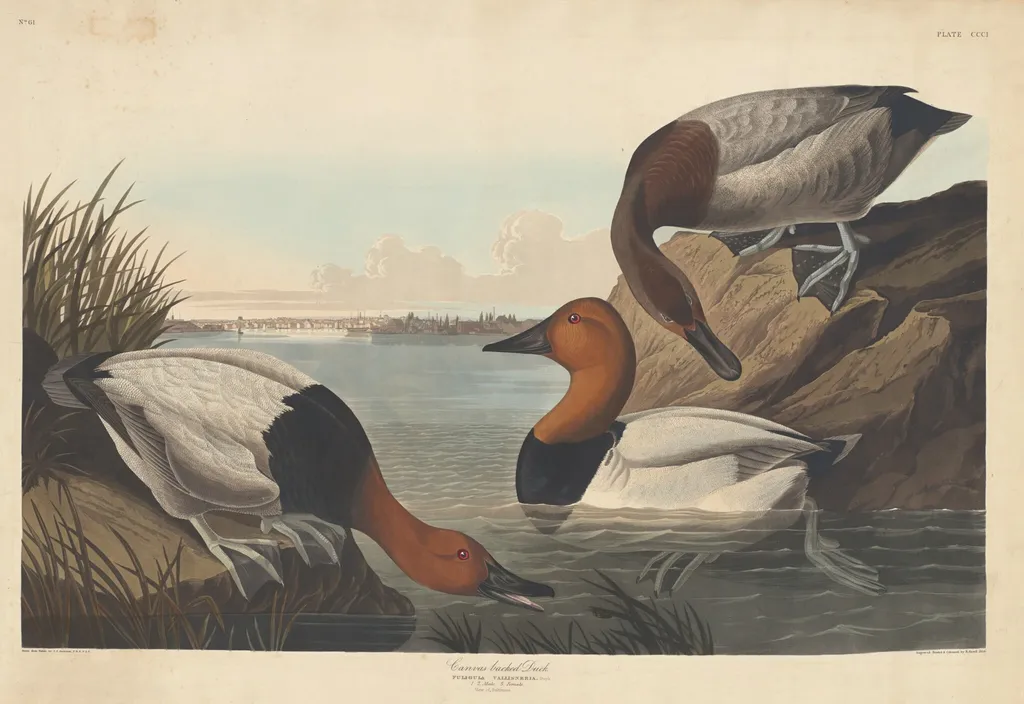
Canvas-backed Duck is an ink print by the Romanticist artist Robert Havell Jr.. It dates from 1836 and is held in the collection of the National Gallery of Art.
About this work
Overview
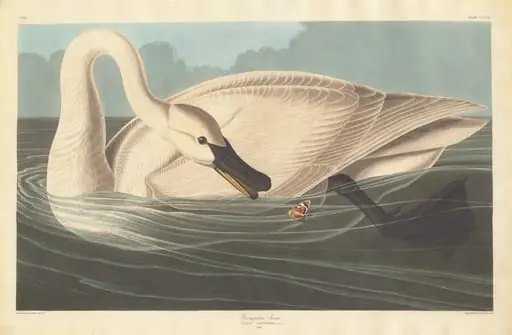
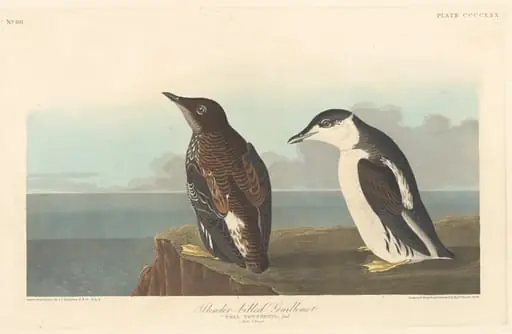
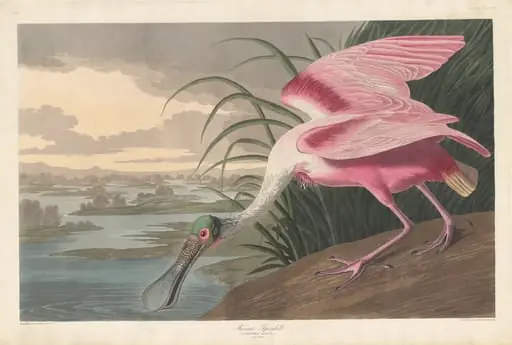
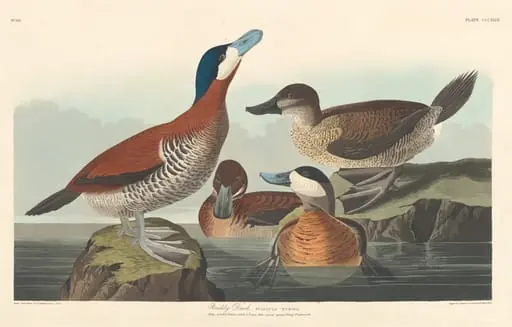
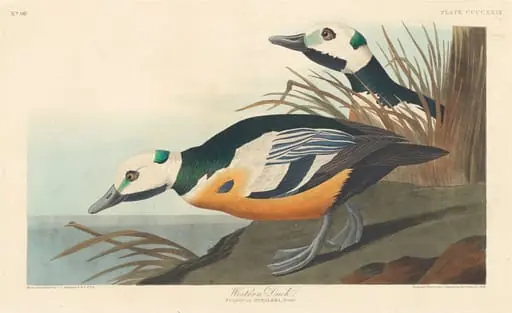
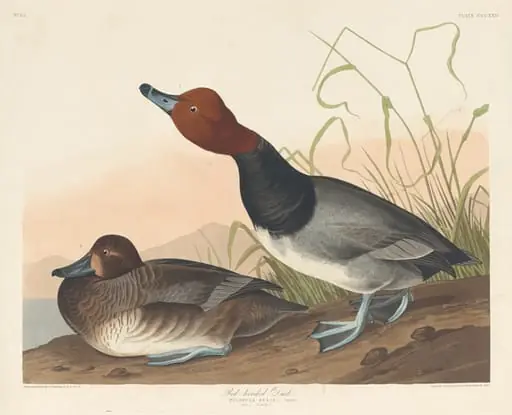
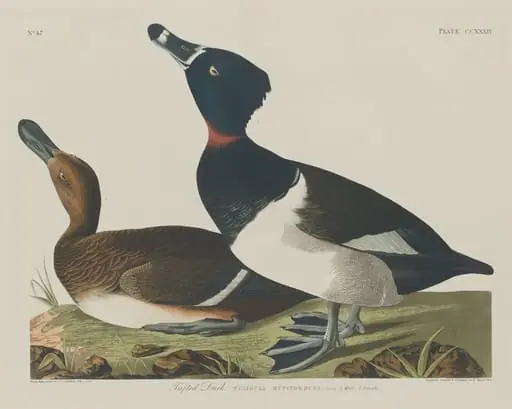
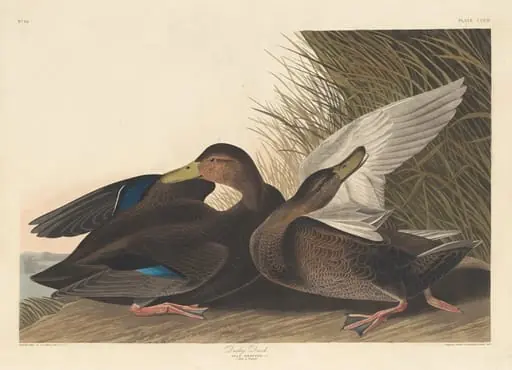
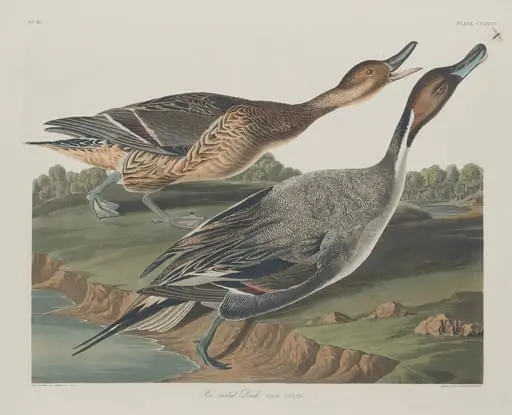
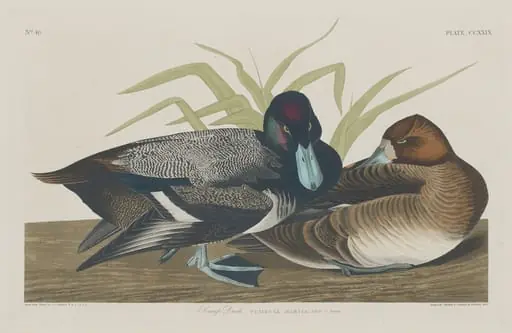
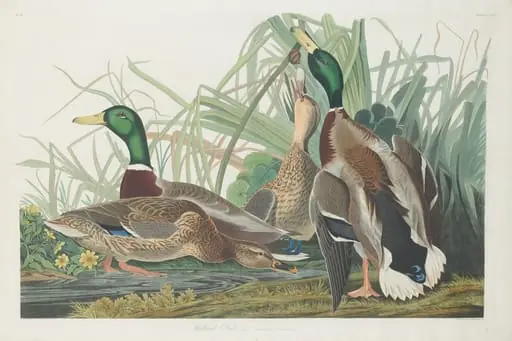
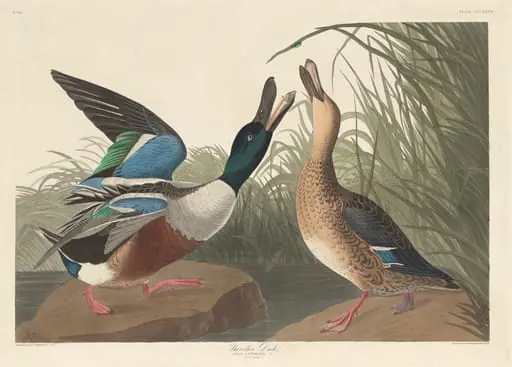
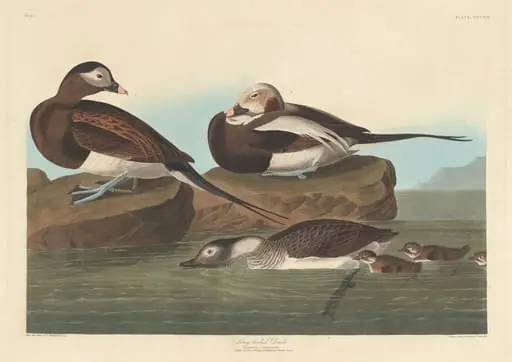
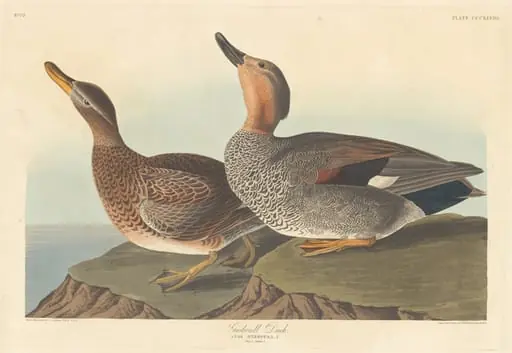
, this hand-colored engraving and aquatint depicts two canvas-backed ducks in a natural setting.
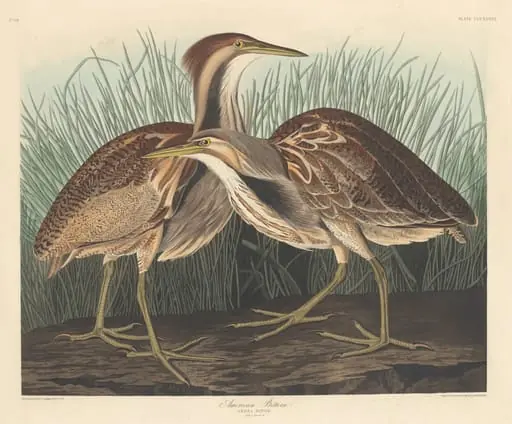
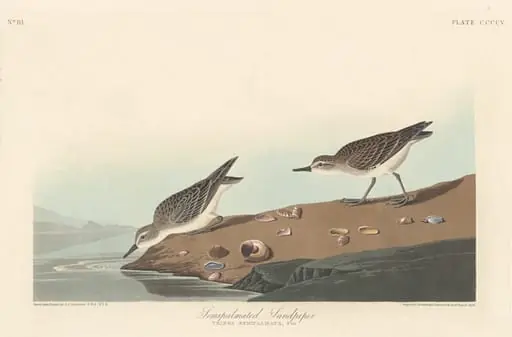
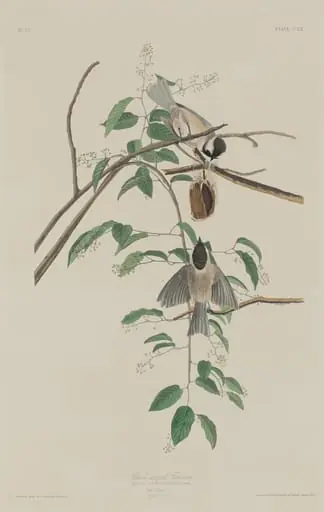
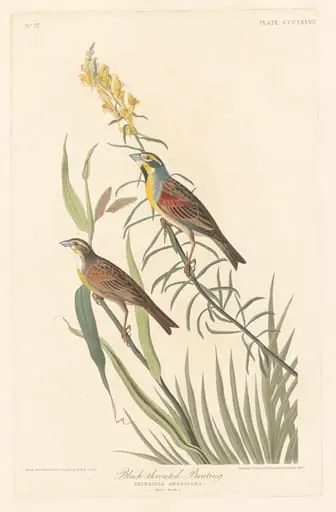
Created in 1836 by Robert Havell Jr., this hand-colored engraving and aquatint depicts two canvas-backed ducks in a natural setting. Executed on Whatman wove paper, the print exemplifies the technical precision and artisanal coloring characteristic of the Havell family’s printmaking tradition. The work belongs to a broader series documenting North American waterfowl, produced during a period of heightened scientific and artistic interest in natural history.
Subject & Meaning
The composition features a swimming duck and a perched counterpart, captured in quiet, everyday moments near a still lake. The setting includes subtle architectural elements in the distance, suggesting human presence without intrusion. The ducks are rendered with anatomical accuracy, reflecting the artist’s commitment to naturalistic observation. The image conveys neither drama nor symbolism, but rather a deliberate, contemplative record of avian life.
Technique & Style
Havell employed aquatint and engraving to achieve fine gradations of tone and intricate feather detail. The metal plate was etched with controlled lines and tonal washes, then each impression was individually hand-colored with water-based pigments. The use of Whatman paper, known for its smooth, absorbent surface, enhanced the clarity of the ink and the subtlety of the coloring, resulting in a lifelike texture that mimics the softness of plumage.
History & Provenance
Robert Havell Jr. was part of a multi-generational family of English printmakers based in Reading, Berkshire. His father, Robert Havell the Elder, and uncle, Luke Havell, were established engravers who contributed to major natural history publications. This print was likely produced for a scientific or ornithological volume, continuing a tradition of illustrated natural history that linked European printmaking with American wildlife documentation in the early 19th century.
Context
During the 1830s, detailed natural history illustrations were in demand among scientists, collectors, and educated audiences. European artists often relied on specimens collected abroad, and Havell’s work reflects this transatlantic exchange. Though he never traveled to North America, his depictions were based on preserved specimens and sketches sent from the field, aligning with broader efforts to classify and visually document the continent’s biodiversity.
Legacy
Havell’s prints, including this one, contributed to the visual vocabulary of American ornithology before photography became viable. His technique influenced later natural history illustrators, and his family’s workshop remained a respected name in printmaking. While largely overshadowed by larger publications, these individual plates endure as precise, quiet records of species and methods now largely obsolete.
Artist & collection

Artist
The Havell family of Reading, Berkshire, England, included a number of notable engravers, etchers and painters, as well as writers, publishers, educators, and musicians.