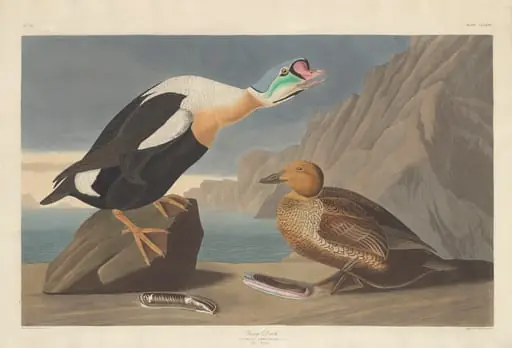
Artwork
Pied Duck
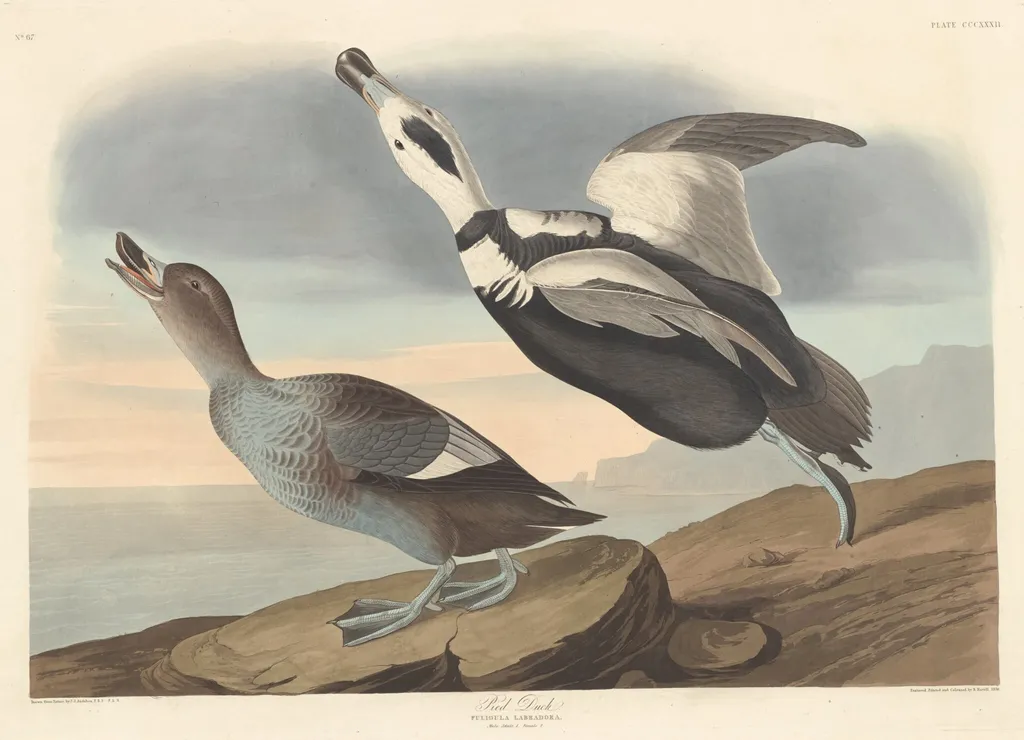
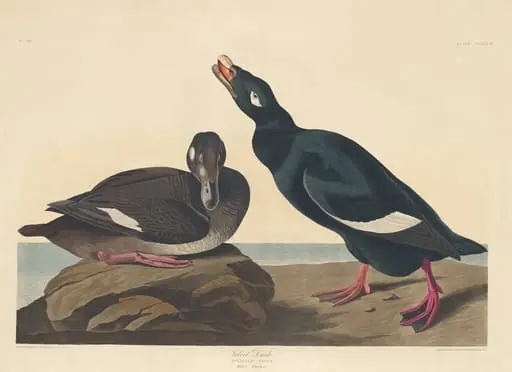
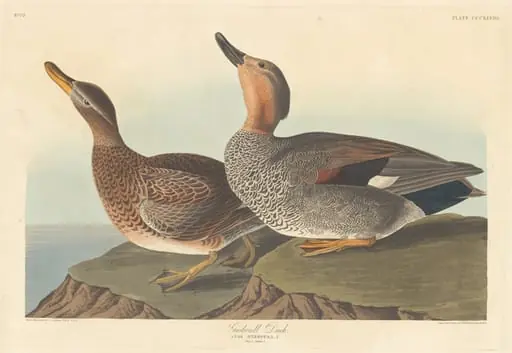
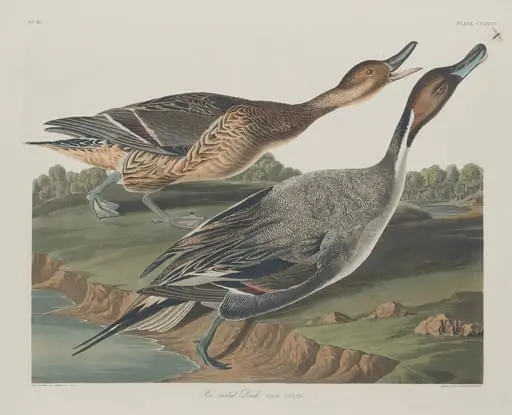
Pied Duck is an ink print by the Romanticist artist Robert Havell Jr.. It dates from 1836 and is held in the collection of the National Gallery of Art.
About this work
Overview
The work belongs to a series of ornithological prints that reflect the Havell family’s sustained involvement in natural history illustration.
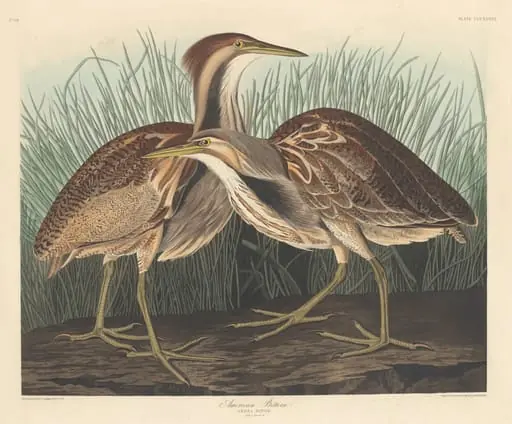
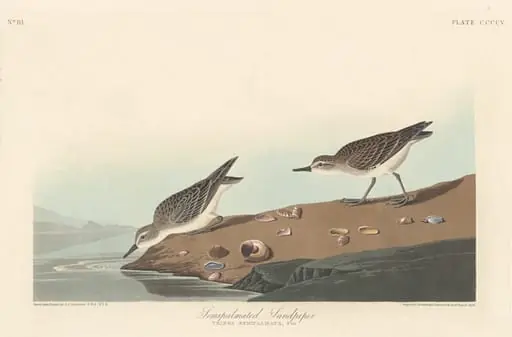
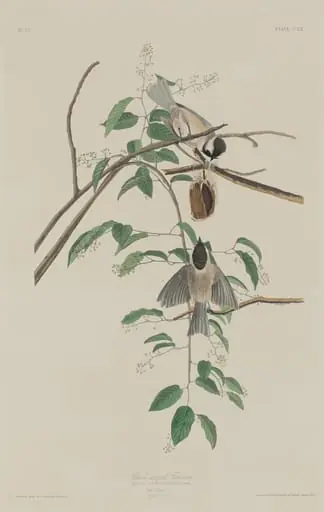
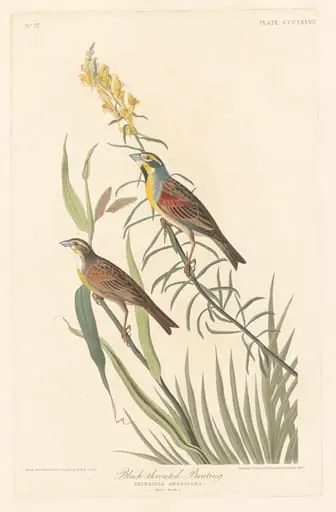
Robert Havell Jr. produced *Pied Duck* in 1836 as a hand-colored engraving and aquatint on Whatman wove paper. The work belongs to a series of ornithological prints that reflect the Havell family’s sustained involvement in natural history illustration. Their technical mastery of aquatint allowed for subtle tonal transitions, distinguishing their prints from contemporaneous methods. The piece exemplifies the family’s commitment to precision and aesthetic refinement in reproductive printmaking.
Subject & Meaning
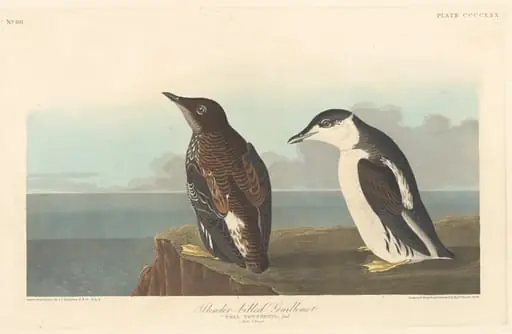
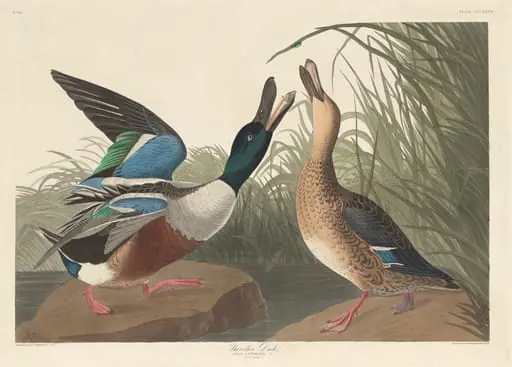
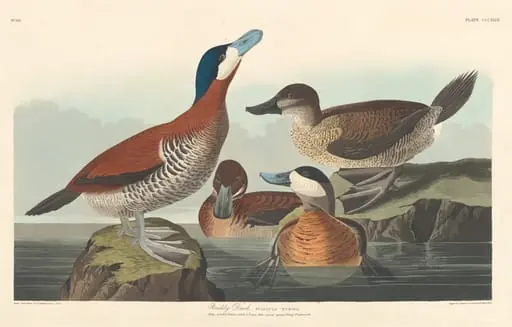
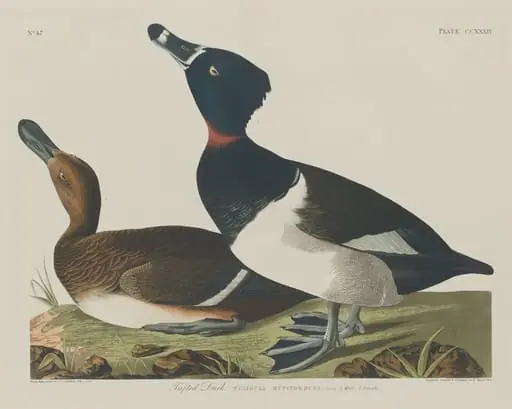
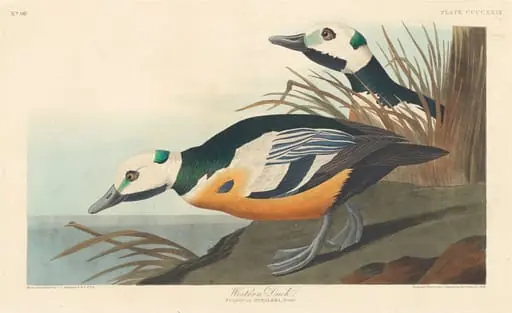
The print portrays two pied ducks perched on coastal rocks, one with its beak open in vocalization, the other still, wings gently extended. The birds’ mottled plumage—gray, white, and brown—aligns with the common name 'pied,' referring to their patchy coloring. The setting, with its muted sea and sky, suggests a quiet, untamed shoreline. The image prioritizes observational accuracy over symbolic narrative, reflecting a scientific interest in avian species rather than allegorical intent.
Technique & Style
Havell employed aquatint to achieve delicate gradations of tone, particularly in the birds’ feathers and the textured rock surfaces. Fine engraving lines define individual plumage details, while hand-coloring added naturalistic hues without obscuring the underlying inkwork. The use of Whatman wove paper, prized for its smooth, even surface, enhanced the clarity of the print’s fine details. The composition balances realism with compositional restraint, avoiding dramatic elements in favor of quiet observation.
History & Provenance
Robert Havell Jr. worked within a family dynasty of engravers, trained under his father, Robert Havell the Elder, and uncle, Luke Havell. The family was known for their collaborations on natural history publications, including John James Audubon’s *Birds of America*. *Pied Duck* emerged from this context, likely produced as part of a broader project documenting avian life. Its survival in private and institutional collections attests to its status as a well-regarded example of early 19th-century printmaking.
Context
In the 1830s, there was growing public and scientific interest in natural history, particularly in documenting regional wildlife. British printmakers like the Havells responded by producing detailed, hand-colored plates for collectors and institutions. Though based in England, the family had connections to Indian artistic traditions, which influenced their approach to texture and composition. *Pied Duck* fits within this transnational tradition of naturalist illustration, blending European techniques with global subject matter.
Legacy
Havell’s prints, including *Pied Duck*, contributed to the standardization of ornithological illustration in the pre-photographic era. Their technical precision and attention to anatomical detail set benchmarks for later natural history publications. While not widely exhibited today, the work remains referenced in studies of 19th-century printmaking and scientific visualization, preserving its role as a quiet but significant artifact of naturalist inquiry.
Artist & collection

Artist
The Havell family of Reading, Berkshire, England, included a number of notable engravers, etchers and painters, as well as writers, publishers, educators, and musicians.