Artwork
Long-tailed Duck
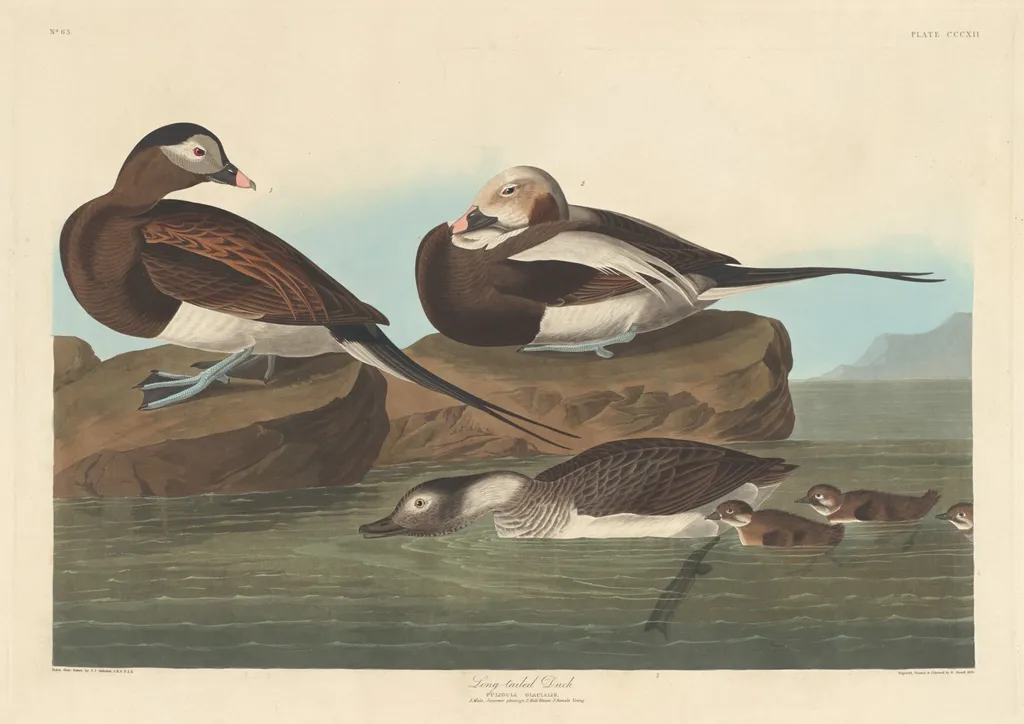
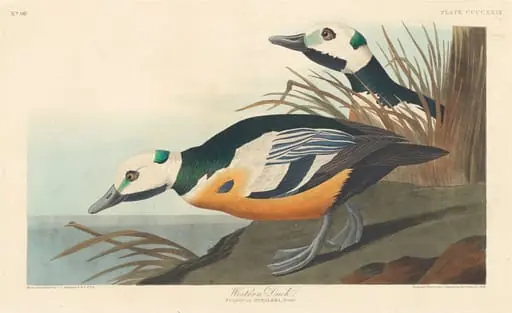
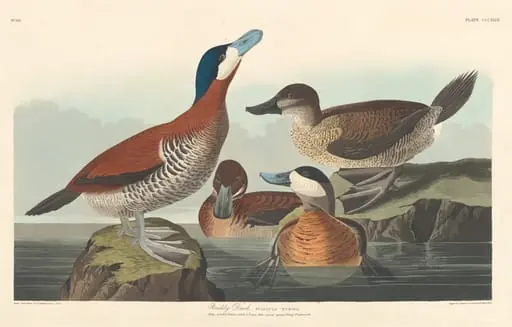
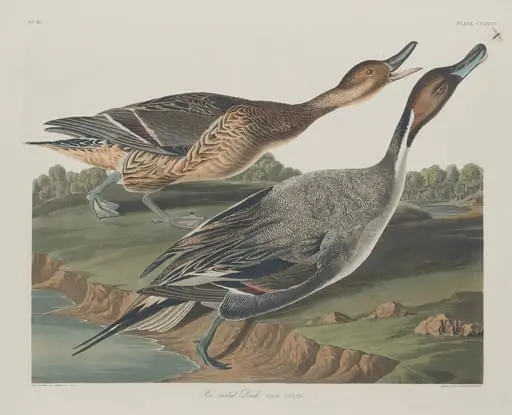
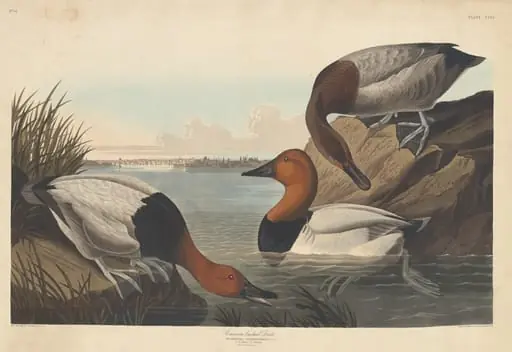
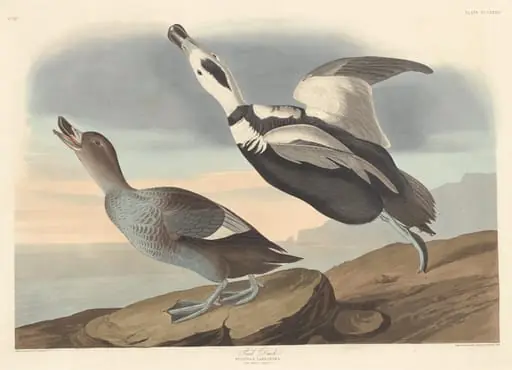
Long-tailed Duck is an ink print by the Romanticist artist Robert Havell Jr.. It dates from 1836 and is held in the collection of the National Gallery of Art.
About this work
Overview
It belongs to a tradition of natural history illustration that combined scientific accuracy with artistic refinement.
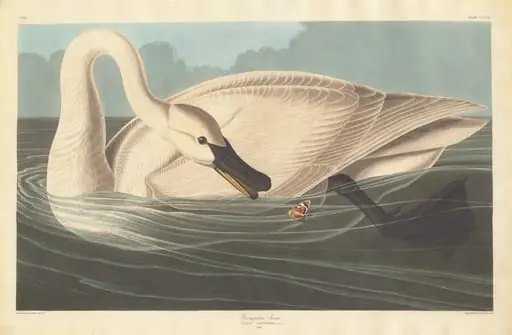
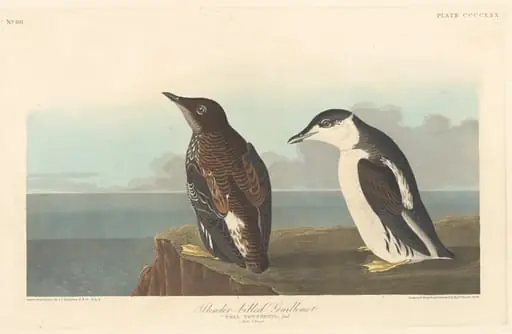
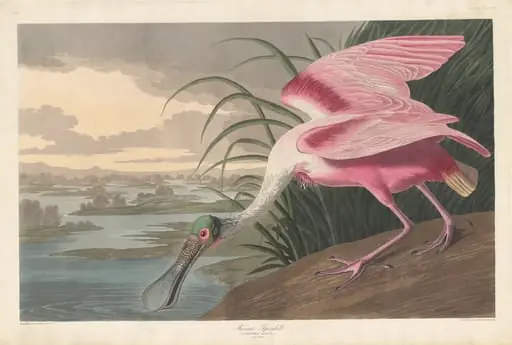
Created in 1836 by Robert Havell Jr., this print is a hand-colored engraving and aquatint on Whatman wove paper. It belongs to a tradition of natural history illustration that combined scientific accuracy with artistic refinement. The Havell family, known for their technical mastery in printmaking, produced numerous works for ornithological publications, with this piece reflecting their commitment to detailed, lifelike representation of avian subjects.
Subject & Meaning
The image depicts three long-tailed ducks in a tranquil aquatic environment: a male with striking plumage perched on a rock, a female with subdued coloring nearby, and two ducklings swimming in the water. The composition emphasizes natural behavior and seasonal harmony, avoiding anthropomorphic or symbolic elements. The focus remains on the birds’ physical presence and ecological setting, aligning with 19th-century naturalist ideals of observation over interpretation.
Technique & Style
Havell employed engraving and aquatint to render fine textures—feathers, water ripples, and stone surfaces—with precision. Hand-coloring added subtle tonal variations, enhancing realism without overwhelming the line work. The use of Whatman wove paper, prized for its smooth, even surface, allowed for delicate ink retention and crisp detail. Background elements are minimized, directing attention to the birds through controlled contrast and spatial clarity.
History & Provenance
The print emerged from the Havell family’s long involvement in publishing natural history illustrations, particularly for works like Audubon’s *Birds of America*. Though the family had ties to Indian art through earlier projects, this piece is part of a series focused on North American wildlife. Its production coincided with growing public interest in ornithology and the documentation of native species during the early Victorian era.
Context
In the 1830s, scientific illustration was increasingly valued as a bridge between art and natural science. Printmakers like Havell worked closely with naturalists to ensure anatomical correctness. The choice of aquatint and fine paper reflected both technical ambition and market demand for high-quality, collectible natural history prints, often used in private collections and academic institutions.
Legacy
This print exemplifies the technical standards of 19th-century ornithological publishing. While not widely known outside specialist circles, it contributes to a broader legacy of visual documentation that shaped public understanding of wildlife. The Havells’ methods influenced later generations of printmakers, and their works remain important references for historians of science and art.
Artist & collection

Artist
The Havell family of Reading, Berkshire, England, included a number of notable engravers, etchers and painters, as well as writers, publishers, educators, and musicians.