Artwork
Velvet Duck
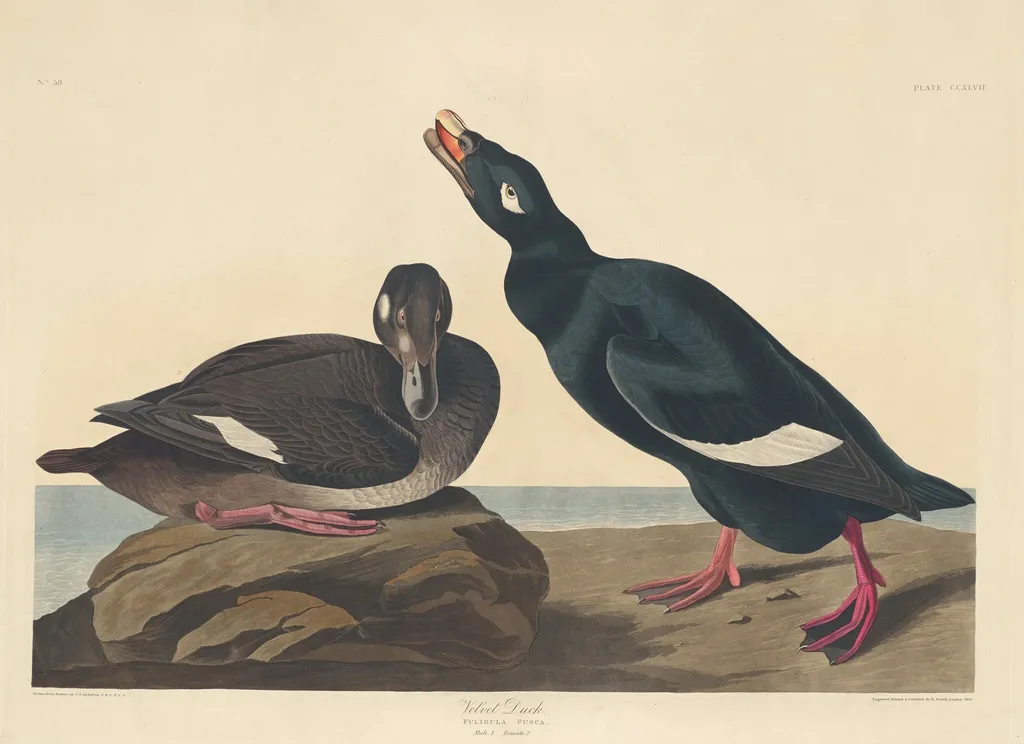
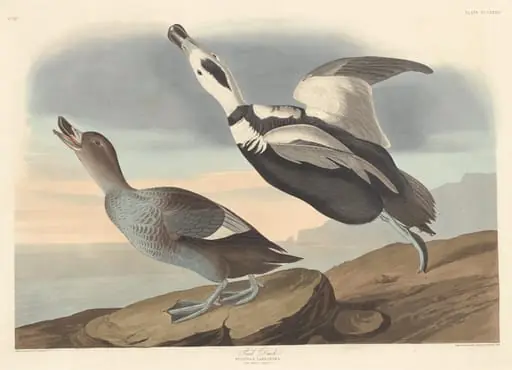
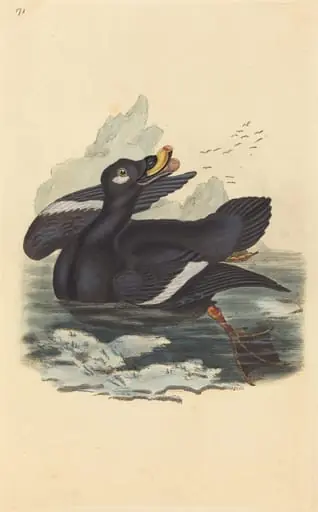
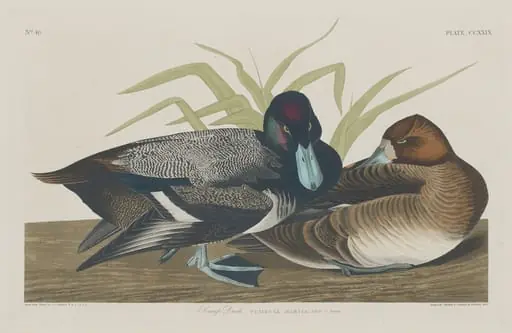
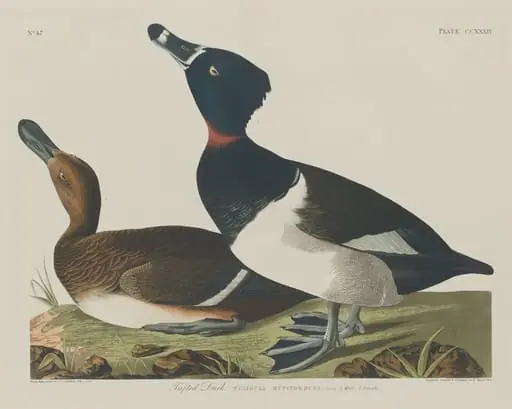
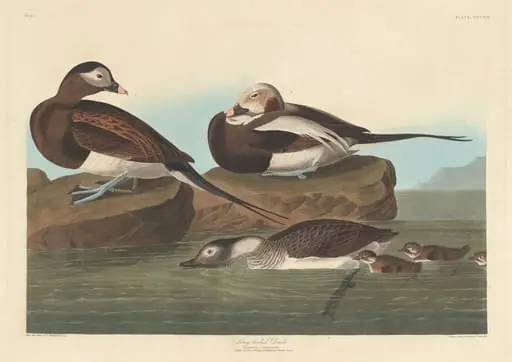
Velvet Duck is an ink print by the Romanticist artist Robert Havell Jr.. It dates from 1835 and is held in the collection of the National Gallery of Art.
About this work
Overview
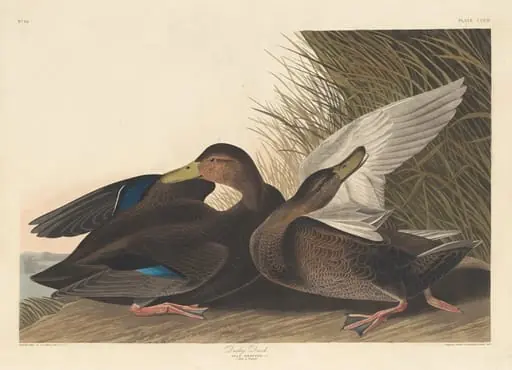
Velvet Duck is a hand-colored engraving and aquatint print created by Robert Havell Jr. in 1835 on Whatman wove paper. It depicts a pair of ducks on a rocky shore, showcasing the artist's meticulous attention to detail in rendering the subjects' plumage and environment.
Subject & Meaning
The print features a male and female duck, distinguished by their markings and postures. The male, with glossy black feathers, yellow beak, and pink legs, stands prominently, while the female, in softer brown and white, sits lower. The scene conveys a sense of naturalistic observation.
Technique & Style
Employing the Havell family's renowned aquatint expertise, the work demonstrates precise printmaking skills. The careful hand-coloring enhances the contrast between the ducks' textures and the subdued, muted background, highlighting the male's vibrant beak and legs against his dark plumage.
History & Provenance
Velvet Duck is part of the Havell family's legacy in English engraving and publishing, building on their established reputation for technical proficiency and engagement with diverse cultural influences, including Indian art.
Context
Created in 1835, the piece reflects the period's interest in natural history and the advancement of printmaking techniques, allowing for detailed, colored reproductions of natural subjects for a broader audience.
Legacy
While specific lasting impacts of *Velvet Duck* are not prominently documented, it contributes to the broader appreciation of the Havell family's contributions to the development of aquatint and hand-colored engraving in the 19th century.
Artist & collection

Artist
The Havell family of Reading, Berkshire, England, included a number of notable engravers, etchers and painters, as well as writers, publishers, educators, and musicians.