Artwork
Pin-Tailed Duck
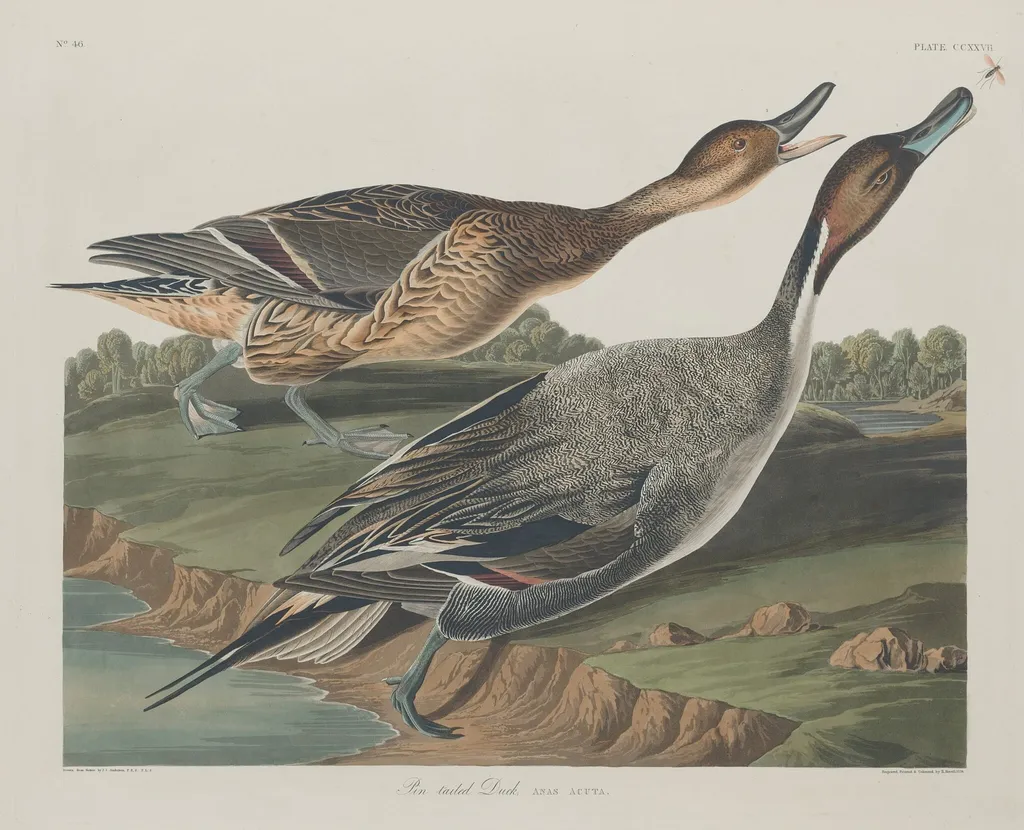
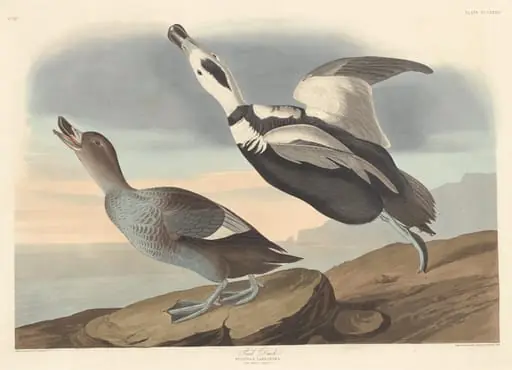
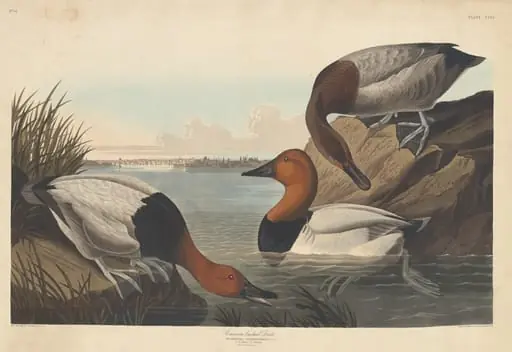
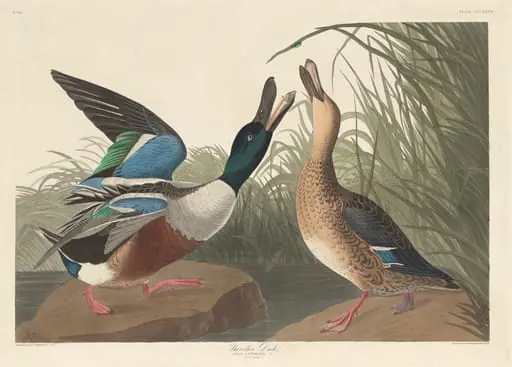
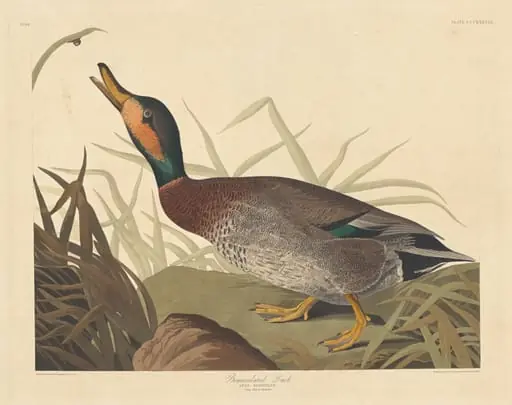
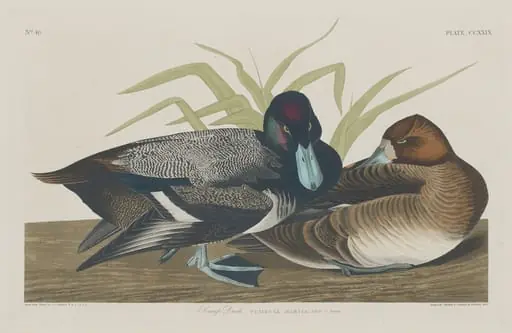
Pin-Tailed Duck is an ink print by the Romanticist artist Robert Havell Jr.. It dates from 1834 and is held in the collection of the National Gallery of Art. Created in 1834, *Pin‑Tailed Duck* is a hand‑colored print that combines engraving with aquatint on a sheet of Whatman wove paper.
About this work
Overview
Created in 1834, *Pin‑Tailed Duck* is a hand‑colored print that combines engraving with aquatint on a sheet of Whatman wove paper. The image captures two waterfowl in mid‑flight against a calm, pastoral landscape of trees, hills and water, conveying a quiet moment in nature.
Subject & Meaning
The composition shows a pair of ducks whose wings are fully extended and beaks open, suggesting a brief, dynamic pause in their journey. The foreground bird faces right with a distinctive white neck stripe, while the rear bird angles left, together forming a balanced diagonal that emphasizes movement within an otherwise tranquil setting.
Technique & Style
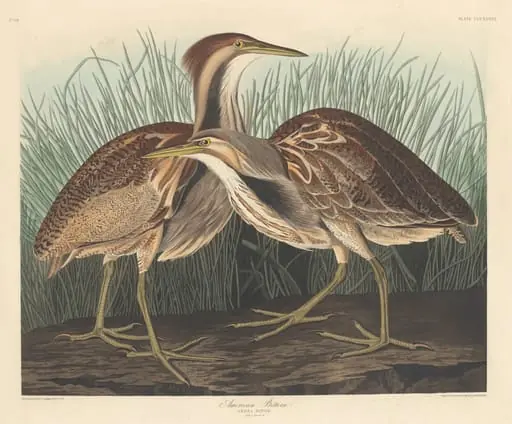
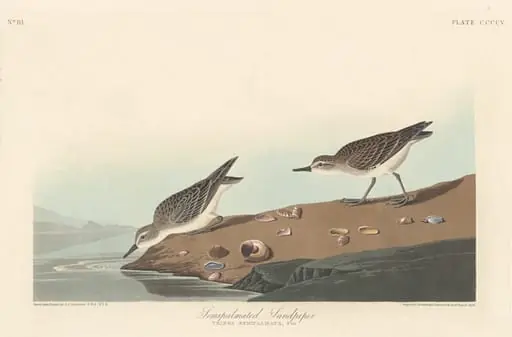
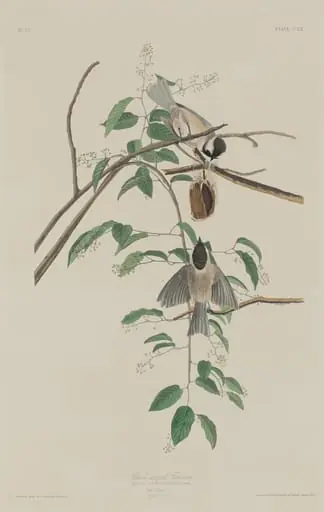
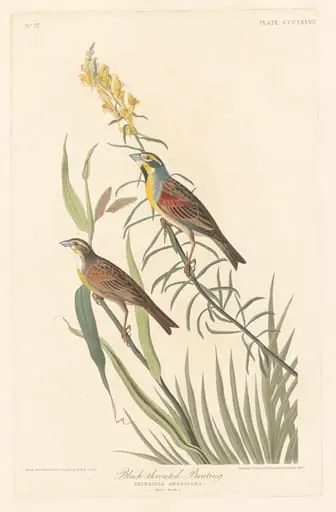
Havell employed a meticulous engraving process, then applied aquatint to achieve broad tonal washes, before adding hand‑applied color. The use of Whatman wove paper provides a smooth, uniform surface that enhances the subtle gradations of brown, gray and white feather tones, exemplifying the family’s expertise in printmaking.
History & Provenance
The work originates from the Havell workshop, a lineage of English engravers noted for their skill in aquatint and connections to Indian artistic circles. Robert Havell Jr., son of Robert Havell the Elder and nephew of Luke Havell, continued the family tradition, producing prints that were widely circulated in the early nineteenth century.
Context
During the 1830s, British printmakers increasingly catered to a growing public interest in natural history and pastoral scenes. *Pin‑Tailed Duck* reflects this trend, offering an accessible, detailed study of wildlife that could be reproduced for educational and decorative purposes.
Own this work as a print
Artist & collection

Artist
The Havell family of Reading, Berkshire, England, included a number of notable engravers, etchers and painters, as well as writers, publishers, educators, and musicians.