Artwork
Samson and Delilah
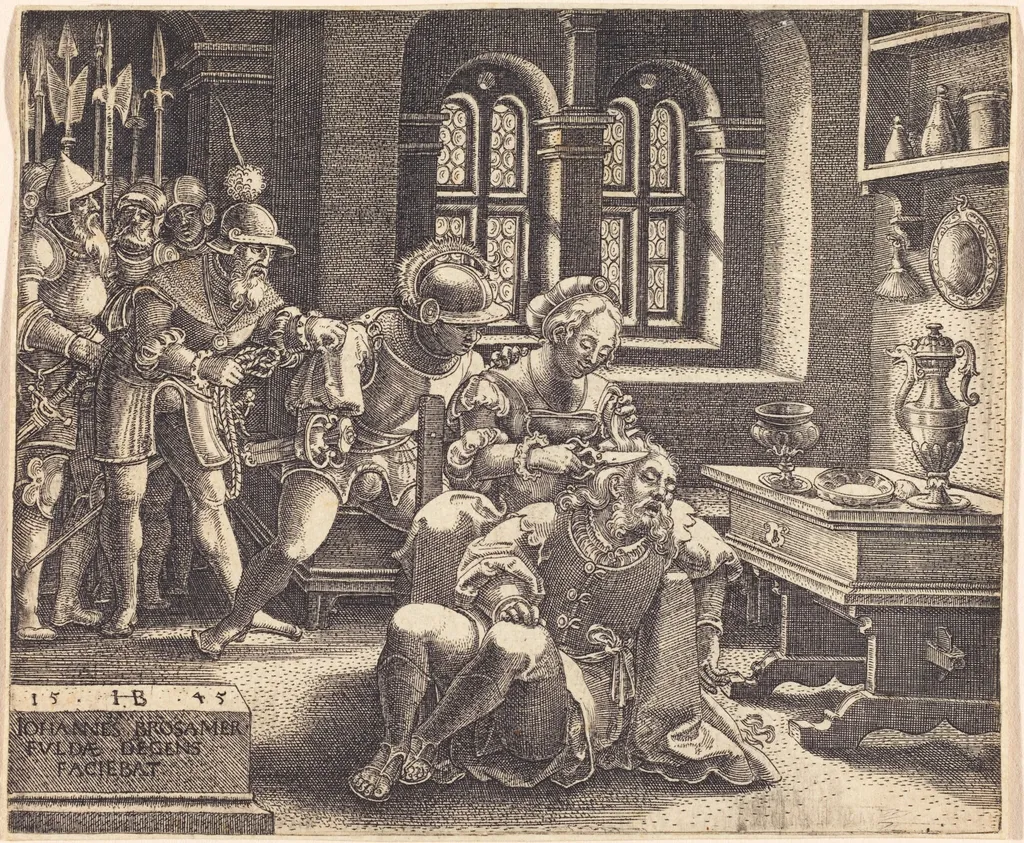
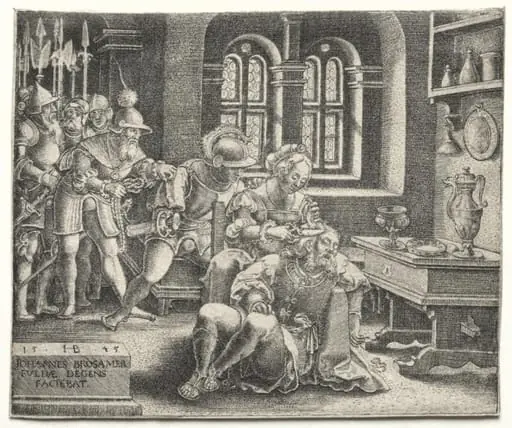
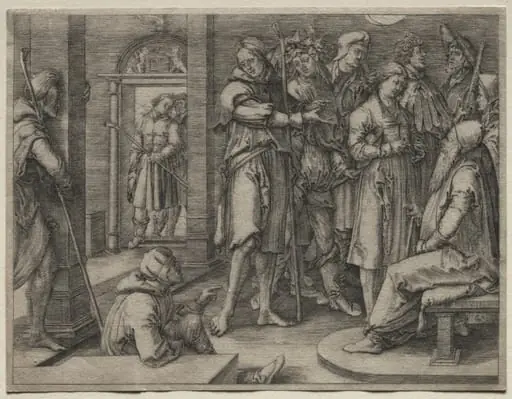
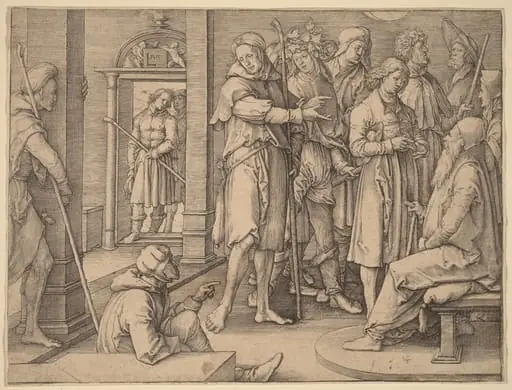
Samson and Delilah is an ink print by the Renaissance artist Hans Brosamer. It dates from 1545 and is held in the collection of the National Gallery of Art.
About this work
Overview
Hans Brosamer’s engraving titled *Samson and Delilah* was produced in 1545 on laid paper. The work belongs to the German Renaissance print tradition and measures the typical size of a single‑sheet print. It presents a black‑and‑white composition that captures a pivotal moment from the biblical story of Samson’s betrayal.
Subject & Meaning
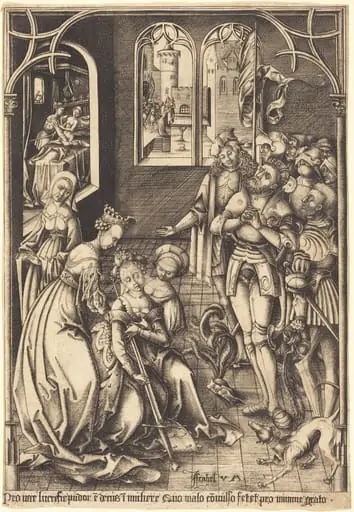
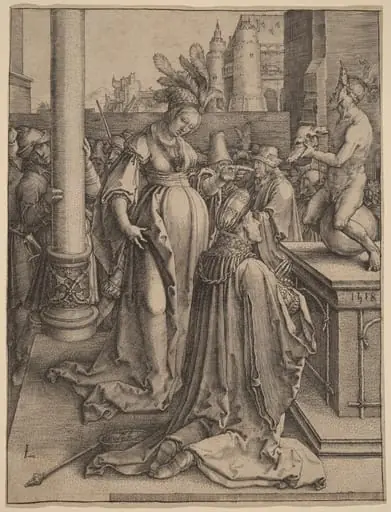
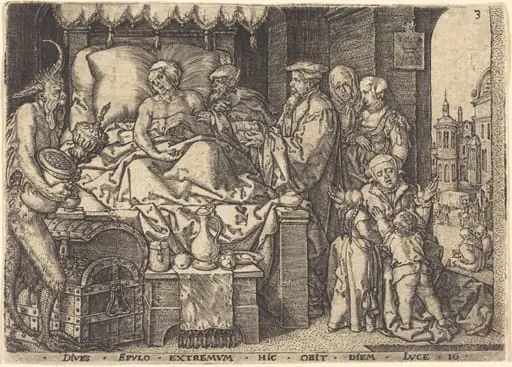
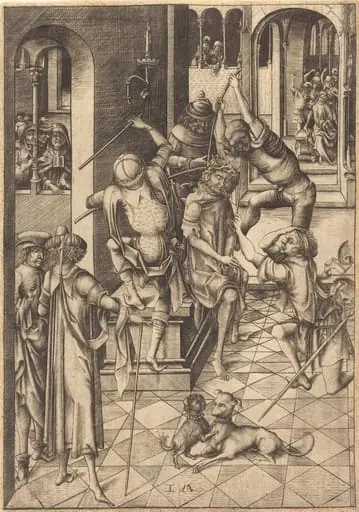
The image portrays the climactic encounter between Samson and Delilah: Delilah stands with a sword, while Samson kneels, his posture suggesting defeat or surrender. Scattered objects—a helmet, a dagger, and a severed arm—evoke the violence of the scene, while the window and domestic furnishings hint at an interior setting that frames the drama.
Technique & Style
Executed as an engraving, Brosamer incised the design into a metal plate, employing fine lines and cross‑hatching to model volume and create atmospheric depth. The meticulous rendering of hair, drapery, and the reflective surfaces of the mirror and pitcher demonstrates his command of line work and shading, hallmarks of his printmaking practice.
History & Provenance
Brosamer, active in Fulda and later Erfurt, was a prolific draughtsman who produced over 600 woodcuts and 38 engravings, many for book illustration and some as standalone pieces. *Samson and Delilah* reflects his independent print output and is dated to the middle of his career, aligning with his documented activity in the 1540s.
Context
The engraving aligns with the broader German Renaissance interest in biblical narratives rendered with dramatic intensity. Brosamer’s choice of a violent, intimate moment mirrors contemporary tastes for moralizing subjects that could be disseminated widely through prints, reaching both literate and lay audiences.
Artist & collection

Artist
Hans Brosamer was a German draughtsman, printmaker and painter of the Renaissance period. His life has left hardly any documentary trace, other than his prints, but he was active in Fulda from 1536 to 1545, and later worked in Erfurt.