Artwork
Samson and Delilah
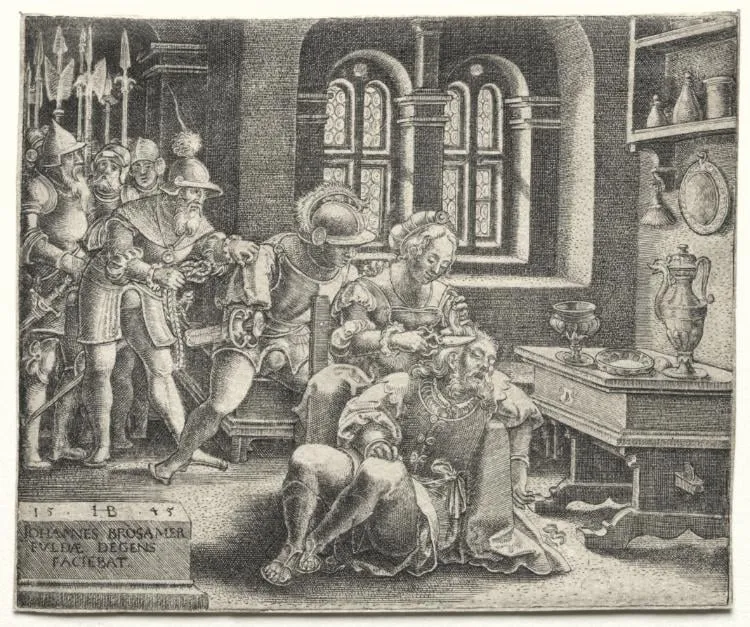
Samson and Delilah is a print by the Renaissance artist Hans Brosamer. It dates from 1545 and is held in the collection of the Cleveland Museum of Art.
About this work
Overview
The print depicts the biblical episode in which Samson, the Nazirite hero famed for his strength, is rendered vulnerable as Delilah cuts his hair. He lies asleep on her lap while Philistine soldiers approach, and a large cup and jug suggest wine has been used to induce his slumber.
Subject & Meaning
In the narrative, Samson’s power is tied to his uncut hair; Delilah, bribed by the Philistines, discovers this secret and betrays him. The composition emphasizes the moral warning popular in Protestant Northern Europe, portraying the perils of temptation and the neglect of sacred vows.
Technique & Style
Hans Brosamer’s print employs dense visual detail, filling the scene with symbolic objects—a scissors, the wine vessels, and the looming soldiers—to create a theatrical tableau. The crowded arrangement and careful line work echo contemporary German printmaking practices of the early sixteenth century.
History & Provenance
The work belongs to a series of Samson and Delilah representations that circulated in Germany during the Reformation era. It reflects the period’s interest in biblical subjects as didactic material, and it aligns with similar treatments by artists such as Hans Burgkmair I, who used a single beaker to highlight the wine motif.
Context
The story resonated strongly in Protestant regions, where it served as an illustration of the dangers of moral laxity. By embedding everyday objects and a staged composition, the artist linked the ancient tale to contemporary concerns about fidelity to religious commitments.
Artist & collection

Artist
Hans Brosamer was a German draughtsman, printmaker and painter of the Renaissance period. His life has left hardly any documentary trace, other than his prints, but he was active in Fulda from 1536 to 1545, and later worked in Erfurt.

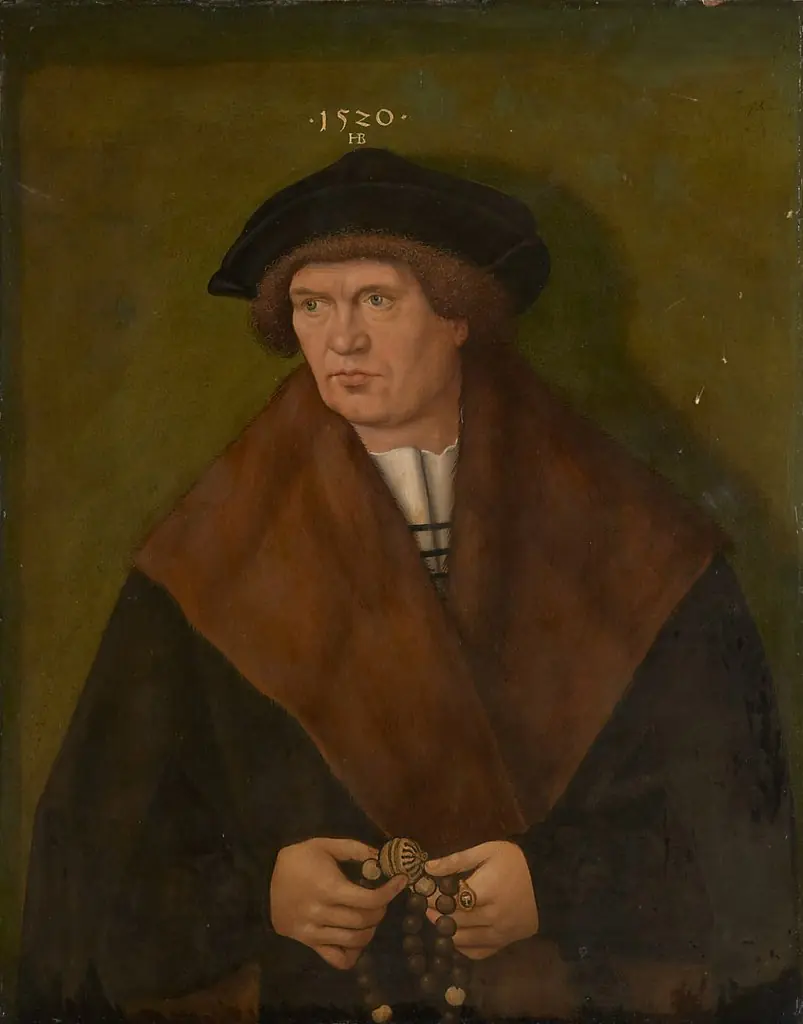
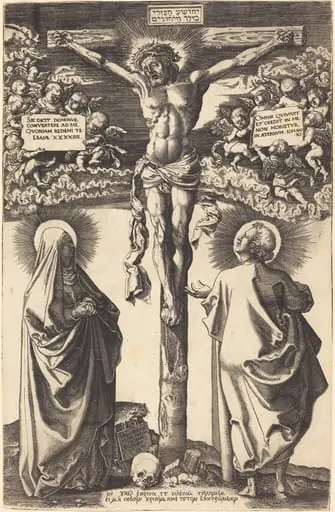
 The Story of Joseph: Joseph Interprets his Dream to Jacob
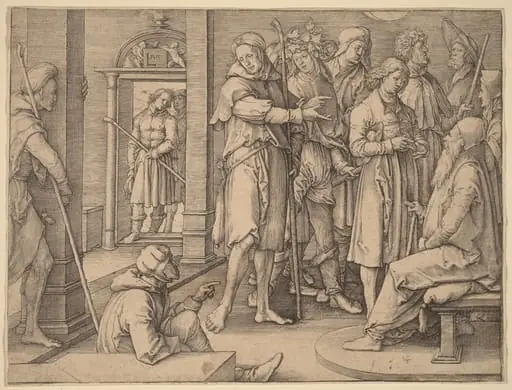 Joseph Interprets His Dream to Jacob
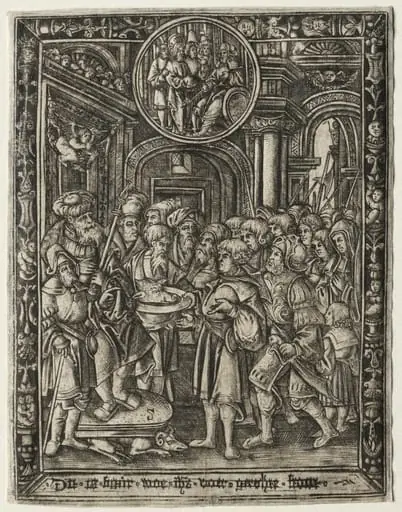 The Old King on His Throne
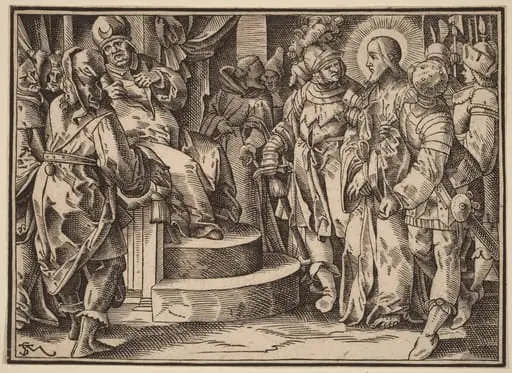 Christ Tells His Disciples of the Last Judgment
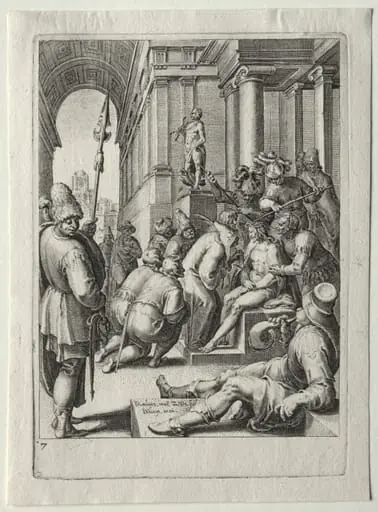 Passion Set: Christ Crowned with Thorns
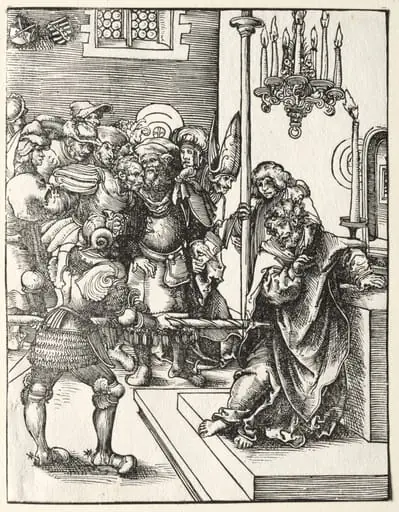 Martyrdom of St. Thomas
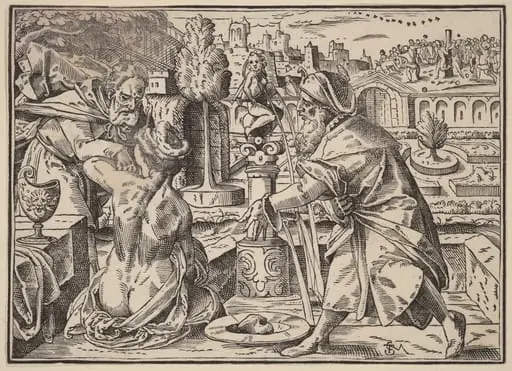 Christ Tells His Disciples of the Last Judgment
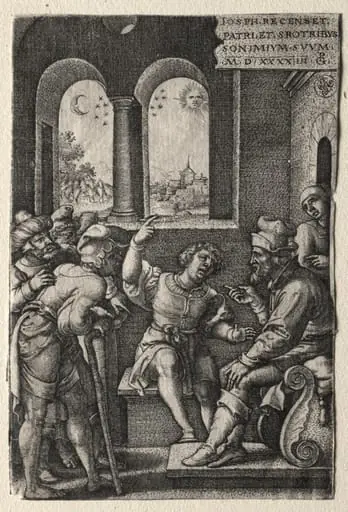 The Story of Joseph: Joseph Recounting his Dreams to his Father
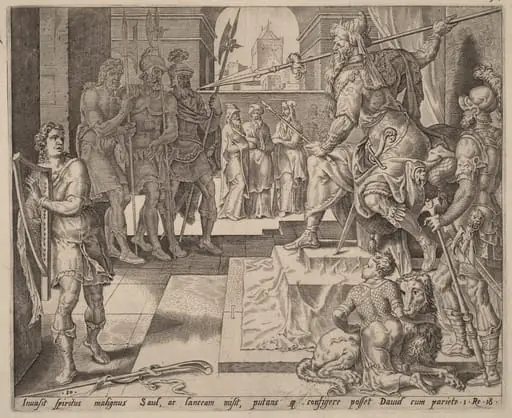 David before Saul
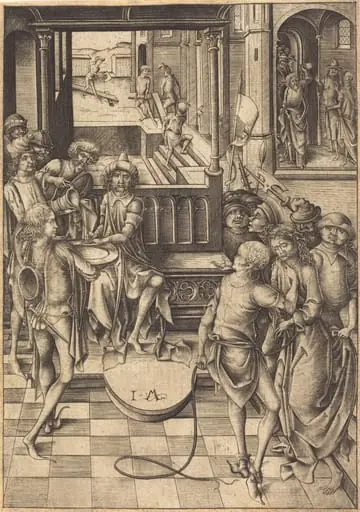 Christ before Pilate
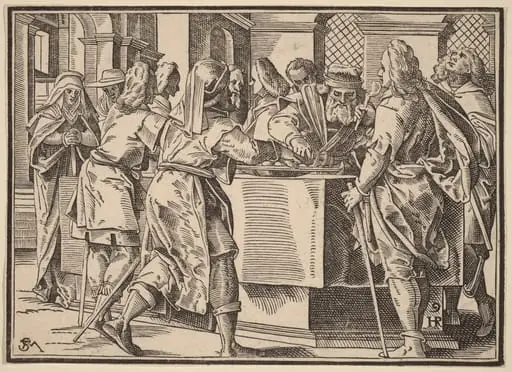 Christ Tells His Disciples of the Last Judgment