Artwork
Jewish Quarters in Amsterdam
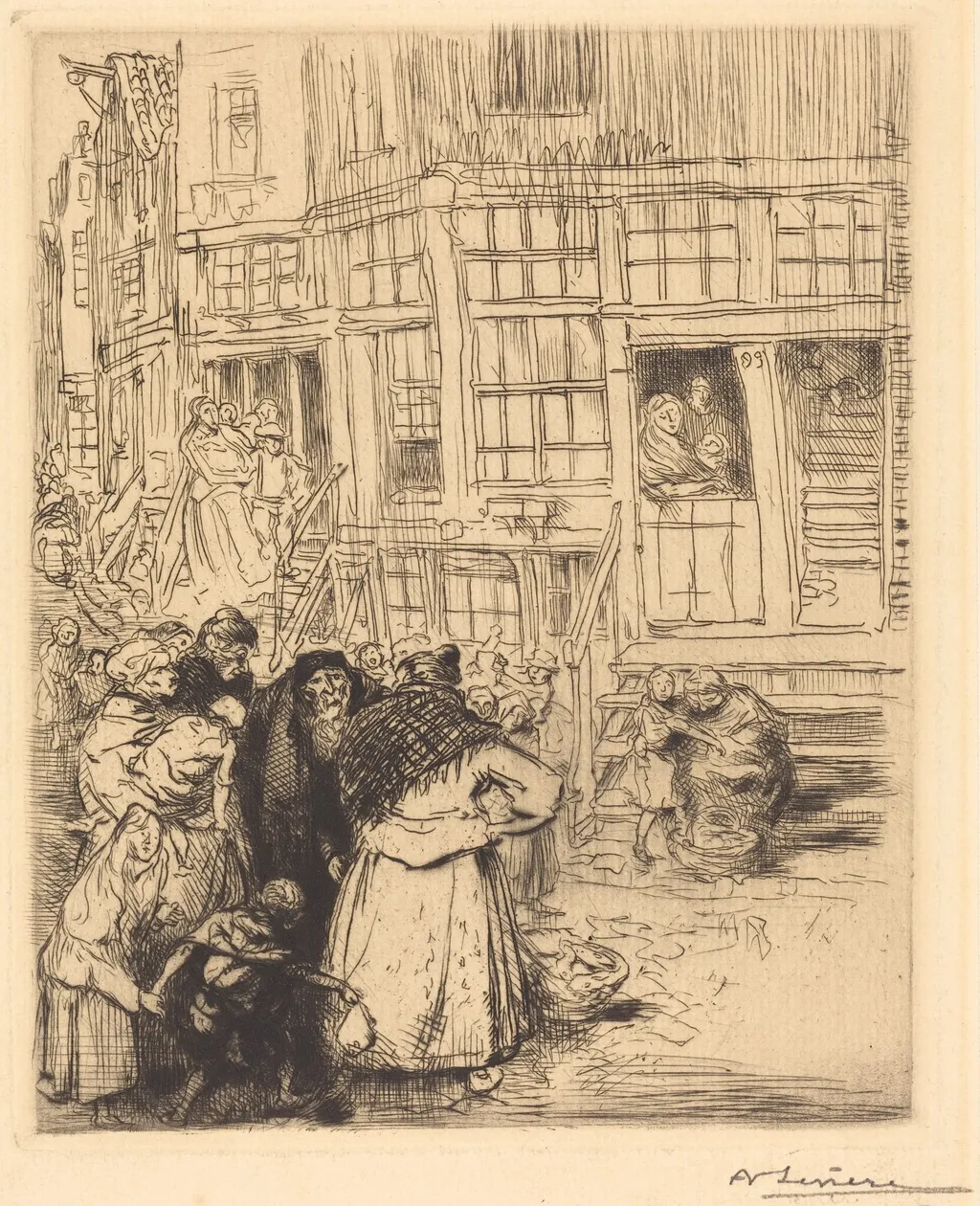
Jewish Quarters in Amsterdam is an ink print by the Romanticist artist Auguste Lepère. It dates from 1884 and is held in the collection of the National Gallery of Art.
About this work
Overview
Jewish Quarters in Amsterdam is an 1884 engraving by Auguste Lepère, a French artist instrumental in the European revival of wood engraving in the late 19th century. The piece captures a vibrant scene from Amsterdam’s Jewish Quarter.
Subject & Meaning
The engraving portrays a crowded street in Amsterdam’s Jewish Quarter, focusing on everyday life. Figures, including a central woman with a baby, are shown bundled in coats, conveying a sense of community and daily activity amidst the quarter’s tall, densely packed buildings.
Technique & Style
Lepère employed detailed, expressive engraving techniques, characterized by dense line work. This approach, reminiscent of cross-hatching, adds texture to elements like coats and building walls, imbuing the scene with a sense of dynamism and vitality.
History & Provenance
Created in 1884, the engraving is part of Lepère’s contributions to the wood engraving revival in Europe during the late 19th century. Specific provenance details are not provided.
Context
The work reflects Lepère’s interest in capturing urban, everyday scenes, while also highlighting the unique character of Amsterdam’s Jewish Quarter during the period.
Legacy
As part of Lepère’s oeuvre, *Jewish Quarters in Amsterdam* contributes to the artistic legacy of the wood engraving revival, influencing subsequent generations of printmakers with its expressive technique.
Artist & collection
Artist
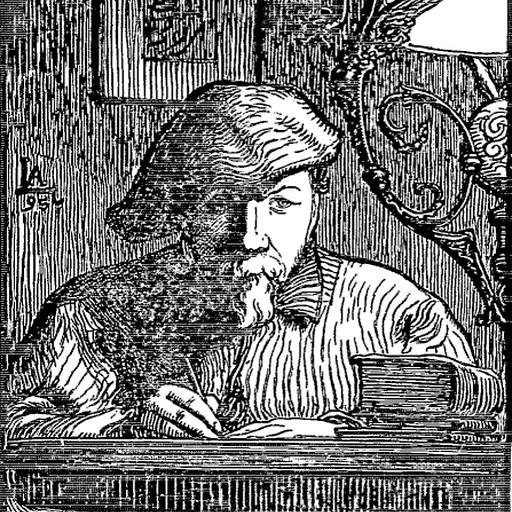
Louis-Auguste Lepère (30 November 1849 – 20 November 1918) was a French painter and etcher. Lepère is also considered a leader in the creative revival of wood engraving in Europe.

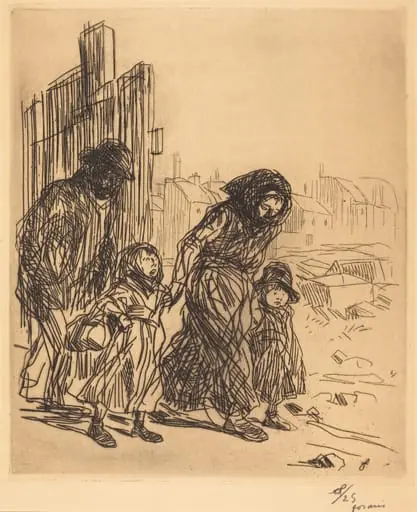 Après la saisie (After the Seizure)
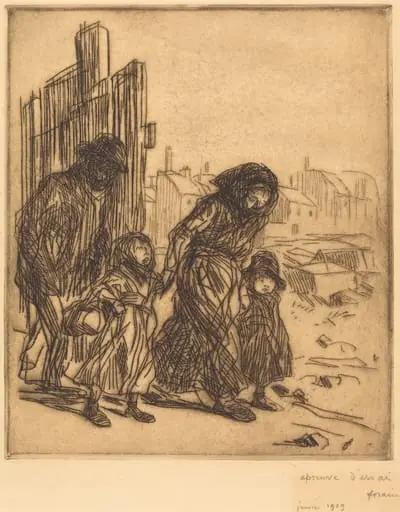 Après la saisie (After the Seizure)
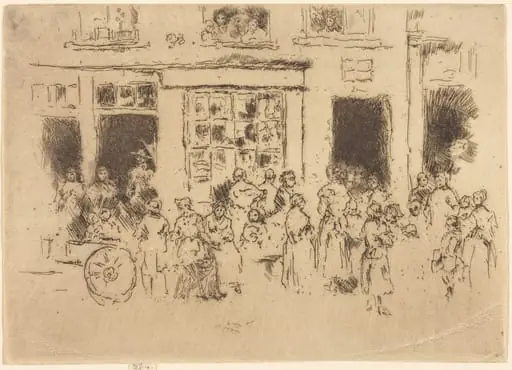 High Street, Brussels
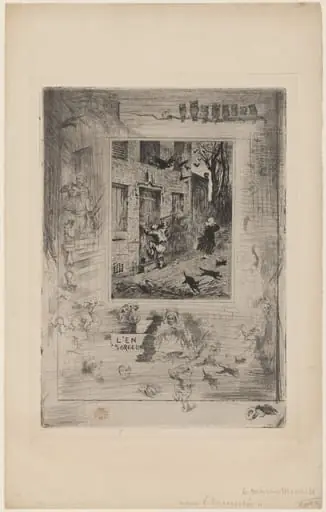 La Maison Maudite (The House of the Damned)
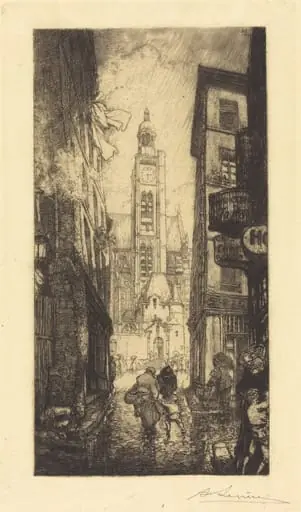 Rue de la Montagne-Sainte-Genevieve, Paris
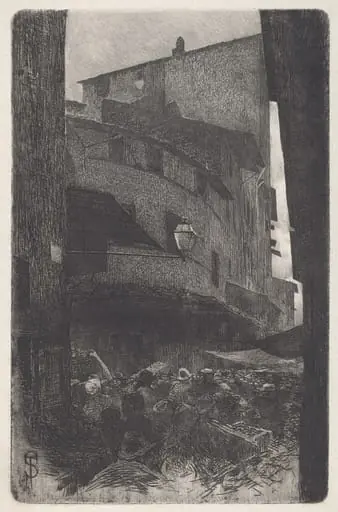 Santa Maria della Tromba
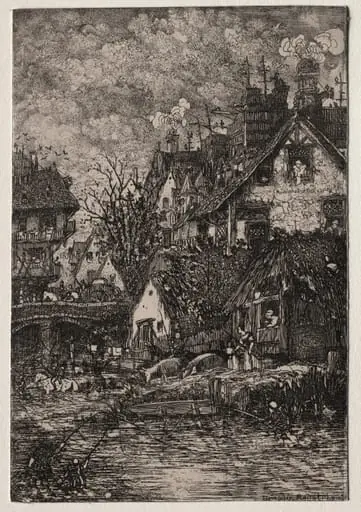 Entrance to a Village
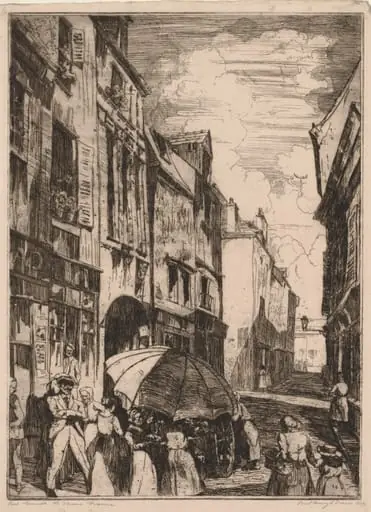 Rue Grande, Le Mans, France
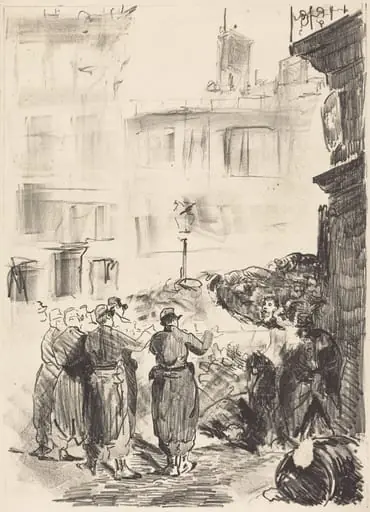 The Barricade (La barricade)
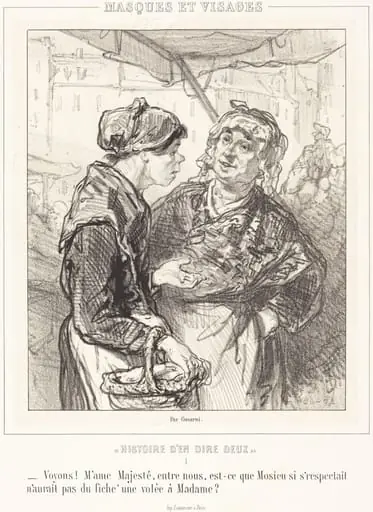 "Voyons! Mme Majeste..."
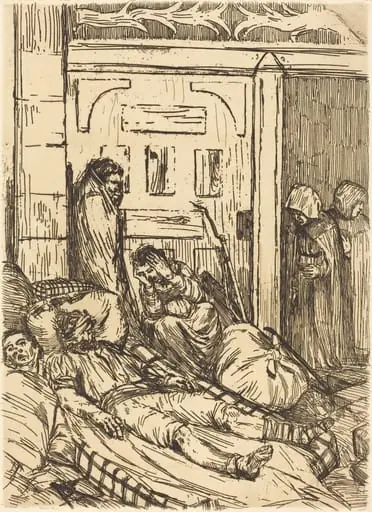 Field Hospital (L'ambulance)
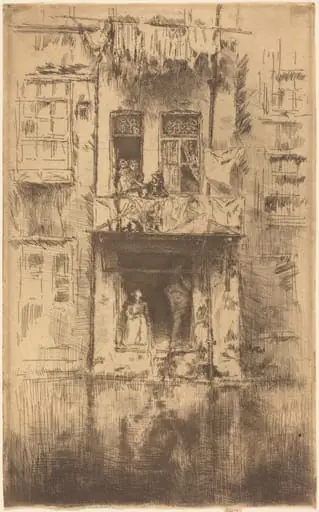 Balcony, Amsterdam