Artwork
The Imperial Eagle
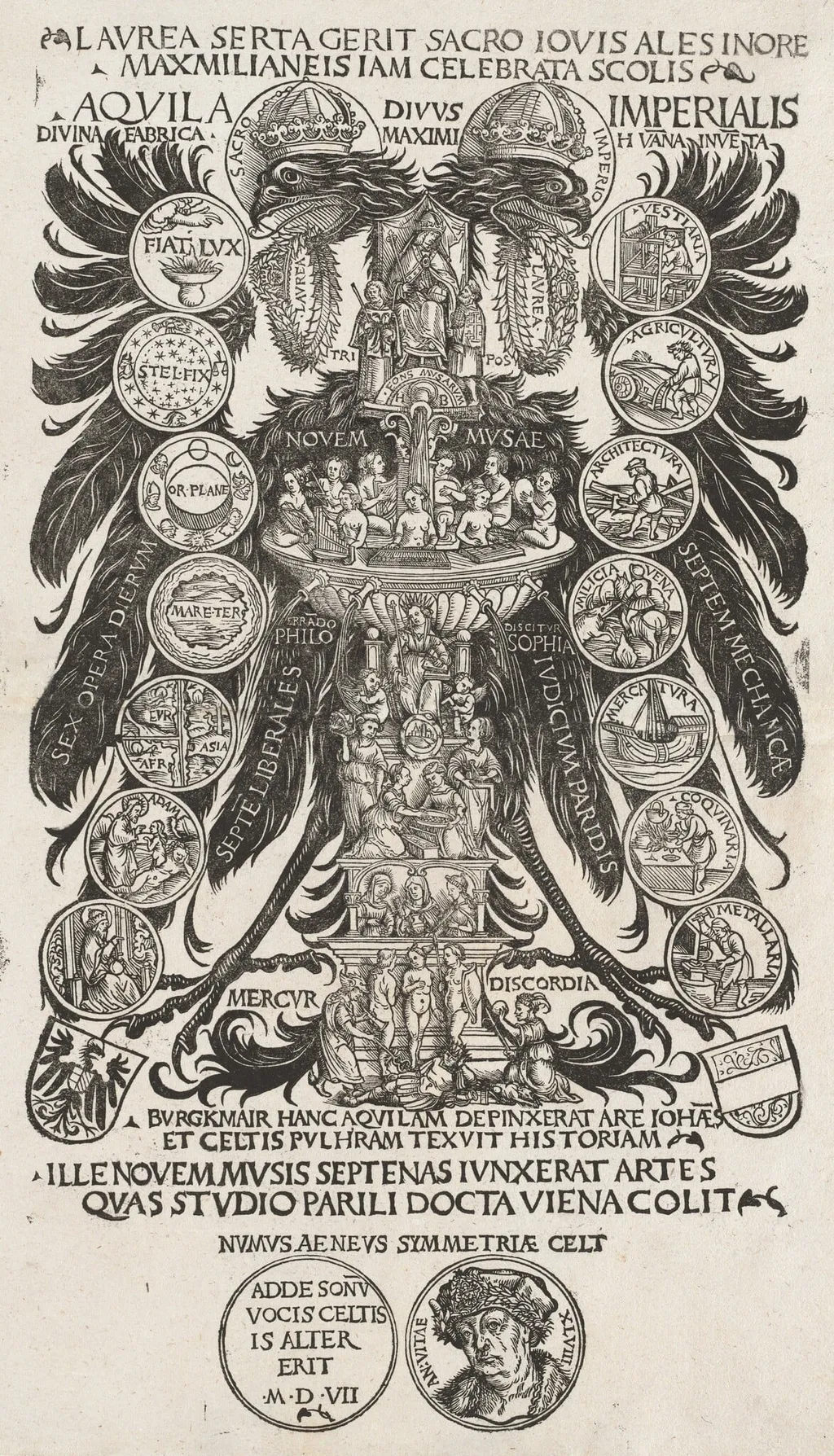
The Imperial Eagle is an ink print by the Renaissance artist Hans Burgkmair the Elder. It dates from 1507 and is held in the collection of the National Gallery of Art.
About this work
Overview
Created in 1507 by Hans Burgkmair I, this woodcut depicts a monumental eagle with outstretched wings, serving as a complex heraldic composition.
Created in 1507 by Hans Burgkmair I, this woodcut depicts a monumental eagle with outstretched wings, serving as a complex heraldic composition. The image is densely populated with round shields, cryptic emblems, and Latin inscriptions, forming a visual network of authority. At its core, miniature figures ascend a tower, suggesting a narrative of ascent or ambition. The artist’s own face appears in the lower right, a quiet assertion of authorship within an otherwise impersonal symbolic system.
Subject & Meaning
The eagle, a traditional emblem of imperial power, is adorned with a mixture of real and invented coats of arms, blending documented noble lineages with fictional or allegorical devices. This deliberate ambiguity invites interpretation of political alliances and claims to legitimacy. The ascending figures may represent courtiers, petitioners, or symbolic virtues, reinforcing the theme of hierarchy. Latin phrases reinforce the message of sovereignty, positioning the eagle as both protector and arbiter of imperial order.
Technique & Style
Executed as a woodcut, the image relies on precise carving to render fine lines and intricate details across a large format. Burgkmair exploited the medium’s capacity for dense patterning, using parallel strokes and cross-hatching to define feathers, shields, and text. The contrast between the bold, centralized eagle and the clustered peripheral symbols creates visual rhythm. The inclusion of a self-portrait reflects Renaissance humanism, merging personal identity with public symbolism.
History & Provenance
Produced in 1507 during Burgkmair’s active years in Augsburg, the print likely served as a political or diplomatic artifact, possibly commissioned by or for members of the Holy Roman Empire’s court. Its survival in multiple institutional collections suggests early circulation among elite audiences. No definitive record of its original commission exists, but its complexity implies a patron with both resources and interest in heraldic propaganda.
Context
In early 16th-century Germany, woodcuts were key tools for disseminating political and religious imagery. Burgkmair’s work emerged amid rising tensions between imperial authority and regional powers. The blending of authentic and fabricated heraldry reflects the fluidity of noble identity during this period. Similar prints by contemporaries like Dürer addressed comparable themes, but Burgkmair’s focus on layered symbolism sets this piece apart as a visual riddle of power.
Legacy
The print endures as an example of how printmaking could encode complex political narratives in accessible form. Its fusion of art, heraldry, and text influenced later emblem books and allegorical prints. Scholars continue to analyze its symbols to reconstruct contemporary understandings of imperial legitimacy. Though not widely reproduced in popular culture, it remains a critical reference in studies of Renaissance visual propaganda and the role of the artist as political commentator.
Artist & collection
Artist
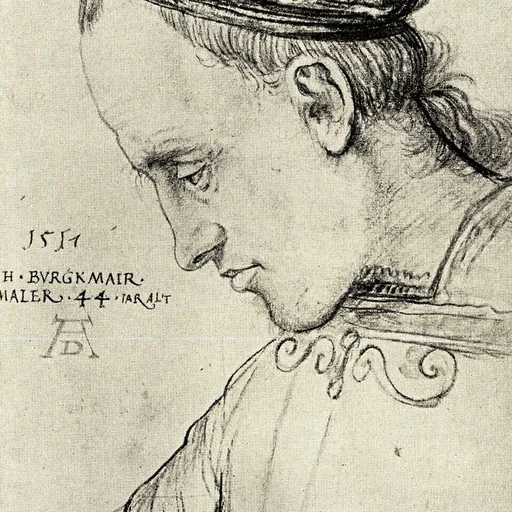
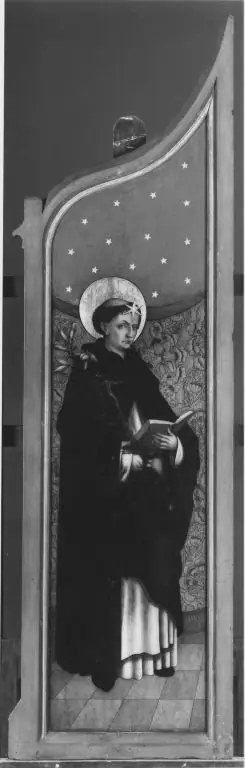
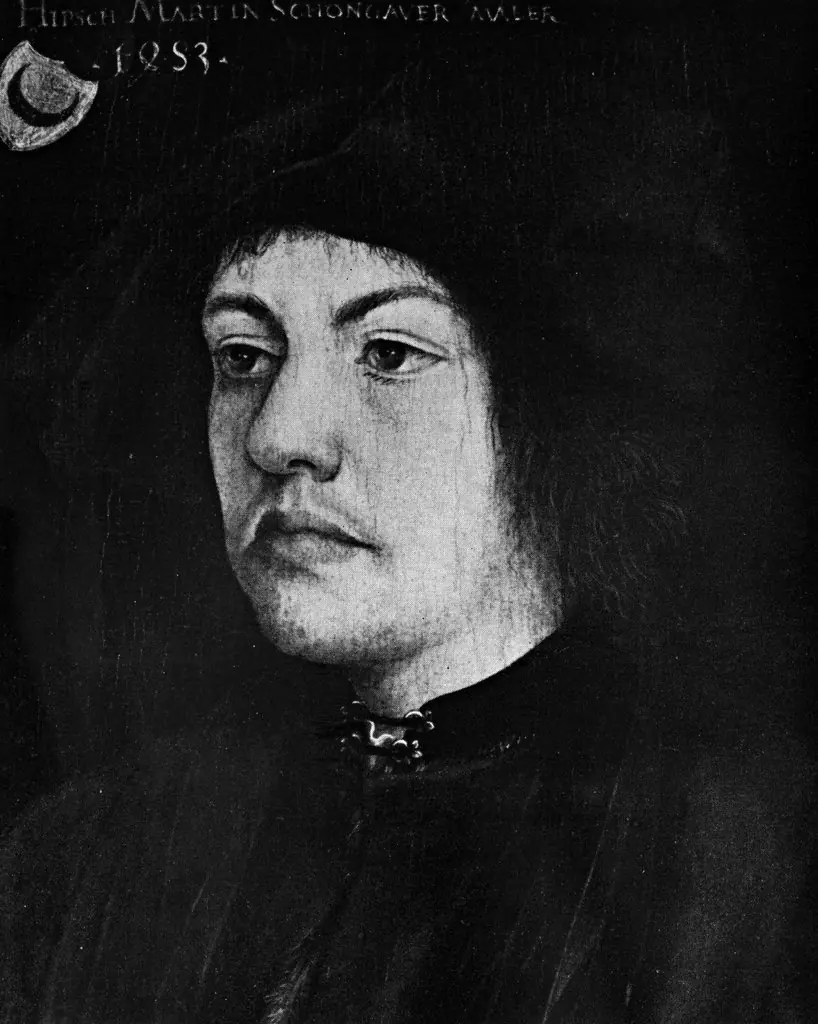
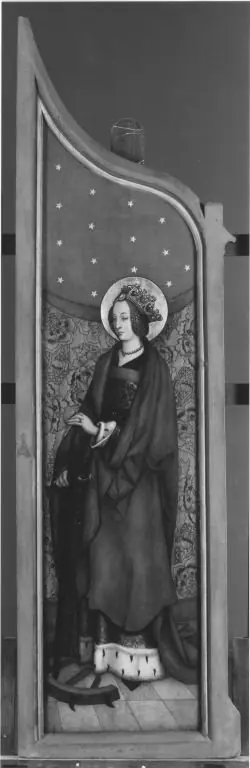
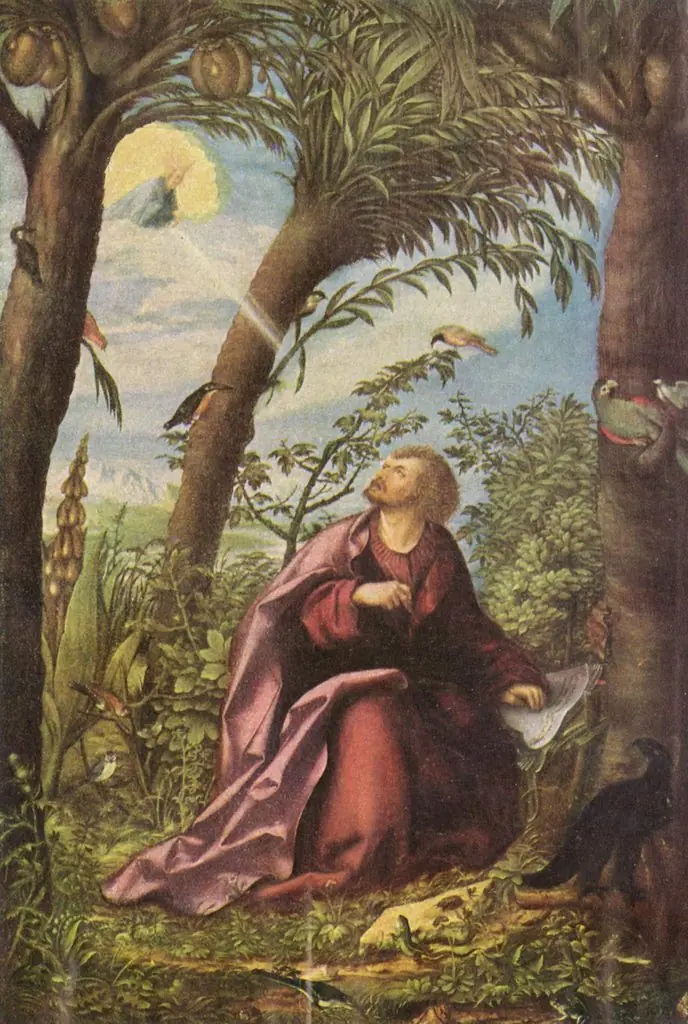
Hans Burgkmair the Elder (1473–1531) was a German artist, born in Augsburg.

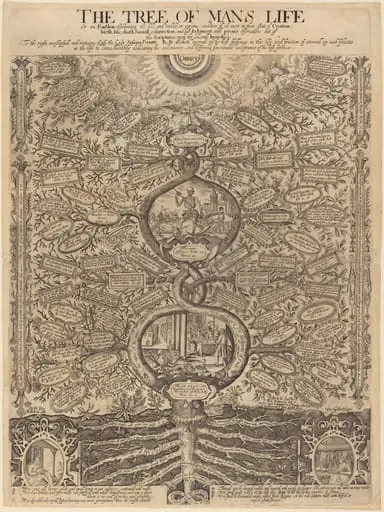 The Tree of Man's Life
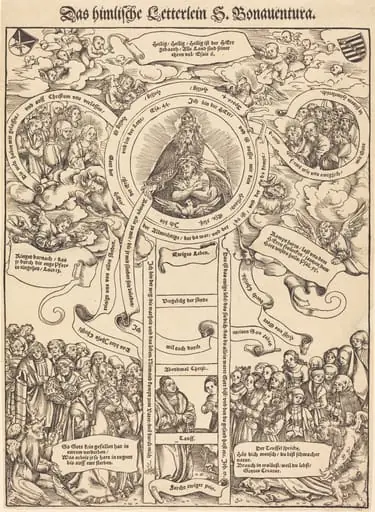 The Celestial Ladder of Saint Bonaventura
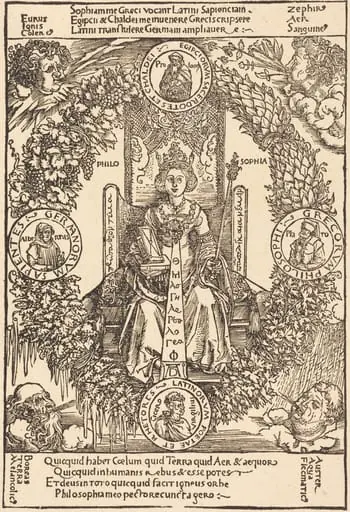 Philosophy
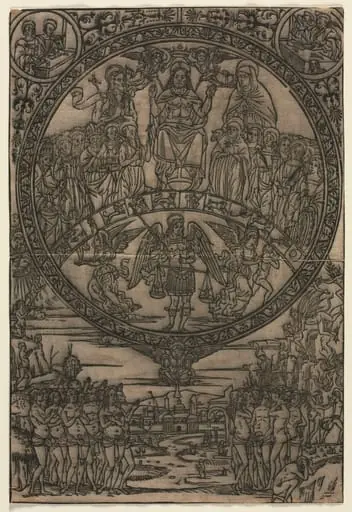 The Last Judgment in the Presence of the Saints and the Archangel Michael
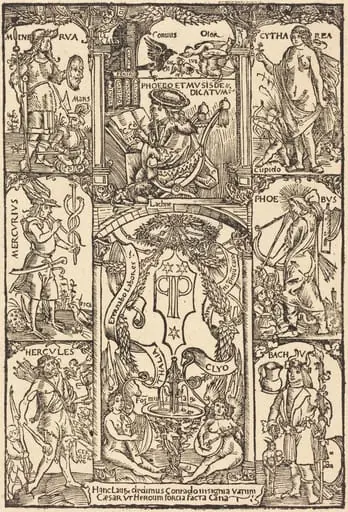 Celtes Surrounded by Greek and Roman Gods
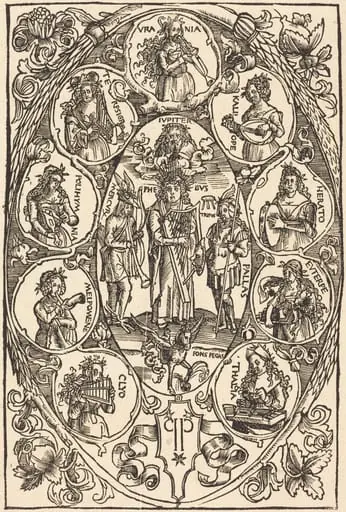 Apollo and the Muses
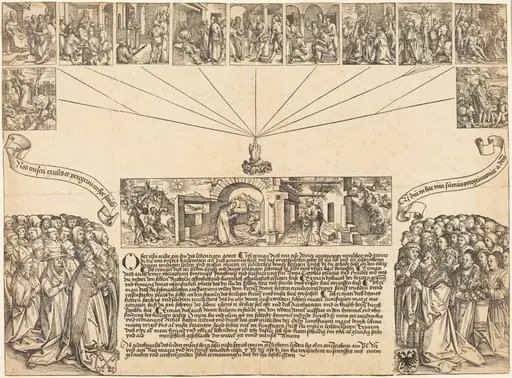 The Nativity and Passion of Christ
 Ornamental Panel Inscribed "Victoria Augusta"
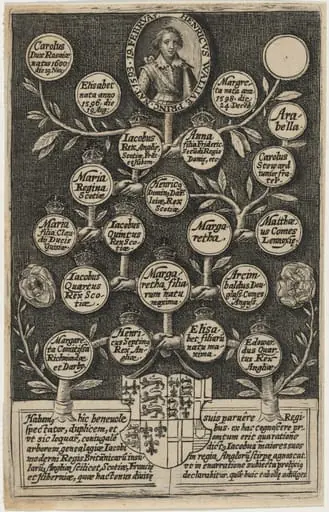 Henry Frederick, Prince of Wales
 Grotesque with Strapwork in the Form of a Cartouche
![The Triumphal Chariot of Maximilian I (The Great Triumphal Car) [plate 1 of 8], by Albrecht Dürer](https://artifactworldgallery.com/img/albrecht-durer--the-triumphal-chariot-of-maximilian-i-the-great-triumphal-ca--4840429519ebb12d-w320.webp) The Triumphal Chariot of Maximilian I (The Great Triumphal Car) [plate 1 of 8]
The Triumphal Chariot of Maximilian I (The Great Triumphal Car) [plate 1 of 8] Ornament with Flower and Eight Wild Folk