Artwork
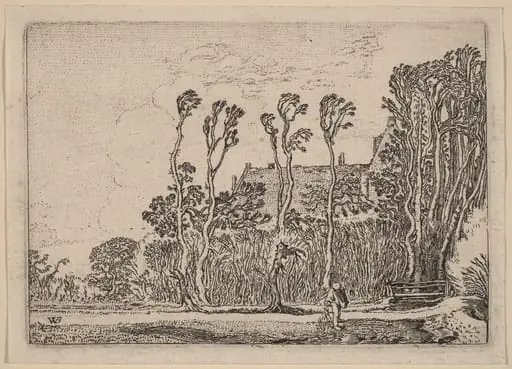
Two Plank Hedges
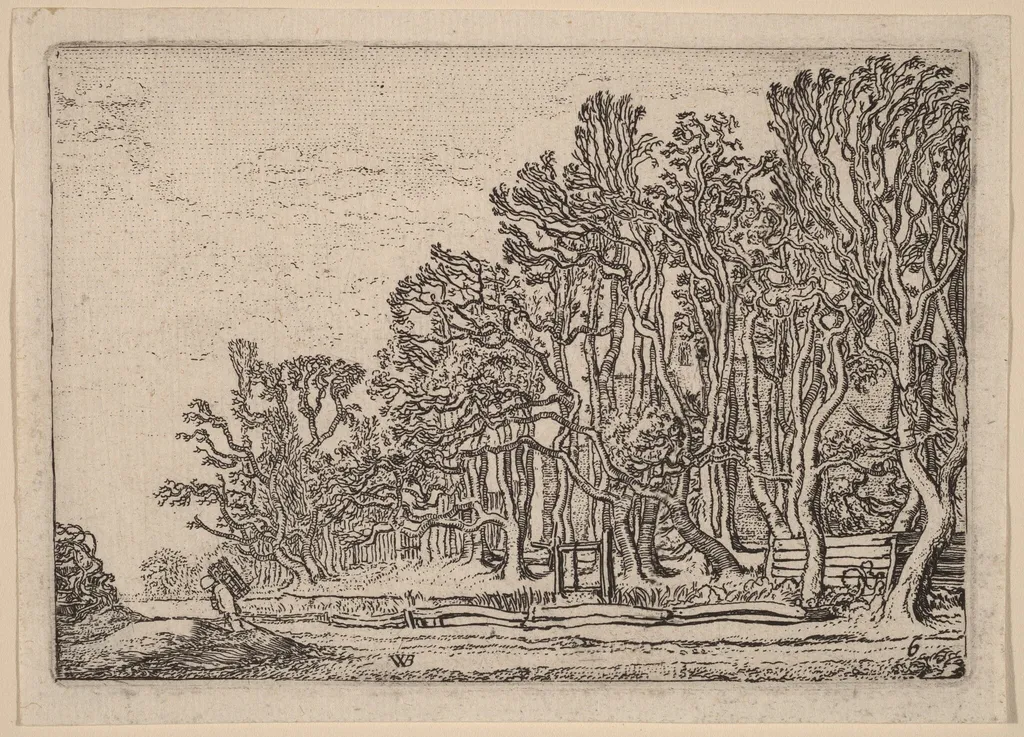
Two Plank Hedges is an ink print by the Baroque artist Willem Buytewech. It dates from 1621 and is held in the collection of the National Gallery of Art.
About this work
Overview
Two Plank Hedges is an early‑17th‑century etching executed by Dutch artist Willem Buytewech in 1621. The work presents a modest countryside scene, dominated by two wooden fences that frame a shallow vista of trees and sky. The composition balances a taller, more pronounced hedge on the right with a shorter, less detailed one on the left, establishing a simple yet structured landscape.
Subject & Meaning
The image depicts a rural setting where the two plank hedges serve as both physical barriers and visual anchors, guiding the viewer’s eye toward the distant foliage and cloud‑filled heavens. The juxtaposition of the robust right hedge against the modest left suggests a subtle narrative of contrast—perhaps alluding to differing levels of human intervention within the natural environment.
Technique & Style
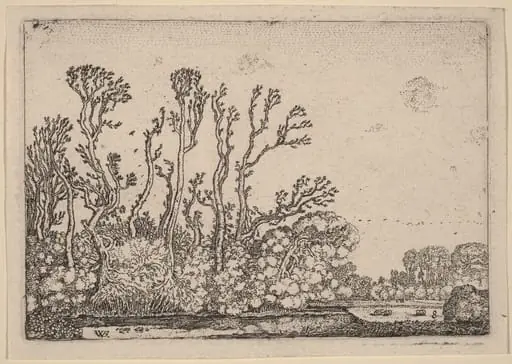
Buytewech employs the etching medium to vary line weight and texture across the scene. Thick, rough strokes define the wooden planks, imparting a tactile sense of timber, while finer, delicate lines render the trees, creating a sense of atmospheric distance. The sky is filled with soft, feathery cloud forms, achieved through light cross‑hatching that softens the background and enhances depth.
History & Provenance
Created in 1621, Two Plank Hedges belongs to the early period of Buytewech’s printmaking career, a time when he was exploring landscape motifs alongside genre scenes. While the etching is catalogued in several collections of Dutch prints, its specific ownership trail prior to the modern era remains undocumented, and it is not currently listed in the holdings of major institutions such as the National Gallery of Art.
Context
The emphasis on simple rural architecture aligns with contemporary interests in depicting the Dutch landscape’s modest, cultivated spaces.
The work emerges from the Dutch Golden Age, when artists increasingly turned to everyday countryside subjects. Buytewech, better known for his lively genre paintings, applied his compositional skill to printmaking, reflecting the period’s growing market for affordable artworks. The emphasis on simple rural architecture aligns with contemporary interests in depicting the Dutch landscape’s modest, cultivated spaces.
Artist & collection


 The Sower
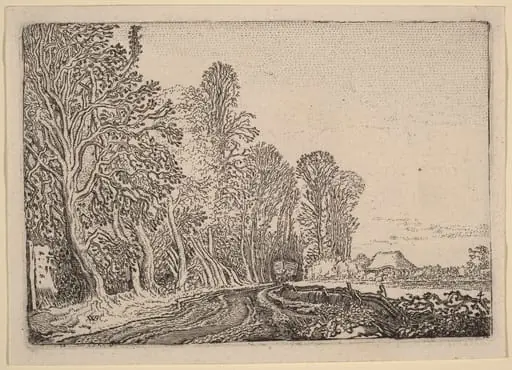 Road at the Edge of the Forest
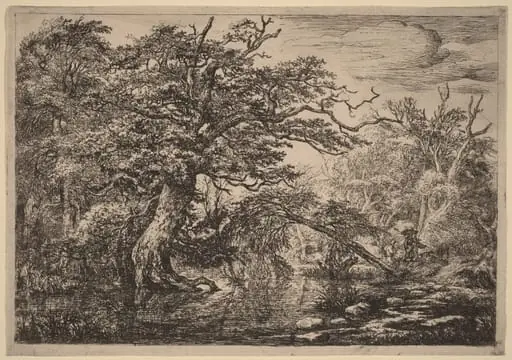 A Forest Marsh with Travelers on a Bank (The Travelers)
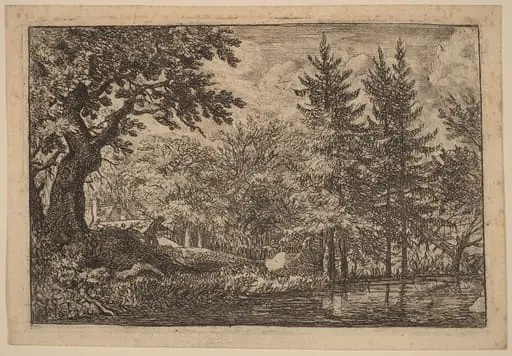 Fir Trees at the Water
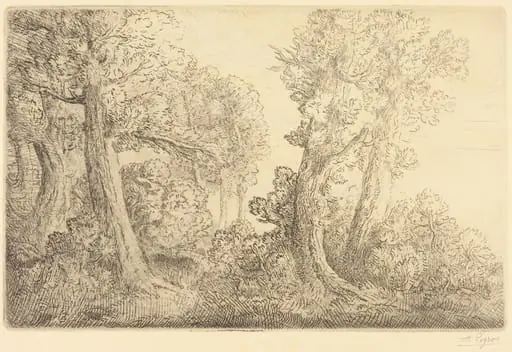 Near the Woods, Veronne (Pres du bois, Veronne)
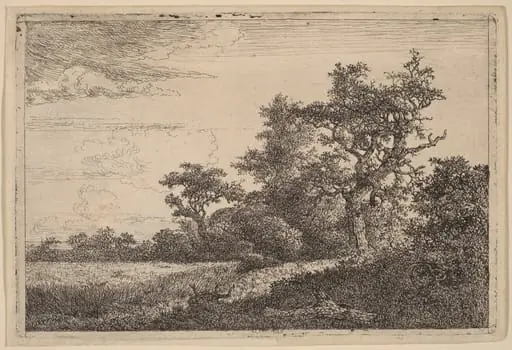 Grain Field at the Edge of a Wood (Corn Field)
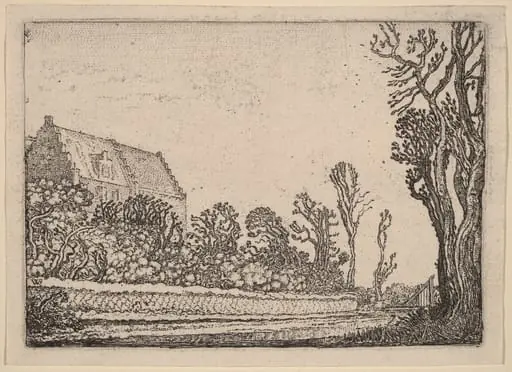 The House with the Stepped Gable
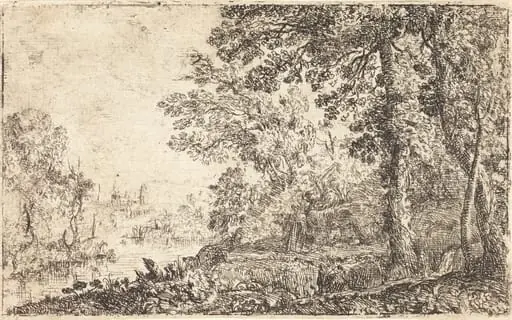 The Vision (L'apparition)
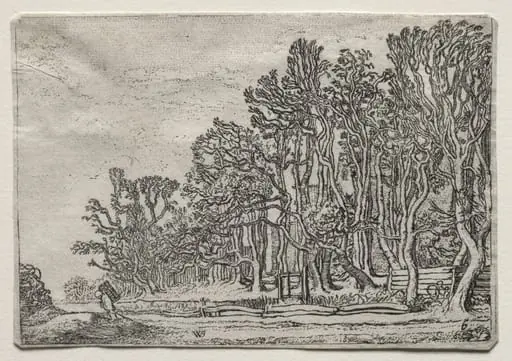 The Set of the Landscapes: Two Plank-Hedges
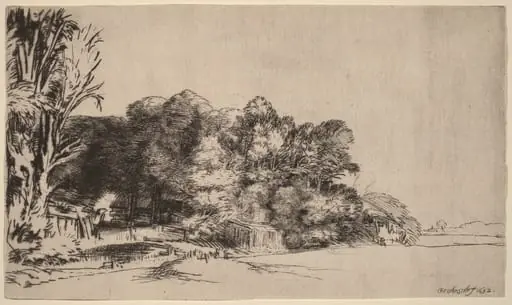 Clump of Trees with a Vista