Artwork
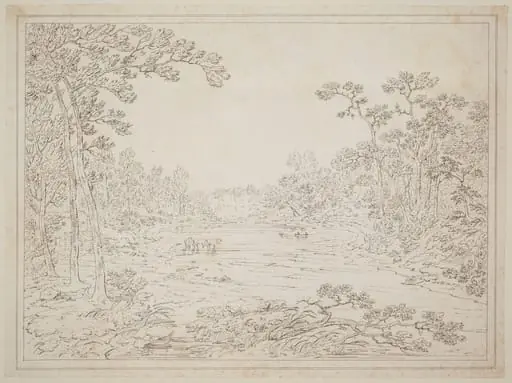
Woodland Pond with a Fisherman
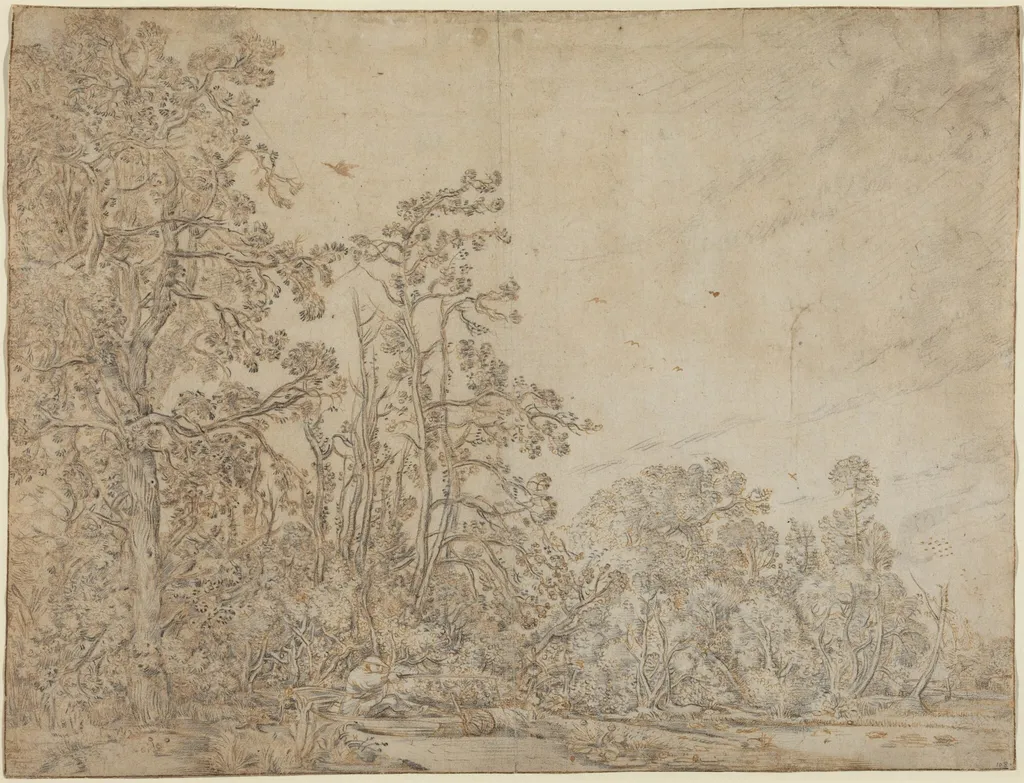
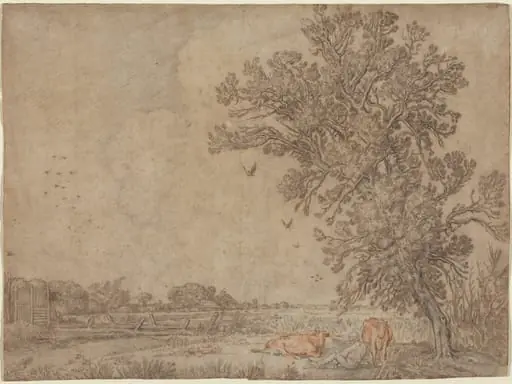
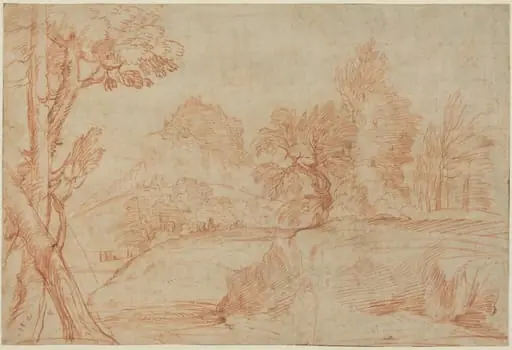
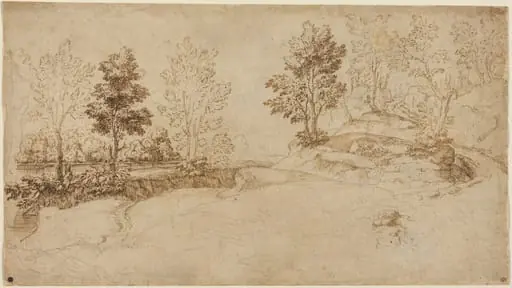
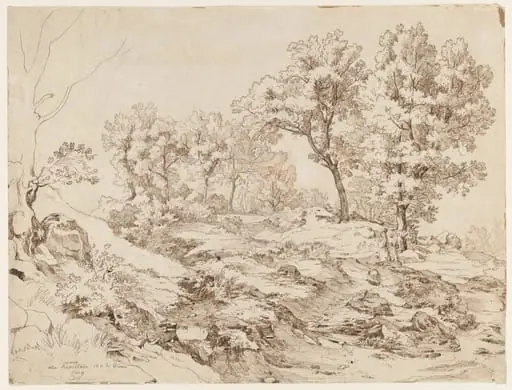
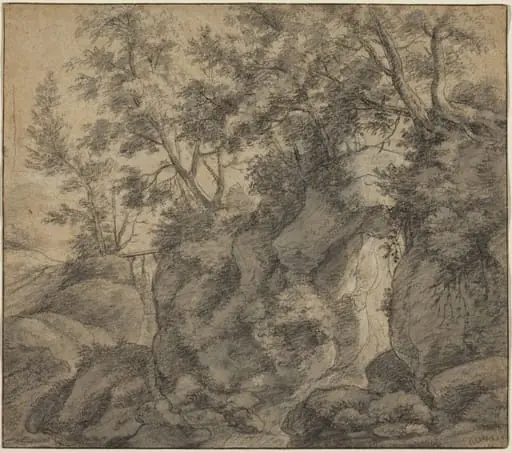
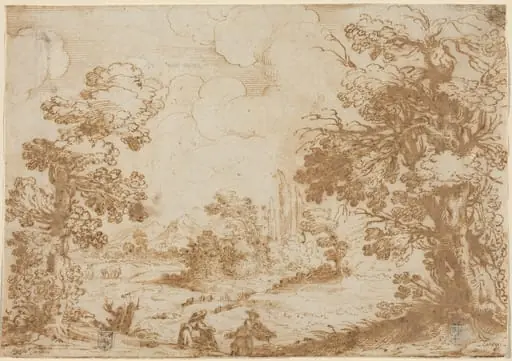
Woodland Pond with a Fisherman is a chalk drawing by the Baroque artist Willem Buytewech. It dates from 1617 and is held in the collection of the National Gallery of Art.
About this work
Overview
The composition centers on the figure seated by the water, framed by dense foliage that recedes into the background.
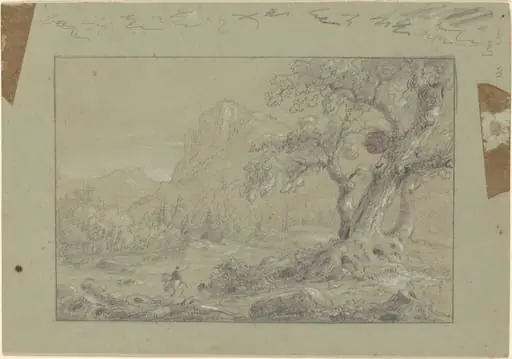
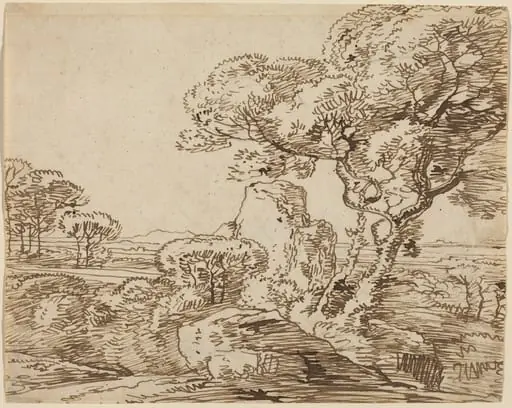
Created around 1617 by Willem Buytewech, this drawing depicts a quiet woodland pond with a solitary fisherman. Executed in black chalk and brown ink on laid paper, it captures a moment of stillness in nature. The composition centers on the figure seated by the water, framed by dense foliage that recedes into the background. The medium’s subtle tonal range enhances the quiet, intimate mood of the scene.
Subject & Meaning
The fisherman, seated quietly beside the pond, embodies a contemplative engagement with the natural world. His stillness contrasts with the implied movement of water and wind through the trees. Rather than emphasizing labor or abundance, the scene suggests a moment of pause, possibly reflecting contemporary Dutch ideals of harmony with nature and modest rural life.
Technique & Style
Buytewech employed black chalk for soft, fluid contours and brown ink for sharper details and shading. The layered application creates a sense of depth through gradations of tone, with delicate hatching defining foliage and water’s edge. The absence of color focuses attention on texture and light, aligning with Northern European drawing traditions that valued tonal nuance over bold color.
History & Provenance
The drawing is attributed to Buytewech’s early period, likely made during his time in Haarlem or Rotterdam. It survives as part of a broader corpus of his graphic work, though its specific provenance before the 20th century remains undocumented. Its preservation reflects its recognition as a refined example of early 17th-century Dutch draftsmanship.
Context
Produced during the Dutch Golden Age, the work aligns with a growing interest in landscape and everyday rural life. While not overtly religious or allegorical, it resonates with the period’s secular appreciation for nature’s quiet rhythms. Similar themes appear in the drawings of contemporaries like Jan van Goyen, though Buytewech’s approach is more intimate and less expansive.
Legacy
This drawing exemplifies the quiet precision of Dutch graphic art in the early Baroque era. Though Buytewech is better known for his genre scenes and etchings, this work illustrates his sensitivity to natural detail and atmospheric tone. It contributes to the broader understanding of how landscape drawing evolved as an independent art form in the Netherlands.
Artist & collection