Artwork
Tablou, ulei pe pânză, „Nicolae Ceaușescu, întâiul președinte al României”, semnat C.Aurel și datat 1974 în partea dreaptă jos. Nicolae Ceaușescu purtând banderolă tricoloră cu stema R.S.R., stând la balcon primind ovații din partea oamenilor muncii adunați într-o piață. În spatele său, steagul cu sigla PCR. Tablou oferit de către autor originar din Câmpina (Prahova), 19 august 1974.
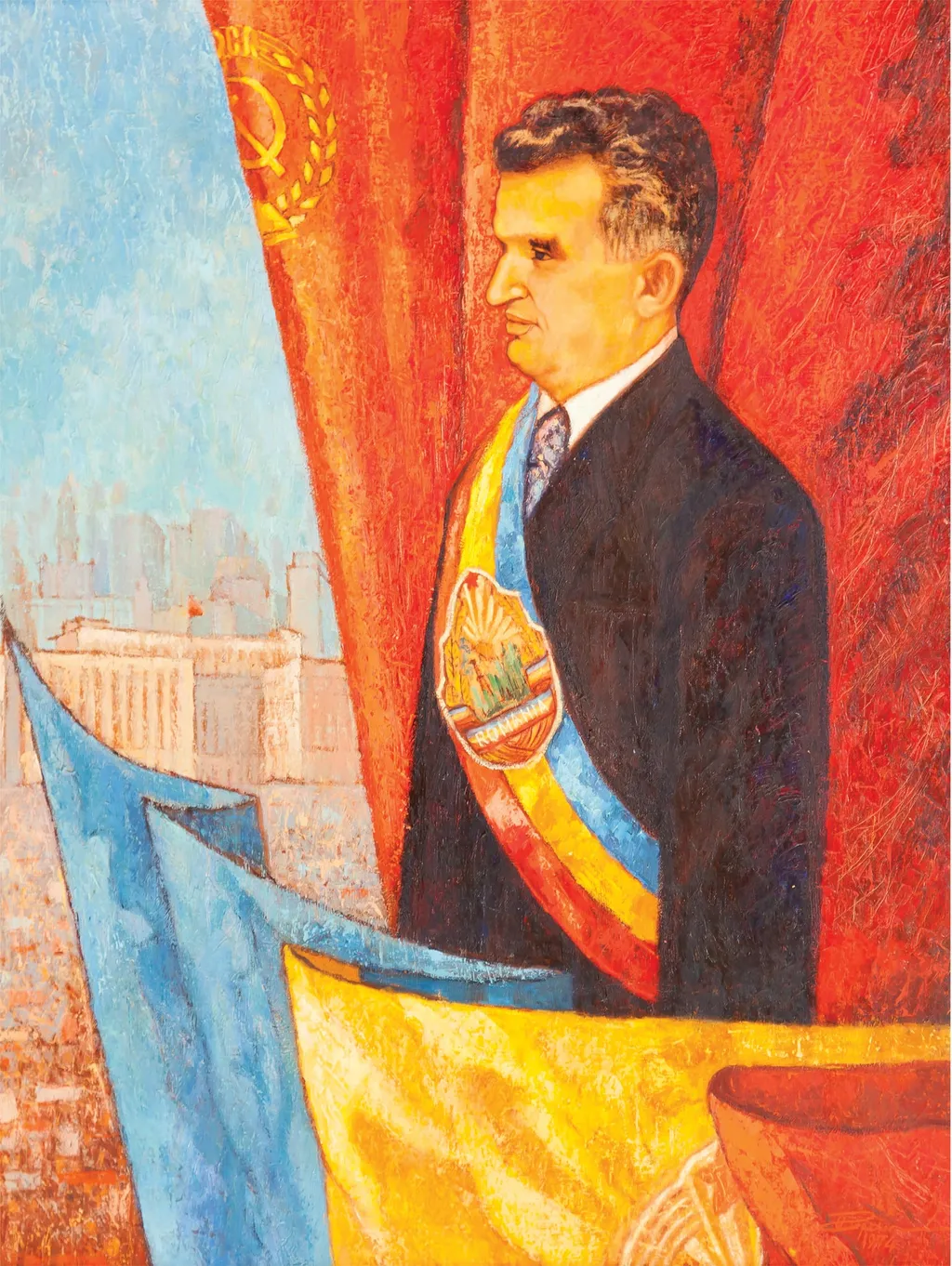
Tablou, ulei pe pânză, „Nicolae Ceaușescu, întâiul președinte al României”, semnat C.Aurel și datat 1974 în partea dreaptă jos. Nicolae Ceaușescu purtând banderolă tricoloră cu stema R.S.R., stând la balcon primind ovații din partea oamenilor muncii adunați într-o piață. În spatele său, steagul cu sigla PCR. Tablou oferit de către autor originar din Câmpina (Prahova), 19 august 1974. is a print by C.Aurel. It is held in the collection of the National Museum of Romanian History. A 1974 oil on canvas portrait by C.
About this work
Overview
Aurel depicts Nicolae Ceaușescu standing on a balcony, clad in a black suit and bearing the tricolor sash of the Romanian Socialist Republic.
A 1974 oil on canvas portrait by C. Aurel depicts Nicolae Ceaușescu standing on a balcony, clad in a black suit and bearing the tricolor sash of the Romanian Socialist Republic. Behind him, a red curtain displays the Communist Party emblem, while a blue flag hangs to the side. The scene captures a moment of public acclaim, with an unseen crowd below offering applause. Signed and dated in the lower right, the work was donated by the artist on August 19, 1974.
Subject & Meaning
The painting presents Ceaușescu as a figure of state authority, positioned centrally on a balcony to symbolize his connection with the working masses. The tricolor sash and party emblem reinforce state ideology, while the absence of specific crowd details universalizes the scene as a ritual of loyalty. The composition frames him as both leader and recipient of collective adulation, aligning with the regime’s cultivated image of popular support.
Technique & Style
The artist employs bold, flat areas of color with minimal texture to convey formality and monumentality. Lighting is even, avoiding dramatic shadows, which flattens spatial depth and emphasizes symbolic clarity. The profile view of Ceaușescu, combined with rigid posture and stylized drapery, reflects the conventions of socialist realism, prioritizing ideological clarity over psychological nuance.
History & Provenance
Painted in 1974 by C. Aurel, a native of Câmpina in Prahova County, the work was donated to its current holder on August 19 of that year. Its creation coincided with Ceaușescu’s consolidation of power and the intensification of personality cult imagery. No record of prior exhibition or ownership exists beyond the artist’s direct transfer, suggesting it was produced for institutional or ceremonial use.
Context
Created during a period of heightened state propaganda, the painting aligns with official visual norms that portrayed Ceaușescu as a paternal, unifying figure. Balcony scenes were common in socialist iconography, linking leaders to mass mobilization. The use of national symbols—flag, coat of arms, party emblem—served to fuse patriotism with party loyalty, reinforcing the regime’s narrative of unity and continuity.
Legacy
The painting remains a documented artifact of Romania’s communist visual culture, representative of state-commissioned portraiture designed to legitimize authority. It is not widely exhibited today but persists in archival collections as evidence of how imagery was deployed to sustain political mythmaking. Its stylistic conventions reflect broader trends in Eastern Bloc art of the era.
Artist & collection
Artist
This painter made a single large portrait of Nicolae Ceaușescu in 1974, shown on a balcony draped in red, yellow, and blue while crowds below cheer.

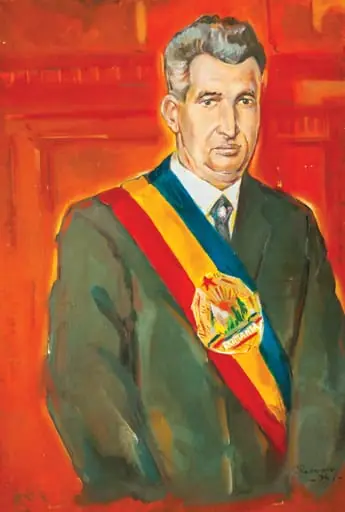 Tablou, ulei pe pânză, Nicolae Ceaușescu, semnat C.Radovan și datat 1974 în partea dreaptă jos. Nicolae Ceaușescu este prezentat într-o atitudine mirat deranjată. Tablou oferit cadou lui Nicolae Ceaușescu de către autor, Ciprian Radovan, București.
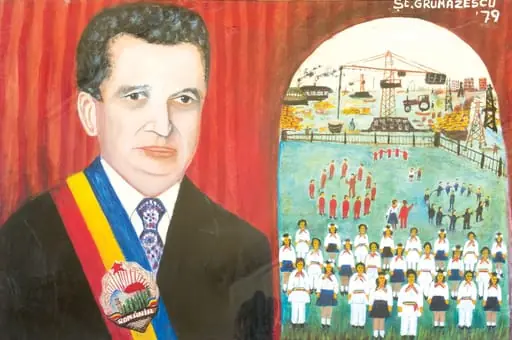 Tablou, ulei pe pânză, Nicolae Ceaușescu și copii, semnat și datat în partea dreaptă sus Șt. Grumăzescu, 1979. Nicolae Ceaușescu este prezentat în partea stângă urmărind o festivitate - pionieri, copii dansând în horă. Maniera de realizare a tabloului este una naivă. Oferit de Ștefan Grumăzescu din București.
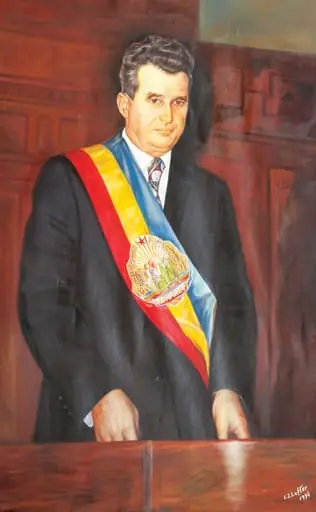 Tablou, ulei pe pânză, ”Portret Nicolae Ceaușescu”, semnat C.I. Lefter și datat 1974 în partea dreaptă jos. Reprezentat într-un cadru oficial în spatele unui pupitru, Nicolae Ceaușescu purtând eșarfa cu stema RSR. Oferit lu Nicolae Ceaușescu de Comitetul de Partid Sănătatea, cu ocazia zilei de naștere, ianuarie 1978.
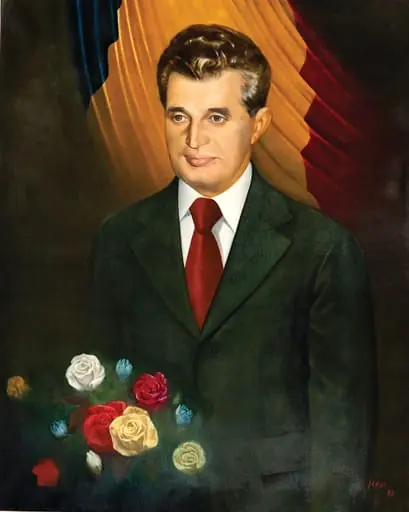 Tablou ulei pe pânză, portret Nicolae Ceaușescu semnat Ispas și datat în partea dreaptă jos. Este prezentat într-o postură solemnă cu un buchet de trandafiri, în spatele său tricolorul. Culorile drapelului se regăsesc și în coloritul trandafirilor. Comandat de Comitetul Județean de Partid Alba (1983).
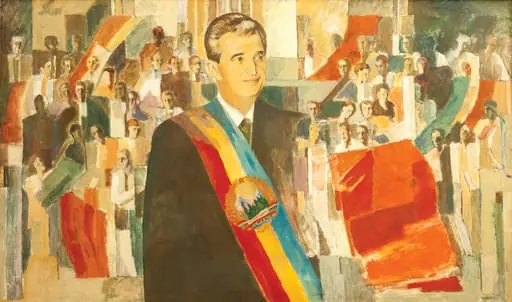 Tablou, tempera pe pânză, „Ceaușescu și Poporul” semnat Grigorian Rusu datat 1982 în partea dreaptă jos. Nicolae Ceaușescu este prezentat în prim plan, cu bandă tricoloră, în fundal sunt reprezentați oamenii muncii. Comandat și oferit de Comitetul Județean de Partid Dolj (1982).
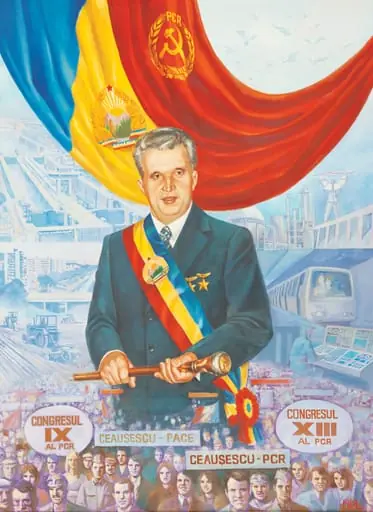 Tablou, ulei pe pânză, ”Ctitorul României Socialiste”, nesemnat, atribuit lui V.Tănase. Tabloul îl prezintă pe Nicolae Ceaușescu în prim plan purtând toate însemnele funcției: eșarfa tricoloră, sceptrul prezidențial, două însemne de ”Erou al Republicii Socialiste România”. În partea de sus a tabloului este redat steagul RSR unit cu steagul PCR. În partea de jos, poporul, oamenii muncii purtând pancarte cu ”Ceaușescu Pace”, ”Ceaușescu PCR”, ”Congresul IX al PCR” (alegerea lui Nicolae Ceaușescu în fruntea partidului), ”Congresul XII al PCR” (realegerea în fruntea partidului). Pe fundal sunt redate realizările socialismului: Canalul Dunăre Marea Neagră, Barajul Vidraru, metroul etc. Tablou comandat de Ministerul Apărării Nașionale (1985).
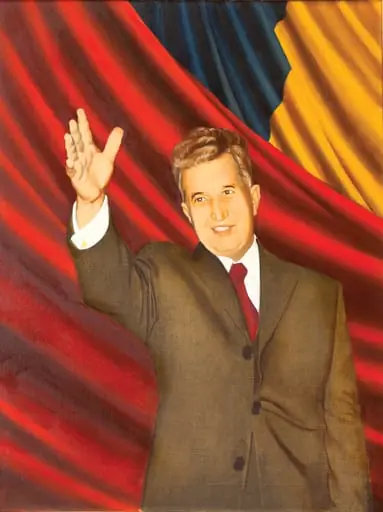 Tablou, ulei pe pânză, „Salutul președintelui”, atribuit lui Viorel Toma, nedatat. Nicolae Ceaușescu este reprezentat în centrul tabloului salutând, pe fundal steagul PCR și cel al RSR. Comandat și oferit de Comitetul Județean de Partid Timiș (1985).
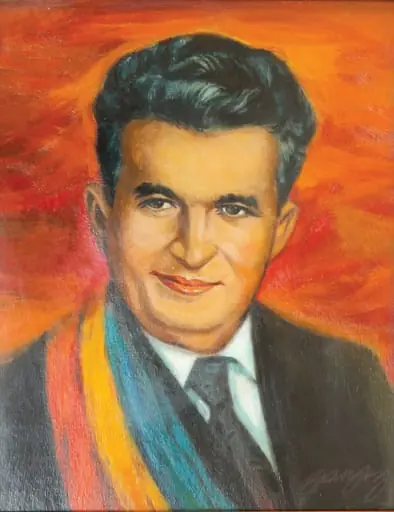 Tablou, „Portret Nicolae Ceaușescu”, semnat Barany în partea dreaptă jos, nedatat. Tabloul prezintă portretul lui Nicolae Caușescu cu banderolă tricoloră pe un fundal roșu - oranj. Comandat și oferit de Comitetul Județean de Partid Arad cu ocazia unei aniverări.
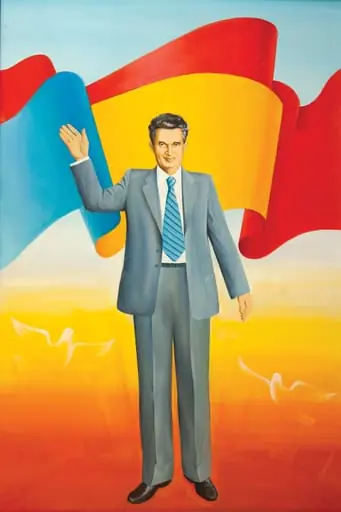 Tablou „ Ceaușescu Pace”, semnat M. Ceacîru și datat dreapta jos. Tabloul îl prezintă pe Nicolae Ceaușescu salutând, în spatele său flutură tricolorul și stegul PCR, în stânga și în dreapta sa doi porumbei albi în zbor.Comandat de Comitetul Județean de Partid Neamț (1989)
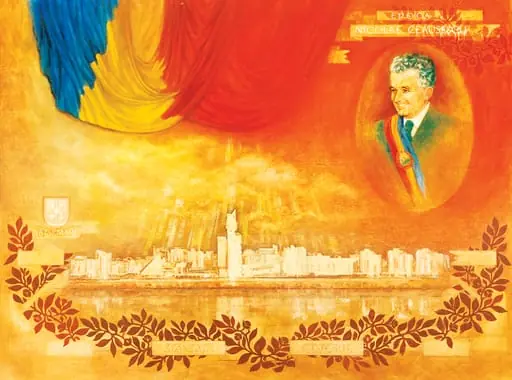 Tablou, ulei pe pânză, „Epoca Ceaușescu – Omagiu” semnat A. Cordea și datat 1986 în partea dreaptă jos. Tabloul îl prezintă pe Nicolae Ceaușescu în medalion dreapta sus privind zâmbitor la orașul Satu Mare scăldat de lumina soarelui, soarele reprezentat de tricolor și steagul PCR. Deasupra medalionului este notat cu majuscule ”EPOCA NICOLAE CEAUȘESCU”. În partea stângă stema județului Satu Mare. În partea de jos o ghirlandă, printre ramurile ei mesajul ”MĂREAȚĂ CTITORIE”. Comandat de Comitetul Județean de Partid Satu Mare (1986)
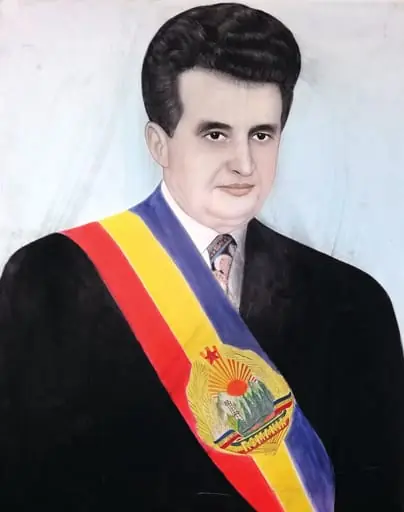 Tablou, acuarelă pe carton, ”Nicolae Ceaușescu la alegerea ca președinte”, nesemnat, atribuit lui Constantin Z. Bolovan. Portretul este realizat într-o manieră naivă, proporțiile personajului sunt puțin supradimensionate, Nicolae Ceaușescu este reprezentat cu eșarfa tricoloră cu stema RSR. Oferit de Constantin Z. Bolovan, Iași, 1978.
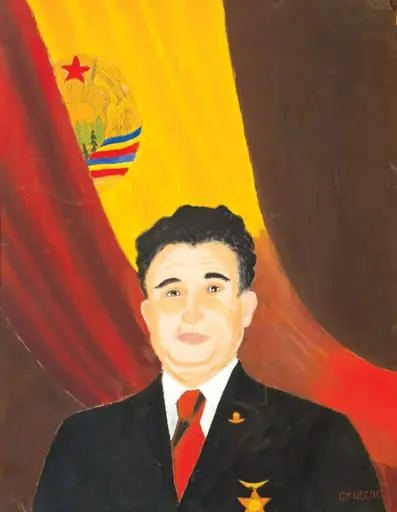 Tablou, ulei pe carton, ”Nicolae Ceaușescu”, semnat Gh. Nechita în partea dreaptă jos. Nicolae Ceaușescu este prezentată cu o figură veselă, în piept are însemnul de ”Erou al Republicii Socialiste România. În spatele său s-a vrut a fii reprezentat steagul cu stema RSR, numai ca, nu există culoarea albastru ea fiind înlocuită de culoarea maro. Oferit lui Nicolae Ceaușescu de către autor Gheorghe Nechita din Baia Mare, 26 ianuarie 1976.
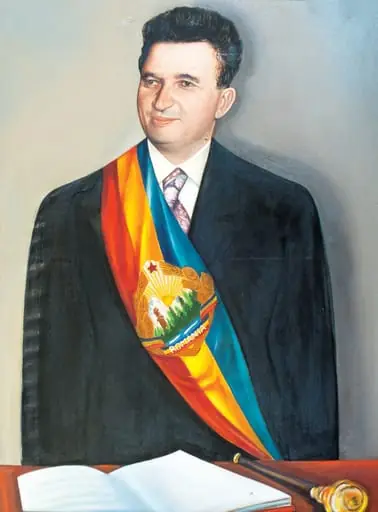 Tablou, ulei pe pânză, ”Portret Nicolae Ceaușescu”, nesemnat, atribui lui Nicolae Toma. Oferit de autor, cu ocazia zilei de naștere a lui Nicolae Ceaușescu, Ploiești, ianuarie 1978.
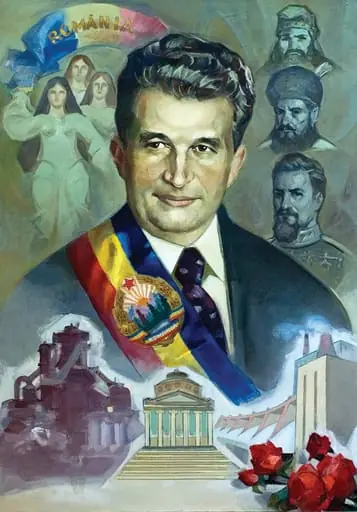 Portret Nicolae Ceaușescu, tablou nesemnat. Comadat de Ministerul de Interne, 1985. Autorul îl prezintă -pe Nicolae Ceaușescu alături de Burebista, Mihai Viteazul și Alexandru Ioan Cuza. În partea de jos a tabloului sunt prezentate alături de Atheneul Român realizările economice ale socialismului.
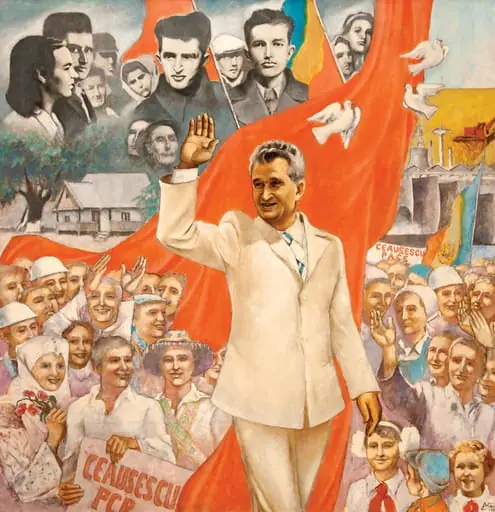 Tablou „Eroul României Socialiste” , semnat și datat în dreapta jos ”Constantin Nițescu 1988”. Comandat de Comitetul Județean de Partid Olt și oferit cadou lui Nicolae Ceaușescu la împlinirea vârstei de 70 de ani (ianuarie 1988).