Artwork
Tablou „ Ceaușescu Pace”, semnat M. Ceacîru și datat dreapta jos. Tabloul îl prezintă pe Nicolae Ceaușescu salutând, în spatele său flutură tricolorul și stegul PCR, în stânga și în dreapta sa doi porumbei albi în zbor.Comandat de Comitetul Județean de Partid Neamț (1989)
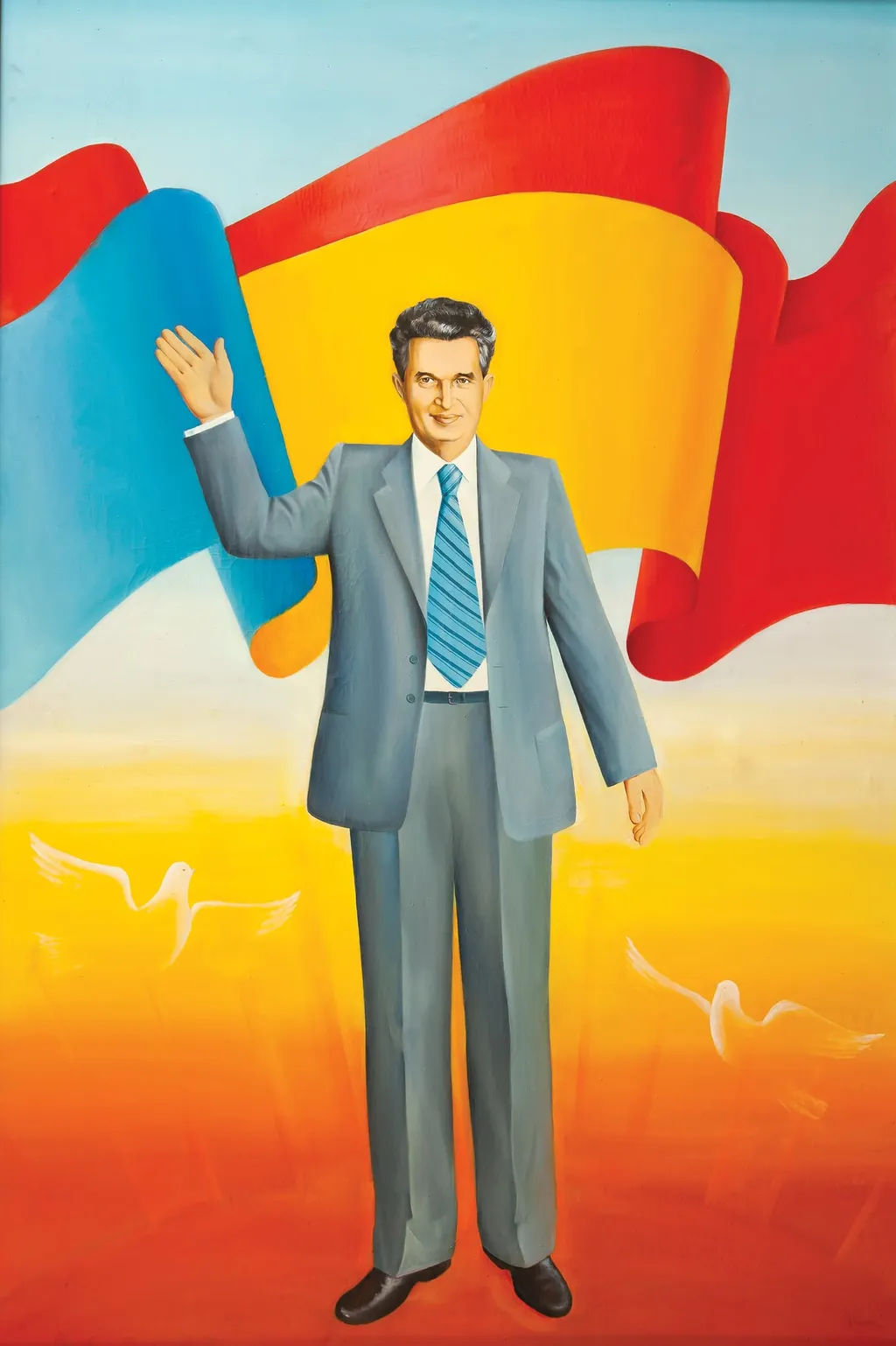
Tablou „ Ceaușescu Pace”, semnat M. Ceacîru și datat dreapta jos. Tabloul îl prezintă pe Nicolae Ceaușescu salutând, în spatele său flutură tricolorul și stegul PCR, în stânga și în dreapta sa doi porumbei albi în zbor.Comandat de Comitetul Județean de Partid Neamț (1989) is a print by M. Ceacîru. It is held in the collection of the National Museum of Romanian History. Tablou „Ceaușescu Pace” depicts Nicolae Ceaușescu in a gesture of salutation, set against a backdrop of symbolic elements.
About this work
Overview
Tablou „Ceaușescu Pace” depicts Nicolae Ceaușescu in a gesture of salutation, set against a backdrop of symbolic elements. The work, signed by M. Ceacîru and dated 1989, captures the former Romanian leader with two white doves in flight beside him and the flags of Romania and the Romanian Communist Party (PCR) waving behind.
Subject & Meaning
Nicolae Ceaușescu is the central figure, portrayed in a gray suit and blue tie, waving with his right hand.
Nicolae Ceaușescu is the central figure, portrayed in a gray suit and blue tie, waving with his right hand. The composition includes potent symbols: the Romanian tricolor and the PCR flag signify national and political allegiance, while the two white doves, flying low on either side, likely represent peace or hope, motifs commonly employed in official communist-era art to convey ideological messages.
Technique & Style
The painting features vibrant colors, notably the bright hues of the flags, which dominate the background. The style aligns with the representational and often propagandistic art common during the communist regime, emphasizing clarity of message over avant-garde techniques. The brushwork and overall execution suggest a focus on conveying political symbolism rather than exploring innovative artistic expressions.
History & Provenance
Commissioned by the Neamț County Party Committee in 1989, the year preceding Ceaușescu's overthrow and execution, the painting reflects the regime's late efforts to bolster its image through art. The work's current location is not specified in the provided details, though similarities with pieces in the Museum of Ethnography are noted.
Context
Created on the eve of the Romanian Revolution, the painting encapsulates the communist regime's propaganda efforts. It blends national and party symbols with universal symbols of peace, reflecting the dual messaging often used by communist regimes to project both internal control and external openness.
Legacy
While not individually renowned, the painting represents a category of communist-era art that has gained interest for its historical and sociopolitical insights rather than purely aesthetic value. Such works are valued today for the window they provide into the propaganda and ideological narratives of the time.
Artist & collection
Artist
M. Ceacîru spent 1989 painting a life-size portrait of Ceaușescu mid-wave, flocks of doves frozen in flight behind him like bad Photoshop. The canvas measures 120 by 80 cm and still exists in Iași city hall—ask the…

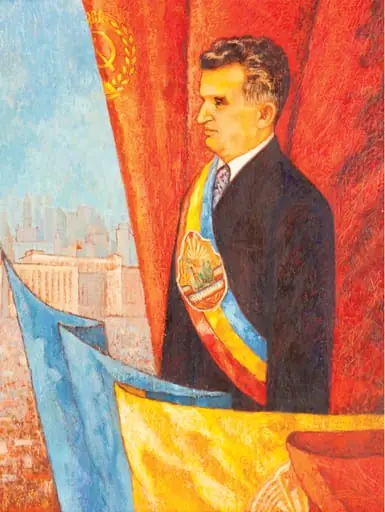 Tablou, ulei pe pânză, „Nicolae Ceaușescu, întâiul președinte al României”, semnat C.Aurel și datat 1974 în partea dreaptă jos. Nicolae Ceaușescu purtând banderolă tricoloră cu stema R.S.R., stând la balcon primind ovații din partea oamenilor muncii adunați într-o piață. În spatele său, steagul cu sigla PCR. Tablou oferit de către autor originar din Câmpina (Prahova), 19 august 1974.
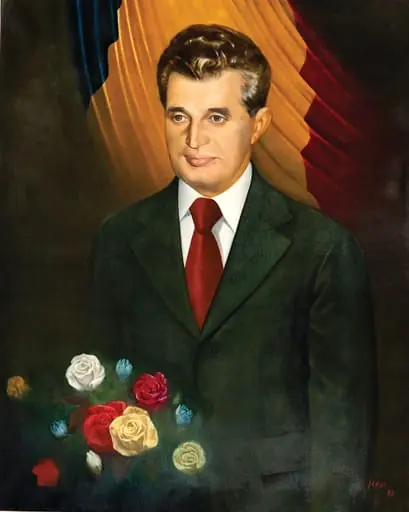 Tablou ulei pe pânză, portret Nicolae Ceaușescu semnat Ispas și datat în partea dreaptă jos. Este prezentat într-o postură solemnă cu un buchet de trandafiri, în spatele său tricolorul. Culorile drapelului se regăsesc și în coloritul trandafirilor. Comandat de Comitetul Județean de Partid Alba (1983).
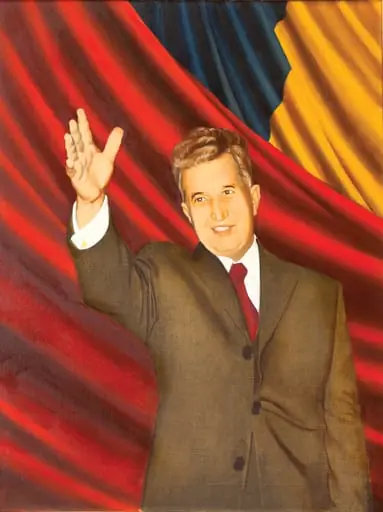 Tablou, ulei pe pânză, „Salutul președintelui”, atribuit lui Viorel Toma, nedatat. Nicolae Ceaușescu este reprezentat în centrul tabloului salutând, pe fundal steagul PCR și cel al RSR. Comandat și oferit de Comitetul Județean de Partid Timiș (1985).
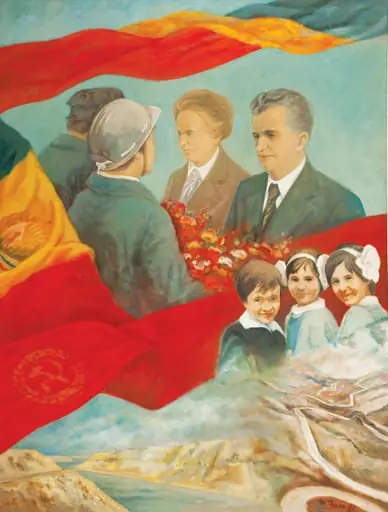 Tablou „Omagiul Președintelui Țării”, ulei pe pânză; semnat Gheorghe Pogan și datat în partea dreaptă jos. Tabloul îi prezintă pe soții Ceaușescu întâmpinați cu flori de două personaje masculine (un miner și un petrolist), învăluiți de tricolor și steagul PCR. În dreapta lui Nicolae Ceaușescu (dreapta tabloului) trei elevi. Partea de jos a tabloului este completată cu reprezentarea Transfăgărășanului și a Canalului Dunăre - Marea Neagră. Comandat și oferit de Comitetul Județean de Partid Hunedoara (1988).
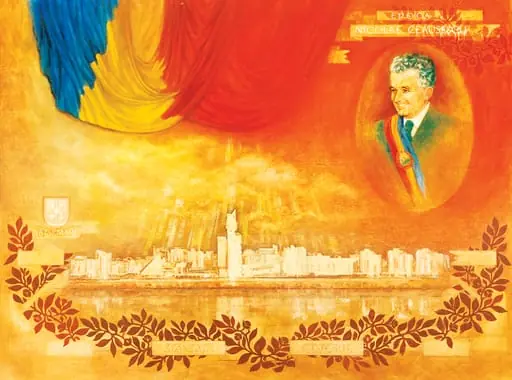 Tablou, ulei pe pânză, „Epoca Ceaușescu – Omagiu” semnat A. Cordea și datat 1986 în partea dreaptă jos. Tabloul îl prezintă pe Nicolae Ceaușescu în medalion dreapta sus privind zâmbitor la orașul Satu Mare scăldat de lumina soarelui, soarele reprezentat de tricolor și steagul PCR. Deasupra medalionului este notat cu majuscule ”EPOCA NICOLAE CEAUȘESCU”. În partea stângă stema județului Satu Mare. În partea de jos o ghirlandă, printre ramurile ei mesajul ”MĂREAȚĂ CTITORIE”. Comandat de Comitetul Județean de Partid Satu Mare (1986)
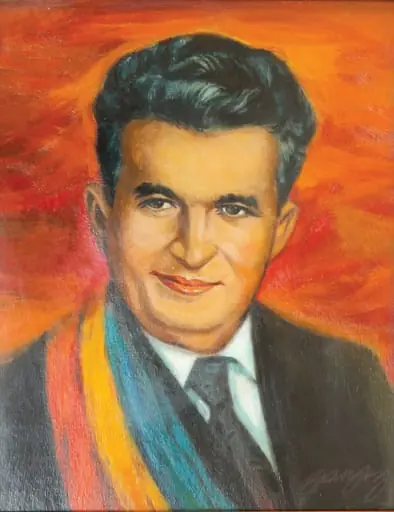 Tablou, „Portret Nicolae Ceaușescu”, semnat Barany în partea dreaptă jos, nedatat. Tabloul prezintă portretul lui Nicolae Caușescu cu banderolă tricoloră pe un fundal roșu - oranj. Comandat și oferit de Comitetul Județean de Partid Arad cu ocazia unei aniverări.
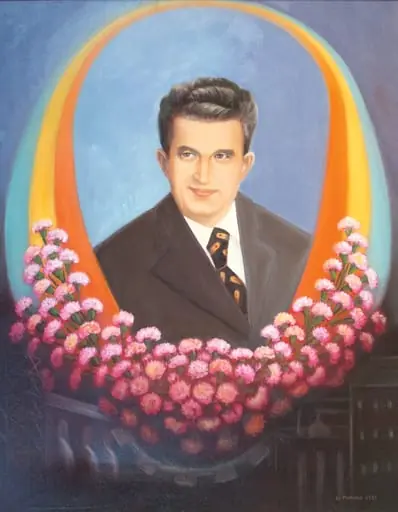 Tablou „Omagiu” semnat N. Porumb și datat în partea dreaptă jos. Tabloul îl reprezintă pe Nicolae Ceaușescu cu tricolorul în spate sub formă de curcubeu; în partea de jos a tabloului o ”mare” de garoafe și realizările socialismului. Comandat de Comitetul Județean de Partid Sibiu și dăruit lui Nicolae Ceaușescu cu ocazia zilie de naștere (ianuarie 1989).
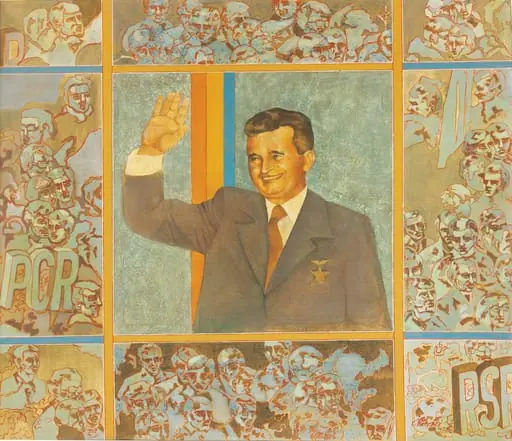 Tablou, ulei pe pânză, „Portret Nicolae Ceaușescu”, semnat în partea dreaptă jos C.Macavei și datat 1978. Tablou împărțit în mai multe registre, în plan central Nicolae Ceaușescu salutând oamenii muncii din celelalte registre. Comandat și oferit de Comitetul Județean de Partid Ilfov, 23 ianuarie 1978.
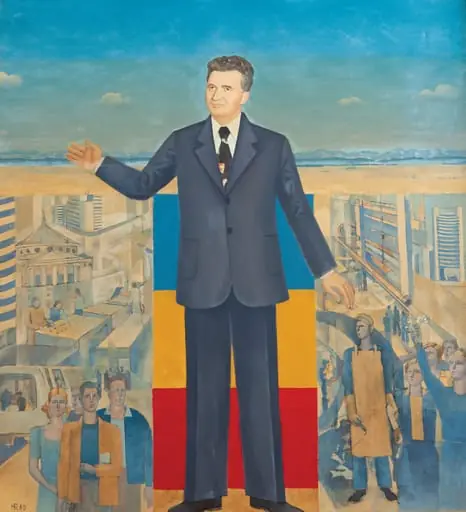 Tablou portret Nicolae Ceaușescu, semnat Mihai Rusu și datat în partea stângă jos. Tabloul îl reprezintă pe Nicolae Ceaușescu în postură salutară, în spatele său este tricolorul; în stânga și în dreapta tabloului sunt ilustrați oamenii miuncii din București. Comandat de Comitetul Municipal de Partid București în anul 1980 și oferit lui Nicolae Ceaușescu cu ocazia aniversării zilei de naștere (ianuarie 1981).
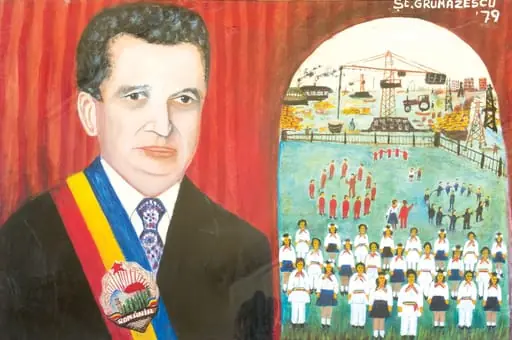 Tablou, ulei pe pânză, Nicolae Ceaușescu și copii, semnat și datat în partea dreaptă sus Șt. Grumăzescu, 1979. Nicolae Ceaușescu este prezentat în partea stângă urmărind o festivitate - pionieri, copii dansând în horă. Maniera de realizare a tabloului este una naivă. Oferit de Ștefan Grumăzescu din București.
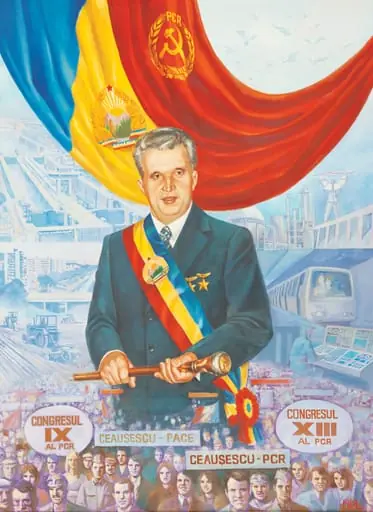 Tablou, ulei pe pânză, ”Ctitorul României Socialiste”, nesemnat, atribuit lui V.Tănase. Tabloul îl prezintă pe Nicolae Ceaușescu în prim plan purtând toate însemnele funcției: eșarfa tricoloră, sceptrul prezidențial, două însemne de ”Erou al Republicii Socialiste România”. În partea de sus a tabloului este redat steagul RSR unit cu steagul PCR. În partea de jos, poporul, oamenii muncii purtând pancarte cu ”Ceaușescu Pace”, ”Ceaușescu PCR”, ”Congresul IX al PCR” (alegerea lui Nicolae Ceaușescu în fruntea partidului), ”Congresul XII al PCR” (realegerea în fruntea partidului). Pe fundal sunt redate realizările socialismului: Canalul Dunăre Marea Neagră, Barajul Vidraru, metroul etc. Tablou comandat de Ministerul Apărării Nașionale (1985).
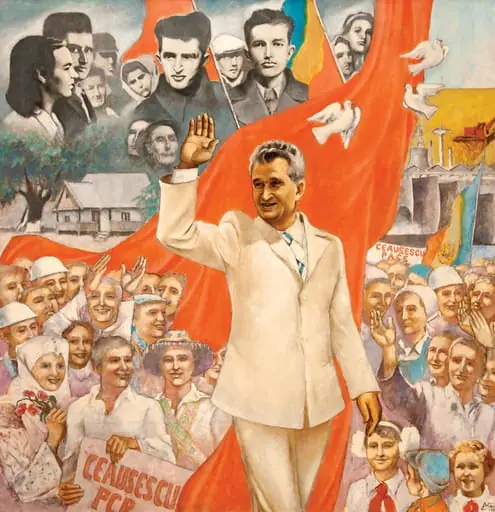 Tablou „Eroul României Socialiste” , semnat și datat în dreapta jos ”Constantin Nițescu 1988”. Comandat de Comitetul Județean de Partid Olt și oferit cadou lui Nicolae Ceaușescu la împlinirea vârstei de 70 de ani (ianuarie 1988).
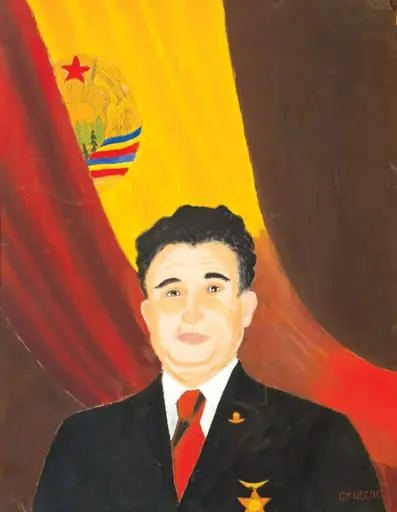 Tablou, ulei pe carton, ”Nicolae Ceaușescu”, semnat Gh. Nechita în partea dreaptă jos. Nicolae Ceaușescu este prezentată cu o figură veselă, în piept are însemnul de ”Erou al Republicii Socialiste România. În spatele său s-a vrut a fii reprezentat steagul cu stema RSR, numai ca, nu există culoarea albastru ea fiind înlocuită de culoarea maro. Oferit lui Nicolae Ceaușescu de către autor Gheorghe Nechita din Baia Mare, 26 ianuarie 1976.
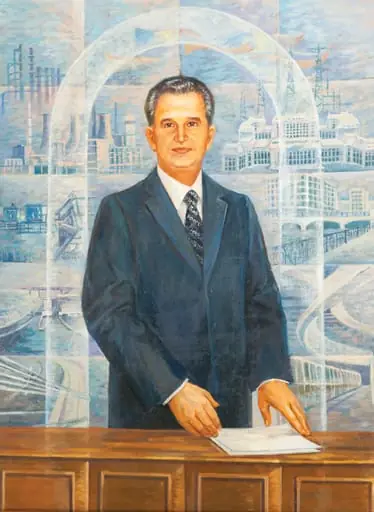 Tablou, „Epoca de aur”, atribuit Doina Catargiu. Tabloul îl prezintă pe Nicolae Ceaușescu într-un cadru oficial, la tribună. În spatele său marile realizări ale epocii sale: Casa Republicii, metroul, Canalul Dunăre - Marea Neagră, rafinării, combinate etc. Comandat și oferit de Comitetul Județean de Partid Suceava (1988).
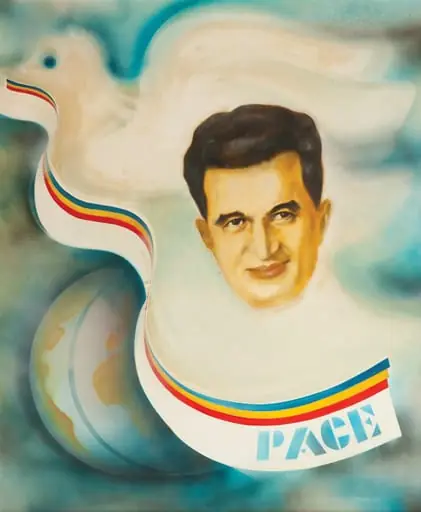 Tablou „Pentru pace, pentru fericirea popoarelor lumii” atribuit lui Simion Mărculescu.Comandat de Comitetul Județean de Partid Galați. 1986.
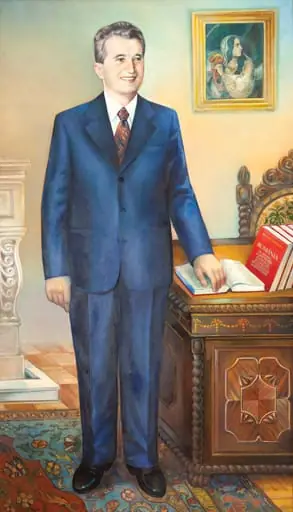 Tablou ulei pe pânză, portret Nicolae Ceaușescu, semnat în partea dreaptă jos Romulus Constantinescu, datat 1983. Nicolae Ceaușescu este reprezentat într-un costum albastru metalizat, stând în picioare lângă biroul său cu mâna pe unul din volumele lucrării ”România pe calea construirii societății socialiste multilateral dezvoltate”. Pe peretele din spatele său ”România Revoluționară” a lui C.D.Rosenthal. Comandat și oferit de Comitetul Județean de Partid Argeș (1983).
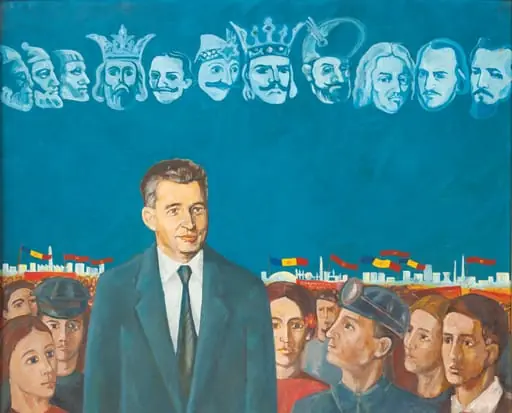 Tablou, ulei pe pânză, „Omagiu”, nesemnat. Nicolae Ceaușescu este prezentat în mijlocul oamenilor muncii vegheat de ”fantomele” eroilor neamului : Burebista, Decebal, Traian, Mircea cel Bătrân, Iancu de Hunedoara, Vlad Țepeș, Ștefan cel Mare, Mihai Viteazul, Dimitrie Cantemir, Nicolae Bălcescu, Alexandru Ioan Cuza (de la stânga la dreapta). Comandat și oferit de Comitetul Județean de Partid Tulcea, 22 ianuarie 1978.
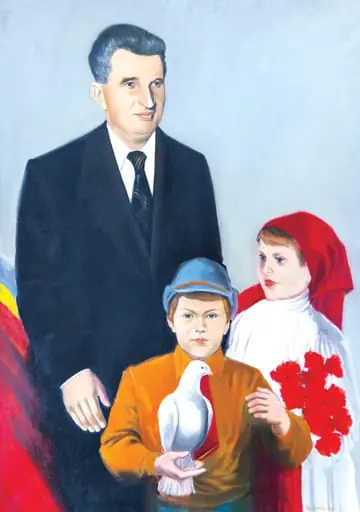 Tablou, ulei pe pânză, „Mesajul României”, semnat Nicolae Costachi în partea dreaptă jos și datat 1984. Nicolae Ceaușescu alături de doi copii, o fată îmbrăcată în costum popular ținând în mâini un buchet de garoafe roșii și un băiat în uniformă de șoim al patriei cu un porumbel alb în palma dreaptă. Comandat și oferit de Comitetul Județean de Partid Bistrița Năsăud (1985).