Artwork
Tablou, acuarelă pe carton, ”Nicolae Ceaușescu la alegerea ca președinte”, nesemnat, atribuit lui Constantin Z. Bolovan. Portretul este realizat într-o manieră naivă, proporțiile personajului sunt puțin supradimensionate, Nicolae Ceaușescu este reprezentat cu eșarfa tricoloră cu stema RSR. Oferit de Constantin Z. Bolovan, Iași, 1978.
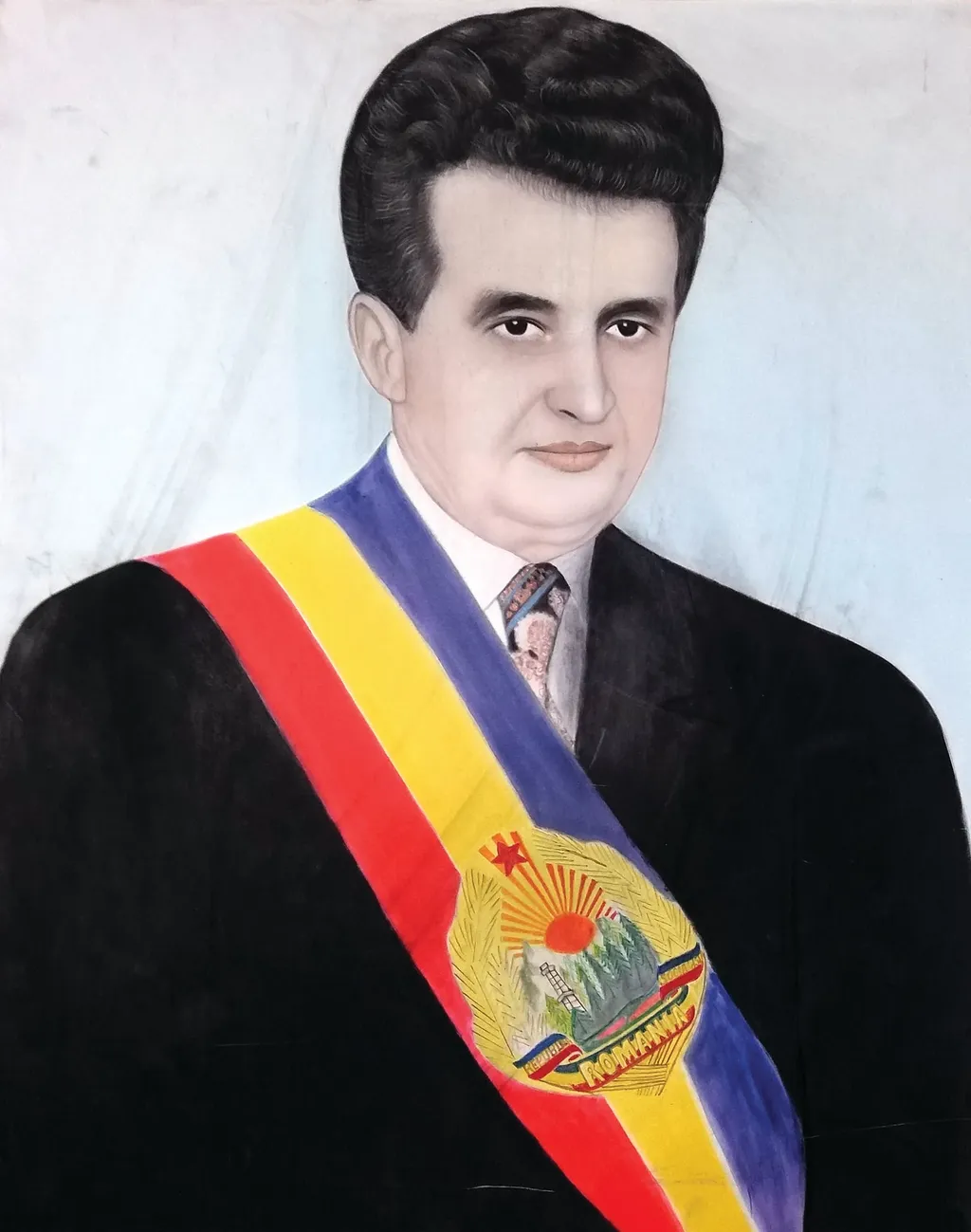
Tablou, acuarelă pe carton, ”Nicolae Ceaușescu la alegerea ca președinte”, nesemnat, atribuit lui Constantin Z. Bolovan. Portretul este realizat într-o manieră naivă, proporțiile personajului sunt puțin supradimensionate, Nicolae Ceaușescu este reprezentat cu eșarfa tricoloră cu stema RSR. Oferit de Constantin Z. Bolovan, Iași, 1978. is a print by Constantin Z. Bolovan. It is held in the collection of the National Museum of Romanian History. This watercolor on cardboard depicts Nicolae Ceaușescu at the moment of his election as president.
About this work
Overview
Rendered with simplified forms and unrefined proportions, the portrait emphasizes symbolic elements over realism.
This watercolor on cardboard depicts Nicolae Ceaușescu at the moment of his election as president. Attributed to Constantin Z. Bolovan and donated by him in 1978, the work lacks a signature but bears stylistic hallmarks of his approach. Rendered with simplified forms and unrefined proportions, the portrait emphasizes symbolic elements over realism. It is held in the collection of the Museum of Ethnography.
Subject & Meaning
Ceaușescu is shown in formal attire, wearing the tricolor sash of the Romanian Socialist Republic, bearing the state emblem with a building and sun motif. His direct gaze and faint smile convey authority and approbation, aligning with official imagery of the time. The composition avoids ambiguity, presenting him as a stable, elevated figure—consistent with state-sanctioned iconography during his rule.
Technique & Style
The painting employs a naive aesthetic: bold outlines, flat color fields, and slightly exaggerated proportions. The face is rendered with careful attention, while the background remains uniformly light blue, offering no spatial depth. Colors are bright and unmodulated, and details like the sash emblem are rendered with schematic precision, reflecting a deliberate departure from academic portraiture.
History & Provenance
The work was donated to the Museum of Ethnography in 1978 by Constantin Z. Bolovan of Iași. Its creation coincided with Ceaușescu’s consolidation of power following his election. As an unattributed piece, its status as an official commission remains unclear, but its donation suggests alignment with state cultural practices of the period.
Context
Produced during the height of Ceaușescu’s regime, the portrait reflects the pervasive use of visual propaganda to reinforce political legitimacy. Naive styles were sometimes employed in state-endorsed art to convey accessibility and ideological purity. This piece fits within a broader category of unofficial yet sanctioned imagery circulating in provincial cultural circles.
Legacy
The painting survives as a quiet artifact of state visual culture, preserved not for its artistic innovation but for its historical testimony. It offers insight into how political authority was visually constructed beyond official studios, through local artists who navigated the boundaries of compliance and expression under a centralized regime.
Artist & collection
Artist
Constantin Z. Bolovan spent the 1970s making cheerful little paintings on cardboard in Iași—think scratchy brushes and colors that looked like they were bought at the hardware store. One of them shows Nicolae Ceaușescu…

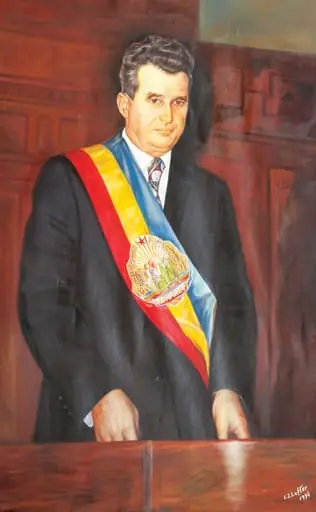 Tablou, ulei pe pânză, ”Portret Nicolae Ceaușescu”, semnat C.I. Lefter și datat 1974 în partea dreaptă jos. Reprezentat într-un cadru oficial în spatele unui pupitru, Nicolae Ceaușescu purtând eșarfa cu stema RSR. Oferit lu Nicolae Ceaușescu de Comitetul de Partid Sănătatea, cu ocazia zilei de naștere, ianuarie 1978.
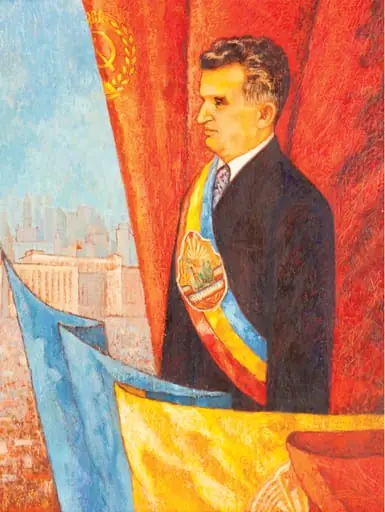 Tablou, ulei pe pânză, „Nicolae Ceaușescu, întâiul președinte al României”, semnat C.Aurel și datat 1974 în partea dreaptă jos. Nicolae Ceaușescu purtând banderolă tricoloră cu stema R.S.R., stând la balcon primind ovații din partea oamenilor muncii adunați într-o piață. În spatele său, steagul cu sigla PCR. Tablou oferit de către autor originar din Câmpina (Prahova), 19 august 1974.
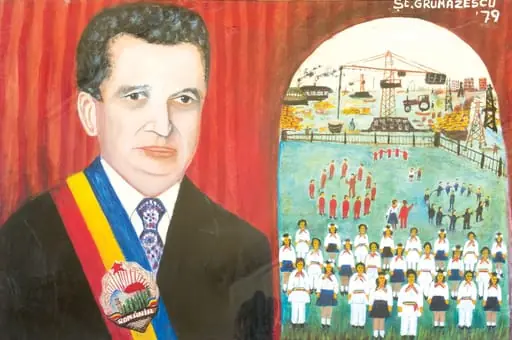 Tablou, ulei pe pânză, Nicolae Ceaușescu și copii, semnat și datat în partea dreaptă sus Șt. Grumăzescu, 1979. Nicolae Ceaușescu este prezentat în partea stângă urmărind o festivitate - pionieri, copii dansând în horă. Maniera de realizare a tabloului este una naivă. Oferit de Ștefan Grumăzescu din București.
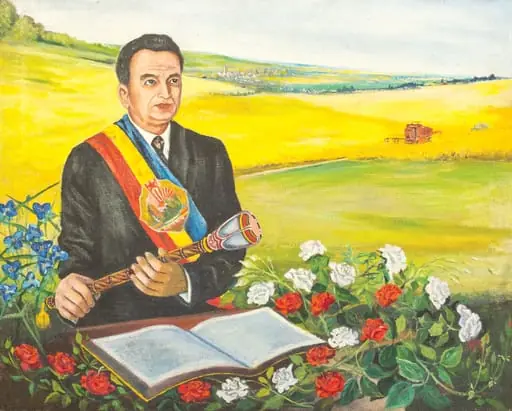 Tablou, ulei pe pânză, ”Nicolae Ceaușescu, președinte”, nesemnat, atribuit I.C. Popescu - Stolojan. Nicolae Ceaușescu este prezentat în momentul învestirii în funcția de președinte al Republicii Socialiste România. Poartă însemnele funcției eșarfa tricoloră, sceptrul prezidențial. Sala Marii Adunări Naționale a fost înlocută cu un fundal agricol - un lan de grâu treierat de o combină. Pupitrul este decorat cu trandafiri și iriși. Oferit de autor, 1976.
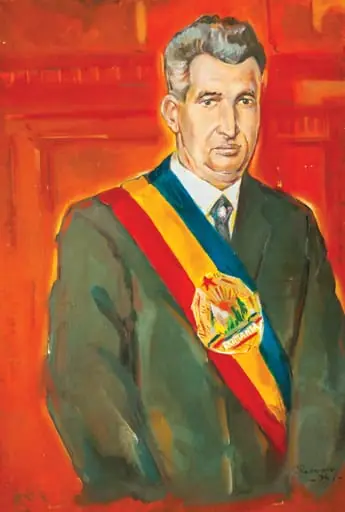 Tablou, ulei pe pânză, Nicolae Ceaușescu, semnat C.Radovan și datat 1974 în partea dreaptă jos. Nicolae Ceaușescu este prezentat într-o atitudine mirat deranjată. Tablou oferit cadou lui Nicolae Ceaușescu de către autor, Ciprian Radovan, București.
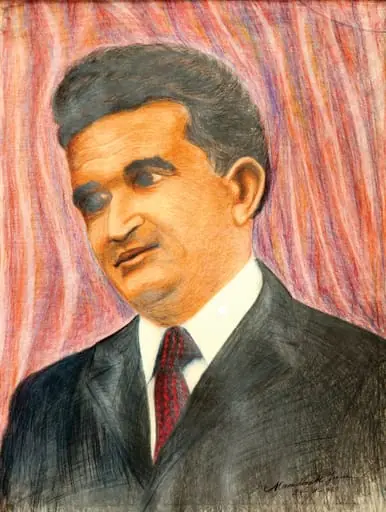 Tablou, desen pe carton, ”Nicolae Ceaușescu”, semnat cu tuș negru Jeana Macedonschi și datat 24.IX.1974, în partea dreaptă jos. Tablou oferit lui Nicolae Ceaușescu de către autor.
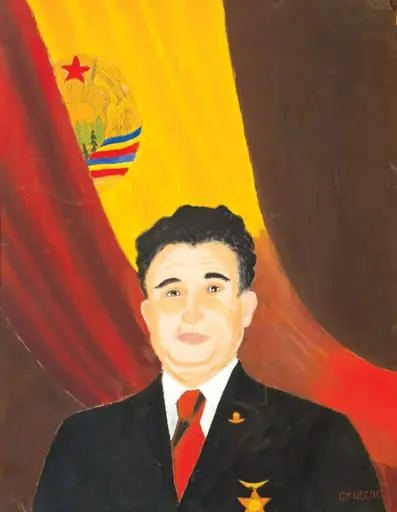 Tablou, ulei pe carton, ”Nicolae Ceaușescu”, semnat Gh. Nechita în partea dreaptă jos. Nicolae Ceaușescu este prezentată cu o figură veselă, în piept are însemnul de ”Erou al Republicii Socialiste România. În spatele său s-a vrut a fii reprezentat steagul cu stema RSR, numai ca, nu există culoarea albastru ea fiind înlocuită de culoarea maro. Oferit lui Nicolae Ceaușescu de către autor Gheorghe Nechita din Baia Mare, 26 ianuarie 1976.
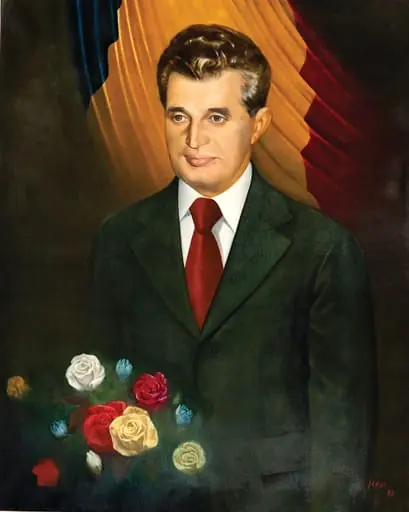 Tablou ulei pe pânză, portret Nicolae Ceaușescu semnat Ispas și datat în partea dreaptă jos. Este prezentat într-o postură solemnă cu un buchet de trandafiri, în spatele său tricolorul. Culorile drapelului se regăsesc și în coloritul trandafirilor. Comandat de Comitetul Județean de Partid Alba (1983).
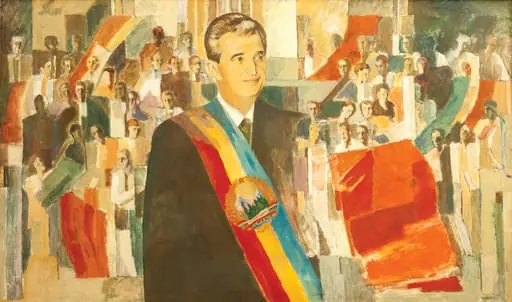 Tablou, tempera pe pânză, „Ceaușescu și Poporul” semnat Grigorian Rusu datat 1982 în partea dreaptă jos. Nicolae Ceaușescu este prezentat în prim plan, cu bandă tricoloră, în fundal sunt reprezentați oamenii muncii. Comandat și oferit de Comitetul Județean de Partid Dolj (1982).
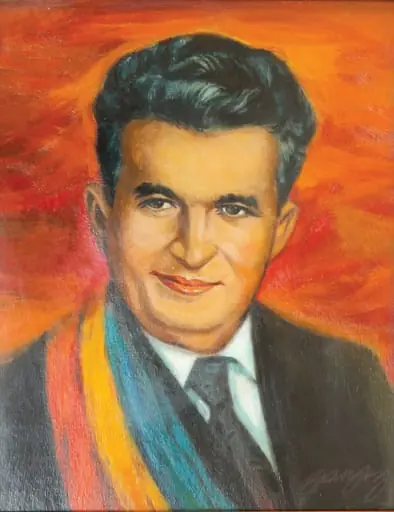 Tablou, „Portret Nicolae Ceaușescu”, semnat Barany în partea dreaptă jos, nedatat. Tabloul prezintă portretul lui Nicolae Caușescu cu banderolă tricoloră pe un fundal roșu - oranj. Comandat și oferit de Comitetul Județean de Partid Arad cu ocazia unei aniverări.
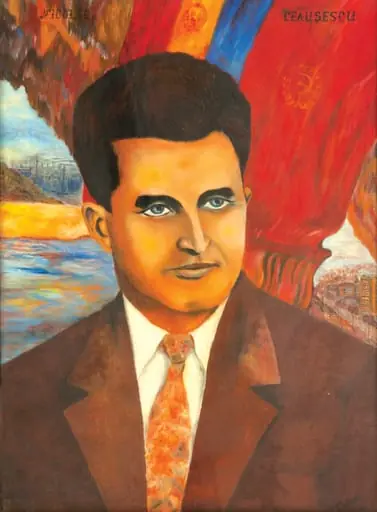 Tablou, ulei pe pânză, ”Portret Nicolae Ceaușescu”, nesemnat, atribuit lui Teodor Istrati. Portret Nicolae Ceaușescu pe fundal steagul cu stema R.S.R. și steagul cu sigla P.C.R., elemente de peisaj urban, inscripție cu majuscule în partea de sus ”NICOLAE CEAUȘESCU”. Oferit de autor lui Nicolae Ceaușescu, București, 25 iunie 1971.
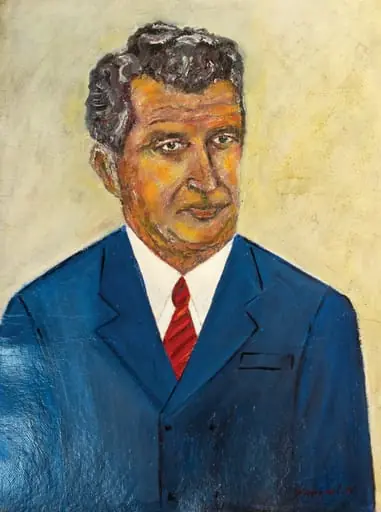 Tablou, ulei pe carton,”Nicolae Ceaușescu”, semnat în pertea dreaptă jos Savopol N., nedatat. Oferit cadou de autor, Nicola Savopol, lui Nicolae Ceaușescu cu ocazia zilei de naștere, București.
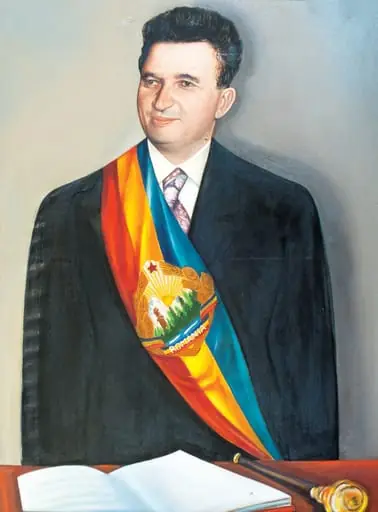 Tablou, ulei pe pânză, ”Portret Nicolae Ceaușescu”, nesemnat, atribui lui Nicolae Toma. Oferit de autor, cu ocazia zilei de naștere a lui Nicolae Ceaușescu, Ploiești, ianuarie 1978.
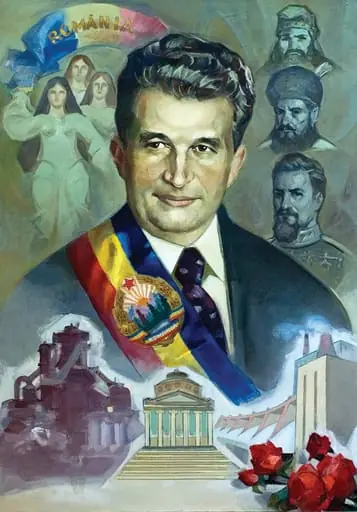 Portret Nicolae Ceaușescu, tablou nesemnat. Comadat de Ministerul de Interne, 1985. Autorul îl prezintă -pe Nicolae Ceaușescu alături de Burebista, Mihai Viteazul și Alexandru Ioan Cuza. În partea de jos a tabloului sunt prezentate alături de Atheneul Român realizările economice ale socialismului.
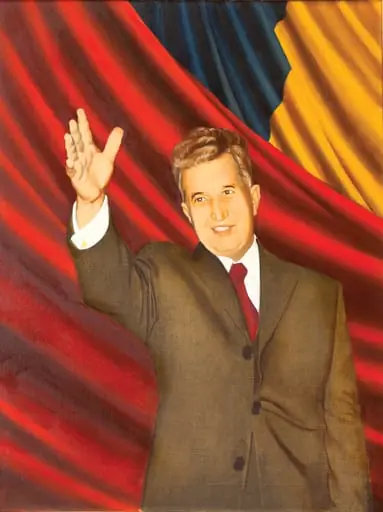 Tablou, ulei pe pânză, „Salutul președintelui”, atribuit lui Viorel Toma, nedatat. Nicolae Ceaușescu este reprezentat în centrul tabloului salutând, pe fundal steagul PCR și cel al RSR. Comandat și oferit de Comitetul Județean de Partid Timiș (1985).