Artwork
Giovanni Fieschi
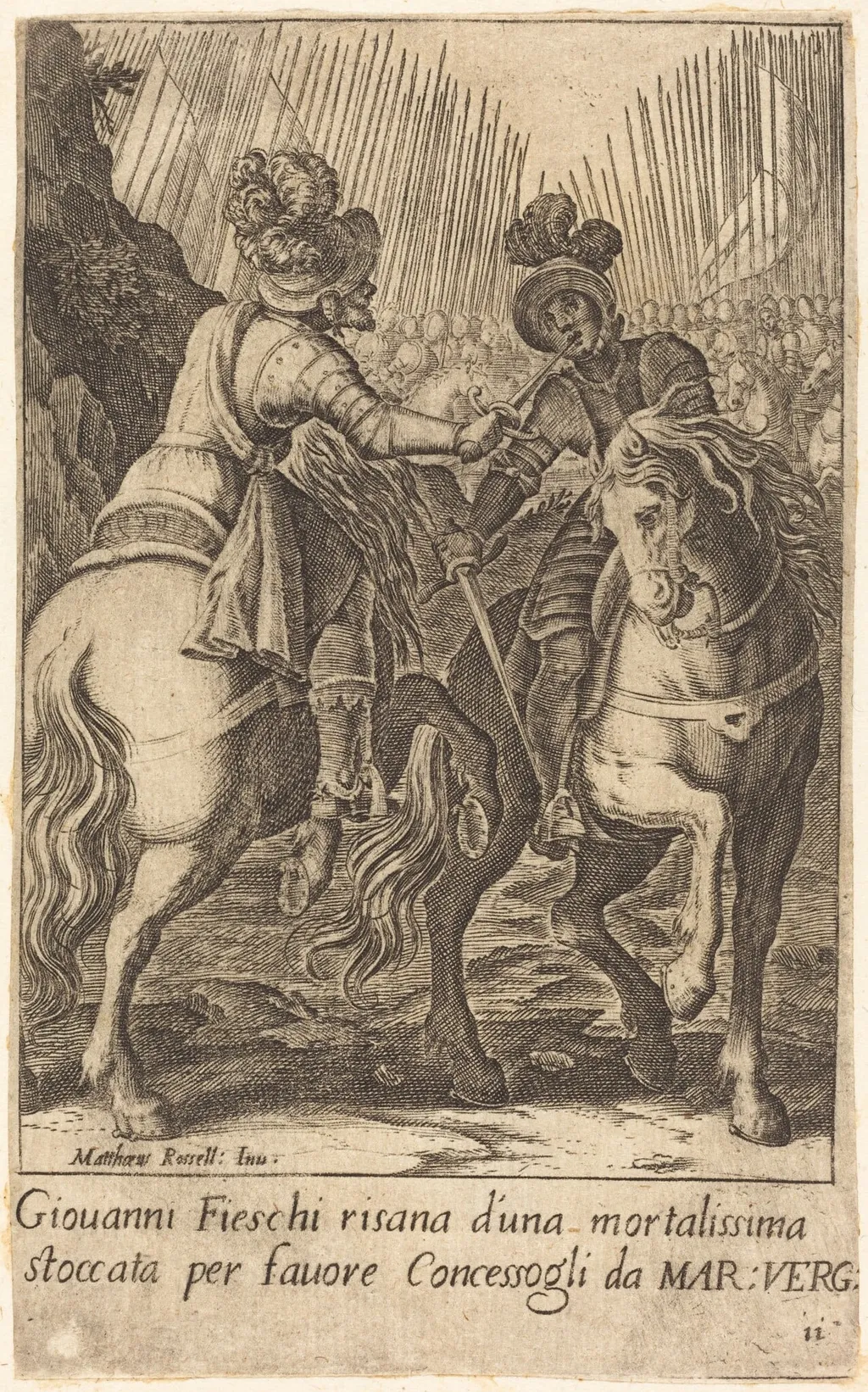
Giovanni Fieschi is an ink print by the Baroque artist Jacques Callot. It dates from 1619 and is held in the collection of the National Gallery of Art.
About this work
Overview
It belongs to a large body of work in which Callot captured scenes of contemporary life with precision and narrative clarity.
Giovanni Fieschi is an engraving by Jacques Callot, produced in 1619 on laid paper. It belongs to a large body of work in which Callot captured scenes of contemporary life with precision and narrative clarity. Though primarily known for his etchings, this piece demonstrates his command of the intaglio method, using fine lines to render complex figures and environments. The subject reflects his interest in historical and martial themes drawn from real or imagined events of his time.
Subject & Meaning
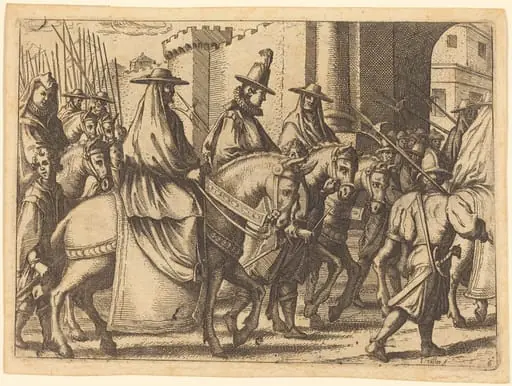
The engraving portrays two armored horsemen locked in violent combat, one gripping the other’s reins while the second raises a sword. Behind them, a crowd watches from near a structure, suggesting a public spectacle or battlefield. The scene may reference a historical duel or a fictionalized moment of chivalric conflict. Callot’s focus on physical tension and social observation aligns with his broader interest in human behavior under duress, whether in war, ceremony, or daily life.
Technique & Style
Callot employed fine-line engraving to achieve sharp detail and tonal depth. Cross-hatching defines the textures of armor, fabric, and landscape, while controlled line weight conveys movement and volume. The composition is tightly organized, with figures dominating the foreground and a sparse but deliberate background. His technique avoids overt drama, instead relying on precision and restraint to evoke tension, characteristic of his mature style in early 17th-century printmaking.
History & Provenance
Created in 1619 during Callot’s time in Florence, the engraving likely emerged from his engagement with Italian court culture and historical narratives. It was part of a series of works documenting figures and events from Italian history, often based on contemporary accounts or literary sources. The print circulated among collectors and artists, contributing to Callot’s reputation across Europe. Its survival in multiple institutional collections attests to its early and sustained recognition.
Context
In early 17th-century Europe, prints like this served as both artistic expression and visual documentation. Callot worked amid rising interest in historical realism and the depiction of martial conflict, influenced by the Thirty Years’ War and the popularity of chivalric tales. His prints bridged elite and popular audiences, offering detailed imagery that was accessible yet intellectually engaged. Giovanni Fieschi fits within this trend, translating narrative drama into a portable, reproducible medium.
Legacy
Callot’s technical innovations in engraving influenced generations of printmakers, particularly in the use of fine line and compositional clarity. While Giovanni Fieschi is not among his most widely reproduced works, it exemplifies his consistent approach to portraying human conflict with psychological nuance. The piece remains a reference for scholars studying the intersection of print culture, historical memory, and visual storytelling in Baroque Europe.
Artist & collection
Artist
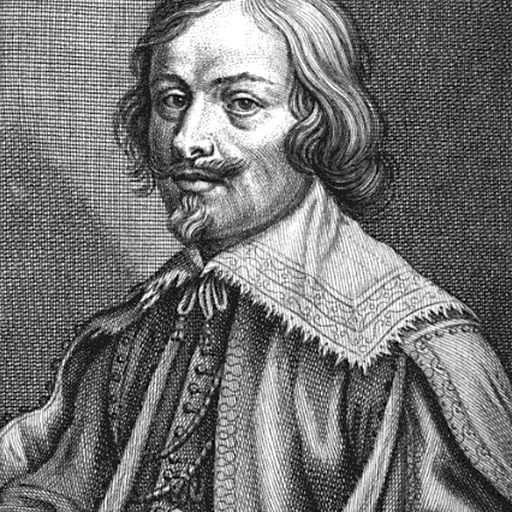
Jacques Callot was a baroque printmaker and draftsman from the Duchy of Lorraine.

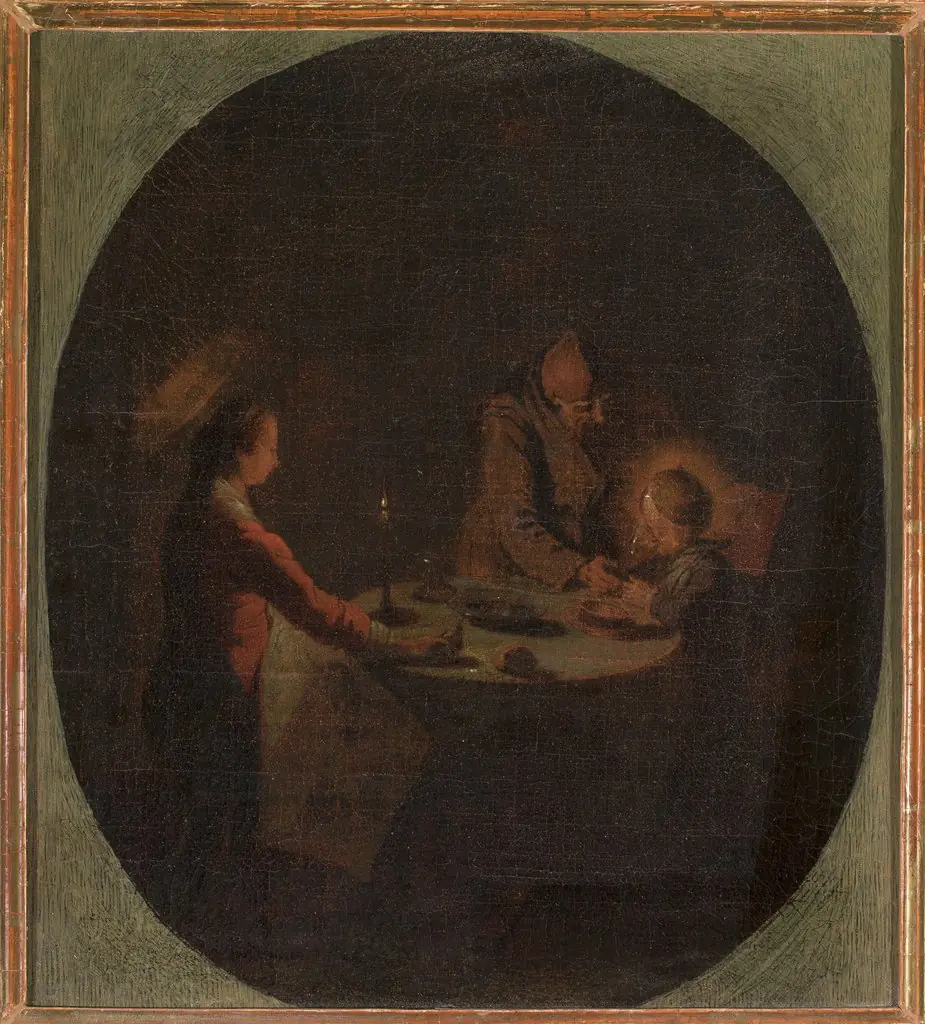 Holy Family at supper
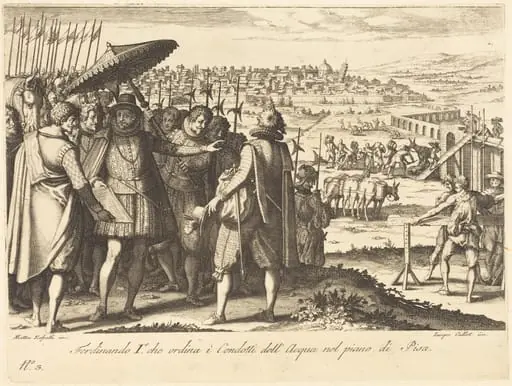 Restoration of the Aqueduct at Pisa
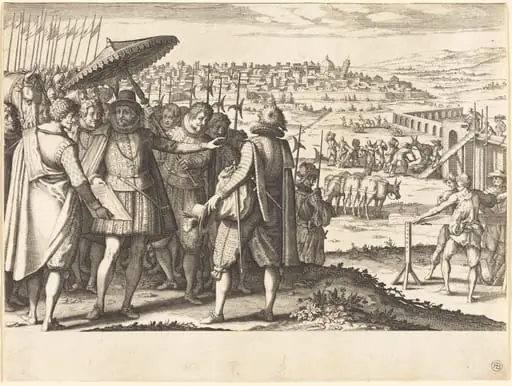 Restoration of the Aqueduct at Pisa
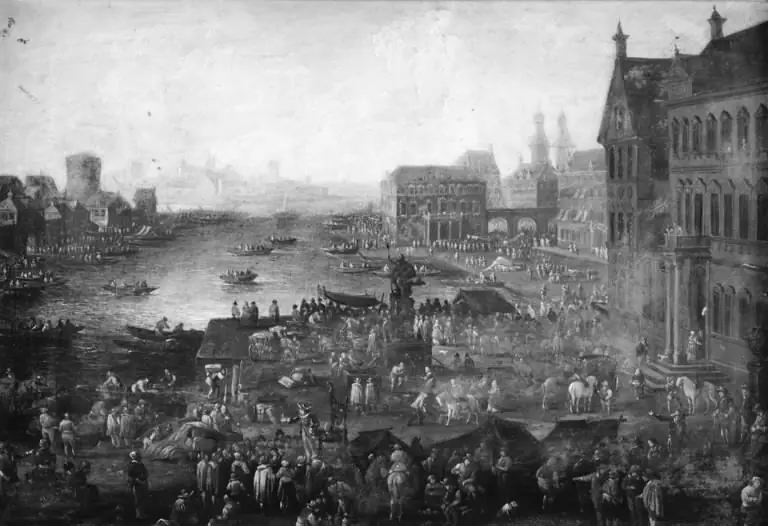 Square in Paris with Many Figures
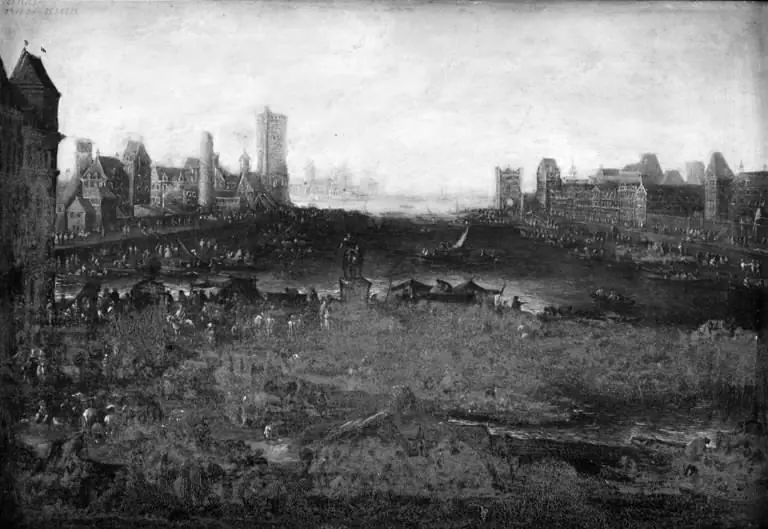 Square in Paris with Many Figures
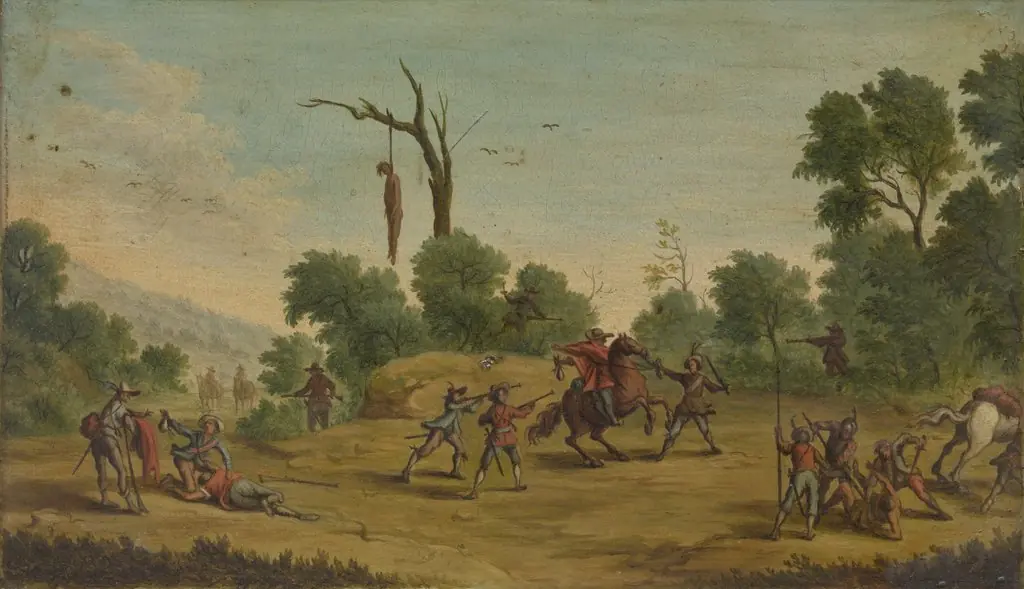 Horsemen Attacked by Robbers
 HOW WILL A COVERED PART BE CORRECTED?HOW WIKA A COVERED HEART DEED CORRECTED?
![Christ Walking on the Water [second plate], by Jacques Callot](https://artifactworldgallery.com/img/jacques-callot--christ-walking-on-the-water-second-plate--2069f3bfe4cb2126-w320.webp) Christ Walking on the Water [second plate]
Christ Walking on the Water [second plate]