Artwork
Saint James the Greater
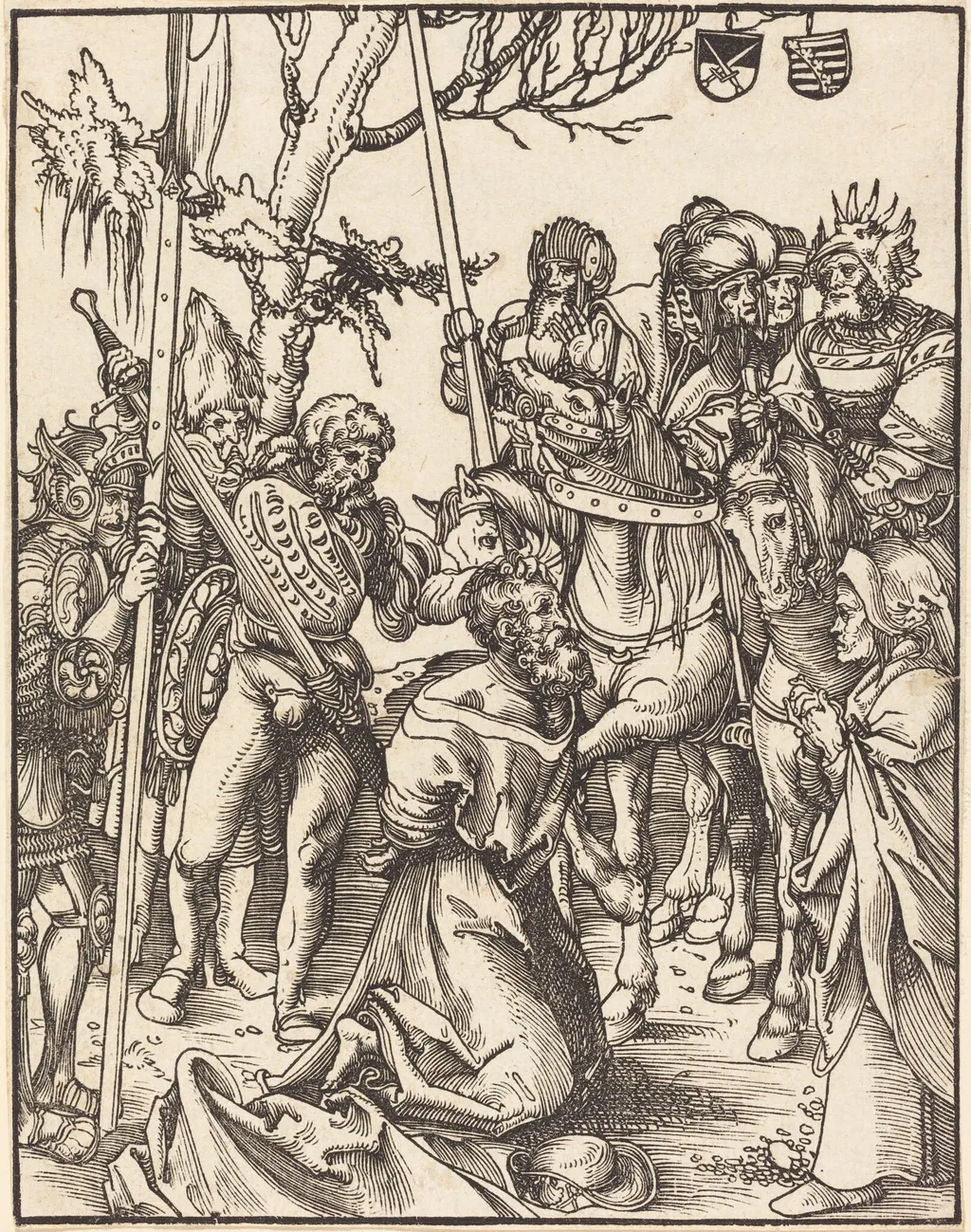
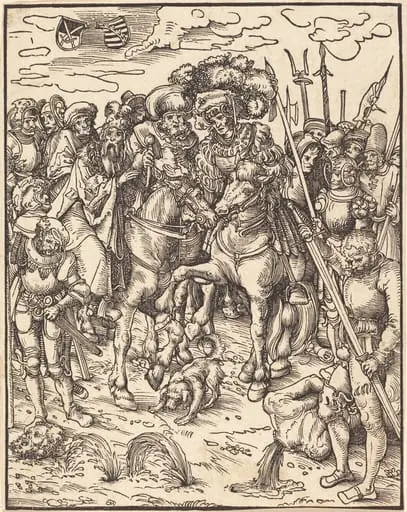
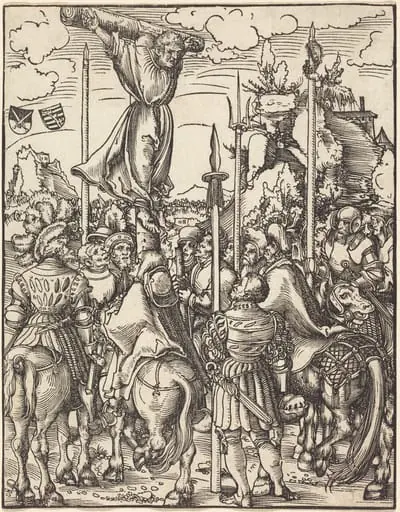
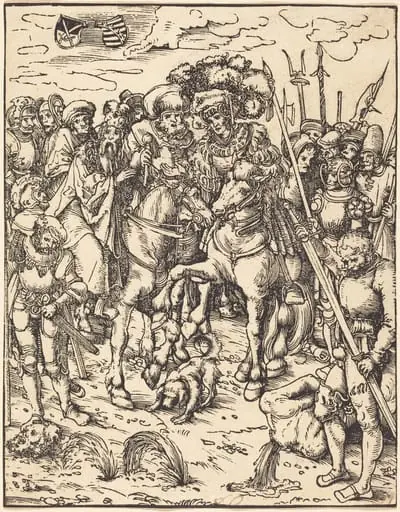
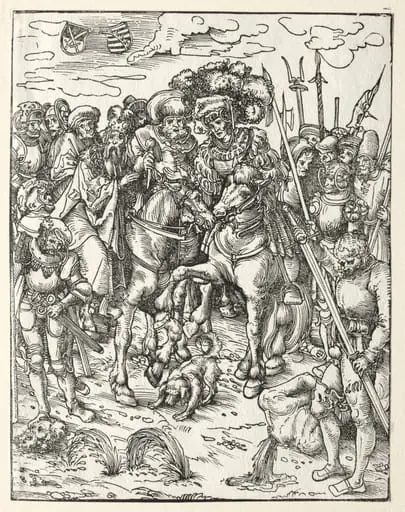
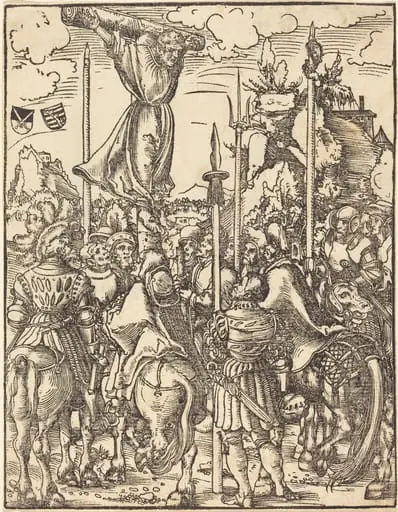
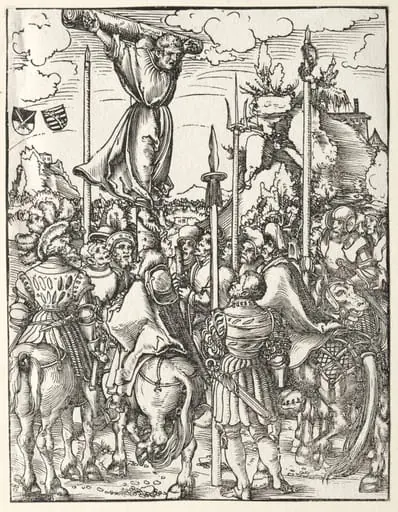
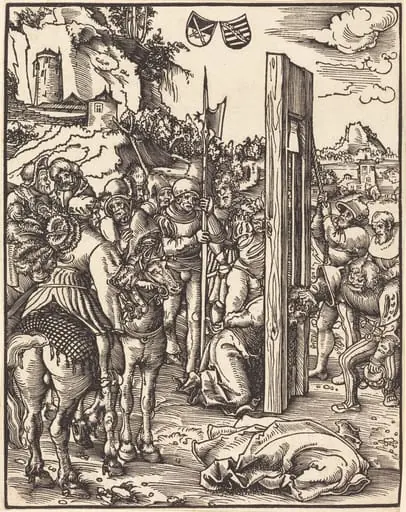
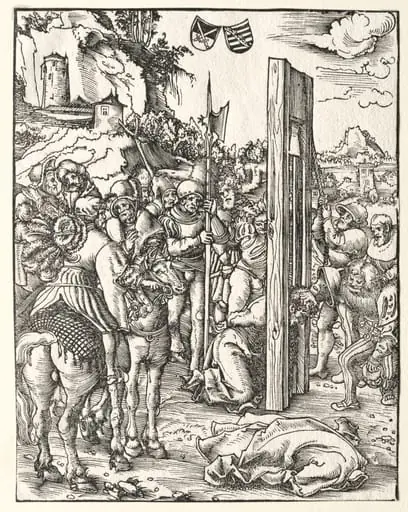
Saint James the Greater is an ink print by the Renaissance artist Lucas Cranach the Elder. It dates from 1512 and is held in the collection of the National Gallery of Art.
About this work
Overview
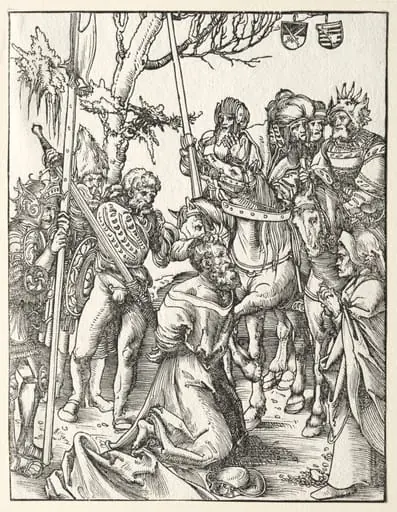
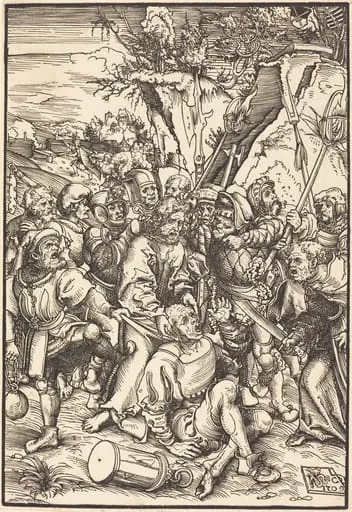
Created in 1512, this woodcut portrays Saint James the Greater and exemplifies Lucas Cranach the Elder’s early print work. Executed in the German Renaissance style, the image reflects Cranach’s dual practice as a painter and engraver while he served as court artist for the Saxon electors.
Subject & Meaning
The composition presents the apostle in a devotional pose typical of late medieval and early Renaissance representations, emphasizing his role as a pilgrim saint. The iconography aligns with Catholic tradition, depicting James with attributes that identify him as a revered figure of the Christian faith.
Technique & Style
Cranach employed the woodcut technique, carving the design into a single block of wood to produce multiple impressions. The work displays the crisp linear quality and restrained modeling characteristic of early 16th‑century German prints, balancing detailed figuration with a relatively flat pictorial space.
History & Provenance
Produced during Cranach’s tenure as the Elector of Saxony’s court painter, the print circulated among devotional audiences before the Reformation. Although Cranach later adapted religious subjects to Lutheran contexts, this early piece remains rooted in the pre‑Reformation Catholic visual language.
Artist & collection
Artist
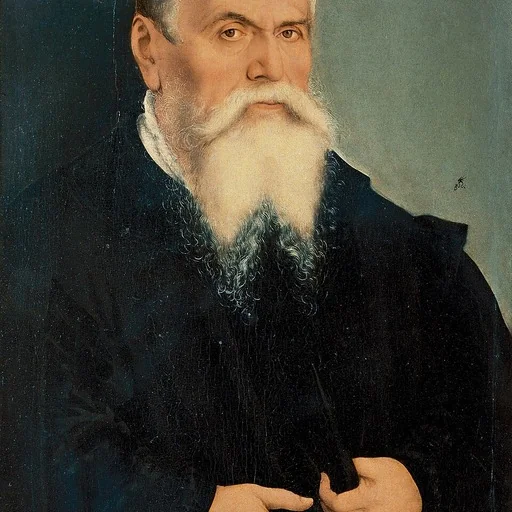
Lucas Cranach the Elder was a German Renaissance painter and printmaker in woodcut and engraving.