Artwork
St. Zenon and Companions; St. John the Baptist; St. Gallicanus; St. Pelagius
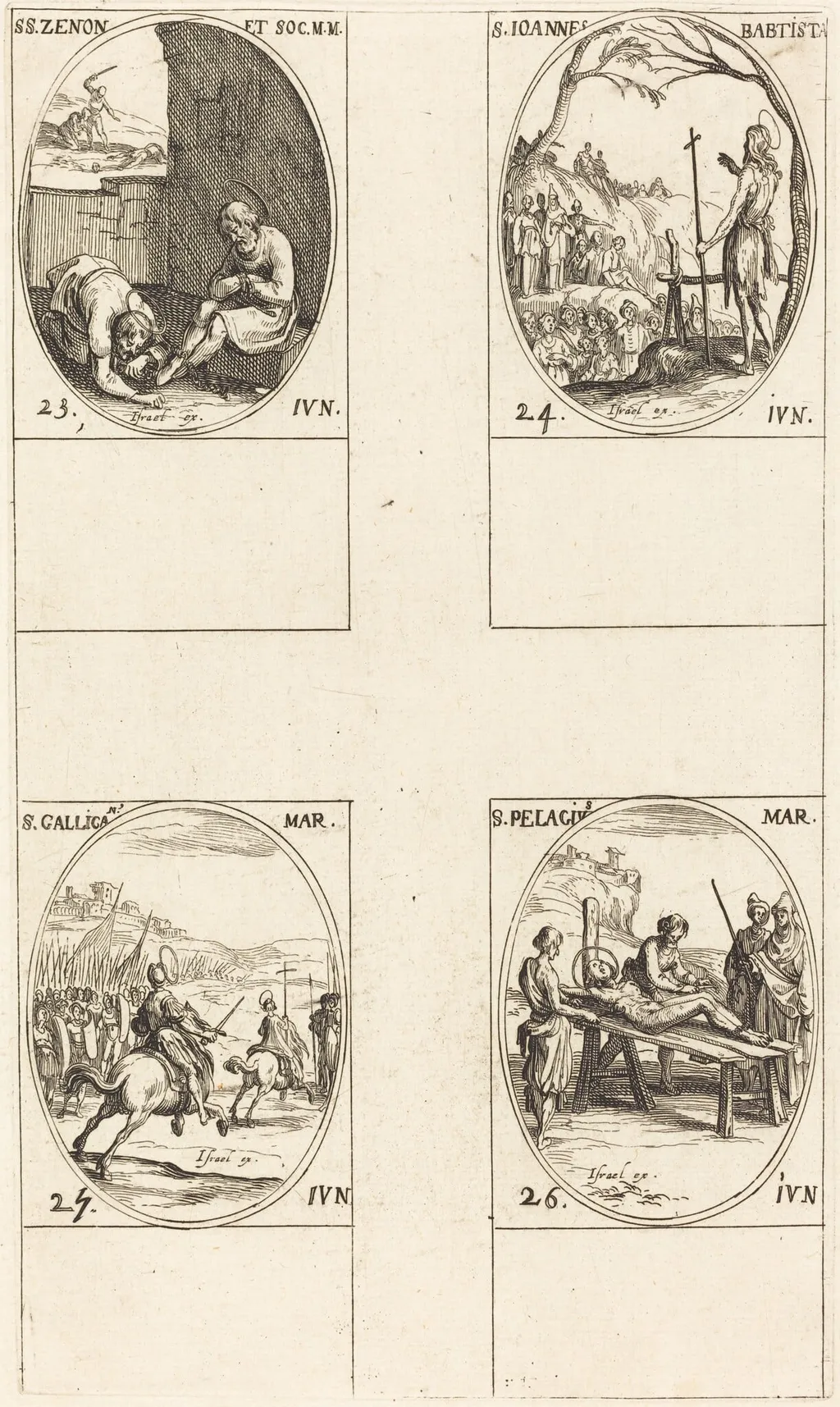
St. Zenon and Companions; St. John the Baptist; St. Gallicanus; St. Pelagius is an ink print by the Baroque artist Jacques Callot. It dates from 1634 and is held in the collection of the National Gallery of Art.
About this work
Overview
Each figure is identified by a small label placed in the lower corner, giving the work a cataloguing quality reminiscent of a group portrait.
Around 1634, French printmaker Jacques Callot produced an etching on laid paper that presents four saints—Zenon, John the Baptist, Gallicanus, and Pelagius—arranged in a linear composition. Each figure is identified by a small label placed in the lower corner, giving the work a cataloguing quality reminiscent of a group portrait. The image is rendered with precise, clean lines that recall the appearance of a finely executed drawing.
Subject & Meaning
The print gathers a quartet of saints from different traditions, emphasizing their individual identities while uniting them within a single devotional scene. By juxtaposing Zenon, a martyr, with the prophetic John the Baptist, the imperial convert Gallicanus, and the ascetic Pelagius, Callot creates a visual meditation on varied paths to sanctity, inviting contemplation of their distinct virtues and shared holiness.
Technique & Style
Callot employed drypoint, a method in which a needle incises lines directly onto a copper plate. The resulting burrs retain ink, producing rich, velvety strokes that give the figures a subtle three‑dimensionality. The crisp contours and careful hatching demonstrate Callot’s mastery of line, while the laid‑paper support adds a delicate texture that enhances the overall clarity of the composition.
History & Provenance
Part of Callot’s extensive oeuvre of more than 1,400 prints, this work belongs to his series of religious subjects produced during his mature period in the 1630s. Although originally circulated among collectors of devotional prints, the etching later entered museum collections, where it is cited as an example of Callot’s ability to blend sacred iconography with his characteristic attention to detail.
Context
Created in the Baroque era, the etching reflects the period’s interest in dramatic narrative and precise rendering of religious figures. Callot, active in the Duchy of Lorraine, often combined secular and sacred themes, and this piece illustrates his engagement with ecclesiastical commissions alongside his more widely known depictions of military life and courtly scenes.
Artist & collection
Artist
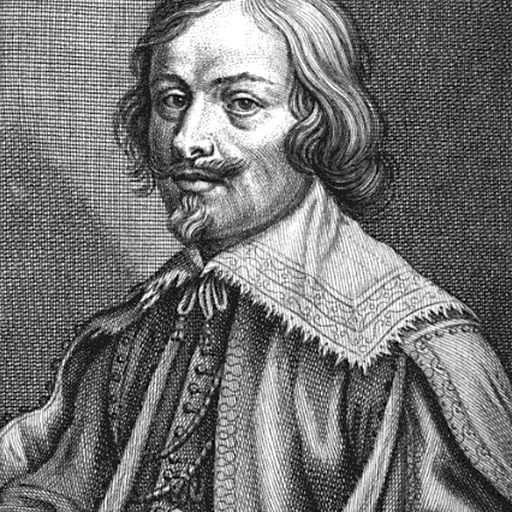
Jacques Callot was a baroque printmaker and draftsman from the Duchy of Lorraine.

 Holy Family at supper
 Restoration of the Aqueduct at Pisa
 Restoration of the Aqueduct at Pisa
 Square in Paris with Many Figures
 Square in Paris with Many Figures
 Horsemen Attacked by Robbers
 HOW WILL A COVERED PART BE CORRECTED?HOW WIKA A COVERED HEART DEED CORRECTED?
![Christ Walking on the Water [second plate], by Jacques Callot](https://artifactworldgallery.com/img/jacques-callot--christ-walking-on-the-water-second-plate--2069f3bfe4cb2126-w320.webp) Christ Walking on the Water [second plate]
Christ Walking on the Water [second plate]
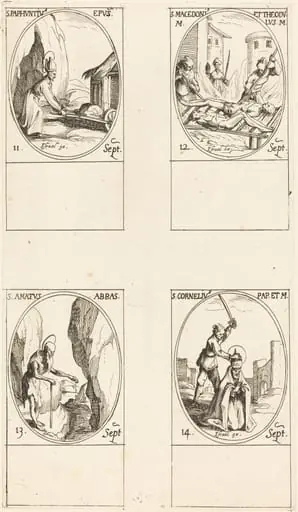 St. Paphnutius; Sts. Macedonius and Theodulus; St. Amatus; St. Cornelias
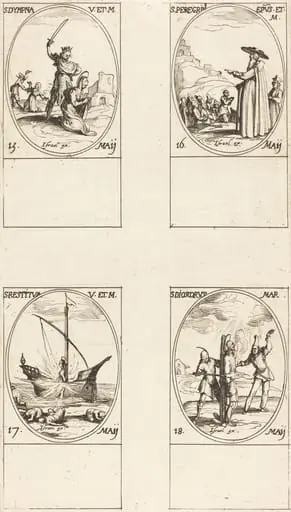 St. Dympna; St. Peregrinus; St. Restituta; St. Dioscorus
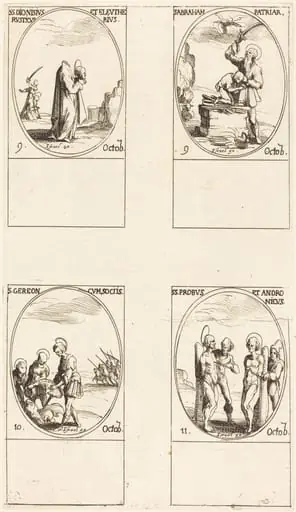 St. Dionysius, Rusticus & Eleutherius; St. Abraham; St. Gereon & Companions; Sts. Probus & Andronichus
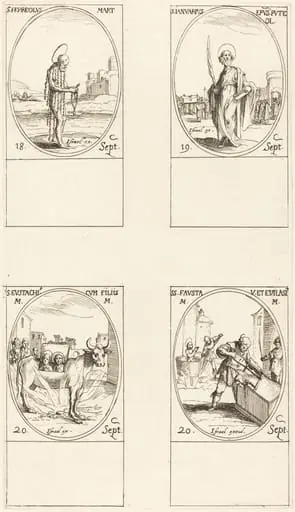 St. Ferreolus; St. Januarius; St. Eustachius & his Children; Sts. Fausta & Evelasius
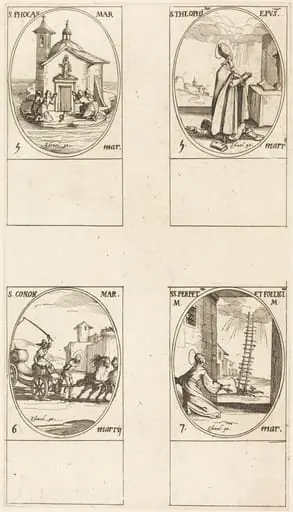 St. Phocas; St. Theophilus; St. Conon; Sts. Perpetua and Felicitas
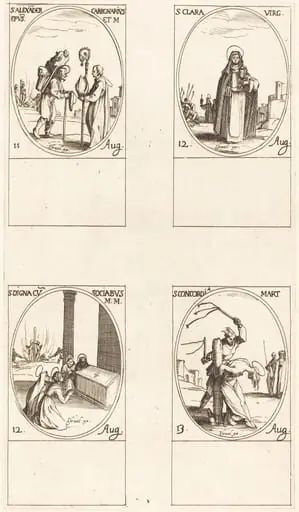 St. Alexander Carbonarius; St. Clare; St. Digna and Companions; St. Concordia
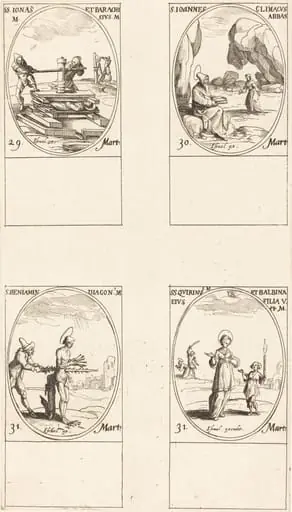 Sts. Jonas & Barachisius; St. John Climacus, Abbot; St. Benjamin; Sts. Quirinus & Bal
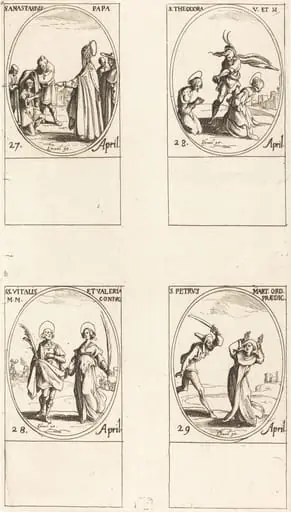 St. Anastasius; St. Theodora; Sts. Vitalis and Valeria; St. Peter Martyr
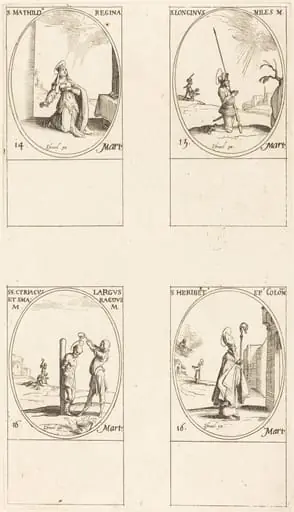 St. Matilda; St. Longinus; St. Cyriacus; St. Heribert
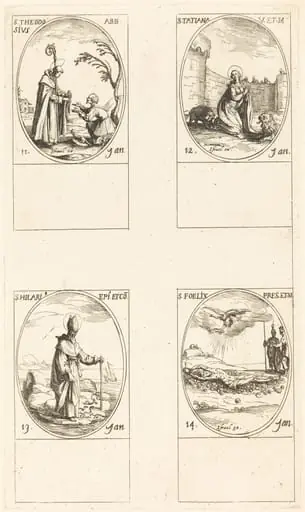 St. Theodosius; St. Tatiana; St. Hilary; St. Felix
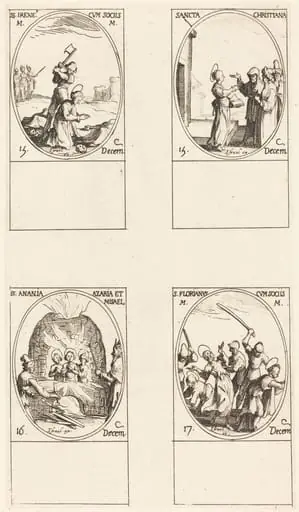 St. Irene & Companions; St. Christiana; Sts. Anania, Azaria & Misael; St. Florianus & Companions