Artwork
View of the Pont Neuf
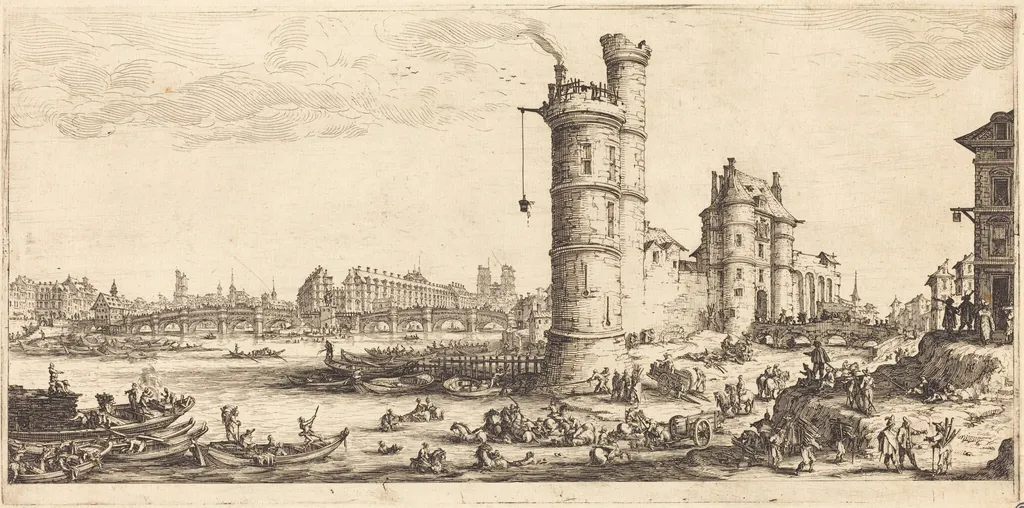
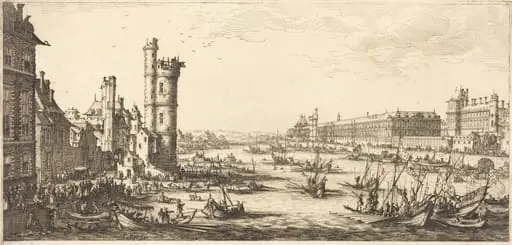
View of the Pont Neuf is an ink print by the Baroque artist Jacques Callot. It dates from 1629 and is held in the collection of the National Gallery of Art.
About this work
Overview
The image presents a moment of public activity centered on one of Paris’s most significant bridges, rendered with precision and quiet realism.
Created in 1629, this etching by Jacques Callot captures a bustling view of the Pont Neuf in Paris. Executed on laid paper, the work belongs to a vast body of prints documenting early 17th-century French urban life. Callot, a native of the Duchy of Lorraine, was renowned for his meticulous technique and keen observation of everyday scenes. The image presents a moment of public activity centered on one of Paris’s most significant bridges, rendered with precision and quiet realism.
Subject & Meaning
The scene portrays the Pont Neuf as a hub of social and commercial exchange. Figures on foot, horseback, and in boats populate the riverbanks and bridge, suggesting the bridge’s role as both transit and gathering space. Lanterns near the tower hint at evening activity, while the dense arrangement of people and vessels reflects the vitality of Parisian life. No single narrative dominates; instead, the composition invites contemplation of collective urban experience.
Technique & Style
Callot employed fine, controlled etching lines to render intricate details—from the texture of fabric and rippling water to the structural elements of the bridge and tower. His use of laid paper enhanced the tonal subtlety of the ink, allowing for nuanced gradations. The composition balances verticality, with the central tower, and horizontal movement along the river and bridge, demonstrating his mastery of spatial depth and atmospheric light through line alone.
History & Provenance
The print was made during Callot’s time in Paris, where he worked for the court and documented the city’s evolving infrastructure. Though specific early ownership records are sparse, the work aligns with his broader practice of producing topographical views for collectors and scholars. Its survival in multiple institutional collections suggests early recognition of its documentary value and technical achievement.
Context
In 1629, Paris was expanding its urban fabric, and the Pont Neuf—completed in 1607—stood as a symbol of modern civic engineering. Unlike earlier bridges lined with buildings, it featured open walkways and public spaces, making it a natural subject for observation. Callot’s print reflects a growing interest in depicting ordinary urban environments, distinct from idealized or mythological landscapes common in earlier art.
Legacy
Callot’s precise etching technique influenced generations of printmakers, particularly in the depiction of urban scenes. His ability to capture the texture of daily life without embellishment set a precedent for later topographical and genre prints. While not widely exhibited in his lifetime as a standalone work, this etching remains a key example of how printmaking could serve as a record of social and architectural change.
Artist & collection
Artist
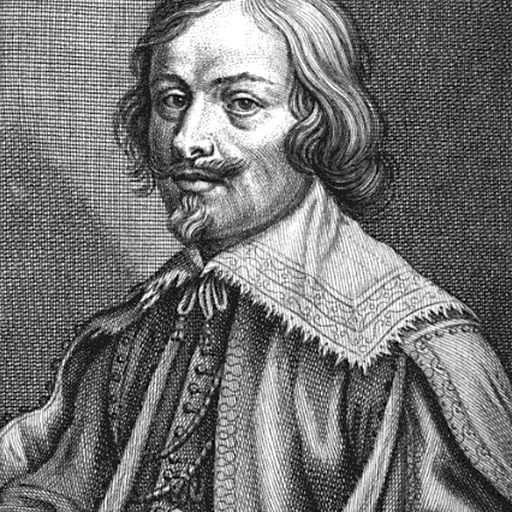
Jacques Callot was a baroque printmaker and draftsman from the Duchy of Lorraine.

 Holy Family at supper
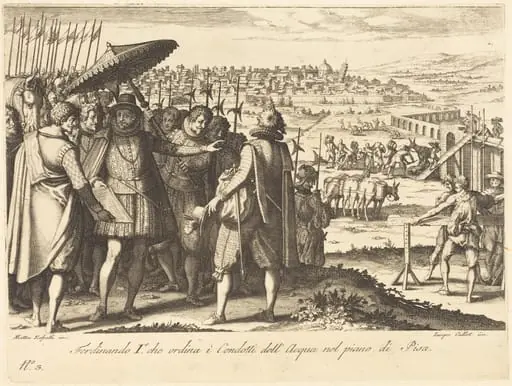 Restoration of the Aqueduct at Pisa
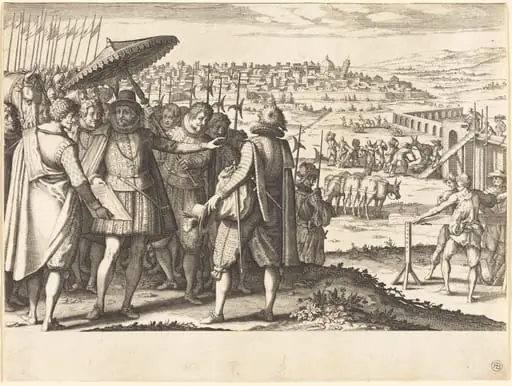 Restoration of the Aqueduct at Pisa
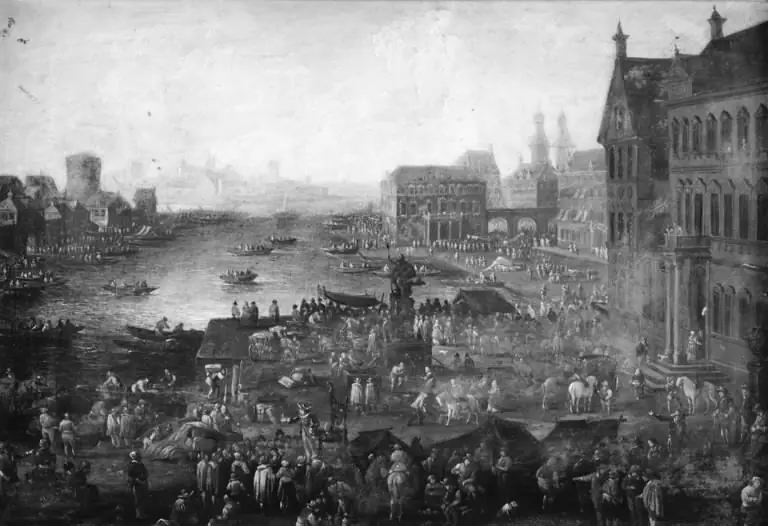 Square in Paris with Many Figures
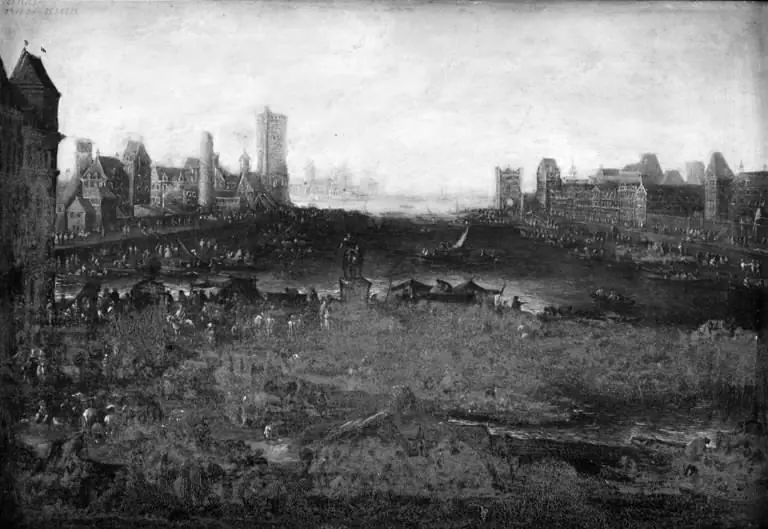 Square in Paris with Many Figures
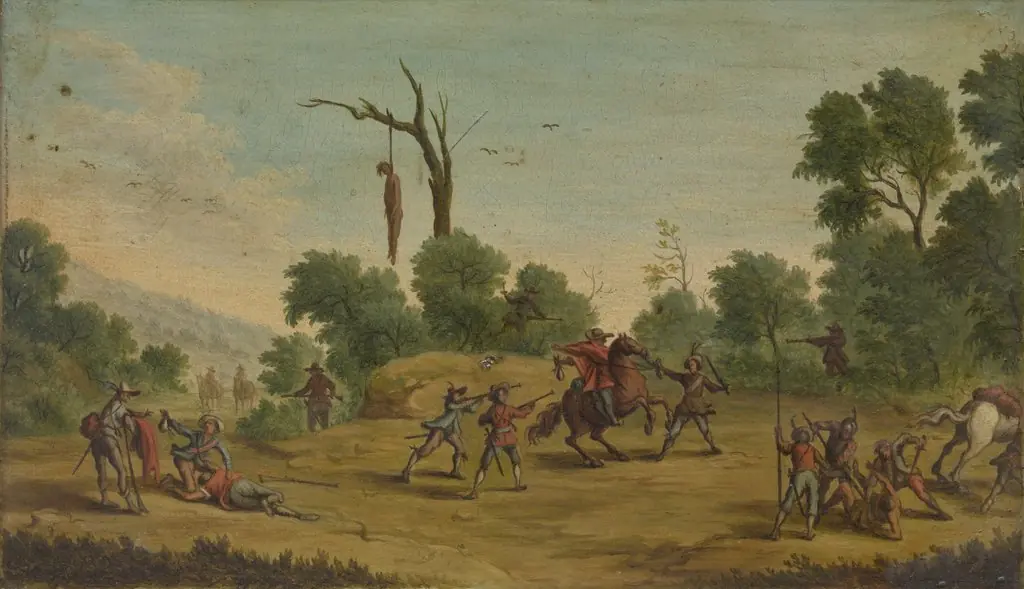 Horsemen Attacked by Robbers
 HOW WILL A COVERED PART BE CORRECTED?HOW WIKA A COVERED HEART DEED CORRECTED?
![Christ Walking on the Water [second plate], by Jacques Callot](https://artifactworldgallery.com/img/jacques-callot--christ-walking-on-the-water-second-plate--2069f3bfe4cb2126-w320.webp) Christ Walking on the Water [second plate]
Christ Walking on the Water [second plate]
 View of the Louvre
 Les deux grandes vues de Paris: Vue du Louvre
 The Small Port
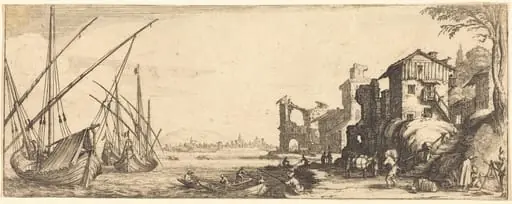 The Small Port
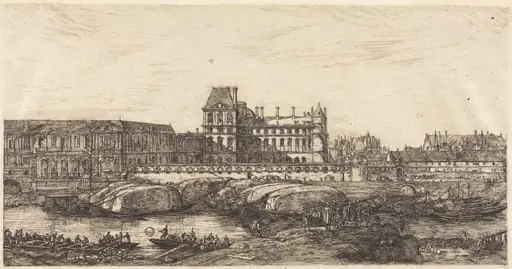 L'ancien Louvre d'après une peinture de Zeeman, 1651 (The Old Louvre, from a Painting by Zeeman, 1651)
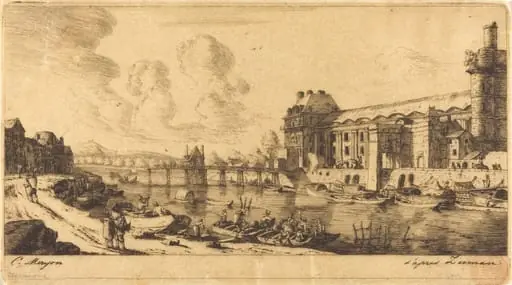 Le Pavillion de Mlle. et une partie du Louvre
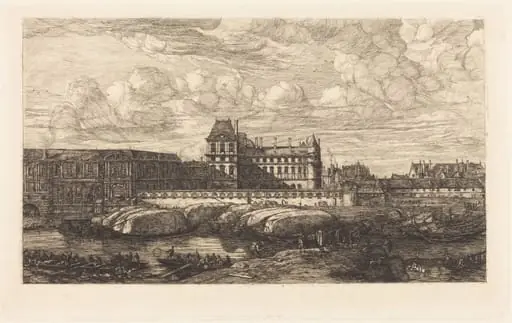 L'ancien Louvre d'après une peinture de Zeeman, 1651 (The Old Louvre, from a Painting by Zeeman, 1651)