Artwork
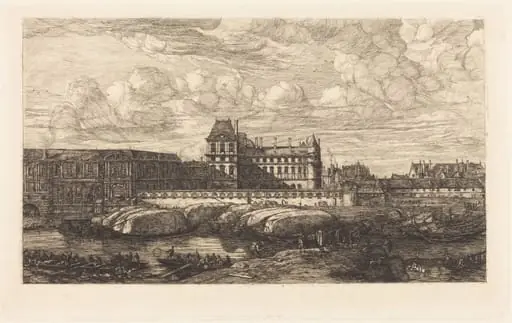
Les deux grandes vues de Paris: Vue du Louvre
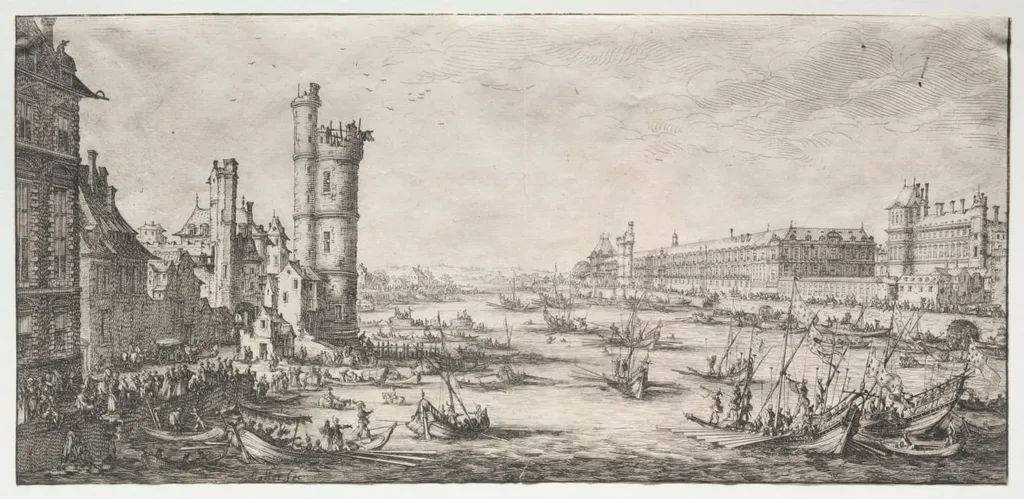
Les deux grandes vues de Paris: Vue du Louvre is a print by the Baroque artist Jacques Callot. It dates from 1629 and is held in the collection of the Cleveland Museum of Art.
About this work
Overview
Executed in etching, it captures a bustling urban landscape along the Seine, emphasizing architectural detail and daily activity.
Created in 1629 by Jacques Callot, this print is one of two large-scale views of Paris depicting the Louvre’s riverside facade. Executed in etching, it captures a bustling urban landscape along the Seine, emphasizing architectural detail and daily activity. The work is part of a rare series documenting the city’s topography during the early 17th century and is currently held in the collection of The Cleveland Museum of Art.
Subject & Meaning
The scene presents the Louvre’s riverside wing as a dominant architectural presence, flanked by dense residential structures and a crowded bridge. Boats of varying sizes populate the river, suggesting commercial and personal transit. The composition reflects Paris as a living, functioning city rather than an idealized monument, offering a documentary perspective on urban life under Louis XIII.
Technique & Style
Callot employed fine-line etching to render intricate textures and spatial depth. He used controlled chiaroscuro—delicate contrasts between light and shadow—to model buildings, vessels, and figures, giving the flat sheet a sense of volume. The precision of his lines captures architectural ornamentation and the movement of water, demonstrating his mastery of the medium and his attention to observational detail.
History & Provenance
The print was produced during a period of renewed interest in topographical imagery in France. Callot, known for his detailed cityscapes, created this work as part of a commissioned series. It entered the Cleveland Museum of Art’s collection in the 20th century, having passed through several European private holdings before its acquisition, preserving its original state and inscriptions.
Context
In the 1620s, Paris was undergoing architectural expansion under royal patronage. Callot’s views align with a growing European trend of documenting urban environments with accuracy. Unlike idealized panoramas, his work records real structures and transient activity, reflecting both civic pride and the increasing value placed on empirical observation in early modern visual culture.
Legacy
Callot’s Paris views influenced later topographical artists and printmakers who sought to depict cities with fidelity. His technical precision and compositional clarity set a standard for urban documentation in print. Though not widely exhibited in his lifetime, these works remain important references for historians studying early modern Parisian infrastructure and daily life.
Artist & collection
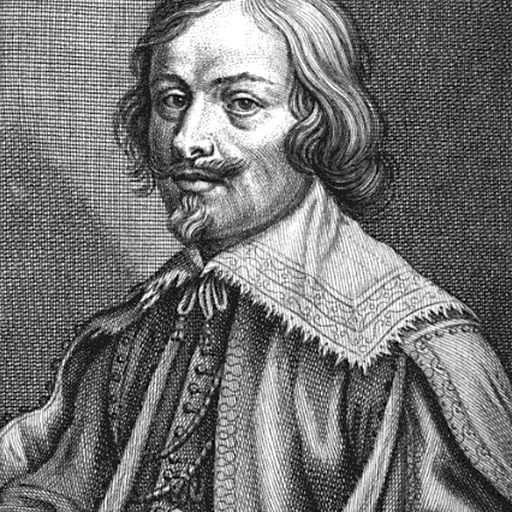
Artist
Jacques Callot was a baroque printmaker and draftsman from the Duchy of Lorraine.

 Holy Family at supper
 Restoration of the Aqueduct at Pisa
 Restoration of the Aqueduct at Pisa
 Square in Paris with Many Figures
 Square in Paris with Many Figures
 Horsemen Attacked by Robbers
 HOW WILL A COVERED PART BE CORRECTED?HOW WIKA A COVERED HEART DEED CORRECTED?
![Christ Walking on the Water [second plate], by Jacques Callot](https://artifactworldgallery.com/img/jacques-callot--christ-walking-on-the-water-second-plate--2069f3bfe4cb2126-w320.webp) Christ Walking on the Water [second plate]
Christ Walking on the Water [second plate]
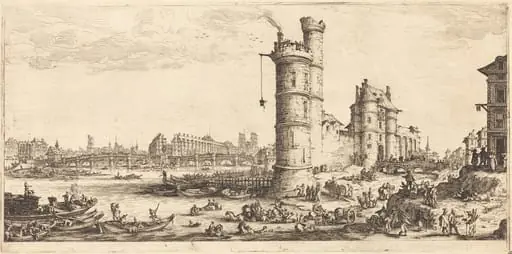 View of the Pont Neuf
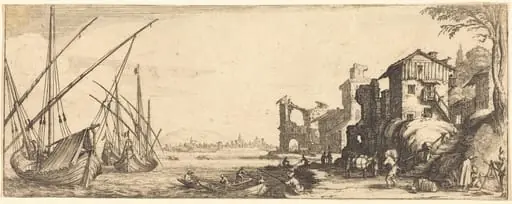
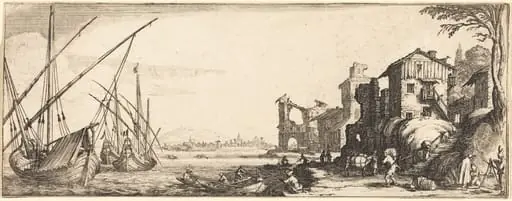 The Small Port
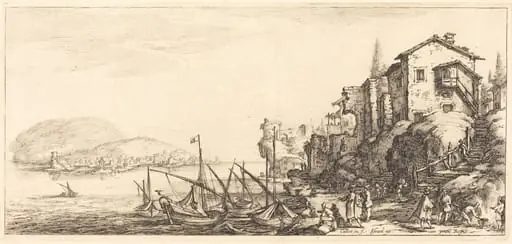 The Small Port
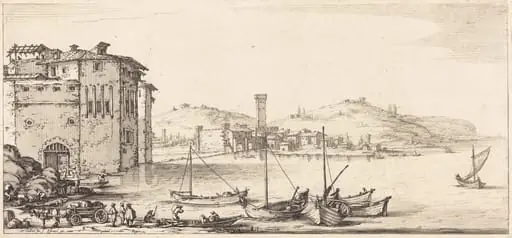 Loading Merchandise
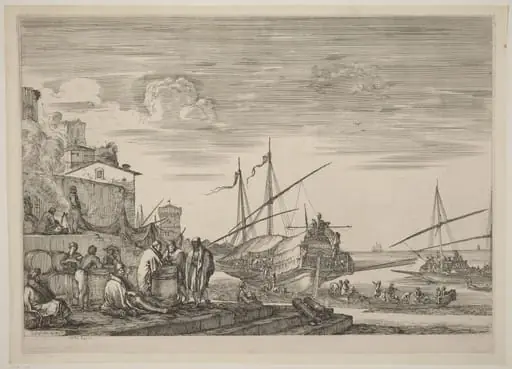 View of Several Houses Facing the Port
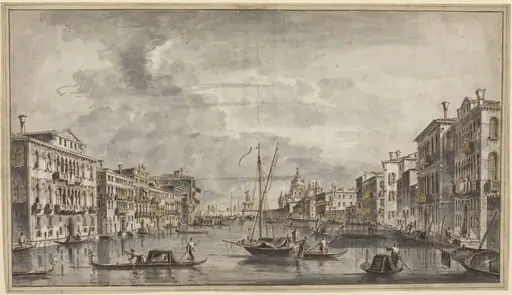 The Grand Canal Looking Toward the Salute and the Dogana
 The Small Port
 L'ancien Louvre d'après une peinture de Zeeman, 1651 (The Old Louvre, from a Painting by Zeeman, 1651)
 Views: The Market on the Molo