Artwork
La Provocation
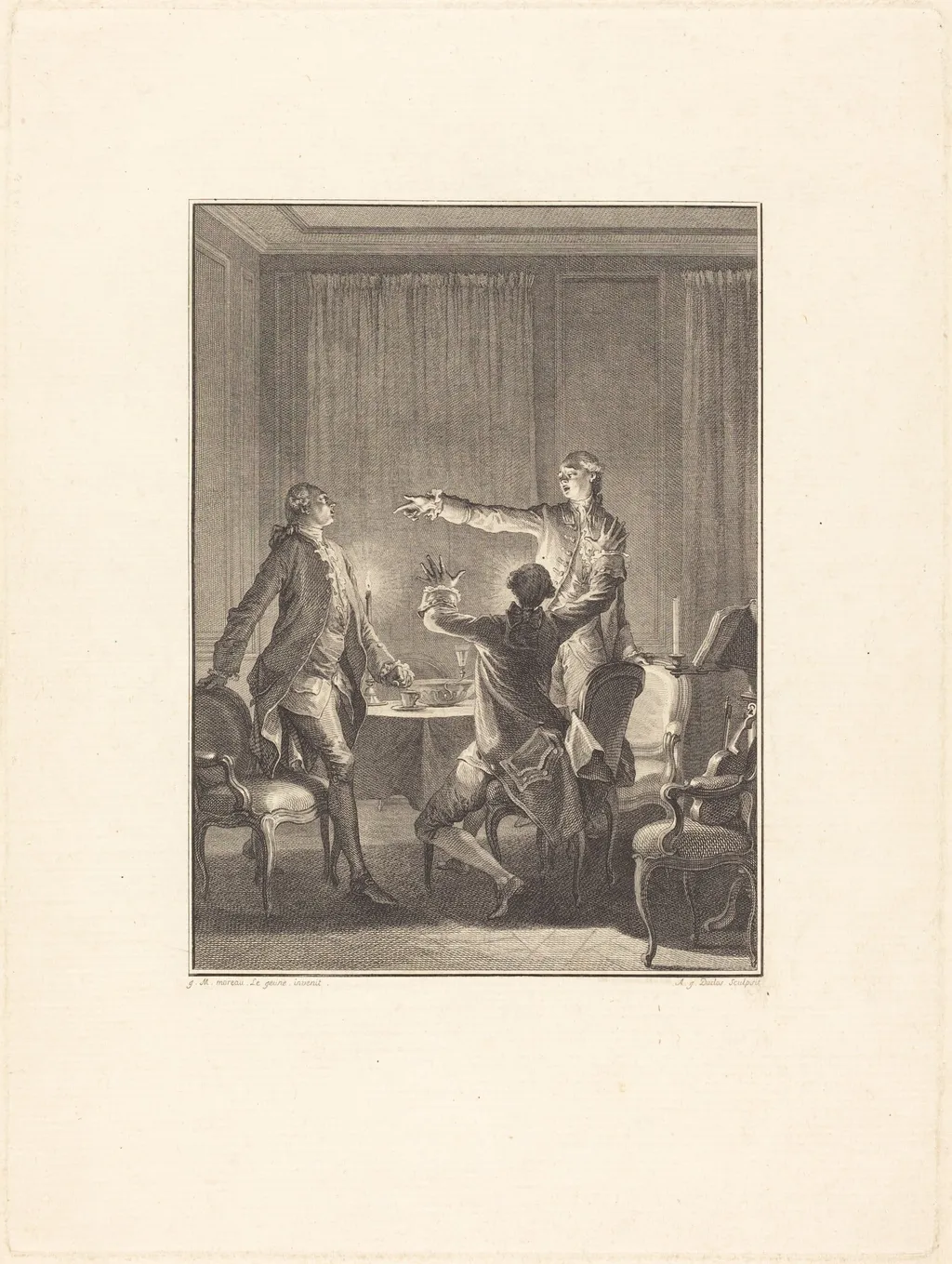
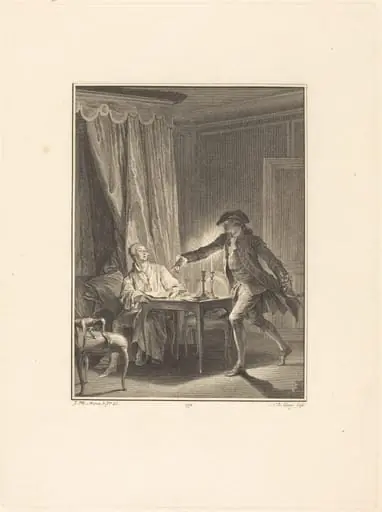
La Provocation is an ink print by the Baroque artist Antoine-Jean Duclos. It dates from 1768 and is held in the collection of the National Gallery of Art.
About this work
Overview
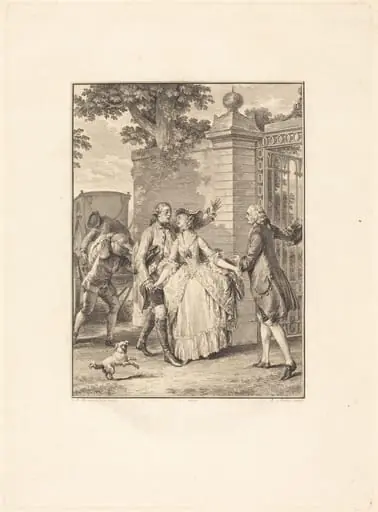
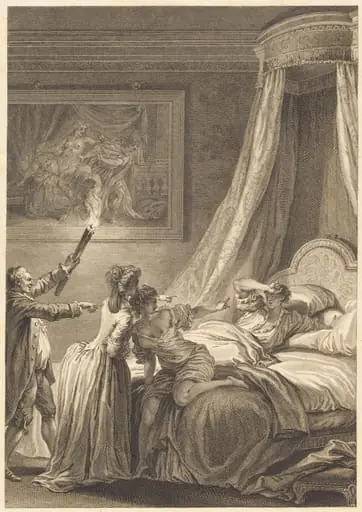
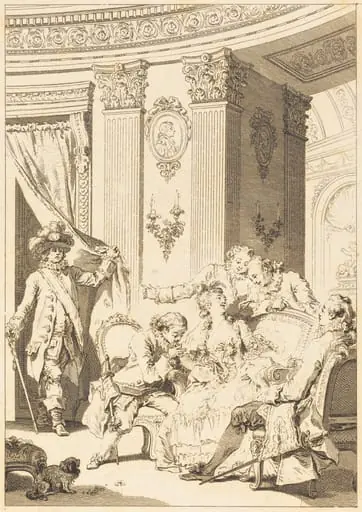
The composition centers on a standing figure gesturing toward two seated counterparts, suggesting confrontation or accusation.
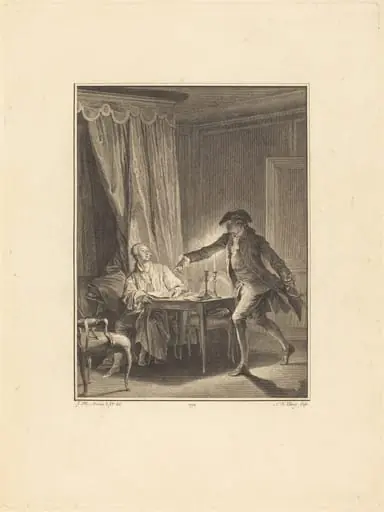
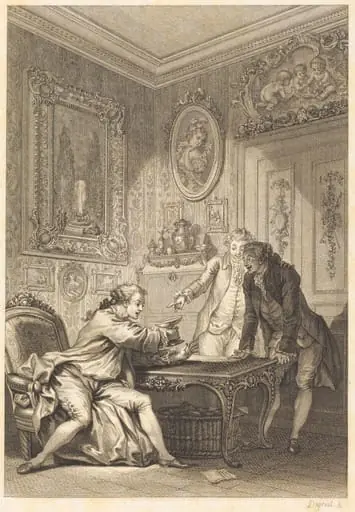
La Provocation is an 1768 print by Antoine-Jean Duclos, executed in etching and engraving. It captures a moment of psychological tension among three men in a modest interior. The composition centers on a standing figure gesturing toward two seated counterparts, suggesting confrontation or accusation. The setting, rendered with precise linework, includes a table with a candle and book, reinforcing the gravity of the scene. The work belongs to a tradition of 18th-century narrative prints that explore social dynamics through quiet, charged moments.
Subject & Meaning
The scene depicts a formal gathering turned confrontational. The standing man, dressed in a coat and hat, appears to issue a challenge or rebuke, while the seated figures look upward, their expressions unreadable but their posture attentive. The presence of a book and lit candle implies a setting of intellectual or legal deliberation. The work does not clarify the nature of the provocation, inviting viewers to interpret the unspoken conflict—perhaps political, moral, or personal—within the rigid structures of polite society.
Technique & Style
Duclos employs fine, controlled lines typical of late Baroque engraving to model form and texture. Shading is achieved through cross-hatching and delicate stippling, giving depth to fabrics, furniture, and architectural details. The candlelight casts subtle shadows, enhancing the spatial realism. The precision of the technique underscores the formality of the scene, while the restrained palette of ink on paper focuses attention on gesture and expression rather than color or ornament.
History & Provenance
Created in 1768, La Provocation was likely produced for a private or scholarly audience interested in moral or social commentary. Few records exist of its early ownership, but it aligns with the period’s interest in prints that illustrated human behavior under social pressure. The work entered institutional collections in the 19th century, where it was preserved as an example of French graphic art from the ancien régime’s final decades.
Context
In mid-18th-century France, printmaking flourished as a medium for exploring social norms and tensions outside official art institutions. Duclos’s work reflects a broader trend of genre scenes that captured private moments of conflict, often hinting at class dynamics or moral dilemmas. The formal attire and interior setting mirror the etiquette of the bourgeoisie and minor nobility, while the unresolved tension suggests the fragility of social harmony amid rising Enlightenment-era scrutiny of authority.
Legacy
La Provocation remains a quiet but compelling example of French graphic art from the decades before the Revolution. Though not widely reproduced or celebrated in its time, it contributes to the understanding of how artists used print to examine interpersonal power and restraint. Its endurance in museum collections reflects its value as a document of social nuance, rather than as a dramatic spectacle.
Artist & collection