Artwork
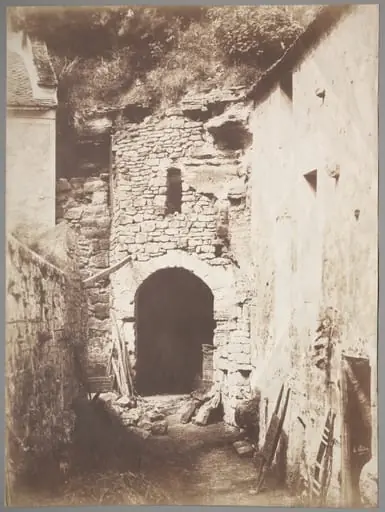
Arch in Farmyard, Swansea
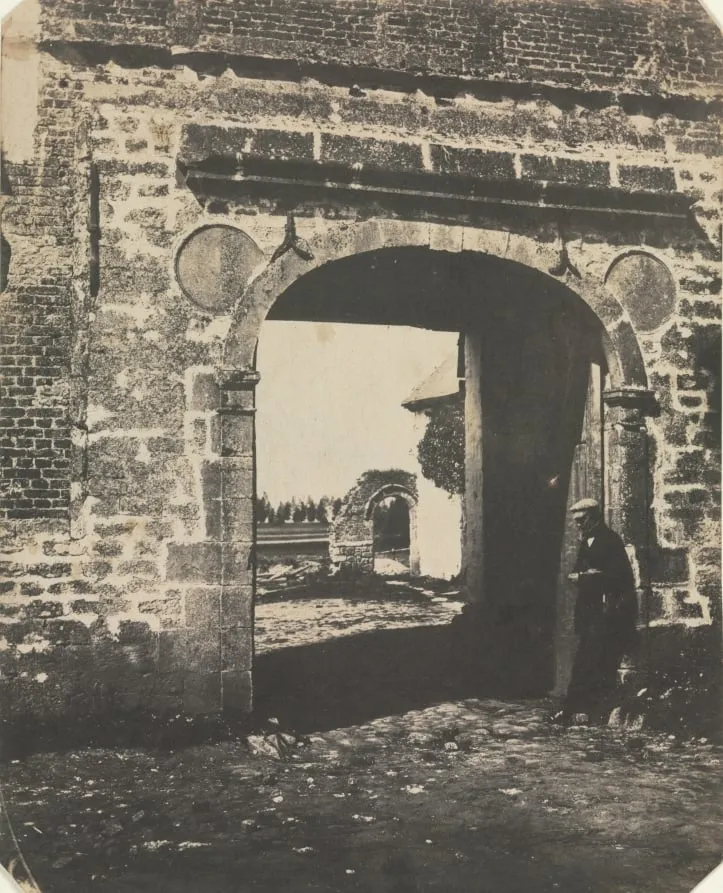
Arch in Farmyard, Swansea is a photography by the Romanticist artist Calvert Richard Jones. It dates from 1845 and is held in the collection of the Cleveland Museum of Art. Taken in the mid-19th century, this calotype captures a rural archway in a Welsh farmyard, framed by weathered stonework and open sky.
About this work
Overview
Taken in the mid-19th century, this calotype captures a rural archway in a Welsh farmyard, framed by weathered stonework and open sky. The image reflects the technical precision and quiet observation characteristic of early photographic practice. Unlike later documentary styles, it balances formal composition with subtle narrative, inviting contemplation rather than declaration.
Subject & Meaning
The central arch, solid and enduring, contrasts with a second, crumbling arch receding into the distance. A solitary figure leans against the foreground structure, not as a subject of action but as a quiet marker of presence. This juxtaposition suggests the slow erosion of human-made forms against time, without overt sentiment or moralizing.
Technique & Style
Executed in calotype, the image exhibits soft tonal gradations and a matte surface typical of paper negatives. Jones employed careful framing and natural light to emphasize texture in stone and foliage. The inclusion of a human figure, minimal and unposed, serves both compositional and conceptual purposes, anchoring scale while reinforcing the theme of transience.
History & Provenance
This image belongs to a series documenting vernacular structures, preserved through private collections before institutional acquisition.
John Dillwyn Llewelyn, known as Jones in some records, transitioned from mathematics and clergy to photography after encountering Talbot’s calotype process in 1845. He produced a body of work focused on architectural ruins and rural scenes across Britain and the Mediterranean. This image belongs to a series documenting vernacular structures, preserved through private collections before institutional acquisition.
Context
During the 1840s and 1850s, photography emerged as a tool for recording architectural heritage amid industrialization. Jones’s work aligned with broader antiquarian interests but avoided romanticized grandeur. His focus on modest, everyday structures reflected a shift toward valuing the ordinary as historically significant.
Legacy
Jones’s photographs contributed to early efforts to document Britain’s rural architecture before widespread modernization. His use of the calotype, though less sharp than later processes, lent a contemplative quality that influenced later pictorialist approaches. His images remain valuable for their unembellished record of 19th-century vernacular landscapes.
Artist & collection
Artist
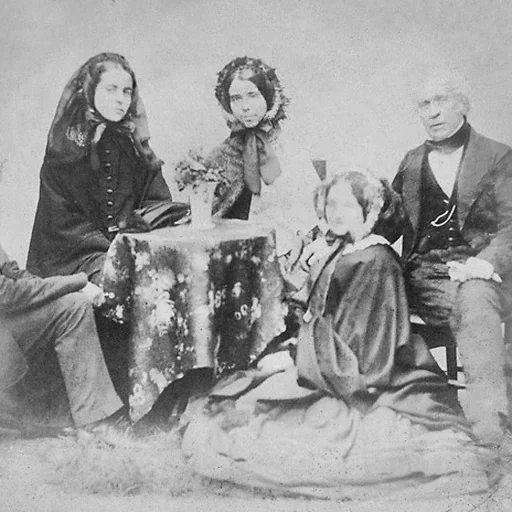
Calvert Richard Jones (4 December 1804 – 7 November 1877) was a Welsh mathematician and painter, best known for his seascapes.

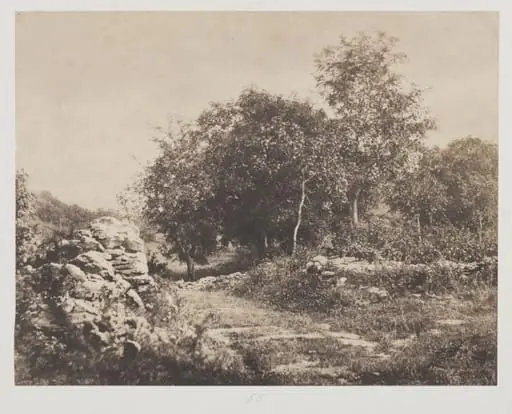 Untitled (Scene of Fontainebleau)
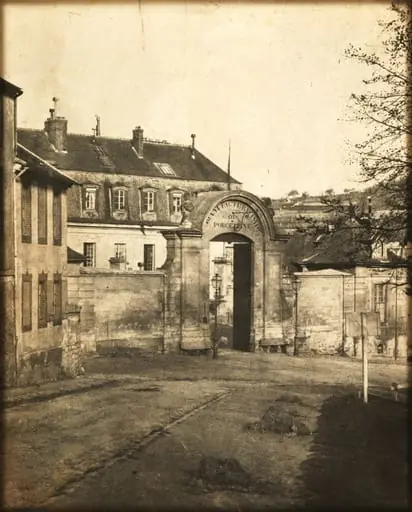 Doorway to Sèvres Factory
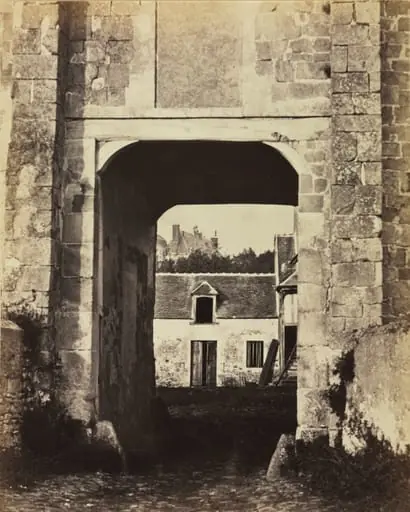 Rural Estate Seen Through Archway
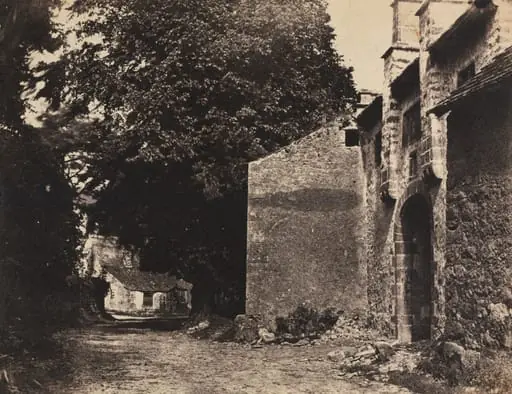 Gateway to Borwick Hall, Lancashire
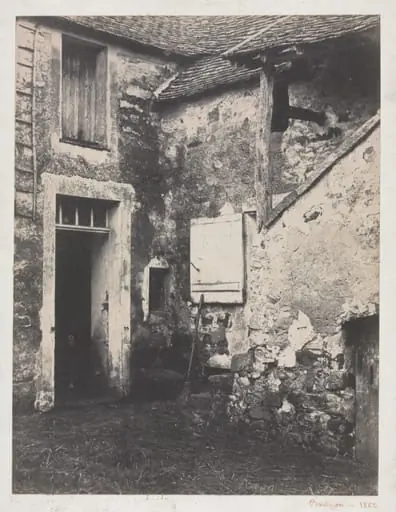 Farmyard
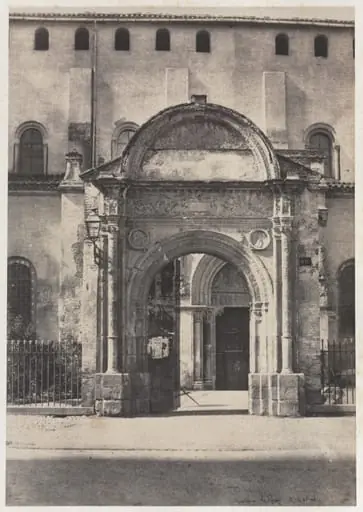 Porte Bachelier, Eglise Saint-Sernin, Toulouse (Haute-Garonne)
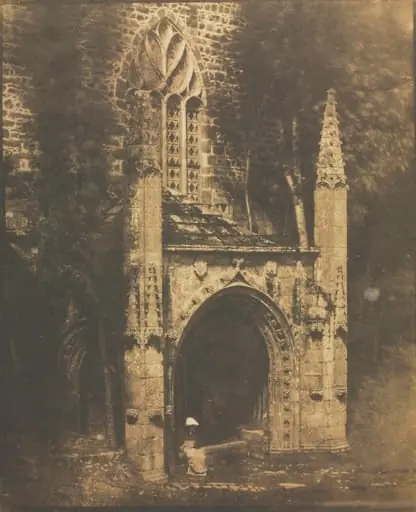 Fountain of Notre-Dame at Saint-Brieuc, Brittany
 Church at Auvers
 Rural Scene with Stone Building and Cross
 A Corner of a Rental Garden
 Rosetta Gate, Alexandria
 Behind the Troglodyte Farm