Artwork
Death of Adonis
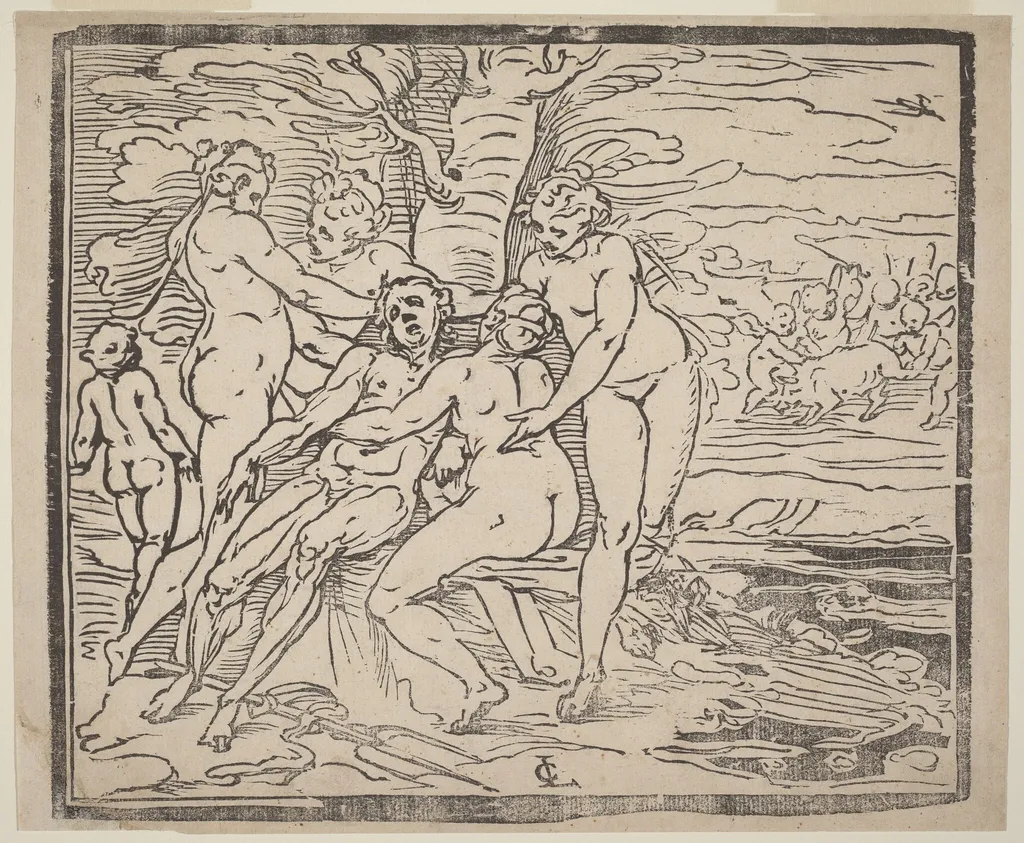
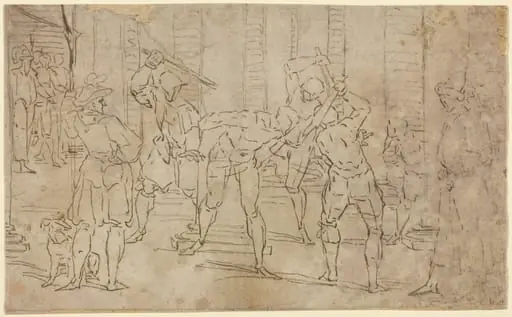
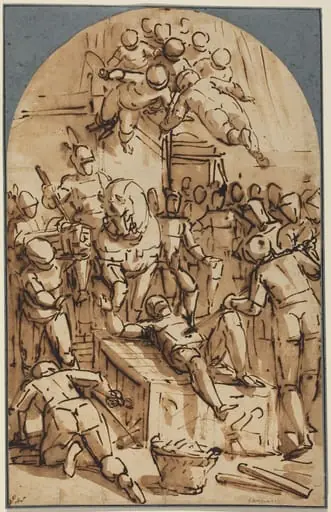
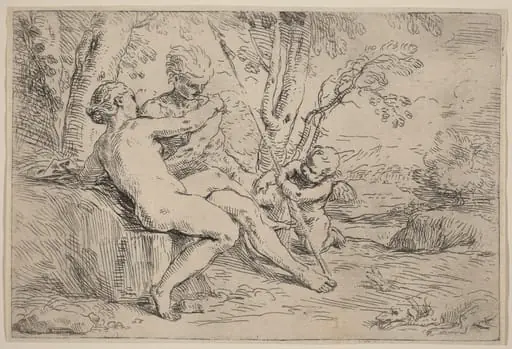
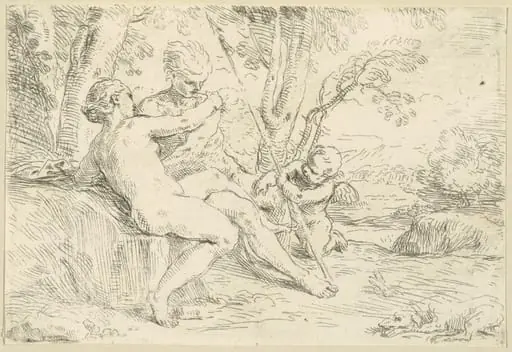
Death of Adonis is an ink print by the Renaissance artist Luca Cambiaso. It dates from 1562 and is held in the collection of the National Gallery of Art.
About this work
Overview
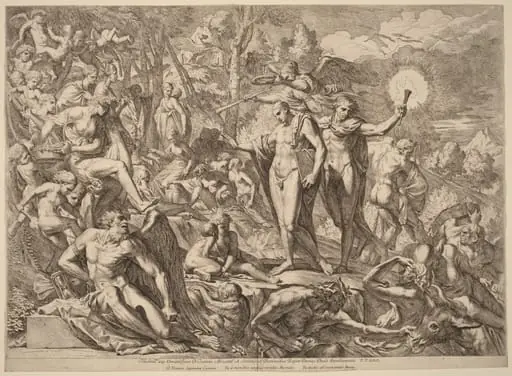
Luca Cambiaso’s woodcut, dated around 1562, portrays the mythic episode of Adonis’s death. Executed on laid paper, the print presents a chaotic tableau where the lifeless, nude Adonis lies amid a group of figures reacting with alarm and grief. A stylized landscape of trees, hills and distant animals frames the scene, amplifying the sense of disorder that surrounds the central tragedy.
Subject & Meaning
The composition captures the moment after the hunter Adonis is mortally wounded, a narrative drawn from classical mythology. The surrounding figures—likely his lover Venus, a grieving companion, and onlookers—express a range of emotions from shock to sorrow, underscoring the fragility of youthful beauty and the inevitability of fate in ancient storytelling.
Technique & Style
Rendered in woodcut, Cambiaso employs bold, decisive lines that carve stark contrasts between light and shadow. The carving creates textured surfaces that suggest depth, while the use of cross‑hatching adds subtle tonal variation. The stylized background, with simplified foliage and distant fauna, reflects a mannerist tendency toward dramatic composition rather than naturalistic detail.
History & Provenance
Created in the mid‑sixteenth century, the print belongs to a period when Italian artists explored mythological subjects through printmaking. Though specific ownership records are sparse, the work has been catalogued among Cambiaso’s printed oeuvre and appears in several collections of Renaissance graphic art, indicating its circulation among connoisseurs of the era.
Artist & collection