Artwork
Portrait of Tishin
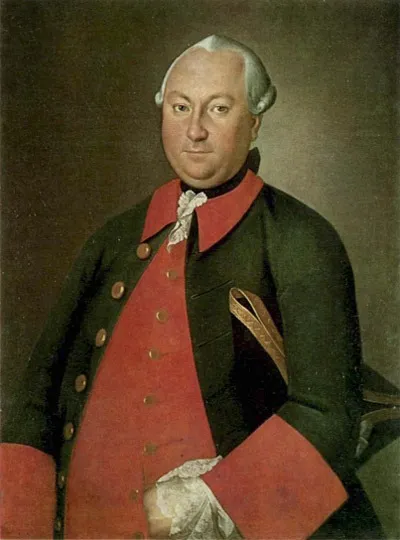
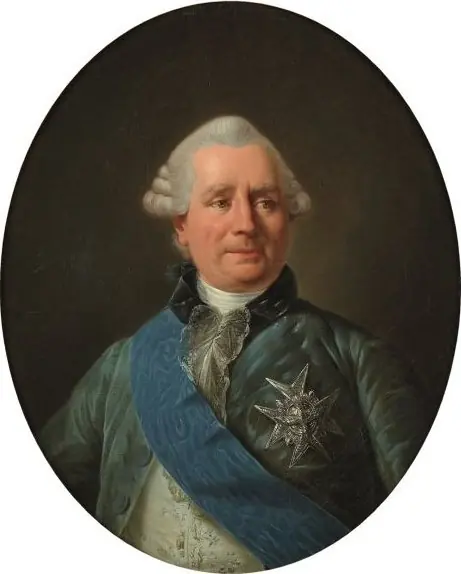
Portrait of Tishin is an oil painting by the Rococo painting artist Carl Ludwig Johann Christineck. It dates from 1764 and is held in the collection of the Hermitage Museum.
About this work
Overview
Christineck, known for serving aristocratic patrons, produced this work during a period when Russian elites embraced Western European artistic conventions.
Painted in 1764 by Carl Ludwig Johann Christineck, a German-born artist working in St. Petersburg, this oil portrait captures a Russian nobleman of the late 18th century. Christineck, known for serving aristocratic patrons, produced this work during a period when Russian elites embraced Western European artistic conventions. The painting remains part of the State Hermitage Museum’s collection, reflecting the cultural alignment of the Russian court with continental styles.
Subject & Meaning
The sitter, identified only as Tishin, appears as a member of the Russian aristocracy, dressed in formal attire that signals status and refinement. The red sash, gold buttons, and powdered wig align with courtly dress codes of the time, suggesting official rank or ceremonial role. His serious expression and restrained posture convey dignity rather than warmth, consistent with the formal expectations of elite portraiture in imperial Russia.
Technique & Style
Christineck employed the Rococo idiom with restrained elegance, favoring soft modeling and precise detail over ornamental excess. The dark background isolates the figure, enhancing the texture of fabric and the sheen of metal buttons. The white cravat and powdered wig are rendered with fine brushwork, while the red lapels and sash provide subtle contrast. The composition avoids theatricality, emphasizing the sitter’s presence through quiet realism.
History & Provenance
Commissioned during Catherine the Great’s reign, the portrait entered the imperial collection shortly after its completion. It has remained in state custody since, now housed in the State Hermitage Museum. Its uninterrupted provenance reflects its status as a documented work of courtly art, preserved as part of Russia’s cultural heritage rather than as a private possession.
Context
In mid-to-late 18th-century Russia, portraiture served as a tool of social affirmation for the nobility. Artists like Christineck, trained in German traditions, were favored for their ability to blend Western aesthetics with Russian aristocratic identity. This portrait exemplifies how foreign-born painters helped shape a visual language of power that mirrored European courts while asserting local prestige.
Legacy
Though Christineck is not widely known today, his portraits, including this one, contribute to the historical record of Russian elite culture. The painting remains a representative example of how foreign artistic influences were absorbed and adapted in imperial Russia. Its preservation in the Hermitage underscores its role as a document of social hierarchy and aesthetic taste in the Age of Enlightenment.
Artist & collection
Artist
Carl Ludwig Johann Christineck
Carl-Ludwig Christinek (1730/1732–c.1794) was a Russian painter. Christinek was born to German parents and was initially taught in German, but lived his whole life in Russia. He painted primarily portraits of Russian…

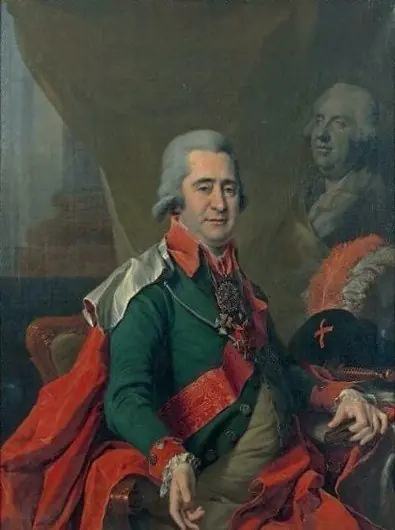 Portrait of Count I. Bezborodko
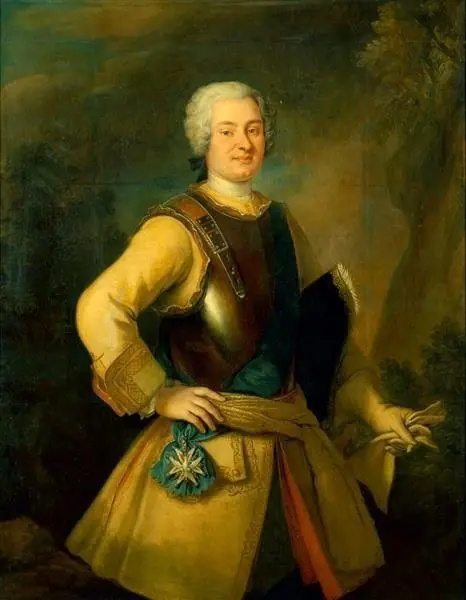 Graf Friedrich August von Rutowsky (1702-1764)
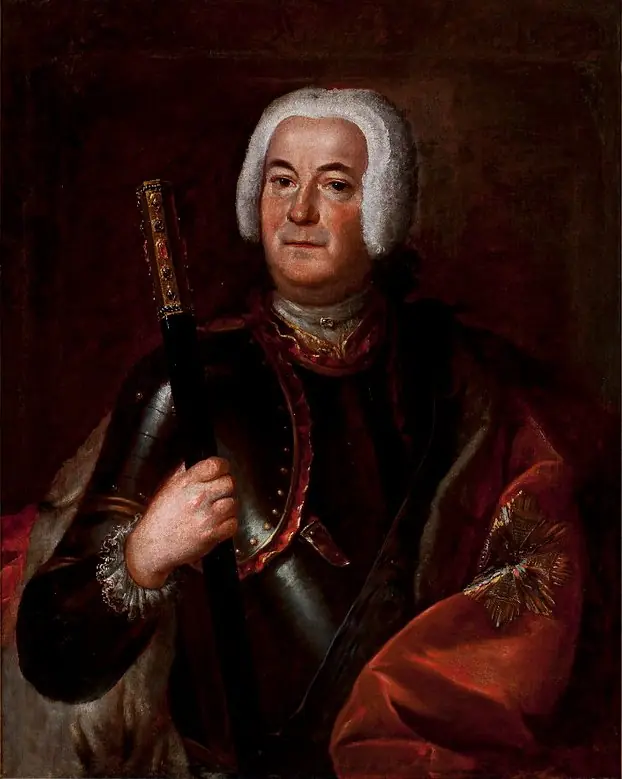 Portrait of Paweł Karol Sanguszka (1680–1750), Grand Marshal of Lithuania
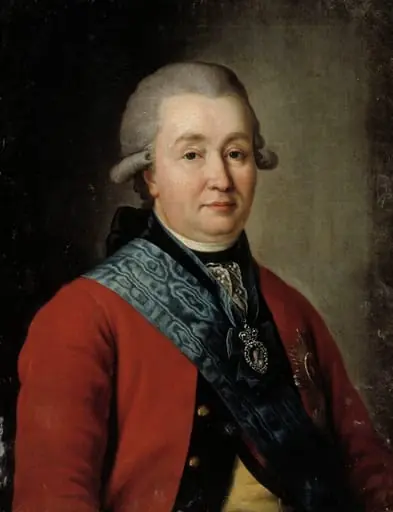 Ruhtinas Grigori Orlov
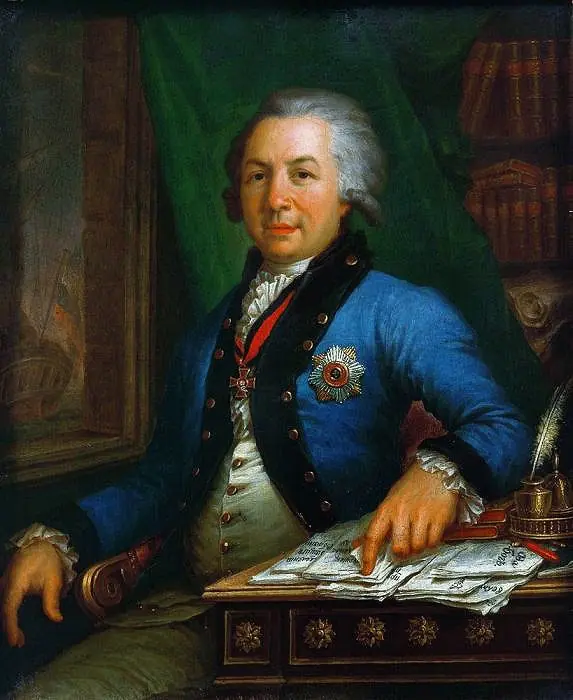 Portrait of Gavrila Romanovich Derzhavin
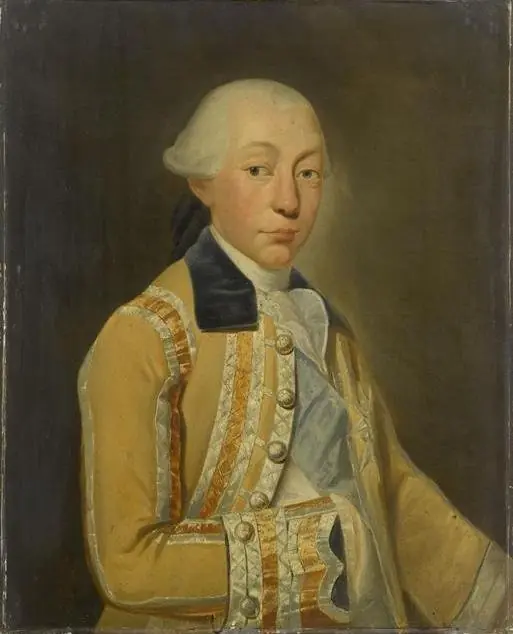 Portrait of Louis François Joseph de Bourbon, Prince of Conti in hunting costume
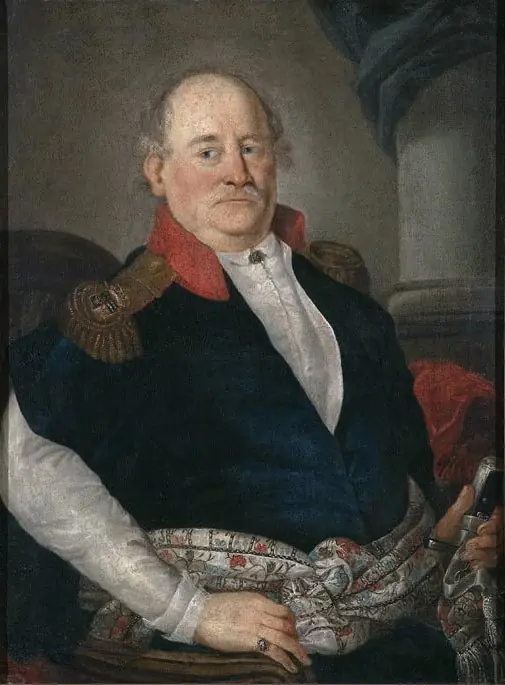 Portrait of Marcin Morawski (1770–1830)
 Bildnis des Karl August von Pfalz-Zweibrücken-Birkenfeld
 Baronul Samuel von Brukenthal (în registrul inventar: Baron Samuel von Brukenthal, guvernatorul Ardealului). Pandant: Baroana Sophia Katharina von Brukenthal născută von Klocknern.
 Comitele Samuel von Baussnern
 Portrait of Infante António Francisco of Portugal (1695-1757)
 The Count de Vergennes