Artwork
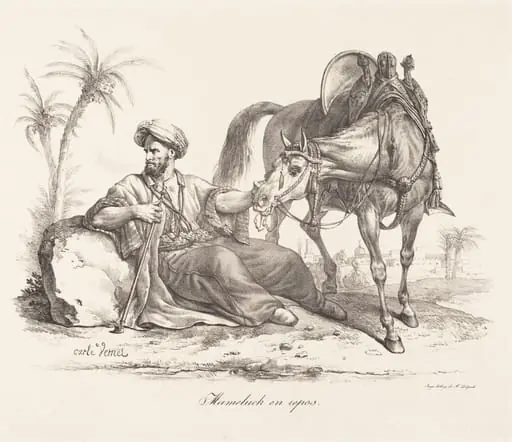
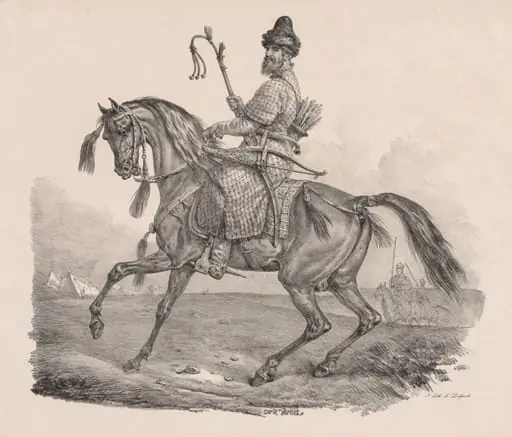
Large Suite of Horses: Mounted Mamelucke
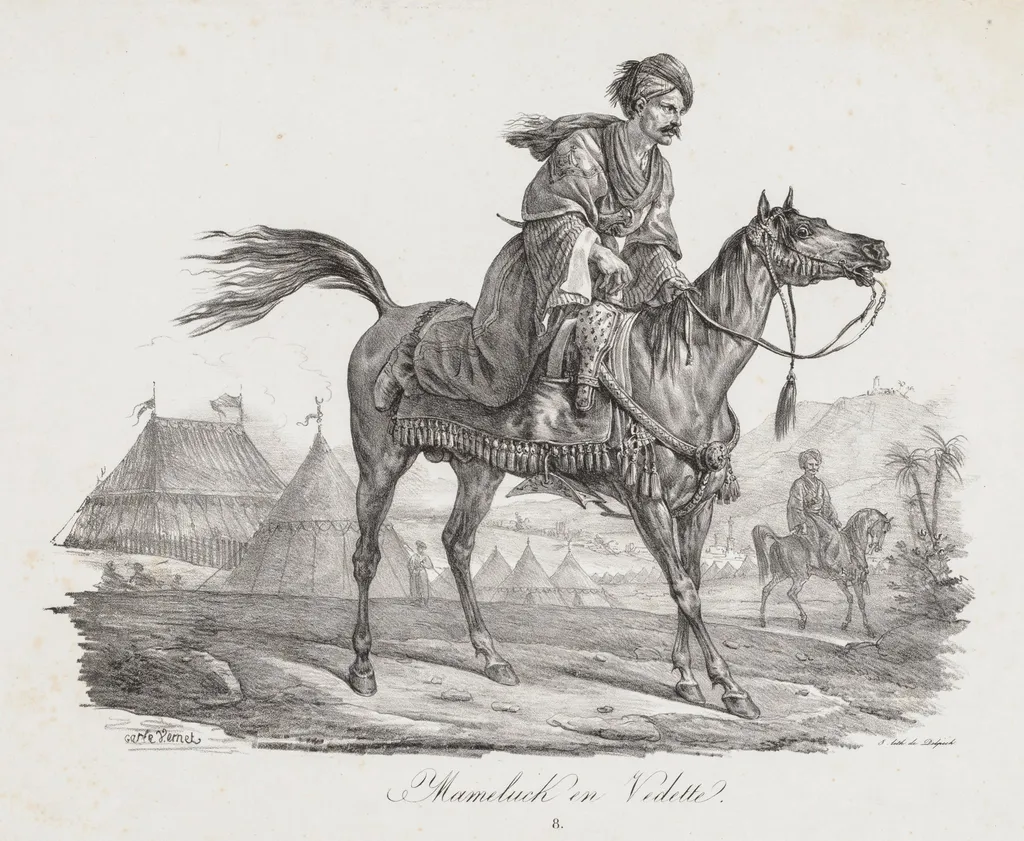
Large Suite of Horses: Mounted Mamelucke is a print by the Romanticist artist Carle Vernet. It dates from 1818 and is held in the collection of the Cleveland Museum of Art.
About this work
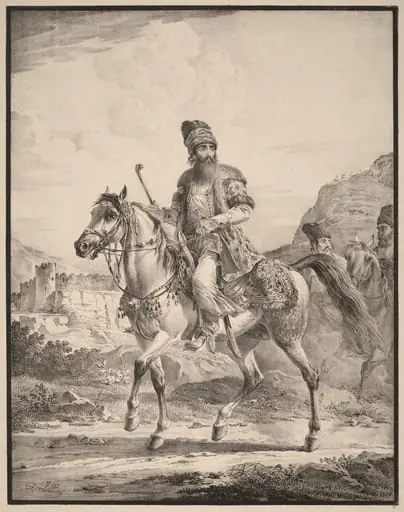
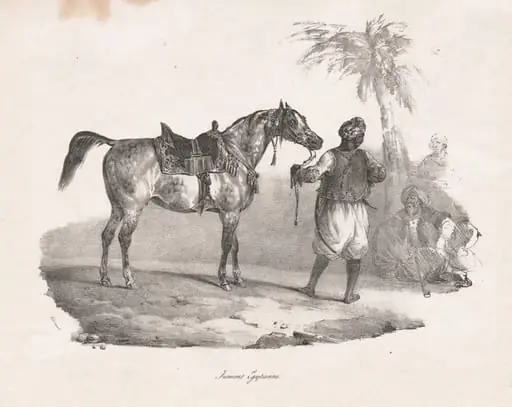
This painting shows a horse and rider in a detailed scene.
The rider is dressed in a formal uniform, which is interesting because it suggests a specific time and place. The uniform and horse are also very detailed, which shows the artist's skill.
You can learn more about this style by looking at the work of artist: Carle Vernet (French, 1758–1836)
Overview
Created around 1818 by French artist Carle Vernet, Large Suite of Horses: Mounted Mamelucke is a print depicting a mounted figure in precise detail. The work belongs to a series focused on equestrian subjects and is part of the collection at The Cleveland Museum of Art. Vernet’s interest in military and animal anatomy is evident in the careful rendering of both rider and steed.
Subject & Meaning
The figure is portrayed as a Mameluke cavalryman, a type of soldier associated with Napoleonic-era forces in Egypt and Syria. His ornate uniform and the horse’s harness suggest a ceremonial or elite military role. The image does not depict action but rather a composed, almost static presence, emphasizing status and discipline rather than combat.
Technique & Style
Vernet employed fine line engraving to achieve intricate detail in the horse’s musculature and the rider’s attire. The composition is tightly controlled, with attention to texture in fabric, metal, and fur. His style blends topographical accuracy with a restrained elegance, characteristic of early 19th-century French academic printmaking.
History & Provenance
The print was produced during Vernet’s mature period, when he was commissioned to document military and equestrian themes for French audiences. It entered the Cleveland Museum of Art’s collection through established acquisition channels in the 20th century, reflecting the museum’s interest in European graphic arts from the Napoleonic era.
Context
Vernet’s work emerged amid a European fascination with Orientalist imagery and military reform. The Mameluke, once a feared warrior class, had been absorbed into French imperial forces, making him a symbol of exoticized military prestige. This print aligns with broader trends in visual culture that romanticized foreign soldiers as embodiments of discipline and nobility.
Legacy
Though not widely exhibited today, the print remains a representative example of Vernet’s contribution to equestrian art. His technical precision influenced later illustrators of military subjects, and the suite of which this print is a part continues to be studied for its documentation of early 19th-century cavalry dress and equine anatomy.
Artist & collection

Artist
Antoine Charles Horace Vernet, better known as Carle Vernet, was a French painter, the youngest child of painter Claude-Joseph Vernet and the father of painter Horace Vernet.