Artwork
Christ in the Garden
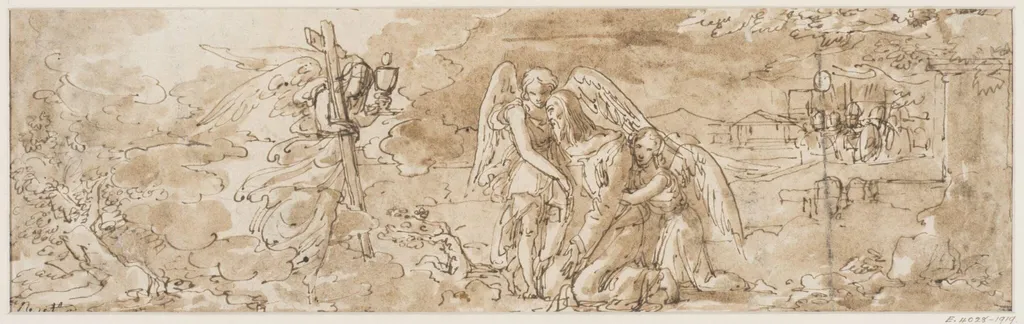
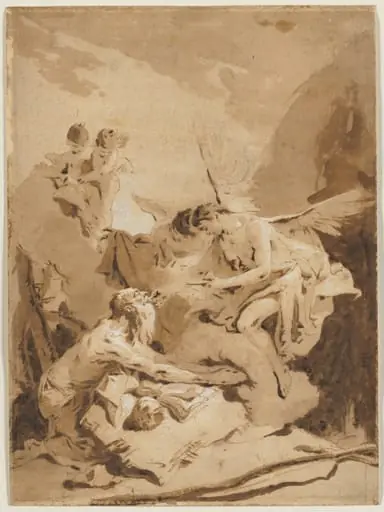
Christ in the Garden is a drawing by Carlo Alberto Baratta. It dates from 1794 and is held in the collection of the Victoria and Albert Museum.
About this work
Overview
Executed with delicate ink lines and soft tonal washes, the composition centers on Christ in prayer, surrounded by two angels and a muted natural setting.
This 1794 pen and wash drawing by Carlo Alberto Baratta portrays Christ in the Garden of Gethsemane, a moment of spiritual preparation before his arrest. Executed with delicate ink lines and soft tonal washes, the composition centers on Christ in prayer, surrounded by two angels and a muted natural setting. The work exemplifies late 18th-century Italian draftsmanship, emphasizing quiet emotion over dramatic intensity.
Subject & Meaning
The scene captures Christ’s moment of anguish and surrender, as described in the Gospels. Kneeling with hands clasped, he is flanked by two angels—one offering a chalice symbolizing his impending suffering, the other observing with solemn attention. The absence of overt turmoil suggests an inner resolve, framing the moment not as a crisis but as a quiet act of acceptance, aligned with devotional ideals of the period.
Technique & Style
Baratta employs fine pen lines, subtle washes, and controlled cross-hatching to model form and suggest depth. Stippling adds texture to the foliage and ground, while the gradation of ink tones creates atmospheric distance in the background landscape. The restrained palette and soft transitions enhance the contemplative mood, guiding the viewer’s focus toward Christ’s still figure without overt contrast or bold strokes.
History & Provenance
Created in 1794, the drawing originates from Baratta’s active period in northern Italy, likely made for private devotion or as a study for a larger work. Its survival in relatively intact condition suggests careful preservation, possibly within a religious or aristocratic collection. No documented exhibition history is known prior to its modern cataloging, but its craftsmanship indicates it was valued by contemporary connoisseurs.
Context
In late 18th-century Italy, religious drawings were often produced as preparatory studies or devotional aids amid shifting secular trends. Baratta’s work reflects a continuation of Counter-Reformation visual piety, where emotional restraint and spiritual clarity were prized. The drawing’s intimacy aligns with a broader trend of private, contemplative imagery, contrasting with the grandeur of public altarpieces of the era.
Legacy
Though not widely published or exhibited, Baratta’s drawing remains a representative example of Italian Neoclassical draftsmanship infused with devotional sensitivity. It contributes to the understanding of how religious themes were sustained in private artistic practice during a time of political and cultural upheaval, preserving a quiet, personal mode of spiritual expression.
Artist & collection

Artist
Carlo Alberto Baratta (1754–1815) was an Italian artist, born in Genoa.

 Saint Mary Magdalene Lifted by Angels
 The Seven Archangels (recto)
![The Ecstasy of Saint Francis [recto], by Sebastiano Ricci](https://artifactworldgallery.com/img/sebastiano-ricci--the-ecstasy-of-saint-francis-recto--5f53f9b59775e5dd-w320.webp) The Ecstasy of Saint Francis [recto]
The Ecstasy of Saint Francis [recto] Anniversary of the Plague at Palermo
 The Adoration of the Magi
 Figure Studies (recto)
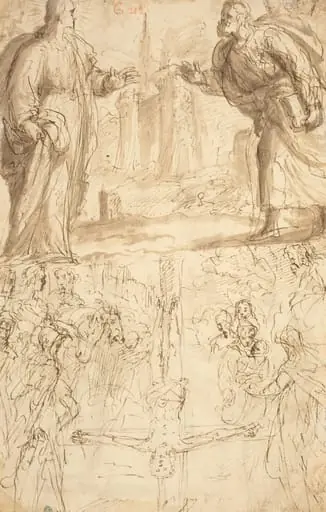 Crucifixion of Saint Peter
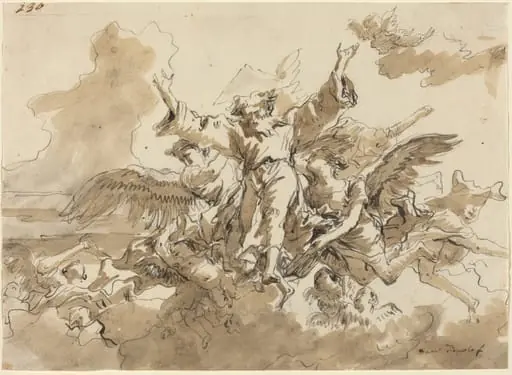 Creation of the Universe
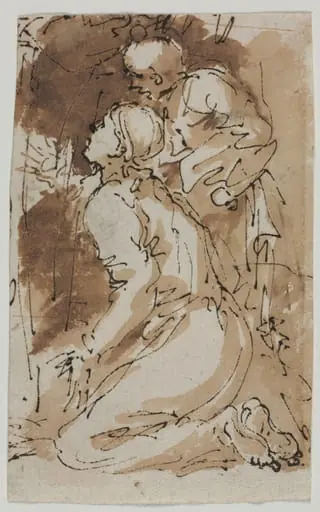 Figure Studies
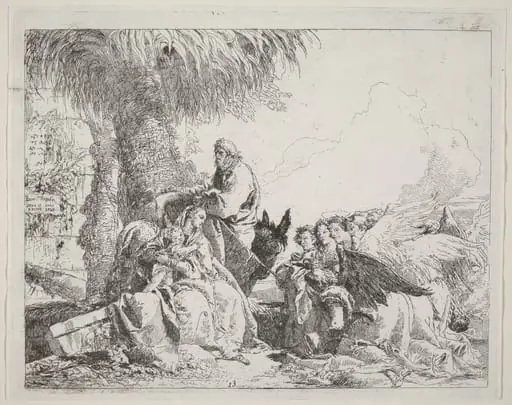 The Rest on the Flight, with Adoring Angels
 The Last Communion of St. Jerome