Artwork
Three Figures
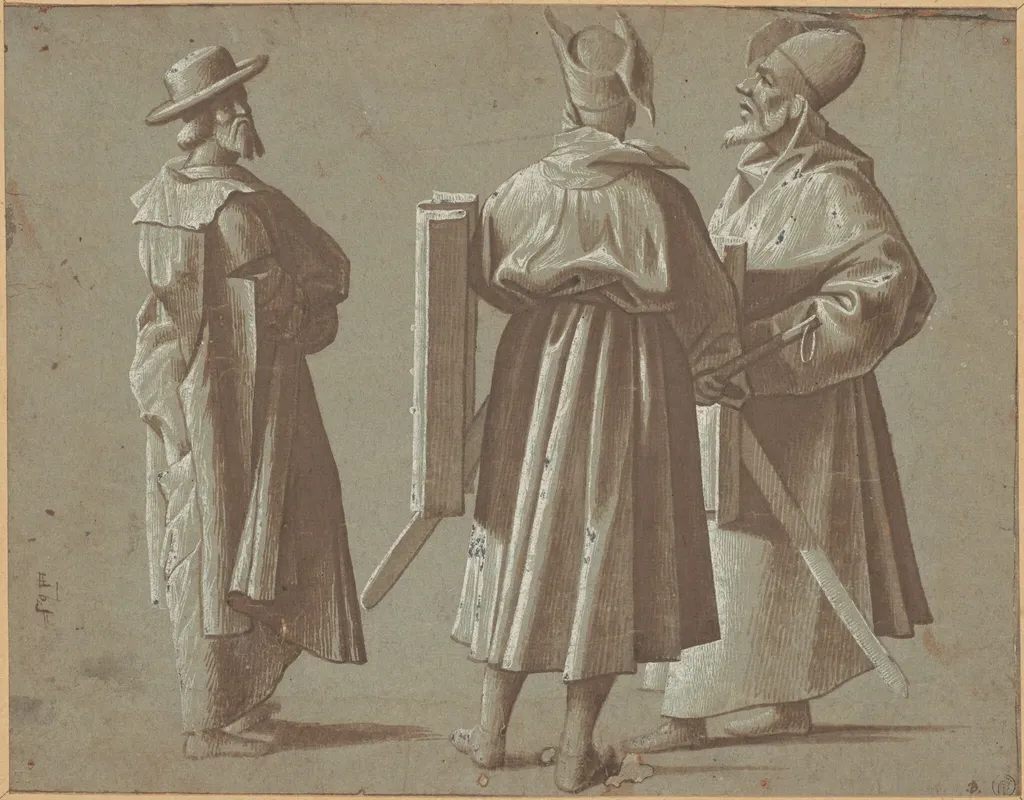
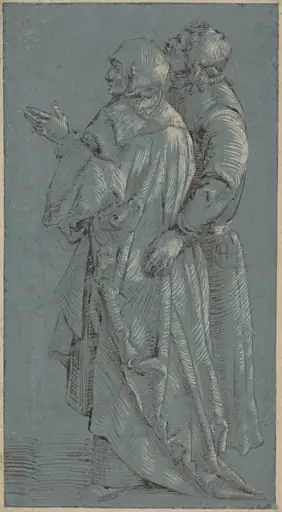
Three Figures is an ink drawing by the Renaissance artist Vittore Carpaccio. It dates from 1496 and is held in the collection of the National Gallery of Art.
About this work
Overview
Created in 1496, this ink drawing by Vittore Carpaccio features three standing figures rendered with fluid lines and selective white highlights. Executed on paper, the work exemplifies the Venetian artist’s skill in capturing form with minimal means. Though a preparatory study, it reveals his sensitivity to posture and spatial relationships, reflecting his broader practice as a narrative painter.
Subject & Meaning
Their proximity and subtle gestures imply a moment of shared attention, though no specific narrative is identified, leaving interpretation open.
The three figures, dressed in archaic garments, appear engaged in a quiet, unspoken interaction. Their varied attire—wide-brimmed hats, hooded robes, fur-lined headwear—suggests distinct social or occupational roles, possibly drawn from historical or biblical archetypes. Their proximity and subtle gestures imply a moment of shared attention, though no specific narrative is identified, leaving interpretation open.
Technique & Style
Carpaccio employed rapid, economical ink strokes to define contours and fabric folds, using white pigment sparingly to suggest light and volume. Areas of the paper remain untouched, emphasizing form through negative space rather than detailed rendering. The absence of heavy shading and the focus on silhouette and movement reflect a sketch-like immediacy, typical of preparatory studies for larger compositions.
History & Provenance
The drawing entered the National Gallery of Art in Washington as part of a significant collection of Renaissance works. Its attribution to Carpaccio is supported by stylistic parallels with his known paintings and drawings from the 1490s. While its original purpose remains uncertain, it likely served as a study for a larger narrative scene, possibly for a commission in Venice.
Context
In late 15th-century Venice, artists like Carpaccio absorbed influences from both local traditions and Northern European models, particularly in the treatment of texture and detail. This drawing aligns with a broader trend of using quick studies to explore figure groupings before executing frescoes or panel paintings, reflecting the workshop practice of the time.
Legacy
Though not a finished work, this drawing illustrates Carpaccio’s ability to convey presence and relationship through minimal means. It contributes to the understanding of how Renaissance draftsmen translated observation into structured compositions, influencing later generations in their approach to figure studies and spatial economy.
Artist & collection
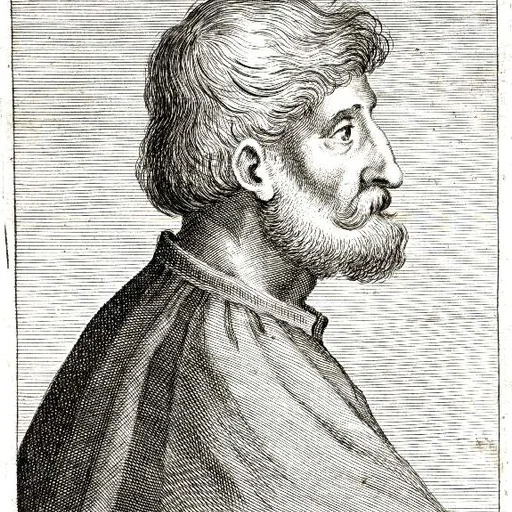
Artist
Vittore Carpaccio (UK: kar-PATCH-ee-oh, US: -PAHTCH-, Italian: ; c. 1460/65 – c. 1525) was an Italian painter of the Venetian school who studied under Gentile Bellini. Carpaccio was largely influenced by the style of…

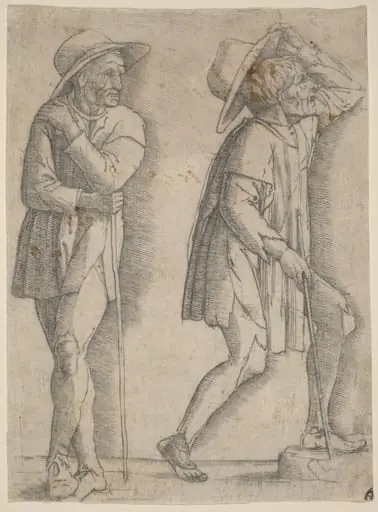 Two Peasants
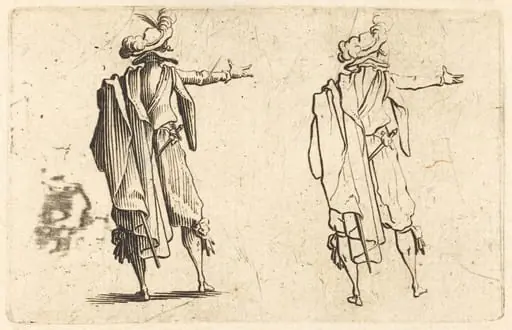 Man seen from Behind with His Right Arm Extended
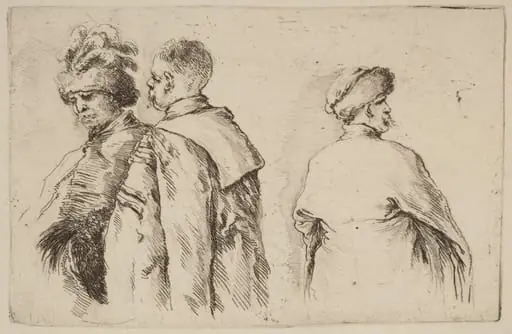 Three Hungarians
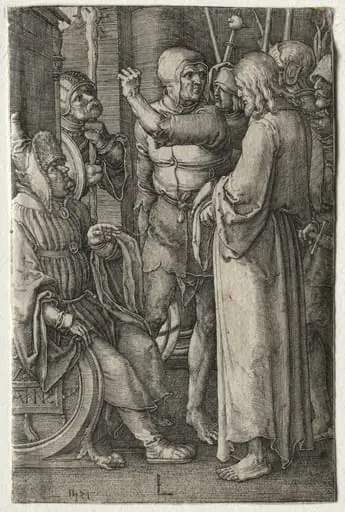 The Passion: Christ Before the High Priest
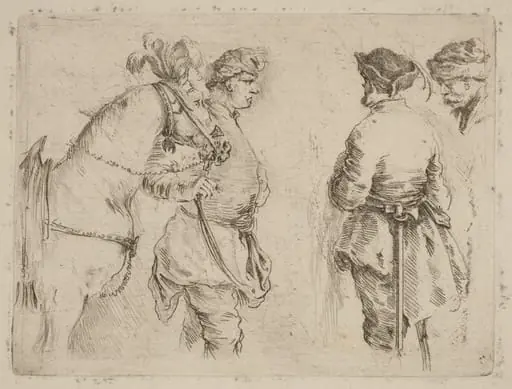 Pole Holding the Bridle of a Horse while Speaking with Two Other Men
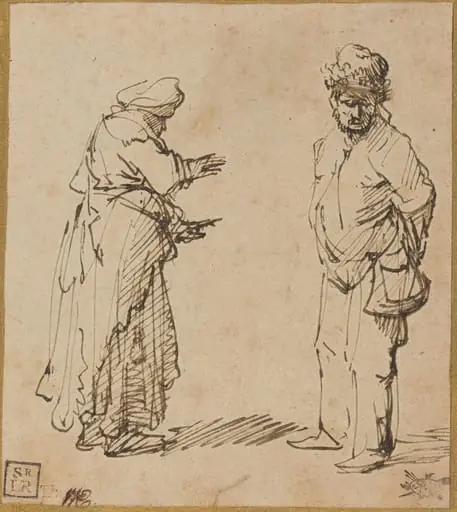 Beggar Man and Woman
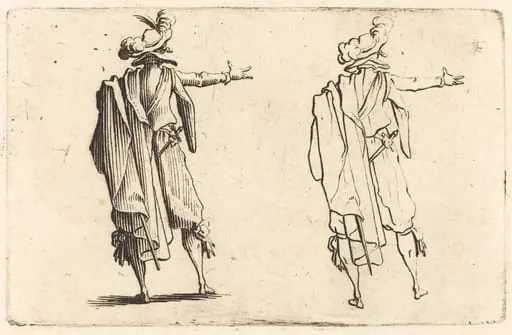 Man seen from Behind with His Right Arm Extended
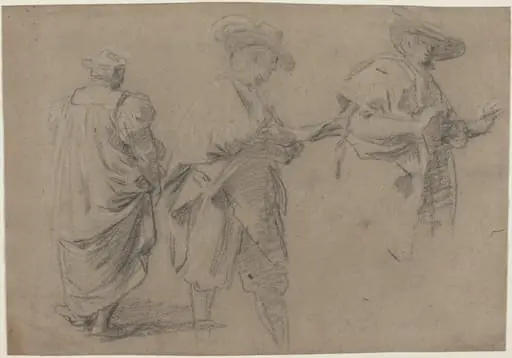 A Judge and Two Gentlemen Lawyers
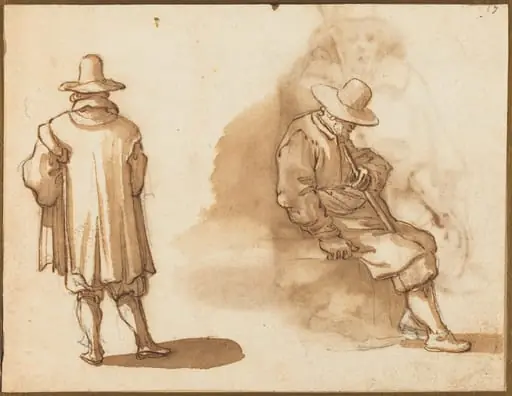 Two Studies of a Man
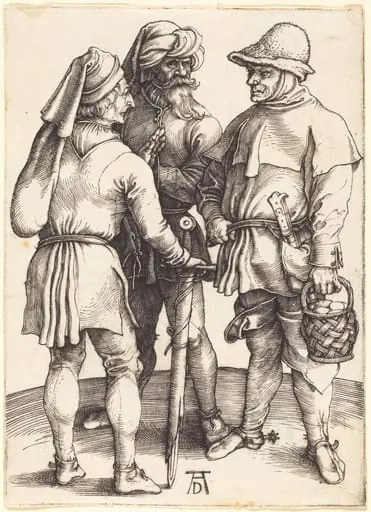 Three Peasants in Conversation
 The Virgin and Saint John
 Two Peasants