Artwork
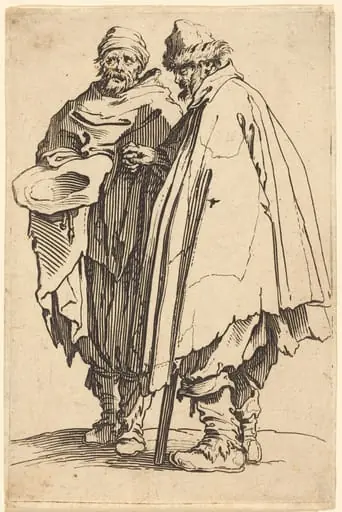
Two Peasants
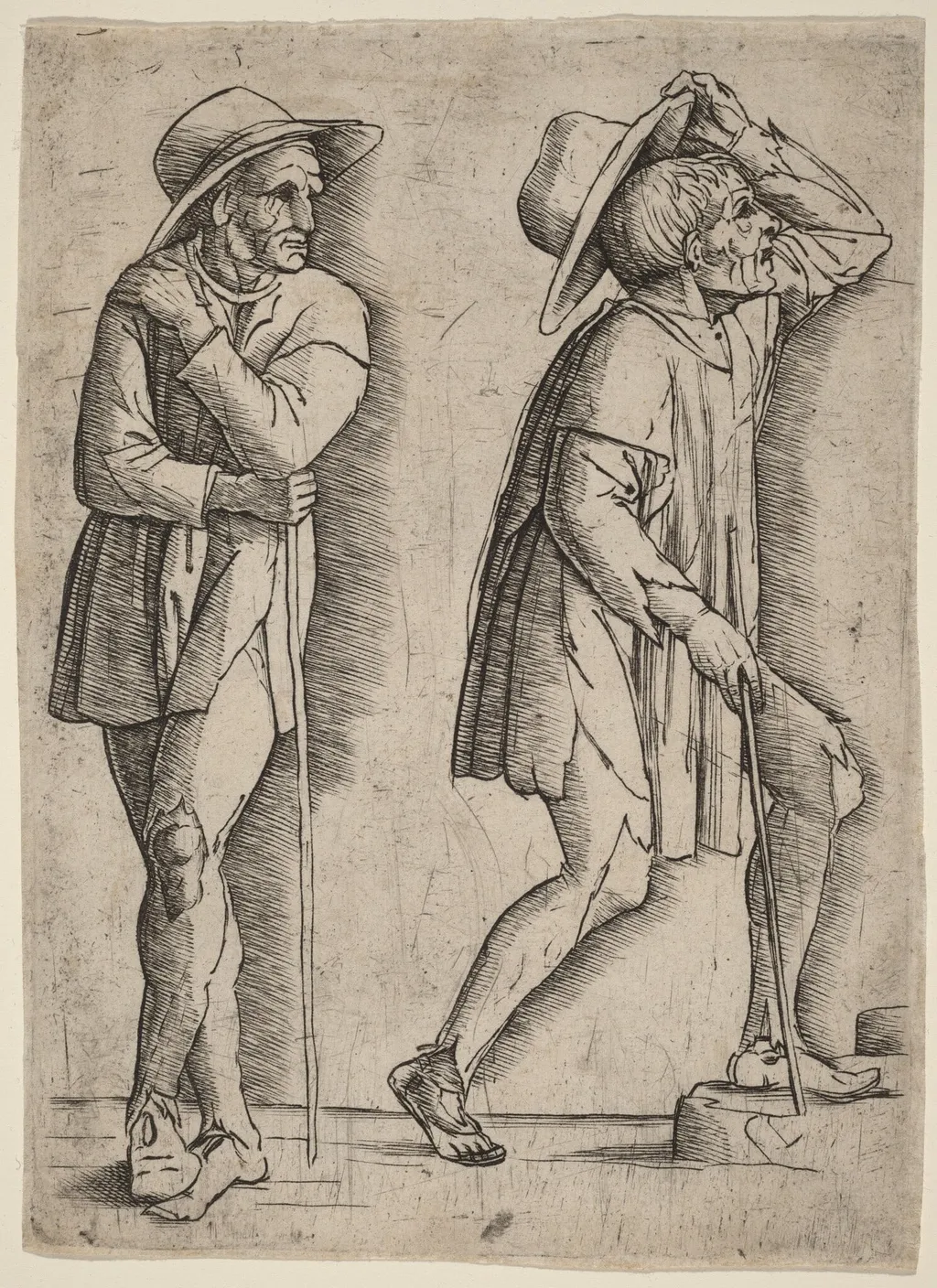
Two Peasants is an ink print by the Renaissance artist Italian 15th Century. It dates from 1494 and is held in the collection of the National Gallery of Art.
About this work
Overview
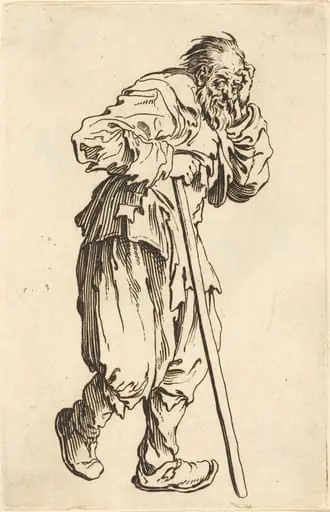
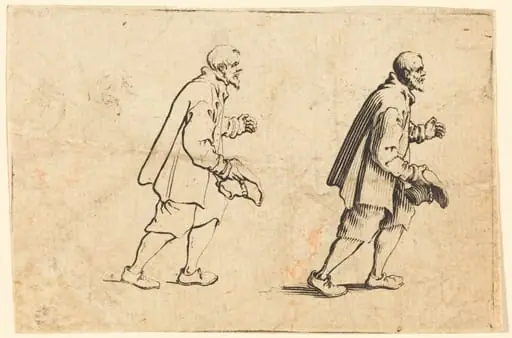
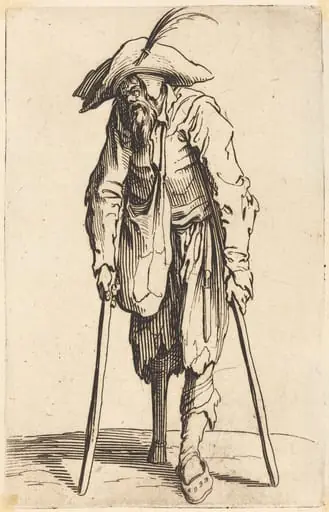
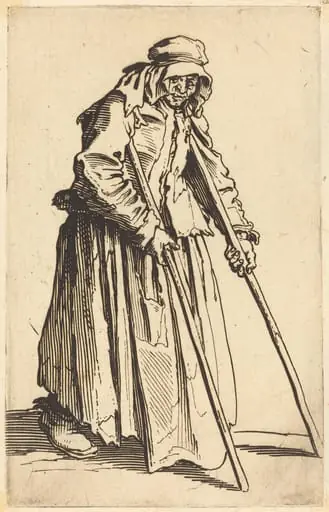
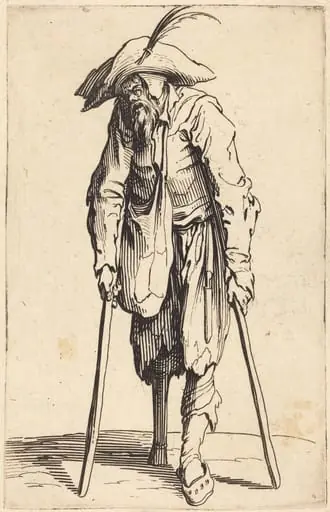
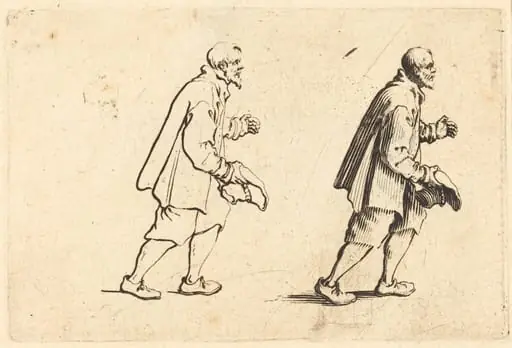
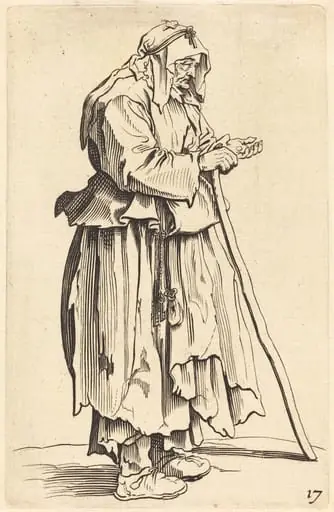
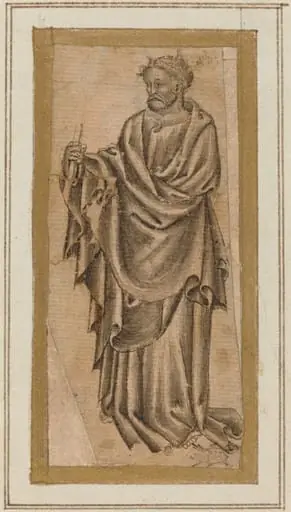
The work is a black‑and‑white engraving titled “Two Peasants.” It depicts a pair of rural figures dressed in loose, antiquated garments; one stands holding a hat and a staff, while the other walks with a limp, adjusting his own hat. The composition is rendered in ink, emphasizing the texture of their worn clothing and aged faces.
Subject & Meaning
The image presents a straightforward genre scene of peasant life, focusing on the physicality and age of the figures. Their wrinkled faces and the limp of the walking man suggest hardship and the passage of time, inviting contemplation of the everyday labor of the lower classes.
Technique & Style
The artist employed fine parallel lines that intersect to form cross‑hatching, a method that builds tonal variation and the illusion of volume. This dense network of lines creates a sense of depth and three‑dimensionality despite the medium’s flat surface.
History & Provenance
The engraving is catalogued as a print, though specific details about its date, creator, or ownership history are not provided in the source material.
Context
Works that portray peasants in simple, unidealized settings were common in printmaking traditions that aimed to document rural life. The use of cross‑hatching aligns the piece with broader European engraving practices that sought realistic representation through line work.
Artist & collection

Artist
This anonymous Italian engraver from the 1490s carved images that could be peeled apart like paper dolls—each knot in the "First Knot" print was cut from a single sheet so you could lift the loops right off the page.


![The Destruction of the Egyptian Idols [verso], by Italian 15th Century](https://artifactworldgallery.com/img/italian-15th-century--the-destruction-of-the-egyptian-idols-verso--646d3c2b8098cfee-w320.webp)
![The Flight into Egypt [recto], by Italian 15th Century](https://artifactworldgallery.com/img/italian-15th-century--the-flight-into-egypt-recto--8f4d5275d7f90f98-w320.webp)