Artwork
The Land Frog (Rana)
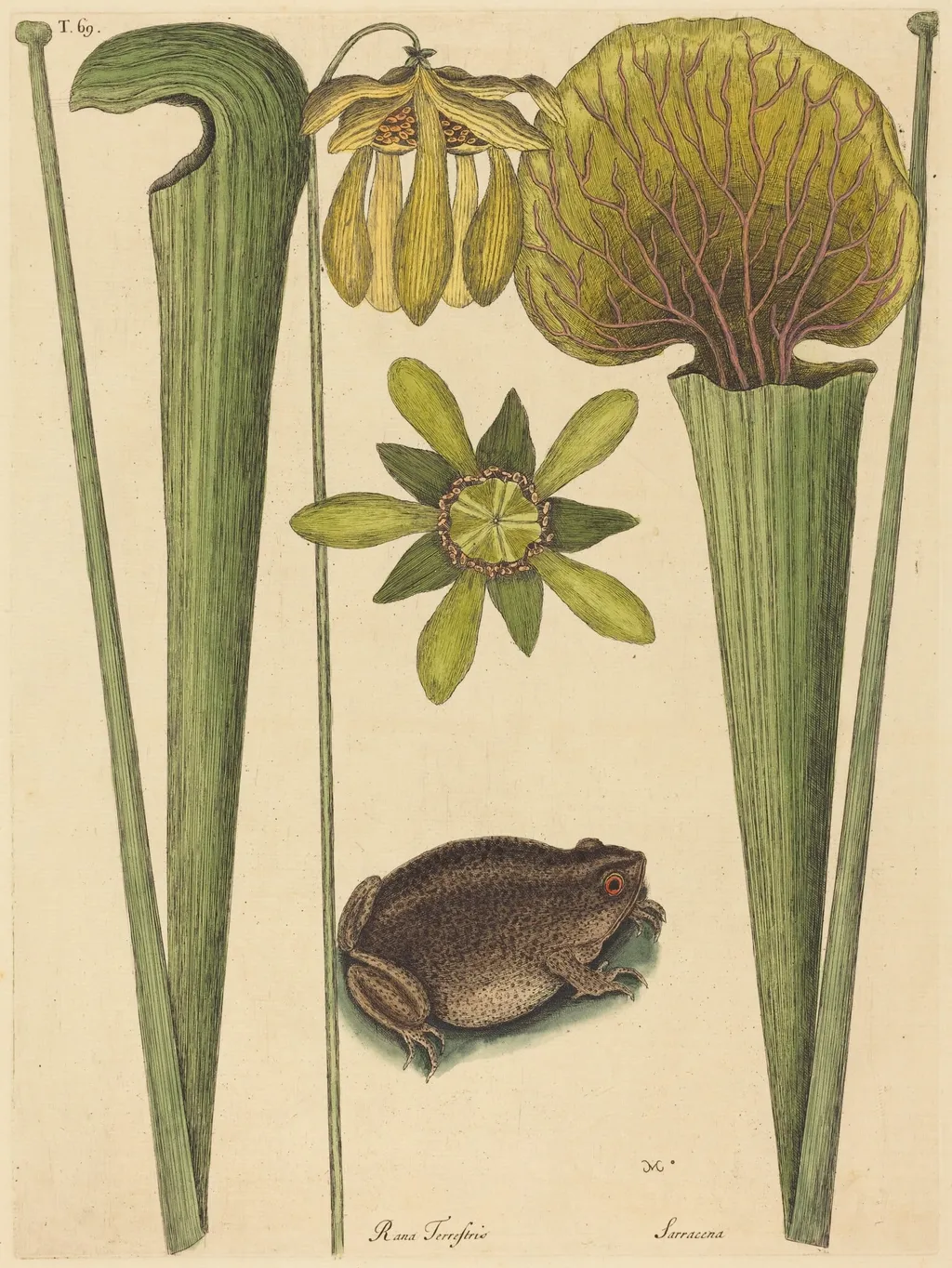
The Land Frog (Rana) is an ink print by the Baroque artist Mark Catesby. It dates from 1737 and is held in the collection of the National Gallery of Art.
About this work
Overview
The Land Frog (Rana) is an etching and engraving with hand coloring on laid paper, created by English naturalist Mark Catesby in 1737. It is part of a larger illustrated study on North American wildlife.
Subject & Meaning
The print depicts a land frog (Rana Terrestris) in a natural setting, surrounded by specific plant elements: two tall green leaves with wavy edges, a star-shaped flower with a dotted center, and a large leaf with purple veins bearing bell-like buds. The composition reflects Catesby’s focus on detailed species documentation.
Technique & Style
The work combines etching and engraving techniques with meticulous hand coloring, characteristic of Catesby’s methodical approach to illustrating natural history. The style is reminiscent of 18th-century nature study illustrations, emphasizing accuracy over artistic embellishment.
History & Provenance
Published as part of *Natural History of Carolina, Florida and the Bahama Islands* (1729-1747), this plate was among the first comprehensive recordings of the region’s flora and fauna. The publication’s significance lies in its detailed, early documentation of North American species.
Context
Created during the Enlightenment, *The Land Frog (Rana)* aligns with the era’s scientific curiosity and the burgeoning field of natural history. It catered to a growing interest in the New World’s biodiversity among European scholars and naturalists.
Artist & collection

Artist
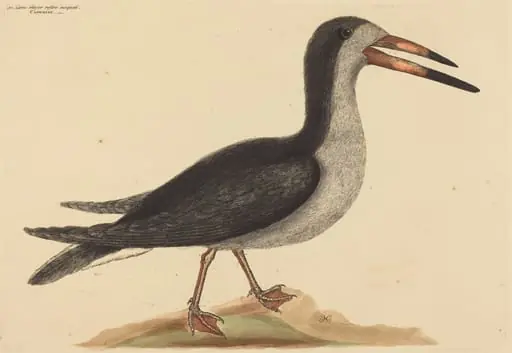
Mark Catesby (24 March 1683 – 23 December 1749) was an English naturalist who studied the flora and fauna of the New World.

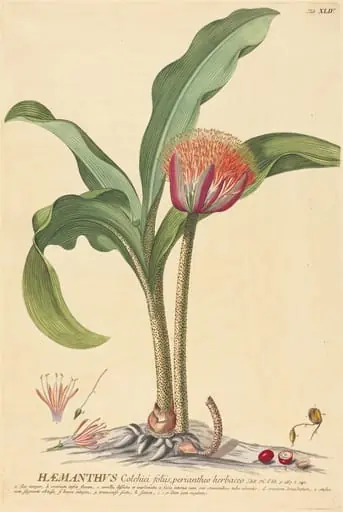 Haemanthus
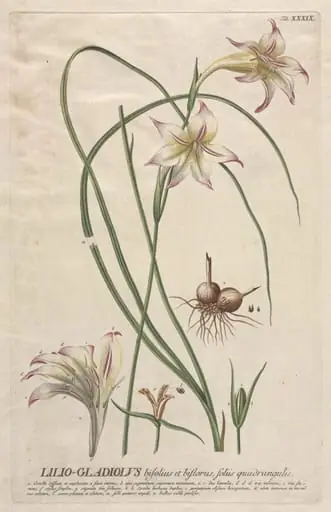 Plantae Selectae: No. 39 - Lilio-Gladiolus
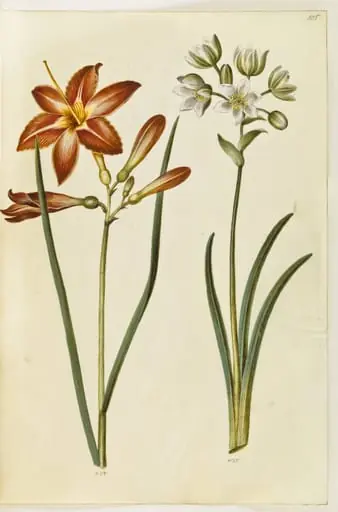 Hemerocallis fulva (brun daglilje); Ornithogalum arabicum (mælkestjerne)
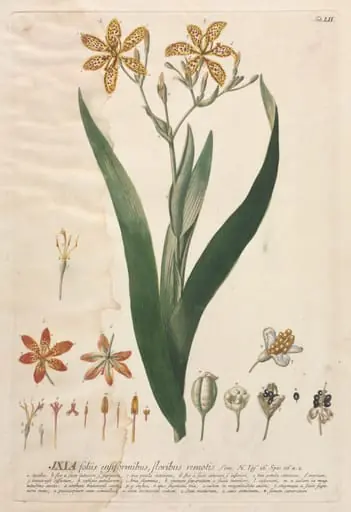 Plantae Selectae: No. 52 - Ixia
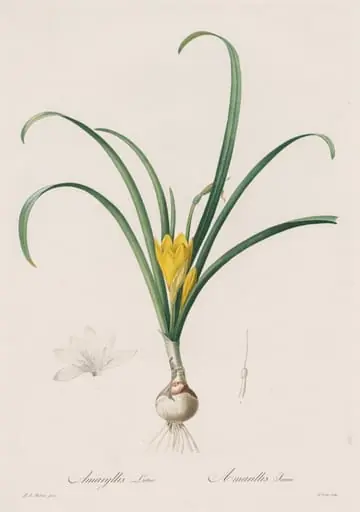 Les Liliacées: Amaryllis Lutes
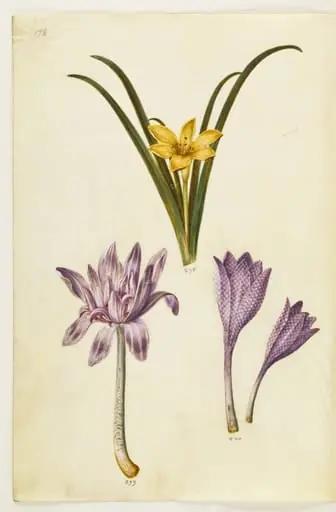 Sternbergia lutea (almindelig sternbergia); Colchicum autumnale (høst-tidløs); Colchicum variegatum (plettet tidløs)
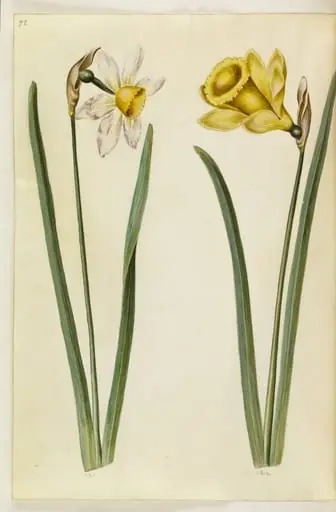 Narcissus ×incomparabilis (have-narcis); Narcissus pseudonarcissus (påskelilje)
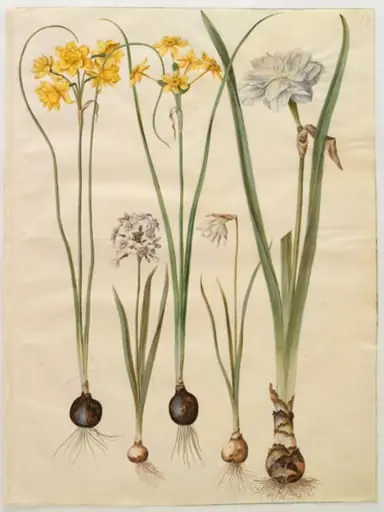 Narcissus jonquilla (siv-narcis); Narcissus tazetta (tazet); Narcissus pseudonarcissus moschatus (moskus-narcis); Narcissus poeticus (pinselilje)
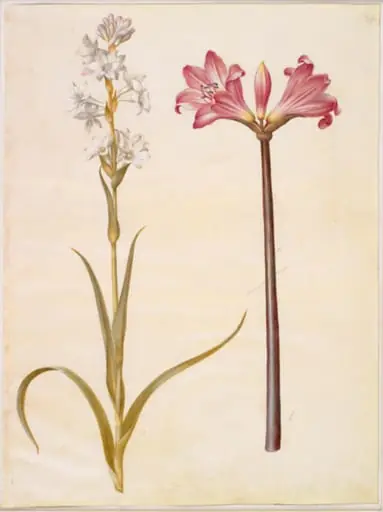 Polianthes tuberosa (tuberose); Amaryllis belladonna (belladonnalilje)
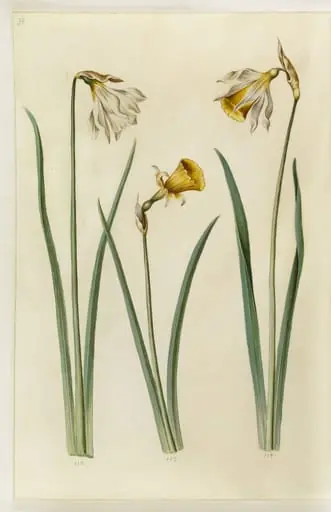 Narcissus pseudonarcissus moschatus (moskus-narcis); Narcissus bulbocodium (krinoline-narcis); Narcissus pseudonarcissus (påskelilje)