Artwork
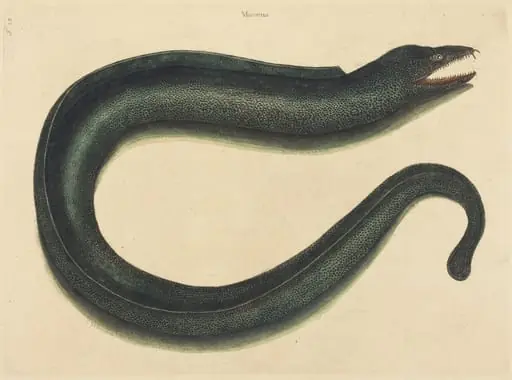
The Muray (Muraena helena)
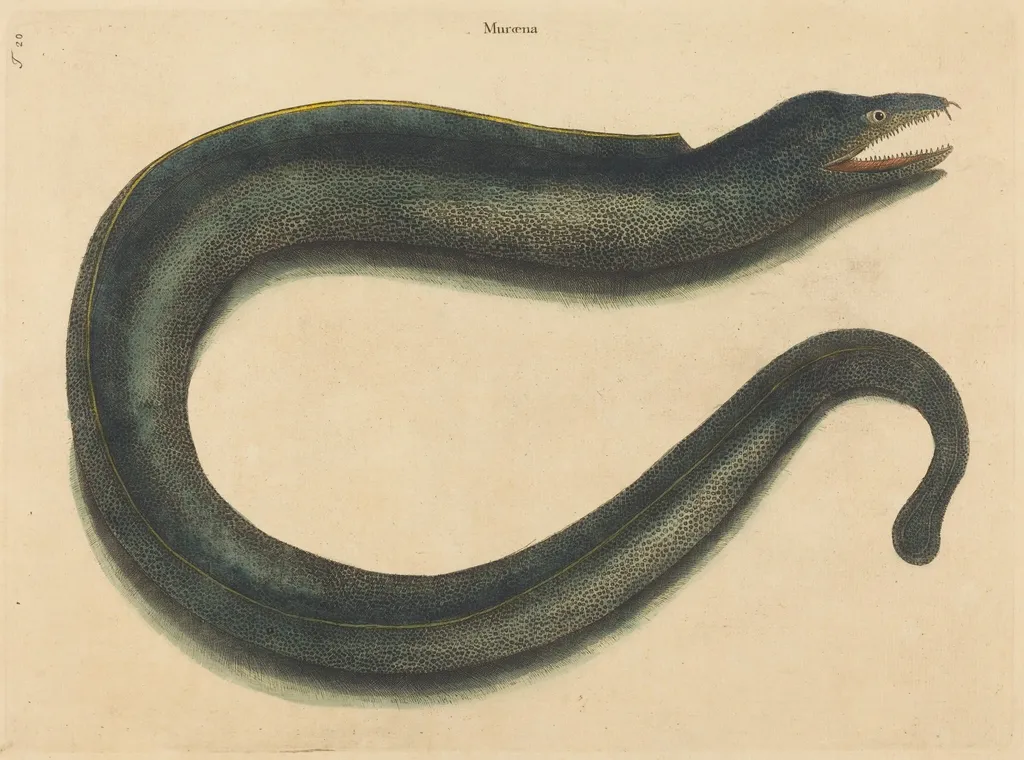
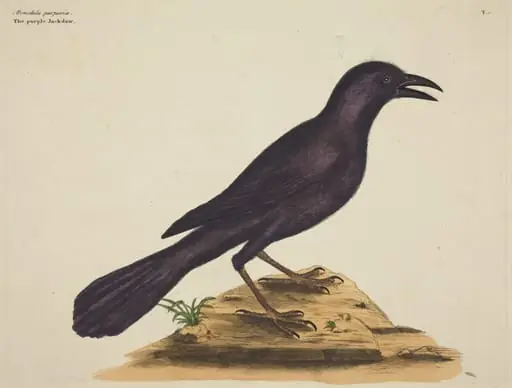
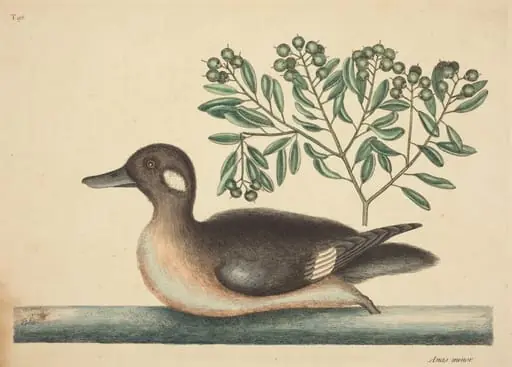
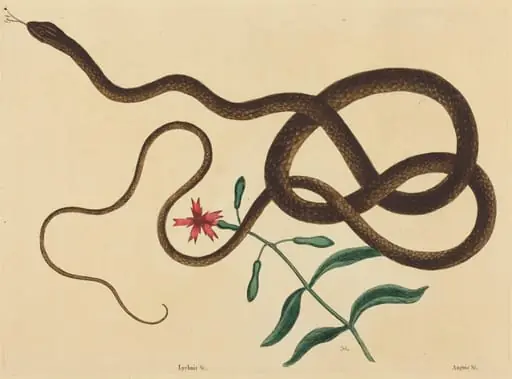
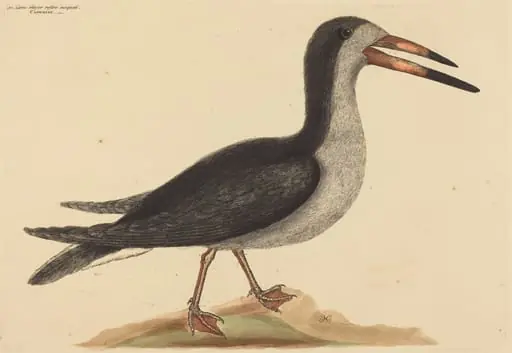
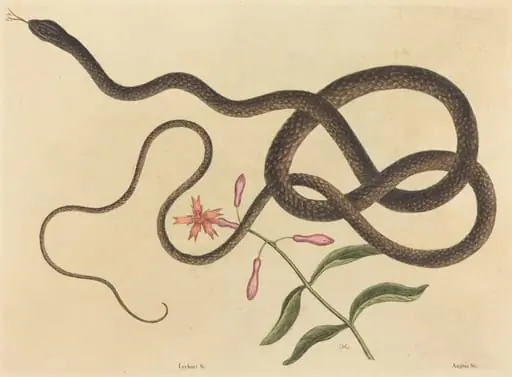
The Muray (Muraena helena) is an ink print by the Baroque artist Mark Catesby. It dates from 1737 and is held in the collection of the National Gallery of Art.
About this work
Overview
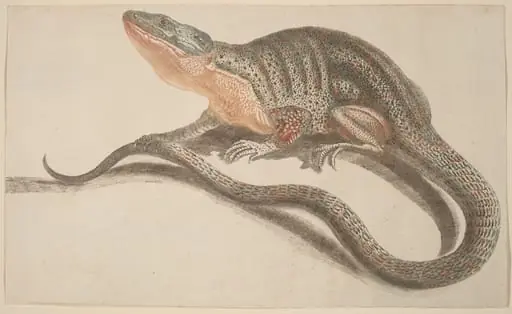
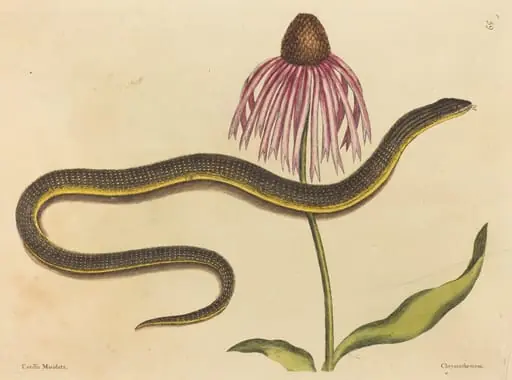
Created in 1737 by English naturalist Mark Catesby, this print portrays a European moray eel (Muraena helena). Executed as an etched and engraved image with hand‑applied color on laid paper, it forms part of Catesby’s extensive natural history series documenting the plants and animals of the Carolinas, Florida, and the Bahama Islands.
Subject & Meaning
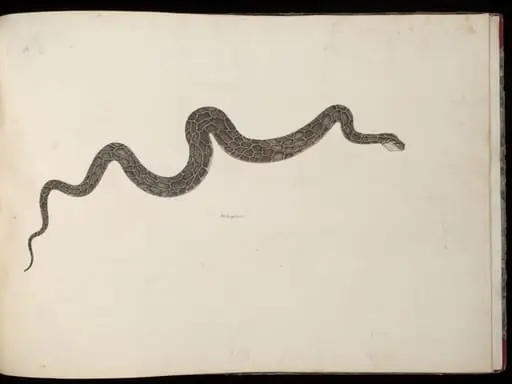
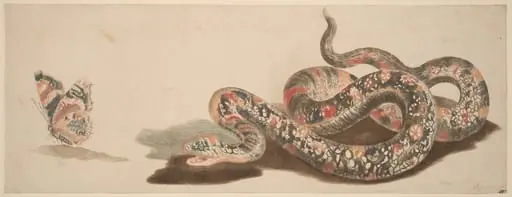
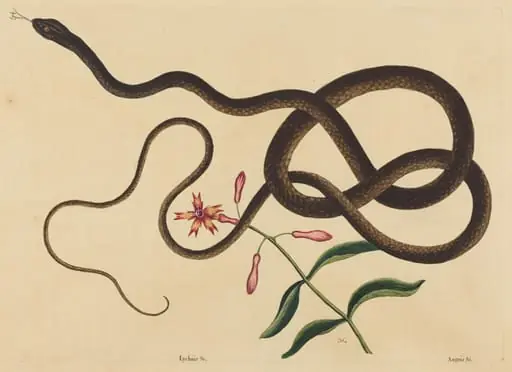
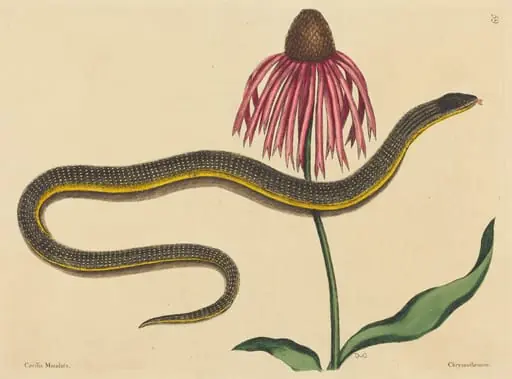
The illustration shows a coiled moray eel, its jaws open to reveal a row of fine, pointed teeth. The animal’s dark, scaly body is rendered in shades of black and gray, accented by a subtle yellow stripe along the dorsal line, emphasizing its distinctive coloration and anatomy.
Technique & Style
Catesby combined intaglio processes—etching and engraving—to achieve fine linear detail, then applied watercolor by hand to enhance texture and tonal variation. The careful cross‑hatching conveys the eel’s slick skin, while the hand‑coloring adds depth without obscuring the precise lines of the print.
History & Provenance
The image appears in Catesby’s Natural History of Carolina, Florida and the Bahama Islands, a multi‑volume work issued between 1729 and 1747. This publication was the first systematic visual record of North American wildlife, and the print has since been held in several institutional collections devoted to early scientific illustration.
Context
During the early eighteenth century, European naturalists sought to catalogue the New World’s biodiversity. Catesby’s field observations and artistic training allowed him to produce accurate, life‑like representations that served both scientific and educational purposes, bridging art and emerging natural history.
Artist & collection

Artist
Mark Catesby (24 March 1683 – 23 December 1749) was an English naturalist who studied the flora and fauna of the New World.