Artwork
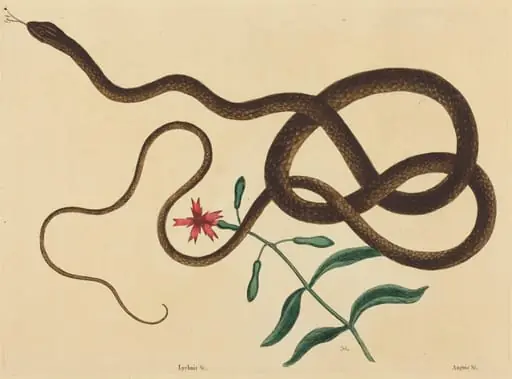
The Glass Snake (Anguis ventralis)
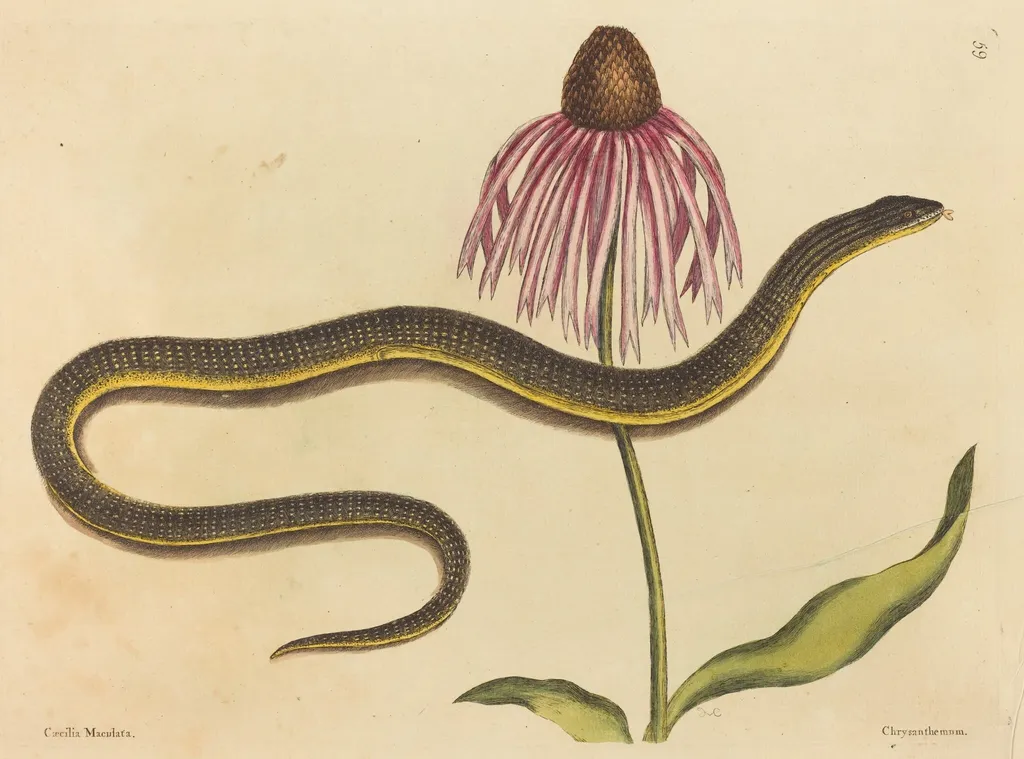
The Glass Snake (Anguis ventralis) is an ink print by the Baroque artist Mark Catesby. It dates from 1737 and is held in the collection of the National Gallery of Art.
About this work
Overview
Created in 1737 by English naturalist Mark Catesby, this print depicts a glass snake coiled among grasses. Executed as an etching and engraving on laid paper, the image was later enhanced with hand‑applied color, emphasizing the creature’s translucent appearance.
Subject & Meaning
The illustration presents the glass snake (Anguis ventralis), notable for its almost transparent scales that reveal underlying ribs. By rendering the animal in its natural setting, Catesby aimed to document the distinctive morphology of North American fauna for scientific reference.
Technique & Style
Catesby combined copper‑plate etching with fine engraving to achieve detailed line work, then applied watercolor by hand to accentuate the snake’s pale body and surrounding vegetation. The use of laid paper provides a subtle texture that supports the delicate rendering of the creature’s anatomy.
History & Provenance
The print forms part of Catesby’s monumental series for *Natural History of Carolina, Florida and the Bahama Islands*, a multi‑volume work issued between 1729 and 1747 containing 220 illustrated plates. The series was produced during Catesby’s extensive field observations in the American colonies.
Context
Catesby’s publication represented one of the earliest comprehensive visual surveys of New World wildlife, bridging European scientific tradition with firsthand observation. His depictions, including this glass snake, supplied European scholars with rare visual data on species previously unknown to them.
Artist & collection

Artist
Mark Catesby (24 March 1683 – 23 December 1749) was an English naturalist who studied the flora and fauna of the New World.

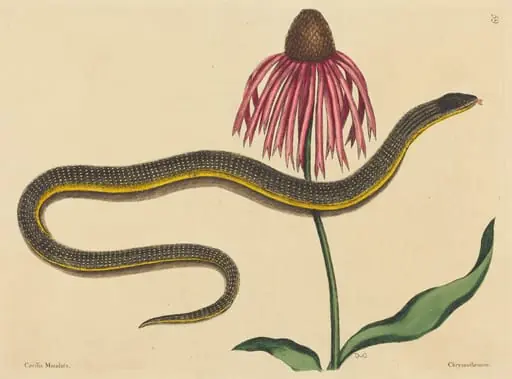 The Glass Snake (Anguis ventralis)
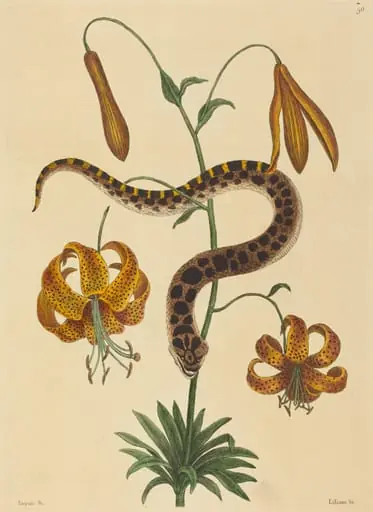 The Hog-nose Snake (Boa contortrix)
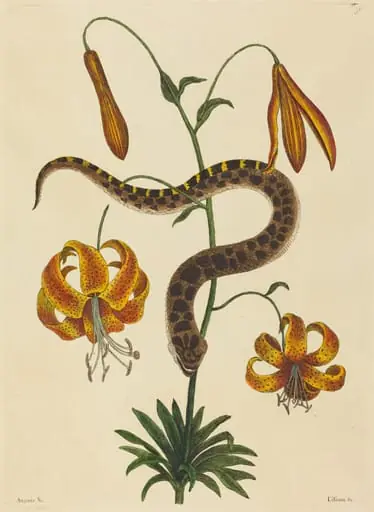 The Hog-nose Snake (Boa contortrix)
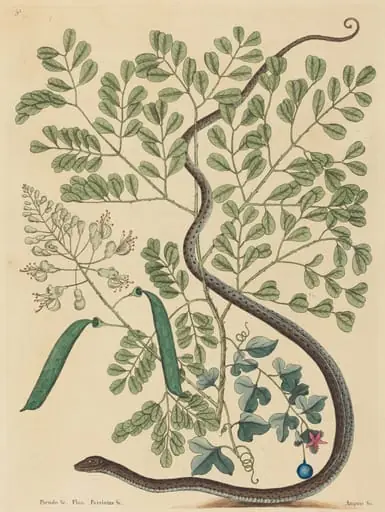 The Spotted Ribbon Snake (Coluber nebulosus?)
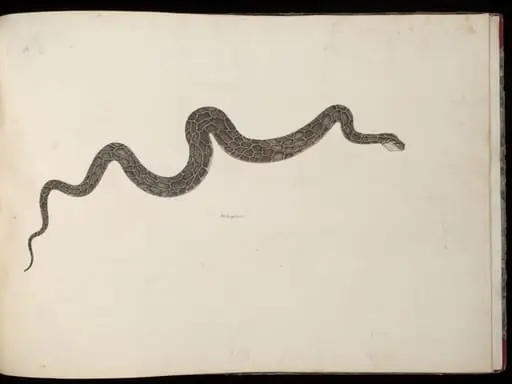 Snake
Snake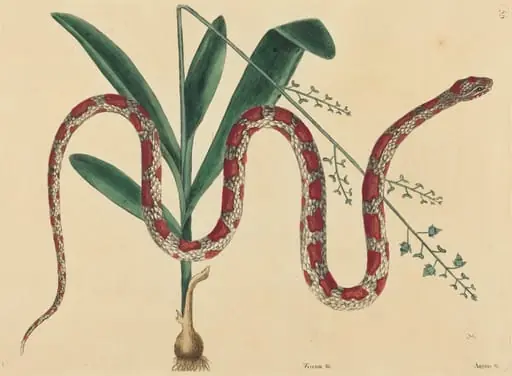 The Corn Snake (Coluber fulvius?)
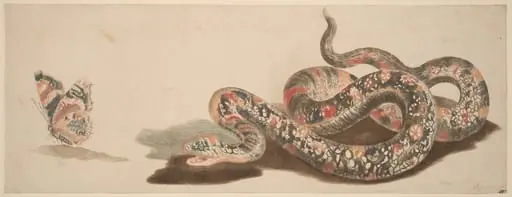 Snake and Butterfly
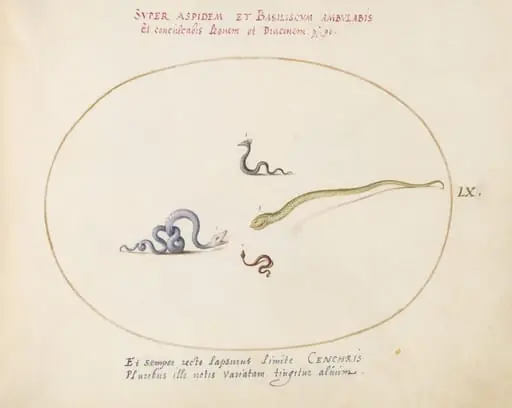 Plate 60: Four Small Snakes
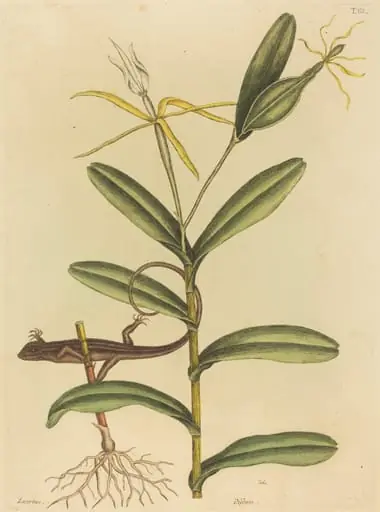 The Lyon Lizard (Lacerta 6-lineata)
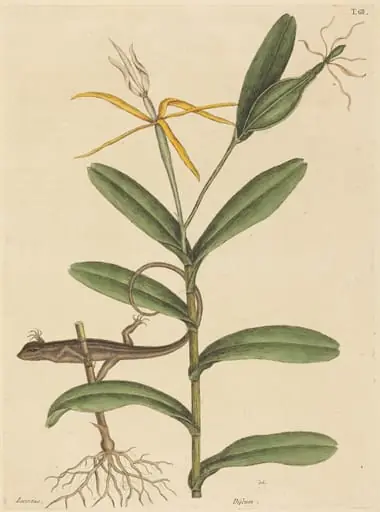 The Lyon Lizard (Lacerta 6-lineata)