Artwork
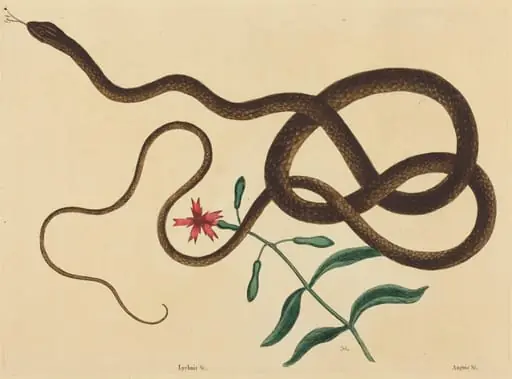
The Coach-whip Snake (Coluber flagellum)
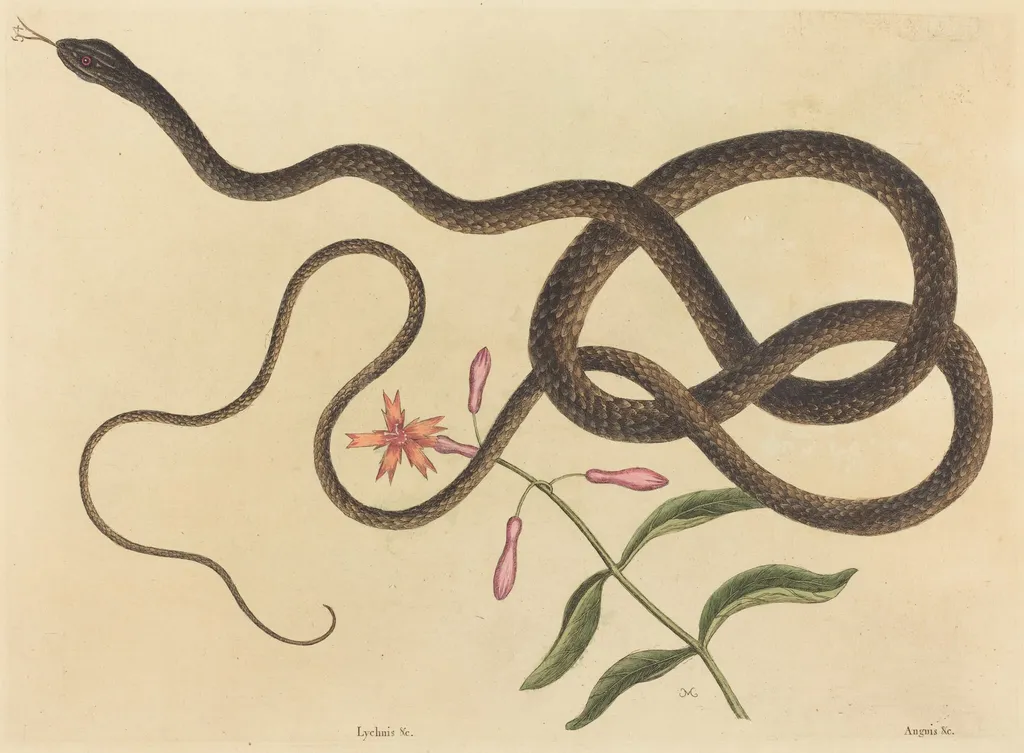
The Coach-whip Snake (Coluber flagellum) is an ink print by the Baroque artist Mark Catesby. It dates from 1737 and is held in the collection of the National Gallery of Art.
About this work
Overview
Created in 1737, this etching and engraving on laid paper is one of 220 plates in Mark Catesby’s *Natural History of Carolina, Florida and the Bahama Islands*.
Created in 1737, this etching and engraving on laid paper is one of 220 plates in Mark Catesby’s *Natural History of Carolina, Florida and the Bahama Islands*. As the first illustrated survey of North American wildlife, the work combined scientific observation with artistic detail. Catesby, an English naturalist, produced the images during extended fieldwork in the southeastern colonies, relying on direct study and hand-coloring to capture species accurately.
Subject & Meaning
The image portrays the coach-whip snake in a tense, coiled posture, its head slightly raised as if poised to strike. Surrounding it are a few scattered leaves resting on a flat stone, suggesting a natural habitat rather than a staged specimen. The depiction reflects Catesby’s intent to document native fauna with precision, avoiding myth or exaggeration, and presenting the animal as a living part of its environment.
Technique & Style
Catesby used etching and engraving to render fine textures—the snake’s scales, the grain of the stone, the veins of the leaves—with meticulous line work. Hand coloring was applied delicately to match observed hues, avoiding theatricality. The composition is balanced yet dynamic, emphasizing the snake’s form against a sparse background, a hallmark of his approach to natural history illustration.
History & Provenance
The print originated from Catesby’s multi-year expedition in the American colonies between 1722 and 1726. He returned to England to produce the plates, overseeing every stage of printing and coloring. The full work was published in two volumes between 1729 and 1747, distributed to European scientific societies and collectors. Original impressions are rare, with most surviving copies held in institutional collections.
Context
In the early 18th century, European interest in New World biodiversity was growing, but few visual records existed. Catesby’s work preceded Linnaean classification and offered one of the earliest systematic visual catalogs of North American species. His method—combining field sketches with detailed engravings—set a precedent for naturalist illustrators, distinguishing his output from speculative or decorative natural history imagery of the time.
Legacy
Catesby’s plates influenced generations of naturalists and illustrators, including Audubon, who adopted his compositional clarity and observational rigor. The *Coach-whip Snake* remains a reference for taxonomic studies and historical ecology. Its enduring value lies not in artistic flourish but in its faithful record of a species as it appeared in its native habitat during the colonial era.
Artist & collection

Artist
Mark Catesby (24 March 1683 – 23 December 1749) was an English naturalist who studied the flora and fauna of the New World.

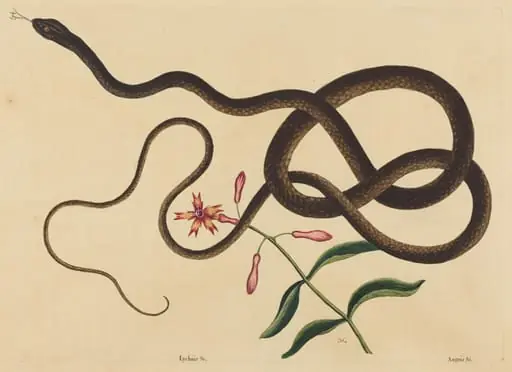 The Coach-Whip Snake (Coluber flagellum)
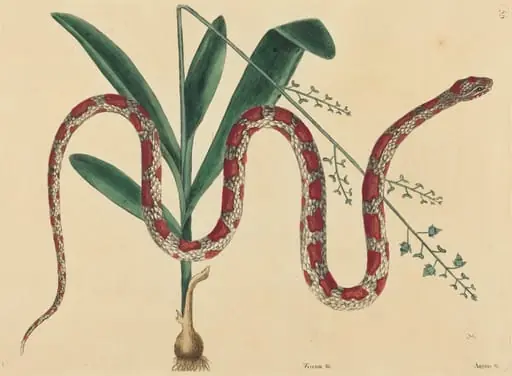 The Corn Snake (Coluber fulvius?)
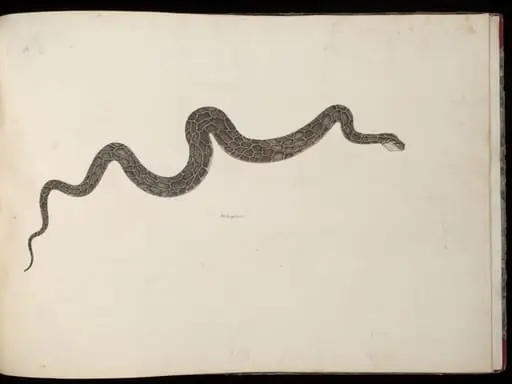 Snake
Snake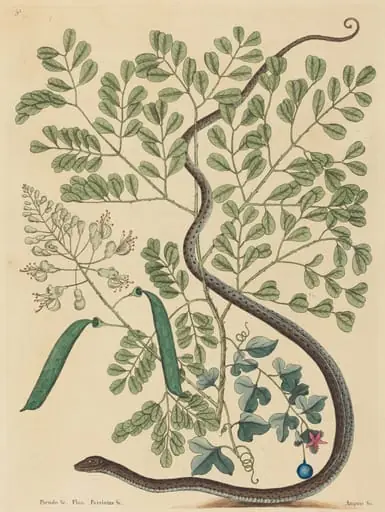 The Spotted Ribbon Snake (Coluber nebulosus?)
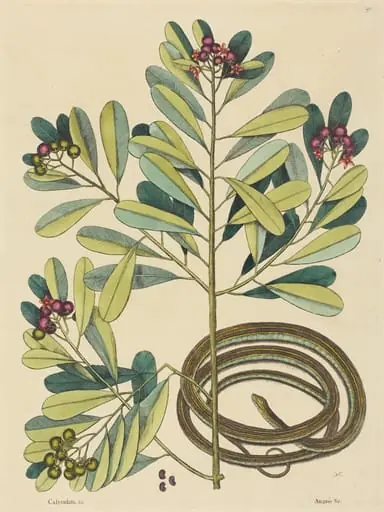 The Ribbon Snake (Coluber saurita)
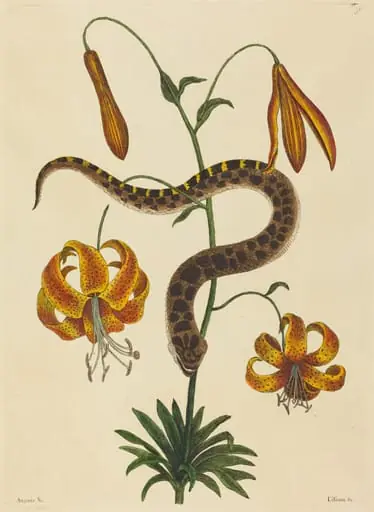 The Hog-nose Snake (Boa contortrix)
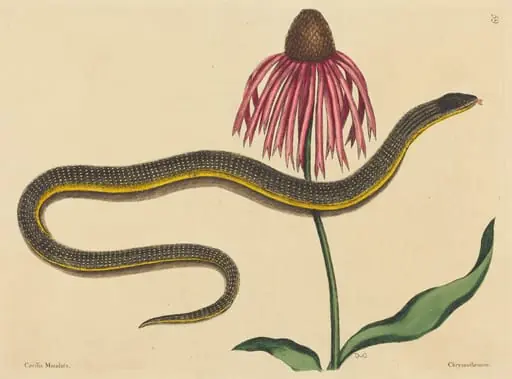 The Glass Snake (Anguis ventralis)
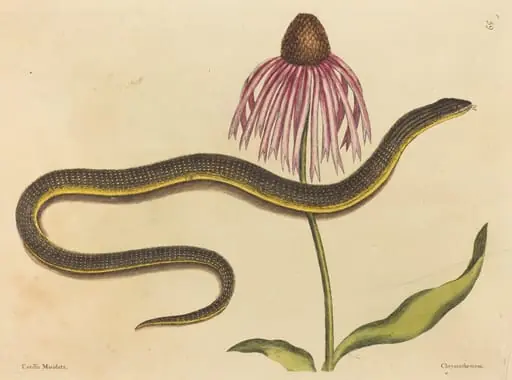 The Glass Snake (Anguis ventralis)
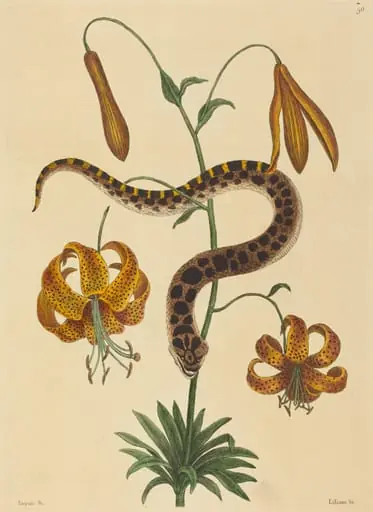 The Hog-nose Snake (Boa contortrix)
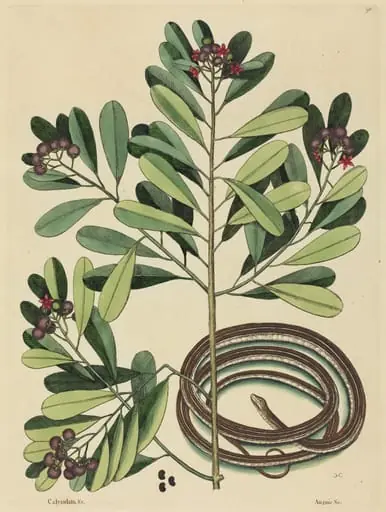 The Ribbon Snake (Coluber saurita)
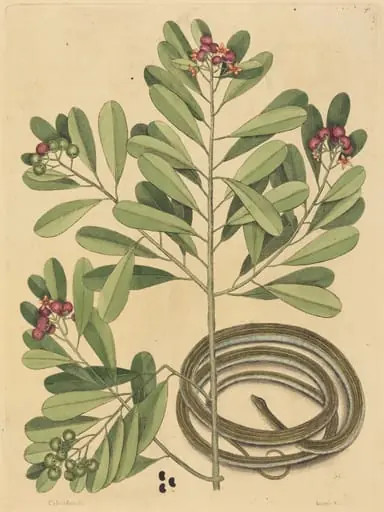 The Ribbon Snake (Coluber saurita)