Artwork
The Soree (Rallus Virginianus)
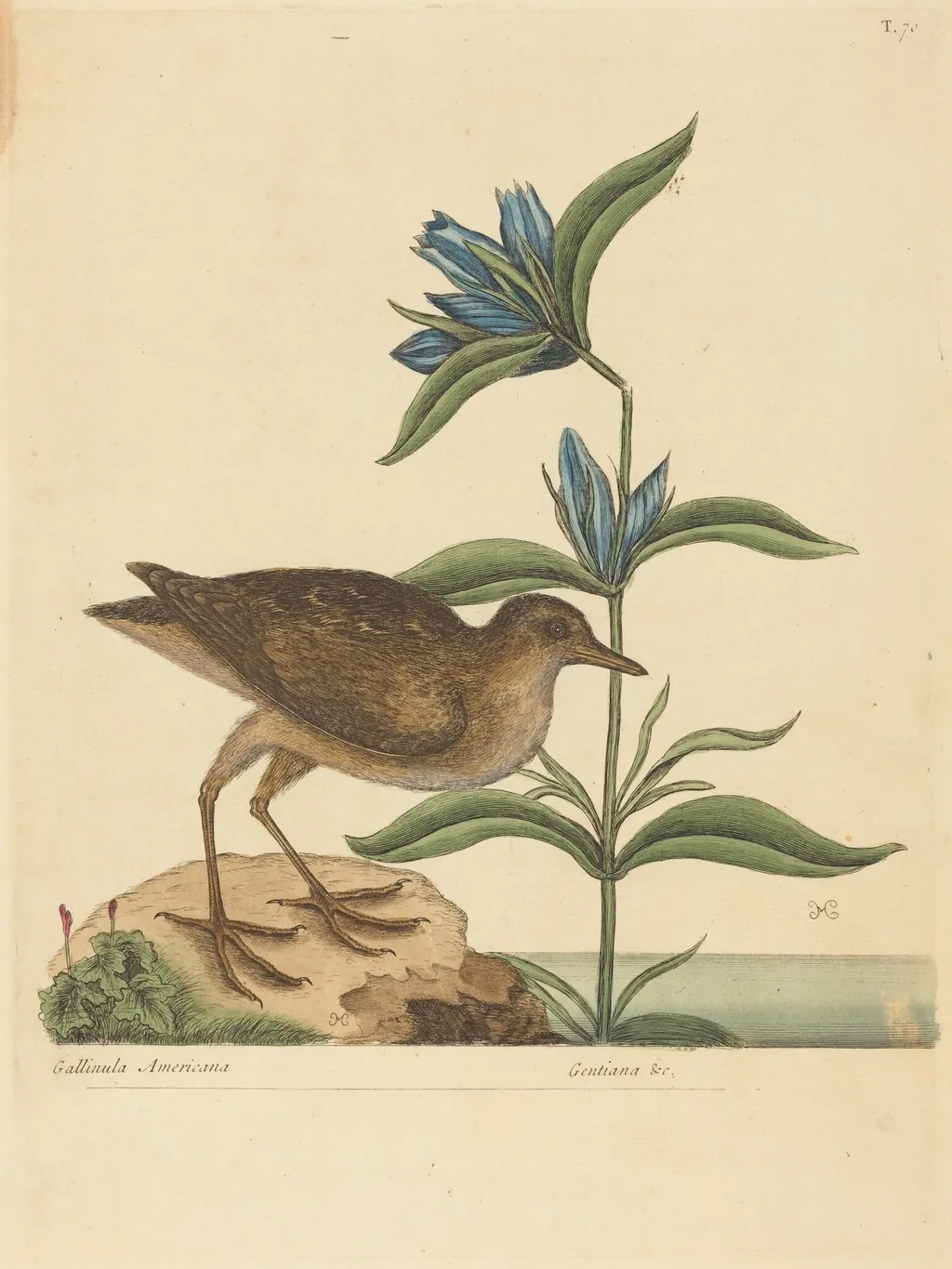
The Soree (Rallus Virginianus) is an ink print by the Baroque artist Mark Catesby. It dates from 1737 and is held in the collection of the National Gallery of Art.
About this work
Overview
Executed in etching and engraving with careful hand coloring on laid paper, it exemplifies the precision of 18th-century natural history illustration.
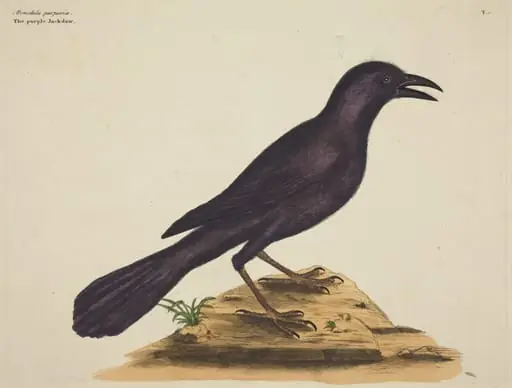
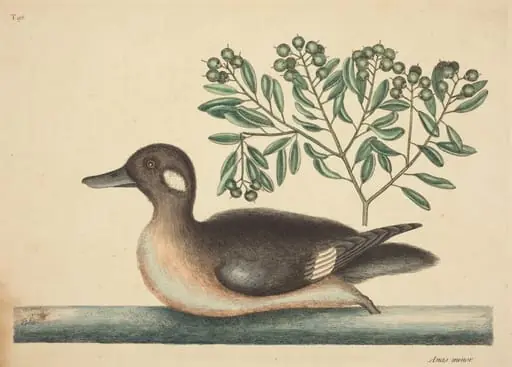
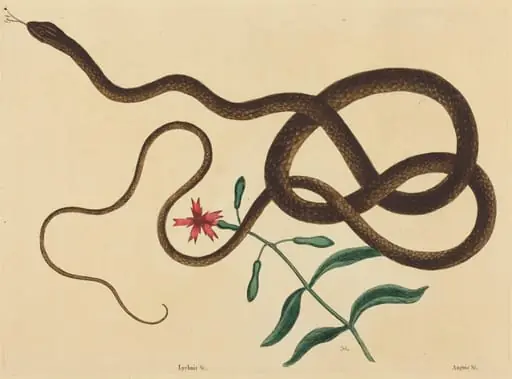
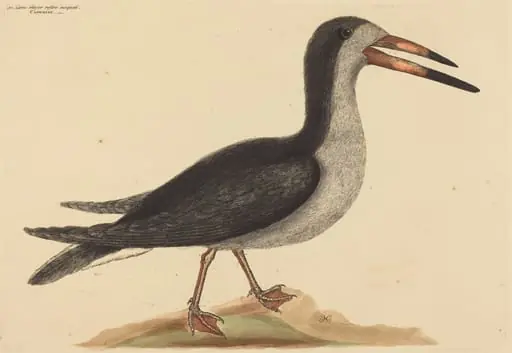
Created in 1737 by English naturalist Mark Catesby, this print is one of 220 plates in his multi-volume study of North American wildlife. Executed in etching and engraving with careful hand coloring on laid paper, it exemplifies the precision of 18th-century natural history illustration. The work was produced as part of Catesby’s effort to systematically document species from Carolina, Florida, and the Bahama Islands, reaching European audiences through publication between 1729 and 1747.
Subject & Meaning
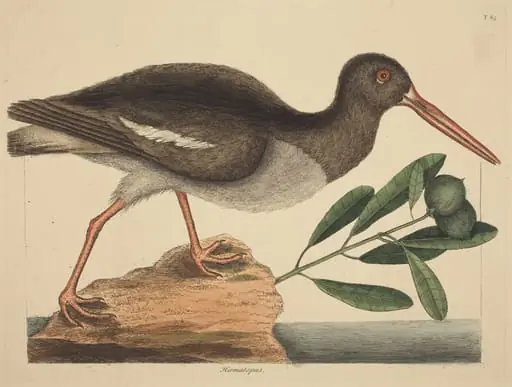
The illustration depicts a Virginia rail, a secretive marsh bird, perched on a rocky outcrop beside a tall plant with blue blossoms. A smaller red-flowered plant in the foreground adds compositional balance. The bird’s alert posture and turned head suggest vigilance, while the inclusion of native vegetation underscores Catesby’s intent to portray species within their ecological context, rather than as isolated specimens.
Technique & Style
Catesby combined etching for fine detail with engraving for texture and depth, then applied watercolor by hand to achieve lifelike tones. The bird’s brown plumage is rendered with subtle gradations, while the plant forms are outlined crisply. The pale background isolates the subject, directing focus to the naturalistic arrangement of flora and fauna, reflecting a scientific aesthetic over decorative flourish.
History & Provenance
The print originated from Catesby’s personal field observations during travels in the American Southeast. Published in London, the plates were distributed to scientific institutions and private collectors across Europe. Original impressions are rare; surviving examples are held in major natural history collections, including the British Library and the New York Public Library, where they remain key sources for early American zoology.
Context
In the early 1700s, European knowledge of North American species was limited and often inaccurate. Catesby’s work was among the first to present native wildlife based on direct observation rather than secondhand accounts or myth. His illustrations influenced later naturalists like Linnaeus and helped shift scientific discourse toward empirical documentation of New World biodiversity.
Legacy
Catesby’s plates established a visual standard for natural history illustration in the Enlightenment era. Though later works surpassed his in taxonomic accuracy, his integration of species with habitat remained influential. The Soree continues to be referenced in studies of early American ecology and the history of scientific visualization, valued for its observational integrity.
Artist & collection

Artist
Mark Catesby (24 March 1683 – 23 December 1749) was an English naturalist who studied the flora and fauna of the New World.