Artwork
Tawny Thrush
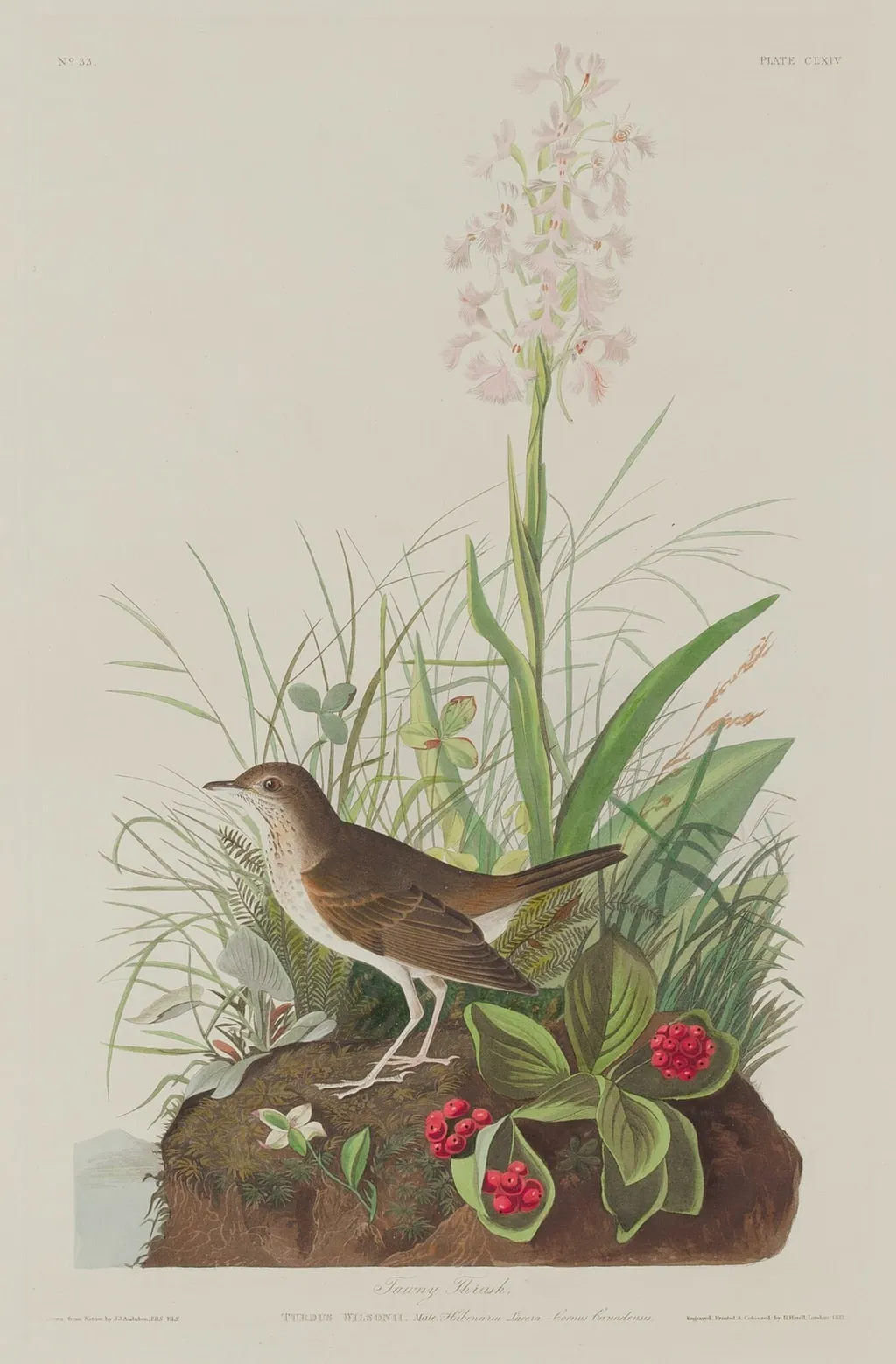
Tawny Thrush is an ink print by the Romanticist artist Robert Havell Jr.. It dates from 1833 and is held in the collection of the National Gallery of Art.
About this work
Overview
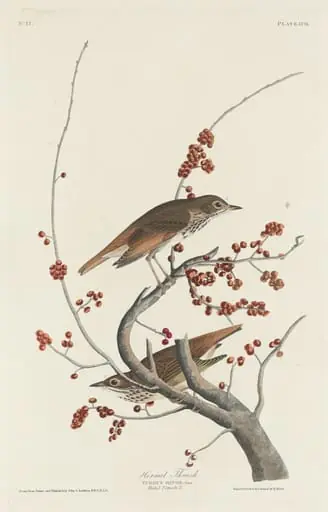
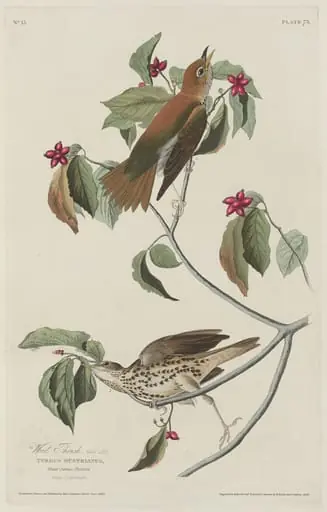
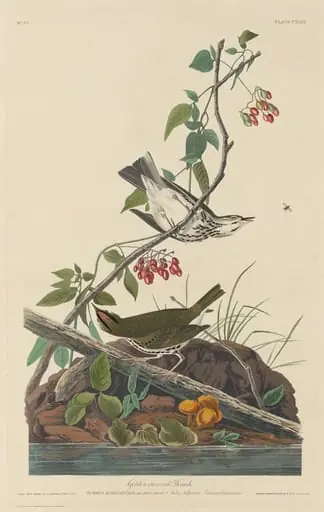
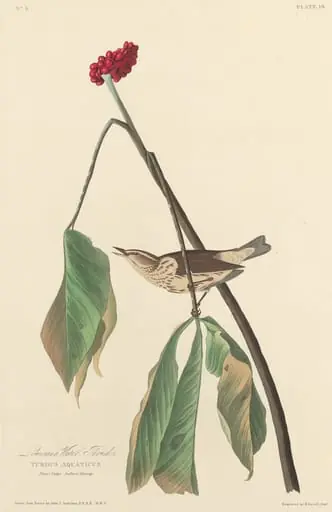
Created in 1833, *Tawny Thrush* is a hand‑colored engraving combined with aquatint, printed on fine Whatman wove paper. The image presents a small, brown‑plumaged thrush perched on a moss‑covered stone, surrounded by detailed foliage, berries and pink blossoms, set against a muted beige ground.
Subject & Meaning
The work portrays a tawny thrush, a common European songbird, rendered with naturalistic precision. The open beak and attentive pose suggest a moment of alertness, while the surrounding vegetation frames the bird within a cultivated garden or woodland scene, reflecting 19th‑century interests in documenting wildlife.
Technique & Style
Havell employed a combination of line engraving and aquatint, a process that allows for tonal washes beneath the inked outlines. After printing, the image was hand‑colored, adding subtle hues to the bird’s plumage and the surrounding plants, a method typical of scientific illustration of the period.
History & Provenance
Robert Havell Jr., part of a distinguished family of British engravers, produced the print following the practice established by his father, Robert Havell the Elder, and his brothers Luke and Daniel. The Havells were noted for their expertise in aquatint and for supplying illustrated plates to natural history publications.
Context
The piece belongs to the early Victorian era’s surge in naturalist illustration, when detailed prints of flora and fauna were in demand for both scientific study and public education. Its aesthetic aligns with the broader Romantic fascination with the natural world and the desire to render it with accuracy and beauty.
Artist & collection

Artist
The Havell family of Reading, Berkshire, England, included a number of notable engravers, etchers and painters, as well as writers, publishers, educators, and musicians.