Artwork
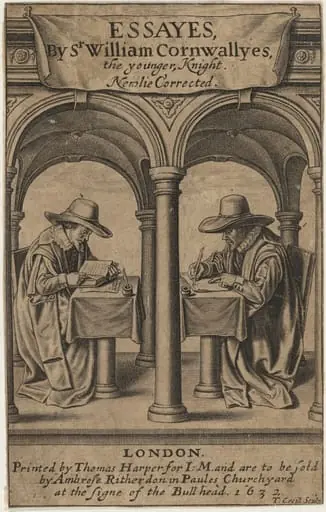
Title Page to Sir William Cornwally's Essays
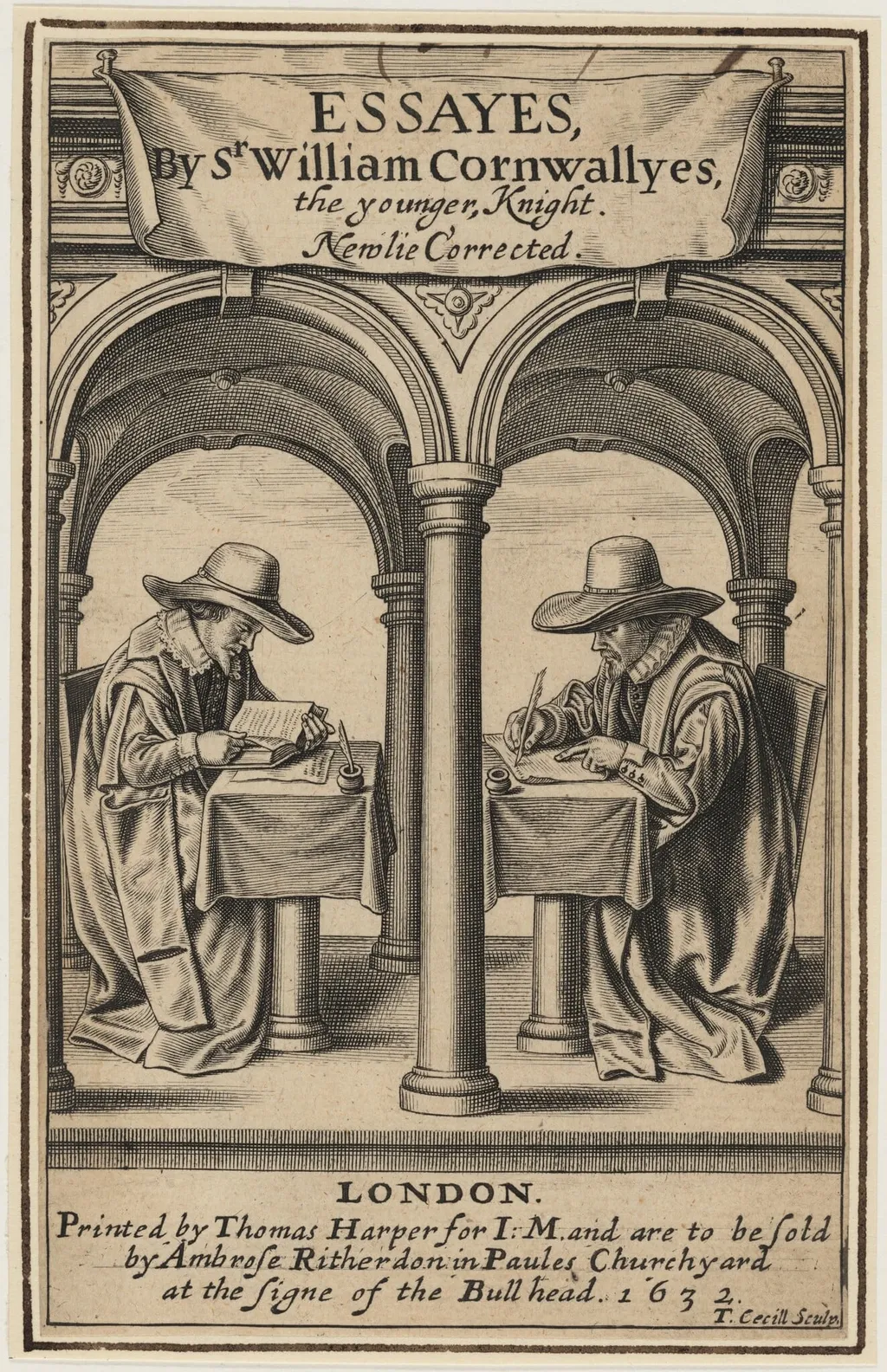
Title Page to Sir William Cornwally's Essays is an ink print by the Renaissance artist Thomas Cecil. It dates from 1621 and is held in the collection of the National Gallery of Art.
About this work
Their clothes look old-fashioned, and the scene is framed by a border with text at the top and bottom.
This image shows two men in wide-brimmed hats working at small desks under an arched stone roof. One holds an open book, the other writes with a quill. Their clothes look old-fashioned, and the scene is framed by a border with text at the top and bottom.
The top text reads *"Essayes by Sr William Cornwallyes"*—this was a book title. The bottom text names a printer and a London shop where it was sold in 1632.
Next, look up engraving to see how artists like this made detailed prints.
Overview
This 1621 engraving by Thomas Cecil serves as the title page for Sir William Cornwallis's collection of essays. It depicts two figures in Renaissance-era attire engaged in scholarly activity beneath a stone archway, surrounded by decorative borders containing printed text. The composition functions both as an illustration and as a commercial marker, identifying the work and its distribution point in London.
Subject & Meaning
The two figures, one reading and the other writing, symbolize the intellectual labor behind the written word. Their attire and setting evoke a timeless, almost idealized scholarly environment, distancing the essays from contemporary immediacy. The scene suggests continuity with classical traditions of learning, reinforcing the authority and permanence of Cornwallis’s prose through visual metaphor.
Technique & Style
Executed in fine-line engraving, the image relies on precise incisions to render texture and form. The arched architecture and detailed clothing are rendered with careful hatching, while the border text is integrated as part of the design rather than an afterthought. The style reflects early 17th-century English printmaking conventions, balancing decorative function with narrative clarity.
History & Provenance
Created in 1621, the engraving was later reused in a 1632 edition of the essays, with updated printer and bookseller information added to the lower border. This practice of reissuing title pages was common in early printing, reflecting economic efficiency and the enduring appeal of Cornwallis’s work. The original publisher and printer remain documented in the inscription.
Context
Cornwallis’s essays were part of a broader European trend toward personal, reflective prose in the early 1600s. The title page’s imagery aligns with contemporary humanist ideals, where writing was seen as a dignified, contemplative act. The use of an arch and scholarly figures echoes classical and monastic imagery, lending intellectual gravitas to a relatively new literary form.
Legacy
As a surviving example of early English book illustration, the engraving offers insight into how printed texts were visually marketed before widespread photography. Its reuse in later editions demonstrates the longevity of Cornwallis’s influence and the adaptability of print design in the pre-industrial era. It remains a tangible artifact of the intersection between literature and visual culture.
Artist & collection

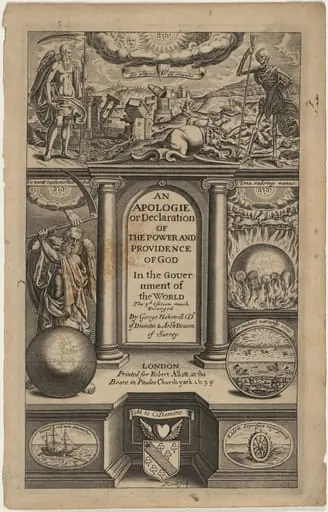 Title Page to An Apologie, or Declaration of the Power and Providence of God
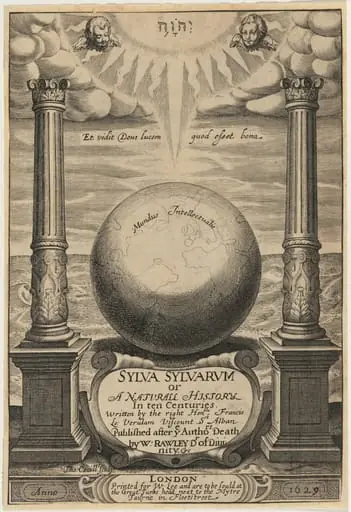 Title Page for Sylva Sylvarum, Francis Bacon
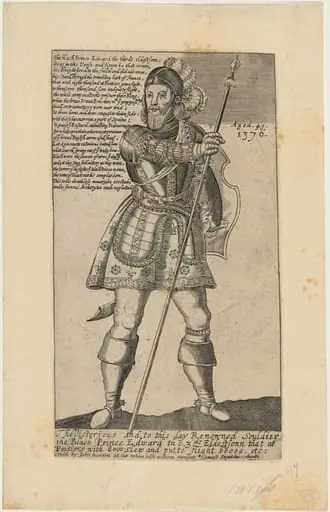 Edward, the Black Prince at the Age of 49
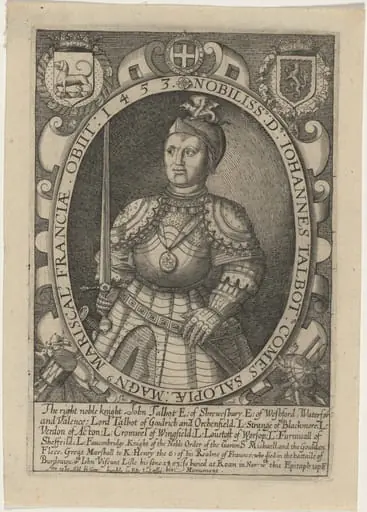 John Talbot, First Earl of Shrewsbury
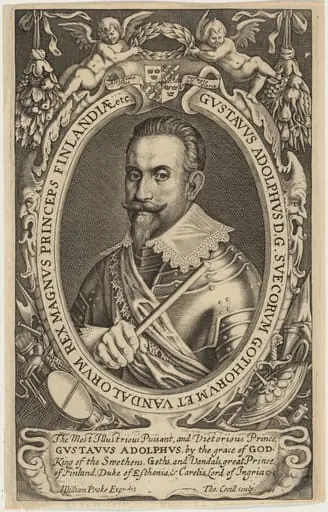 Gustavus Adolphus
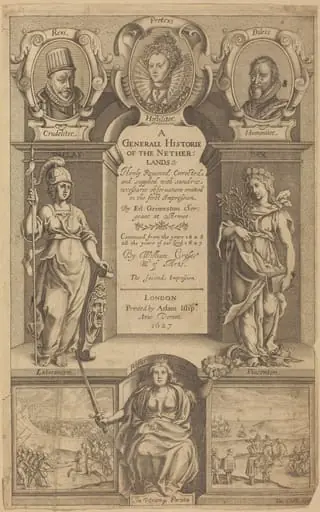 Frontispiece
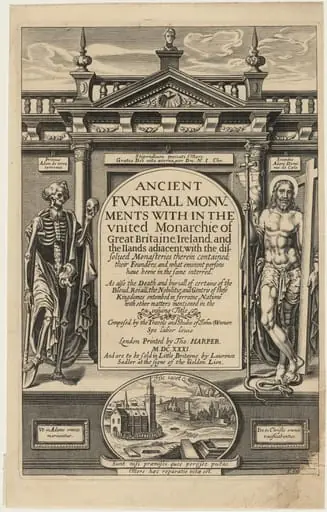 Title Page to John Weever, Ancient Funeral Monuments
 Title Page to Sir William Cornwally's Essays
 The Churchgoers
 Erasmus of Rotterdam
 The Temple of Honor
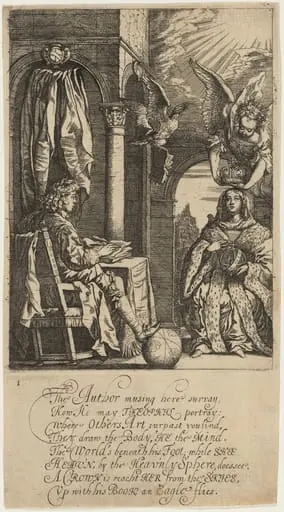 Illustration for Edward Benlowes, Theophila
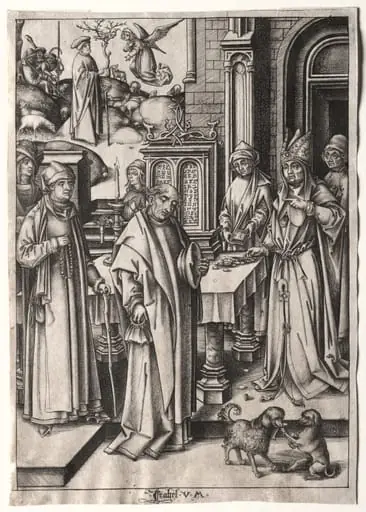 Life of the Virgin: High Priest Rejecting the Offering of Joachim
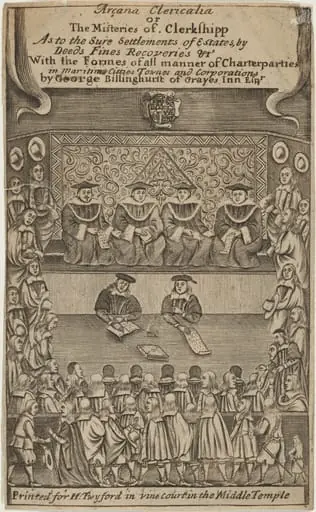 Title Page to Arcana Clericalia or the Misteries of Clerkshipp by George Billinghurst
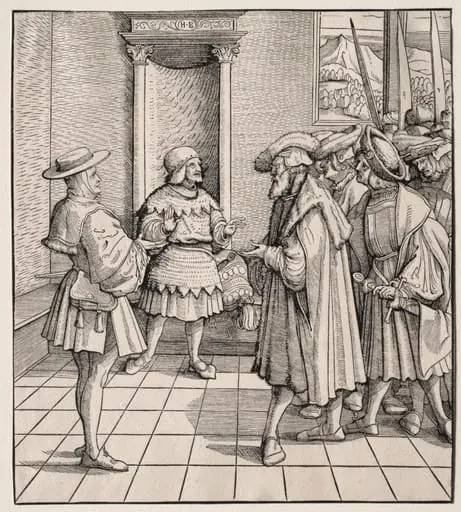 The Bad Advice of One Little Man to Another
 Smoker on a Stool Conversing with a Cobbler at Work
 Restoration of the Duomo, Florence
 Saint Jerome Writing
 Desiderius Erasmus of Rotterdam