Artwork
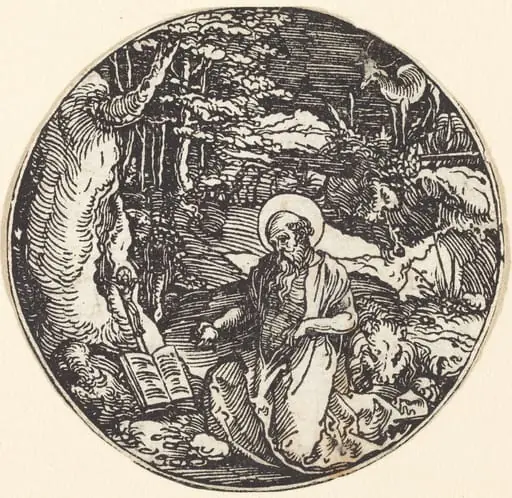
Saint Jerome Writing
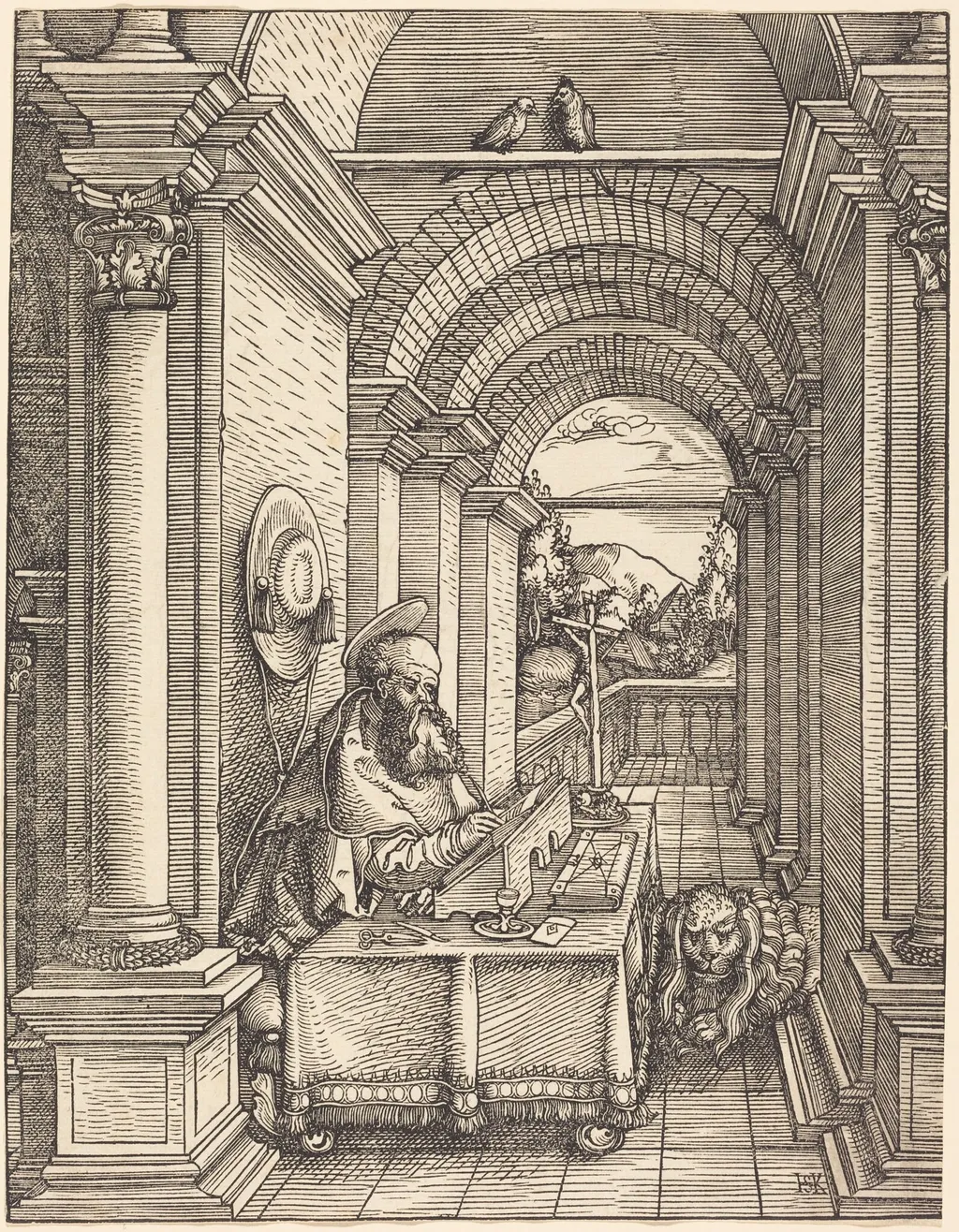
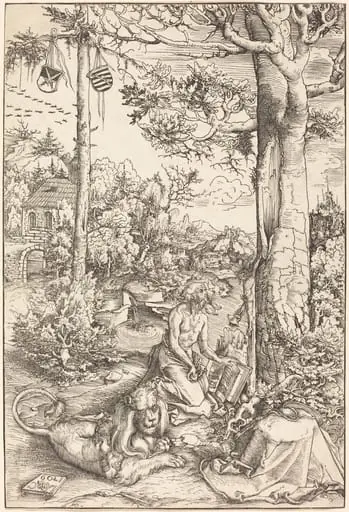
Saint Jerome Writing is an ink print by the Renaissance artist Hans Springinklee. It dates from 1522 and is held in the collection of the National Gallery of Art.
About this work
Overview
The image reflects the period’s fusion of religious subject matter with humanist ideals, emphasizing intellectual labor as a sacred act.
Hans Springinklee’s 1522 woodcut portrays Saint Jerome engaged in transcription, rendered in the precise, linear style characteristic of early 16th-century German printmaking. As a Nuremberg-based artist trained in Albrecht Dürer’s workshop, Springinklee employed woodcut techniques to translate devotional themes into intimate, finely detailed compositions. The image reflects the period’s fusion of religious subject matter with humanist ideals, emphasizing intellectual labor as a sacred act.
Subject & Meaning
Saint Jerome, depicted in monastic robes and a fur-lined hat, is shown in quiet concentration as he writes his Latin translation of the Bible. The cluttered desk—filled with inkwells, scrolls, and pens—signals scholarly devotion. Behind him, architectural arches and a distant landscape suggest a contemplative space beyond the physical world, reinforcing his role as a bridge between divine revelation and human scholarship.
Technique & Style
Springinklee used fine, controlled lines to carve intricate textures in wood, capturing the weight of fabric, the grain of parchment, and the depth of architectural space. The contrast between dense shadow and open areas creates spatial clarity without perspective distortion. The composition’s balance and meticulous detail reflect Dürer’s influence, yet Springinklee’s handling retains a quieter, more restrained expressiveness.
History & Provenance
Created in 1522, the print emerged during a period of religious upheaval when printed images played a key role in disseminating religious ideas. As a pupil of Dürer, Springinklee operated within Nuremberg’s thriving print culture, where woodcuts circulated widely among clergy and educated laypeople. The work’s survival in multiple institutional collections attests to its early reception and enduring technical appeal.
Context
In early 16th-century Germany, depictions of Saint Jerome were common in both painting and print, symbolizing the value of textual study and scriptural authority. Woodcuts like this one were affordable and reproducible, making them ideal for private devotion and scholarly use. Springinklee’s image aligns with broader humanist trends that elevated the act of writing as a spiritual discipline, especially in the decades before the Reformation.
Legacy
Though less widely known than his master Dürer, Springinklee’s woodcut exemplifies the quiet precision of Nuremberg’s printmaking tradition. His work contributed to the standardization of saintly iconography in print and influenced later generations of German engravers. The piece remains a testament to the capacity of woodcut to convey both spiritual gravity and technical mastery within a modest medium.
Artist & collection

Artist
Hans Springinklee (c.1490/c.1495 – c.1540) was a German artist from Nuremberg, best known for his woodcuts. He was a pupil of Albrecht Dürer.

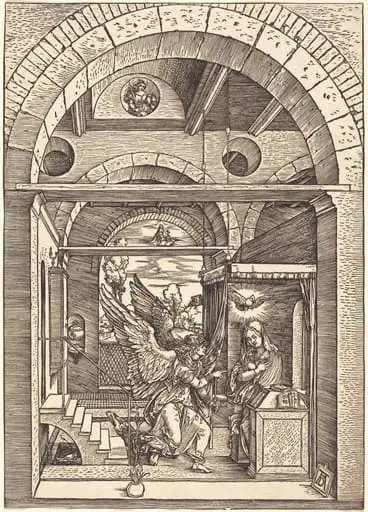 The Annunciation
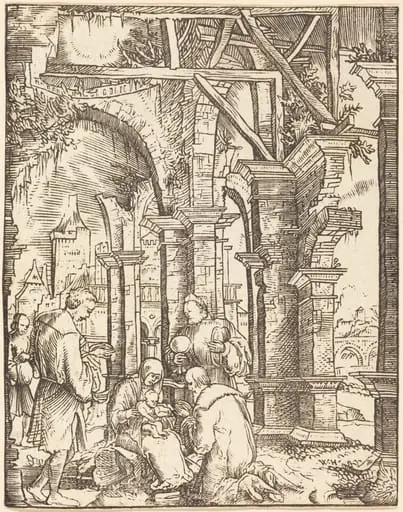 The Adoration of the Magi
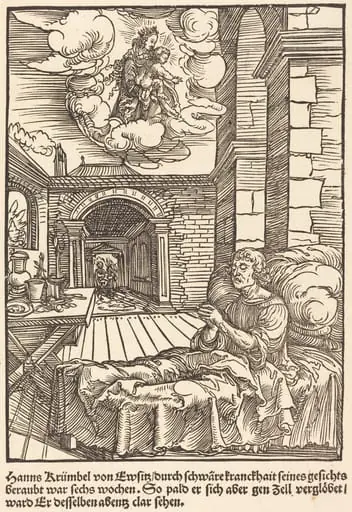 Hanns Krumbel von Ewsitz... d'organdie
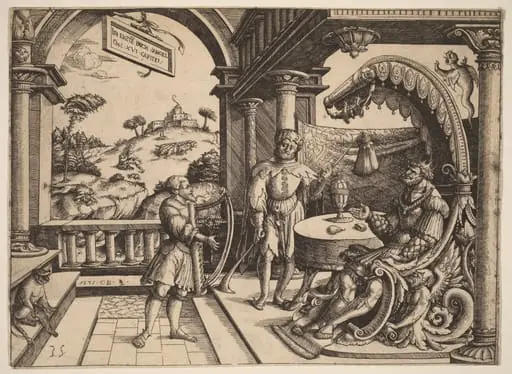 David Playing the Harp before Saul
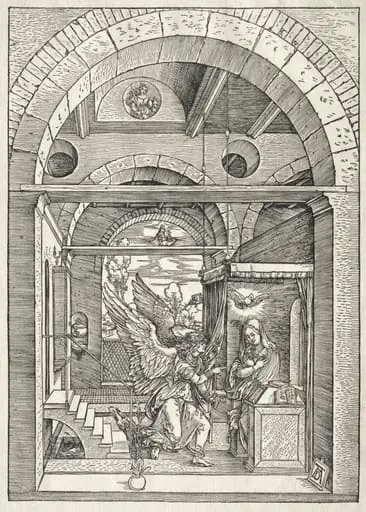 Life of the Virgin: The Annunciation
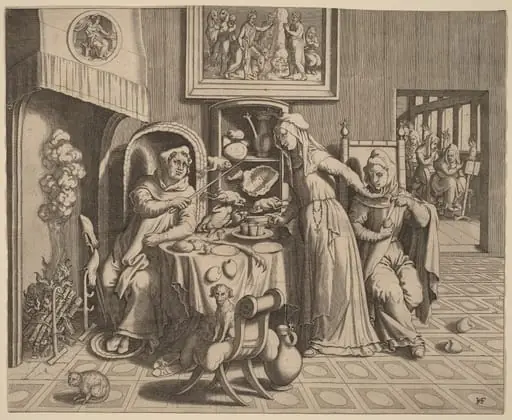 The Amorous Nun between the Abbot and the Monk
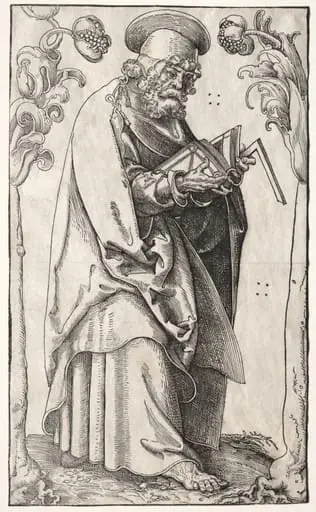 The Apostle Matthew
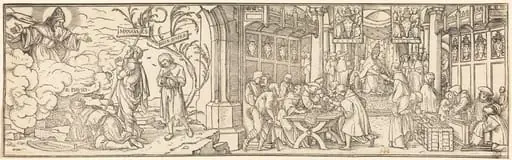 Traffic in Indulgences
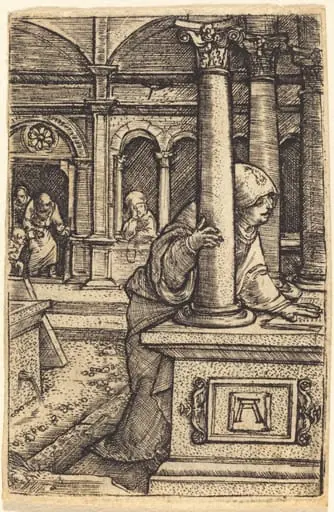 The Virgin Seeking Jesus in the Temple
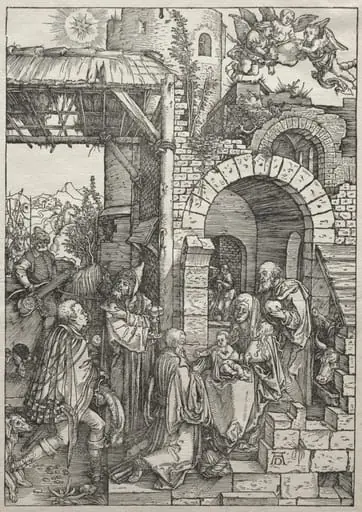 Life of the Virgin: Adoration of the Magi
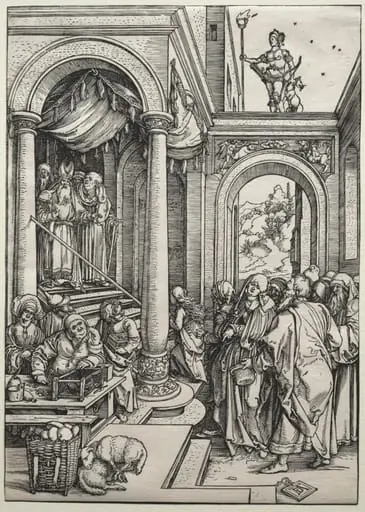 The Presentation of the Virgin in the Temple
 The Penitence of Saint Jerome