Artwork
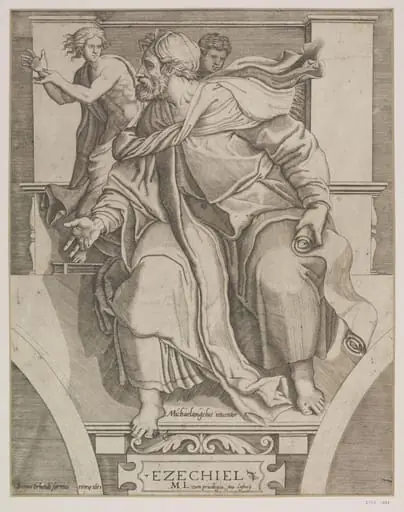
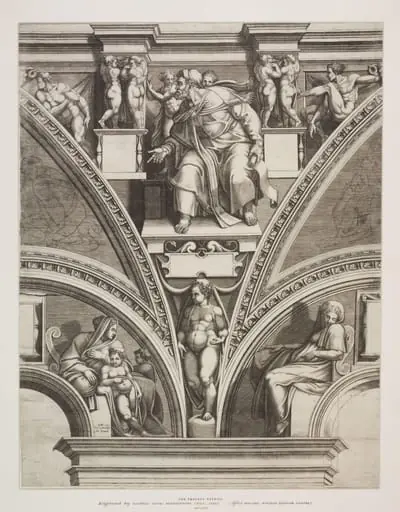
Copy after Michelangelo’s fresco of the ‘Prophet Ezekiel’ on the Sistine Chapel vault (Sistine Chapel, Rome, about 1511)
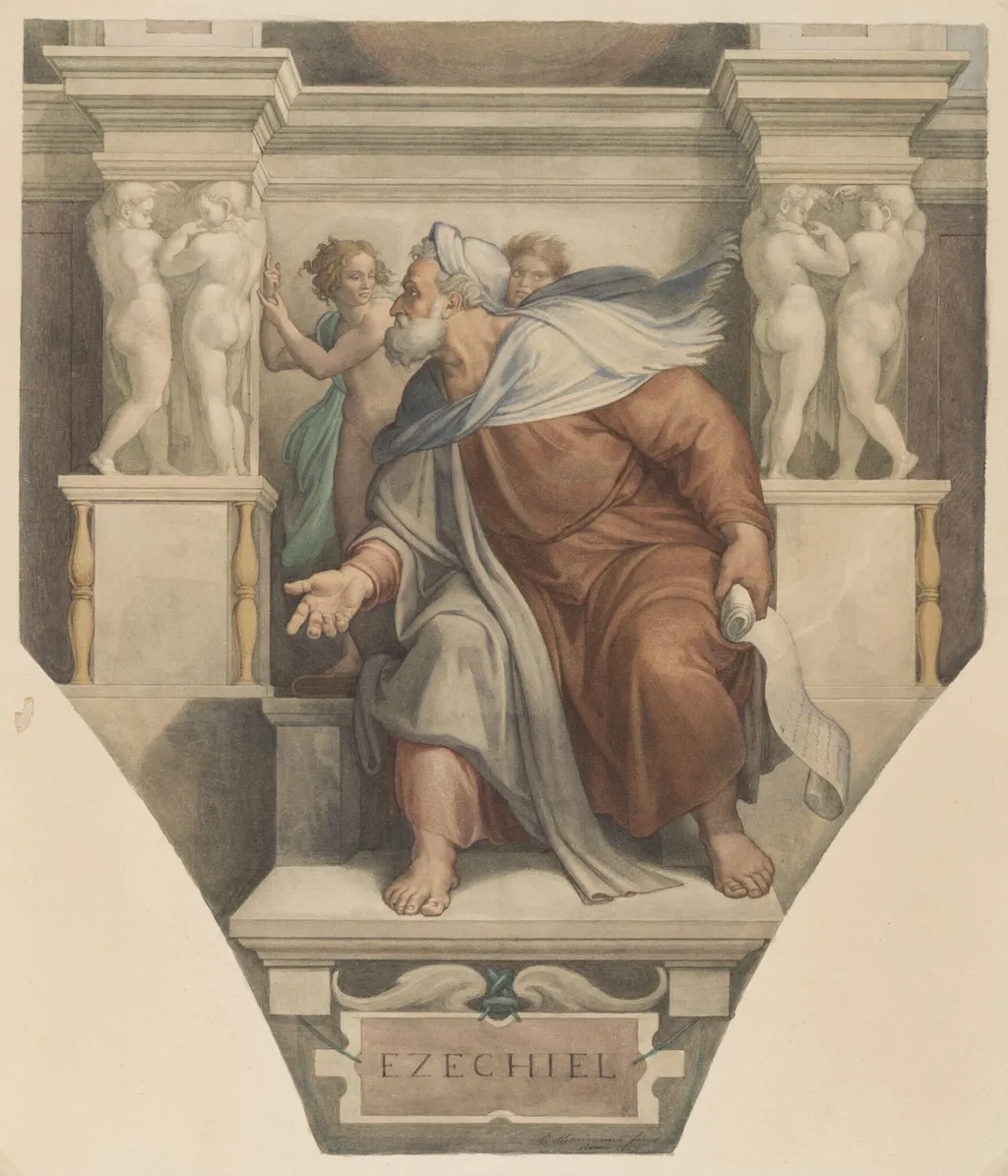
Copy after Michelangelo’s fresco of the ‘Prophet Ezekiel’ on the Sistine Chapel vault (Sistine Chapel, Rome, about 1511) is a watercolor work on paper by the Impressionist artist Cesari Mariannecci. It dates from 1867 and is held in the collection of the Victoria and Albert Museum. This watercolor is a faithful reproduction of Michelangelo’s early 16th‑century fresco of the Prophet Ezekiel on the Sistine Chapel vault.
About this work
Later, the sheet moved from the National Gallery to the Victoria and Albert Museum in 1993.
Cesari Mariannecci made this watercolor in 1867. It copies Michelangelo’s 1511 Sistine Chapel fresco of the Prophet Ezekiel. The Arundel Society hired him to do the work.
This wasn’t just a sketch. They turned his watercolor into a printed picture in 1871. Later, the sheet moved from the National Gallery to the Victoria and Albert Museum in 1993.
Want to see more copies like this? Look up Cesari Mariannecci.
Overview
This watercolor is a faithful reproduction of Michelangelo’s early 16th‑century fresco of the Prophet Ezekiel on the Sistine Chapel vault. Executed in 1867 by the Italian artist Cesare Mariannecci, the work translates the monumental wall painting into a portable, paper‑based format.
Subject & Meaning
The original fresco depicts Ezekiel, a major Old Testament prophet whose visions anticipate events later interpreted as foretelling the Christian era. Michelangelo’s composition presents the figure in a contemplative pose, emphasizing his role as a seer within the broader theological program of the chapel.
Technique & Style
Mariannecci employed transparent watercolor washes to capture the tonal range and chiaroscuro of Michelangelo’s fresco. The medium allows a delicate rendering of the figure’s drapery and facial expression, while preserving the overall compositional balance of the original mural.
History & Provenance
Commissioned by the Arundel Society in 1867, Mariannecci’s copy was reproduced as a chromolithograph in 1871, broadening its accessibility. After the Society’s dissolution in 1897, the original watercolor entered the National Gallery’s collection and was transferred to the Victoria and Albert Museum in 1993, where it remains on view.
Context
The 19th‑century interest in documenting Renaissance masterpieces spurred societies like Arundel to sponsor copies of key works. Mariannecci’s watercolor reflects this scholarly impulse, serving both as a study aid for artists and as a means of disseminating Michelangelo’s iconography beyond the confines of the Vatican.
Artist & collection
Artist
In the 1860s, Mariannecci spent years hunched over watercolors in Rome, squinting at Raphael’s frescoes until her brush matched their curves.

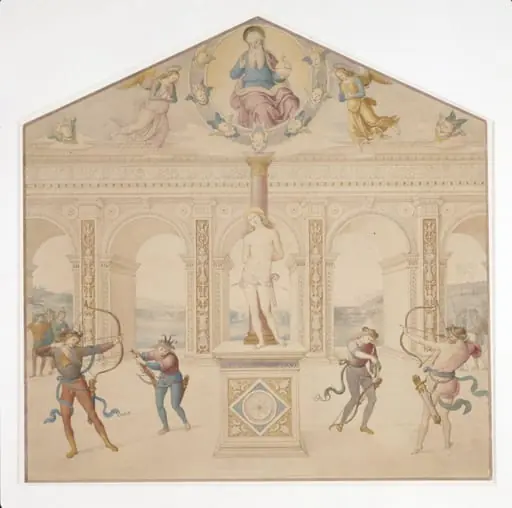 Copy after the painting Martyrdom of St Sebastian by Perugino in S. Sebastiano, Panicale.
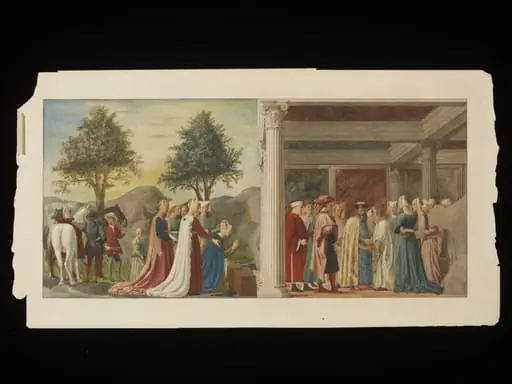 Arundel Society watercolour, Copy after the painting St Helena Finds the True Cross, by Piero della Francesca in San Francesco, Arezzo
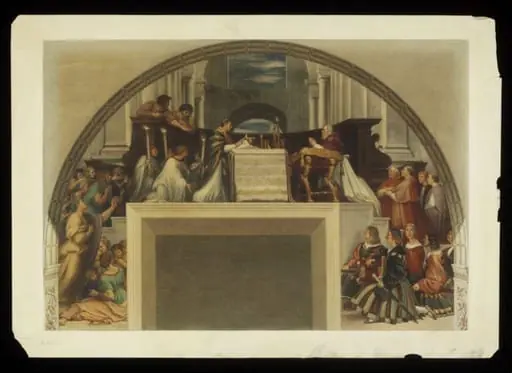 Copy after Raphael’s fresco representing the ‘Miracle of the Mass at Bolsena’ in the Stanza di Eliodoro (Vatican Palace, Rome, 1512-13), 1864.
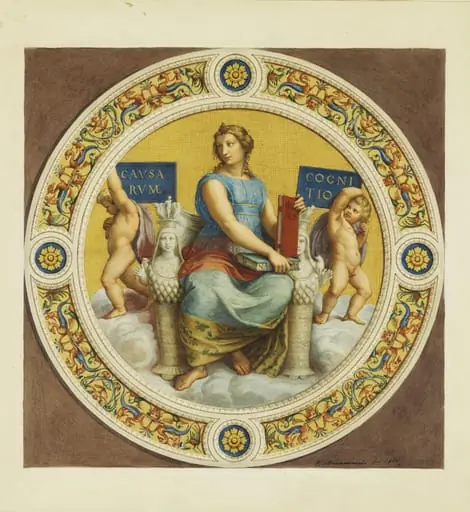 Copy after Raphael’s ceiling fresco representing ‘Philosophy’ in the Stanza della Segnatura (Vatican Palace, Rome,1509-11), 1864
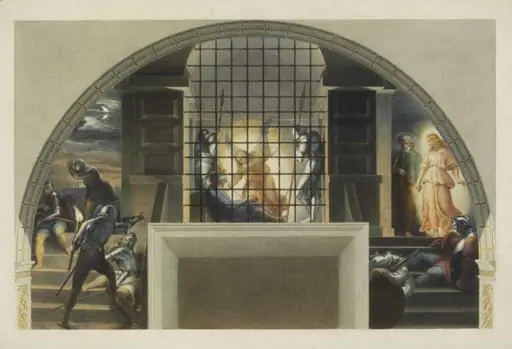 Copy after Raphael’s fresco representing the ‘Deliverance of St Peter from Prison’ in the Stanza di Eliodoro (Vatican Palace, Rome, 1511-12), 1864
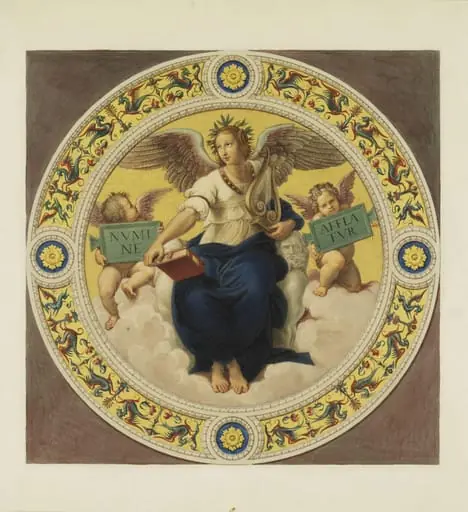 Copy after Raphael’s ceiling fresco representing ‘Poetry’ in the Stanza della Segnatura (Vatican Palace, Rome,1509-11), 1864
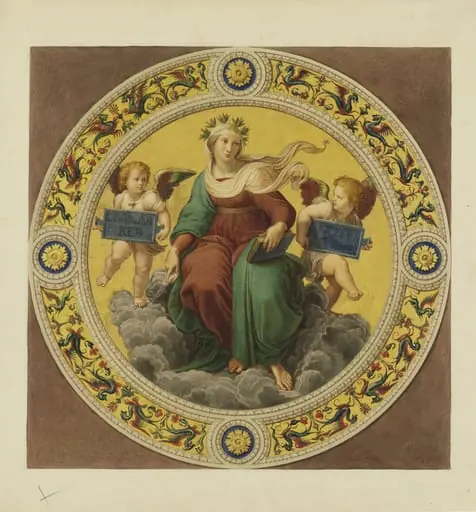 Copy after Raphael’s ceiling fresco representing ‘Theology’ in the Stanza della Segnatura (Vatican Palace, Rome,1508-09), 1864.
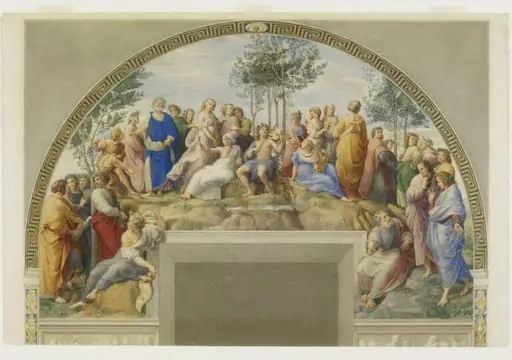 Copy after Raphael’s fresco representing the ‘Poets on Mount Parnassus’ in the Stanza della Segnatura (Vatican Palace, Rome, 1510-11), 1864-66