Artwork
Copy after Raphael’s fresco representing the ‘Miracle of the Mass at Bolsena’ in the Stanza di Eliodoro (Vatican Palace, Rome, 1512-13), 1864.
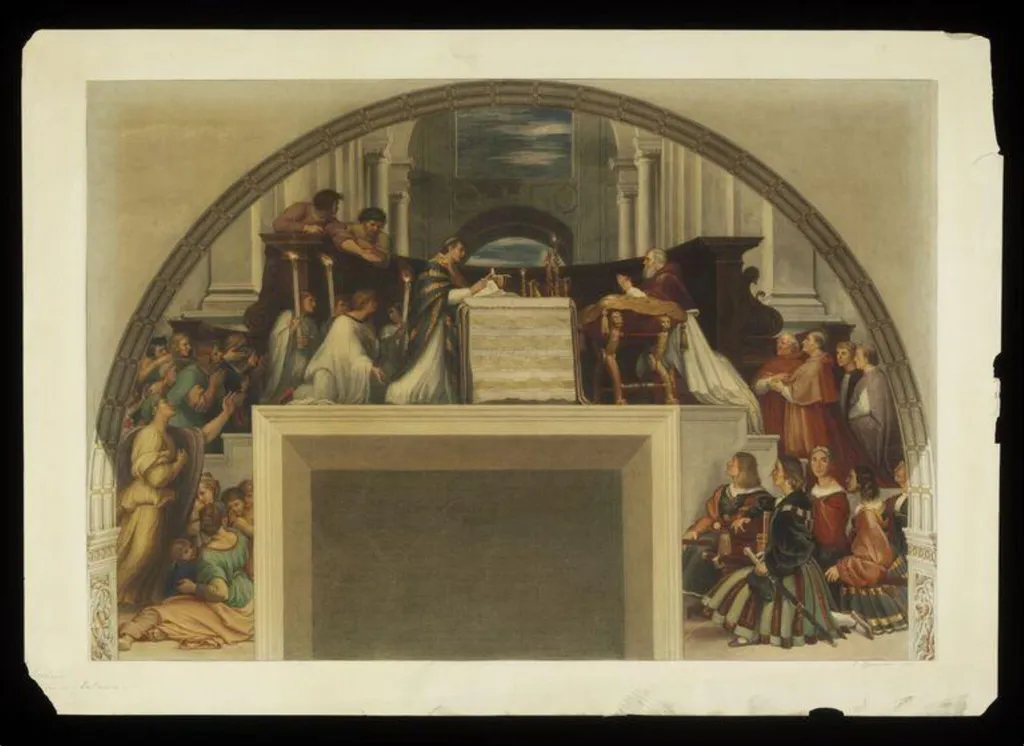
Copy after Raphael’s fresco representing the ‘Miracle of the Mass at Bolsena’ in the Stanza di Eliodoro (Vatican Palace, Rome, 1512-13), 1864. is a watercolor work on paper by the Biedermeier artist Cesari Mariannecci. It dates from 1864 and is held in the collection of the Victoria and Albert Museum.
About this work
You can learn more about the artist who made this copy, Cesari Mariannecci, at the museum where it's held, but first look up the movement: Realism.
This watercolour is a copy of a fresco by Raphael. It's about a miracle that happened in 1263.
The miracle happened at the Church of Santa Cristina at Bolsena. The bread of the eucharist began to bleed during a mass. This event was important and inspired many artworks.
You can learn more about the artist who made this copy, Cesari Mariannecci, at the museum where it's held, but first look up the movement: Realism.
Overview
This small watercolour reproduces Raphael’s early 16th‑century fresco of the ‘Miracle of the Mass at Bolsza’, a scene that depicts the 1263 Eucharistic miracle in which the host allegedly began to bleed. The copy was executed in 1864 by the Italian artist Cesare Mariannecci for the Arundel Society, a group devoted to disseminating knowledge of great frescoes.
Subject & Meaning
The composition records the legendary event at Santa Cristina in Bolsza, where, according to medieval accounts, the consecrated bread turned red during Mass, affirming the doctrine of transubstantiation. Raphael’s original fresco presents the miracle within a narrative framework that emphasizes divine intervention and the sanctity of the sacrament.
Technique & Style
Mariannecci rendered the fresco in transparent watercolour, translating Raphael’s complex chiaroscuro and rich coloration into a delicate, monochrome medium. The copy retains the original’s compositional balance and figural arrangement while adapting the fresco’s broad brushwork to the finer, linear qualities of watercolour.
History & Provenance
Commissioned by the Arundel Society, Mariannecci produced eight watercolour copies of Raphael’s Vatican Stanze scenes between 1864 and 1868. This particular work was never reproduced as a chromolithograph and remained unpublished. After the Society dissolved in 1897, the watercolour passed to the National Gallery, which transferred it to the Victoria and Albert Museum in 1993, where it remains in the collection.
Context
The Vatican Stanze were initiated by Pope Julius II and continued under Popes Leo X and Clement VII. Raphael, appointed by Julius II, frescoed the Stanza della Segnatura (1508‑11) and later the Stanza di Eliodoro (1512‑13), where the ‘Miracle of the Mass at Bolsza’ is located. Mariannecci’s copy reflects the 19th‑century interest in documenting Renaissance frescoes for wider audiences.
Artist & collection
Artist
In the 1860s, Mariannecci spent years hunched over watercolors in Rome, squinting at Raphael’s frescoes until her brush matched their curves.

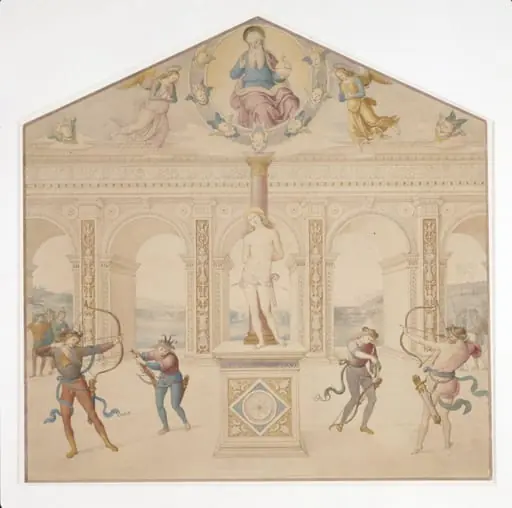 Copy after the painting Martyrdom of St Sebastian by Perugino in S. Sebastiano, Panicale.
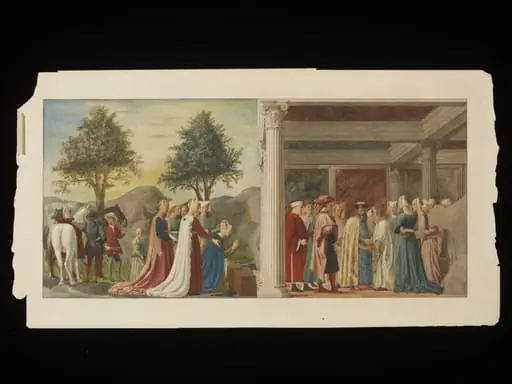 Arundel Society watercolour, Copy after the painting St Helena Finds the True Cross, by Piero della Francesca in San Francesco, Arezzo
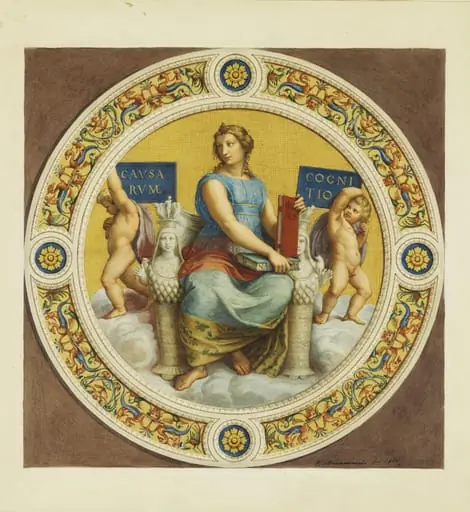 Copy after Raphael’s ceiling fresco representing ‘Philosophy’ in the Stanza della Segnatura (Vatican Palace, Rome,1509-11), 1864
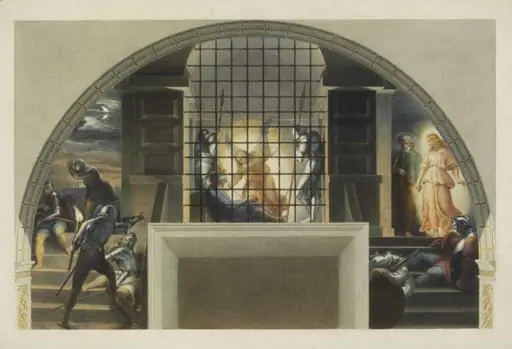 Copy after Raphael’s fresco representing the ‘Deliverance of St Peter from Prison’ in the Stanza di Eliodoro (Vatican Palace, Rome, 1511-12), 1864
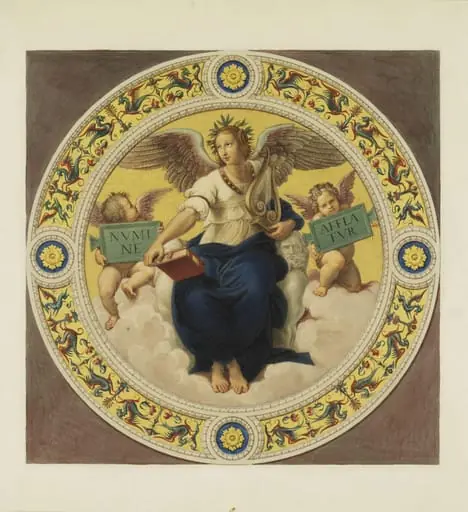 Copy after Raphael’s ceiling fresco representing ‘Poetry’ in the Stanza della Segnatura (Vatican Palace, Rome,1509-11), 1864
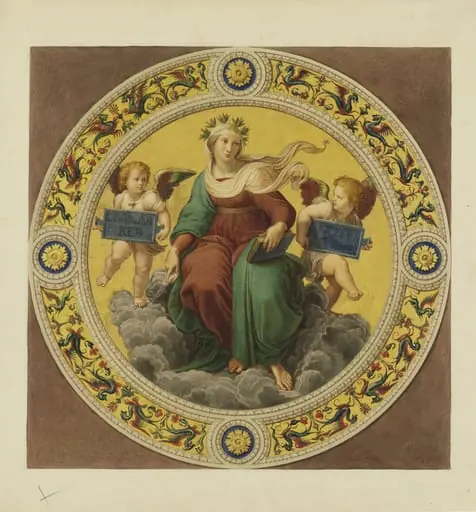 Copy after Raphael’s ceiling fresco representing ‘Theology’ in the Stanza della Segnatura (Vatican Palace, Rome,1508-09), 1864.
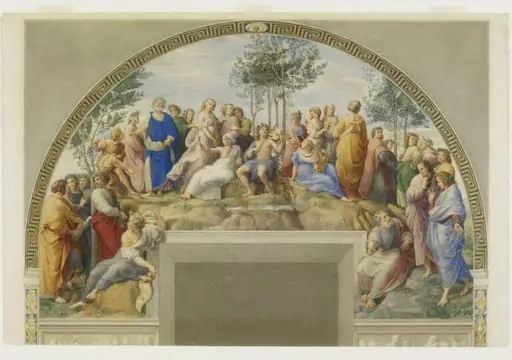 Copy after Raphael’s fresco representing the ‘Poets on Mount Parnassus’ in the Stanza della Segnatura (Vatican Palace, Rome, 1510-11), 1864-66
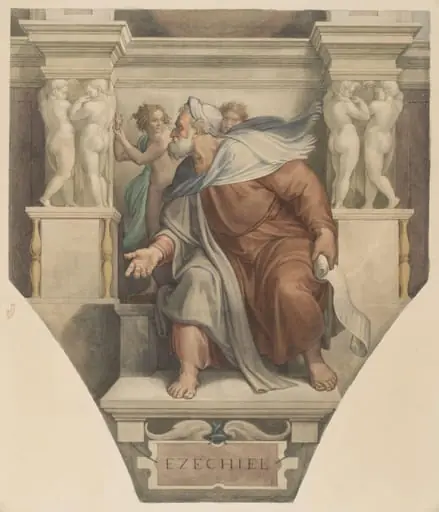 Copy after Michelangelo’s fresco of the ‘Prophet Ezekiel’ on the Sistine Chapel vault (Sistine Chapel, Rome, about 1511)
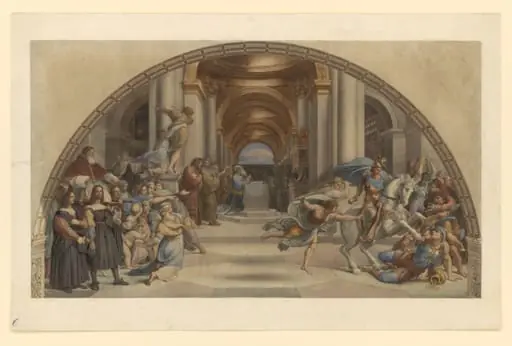 Copy after Raphael’s fresco representing the ‘Expulsion of Heliodorus from the Temple’ in the Stanza di Eliodoro (Vatican Palace, Rome, 1512-14), 1866.
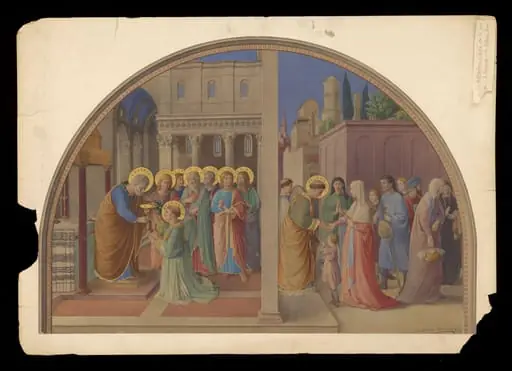 Watercolour, copy after The Ordination of St Stephen and St Stephen Distributing Alms, Fra Angelico in the Niccoline Chapel (Vatican, Rome)
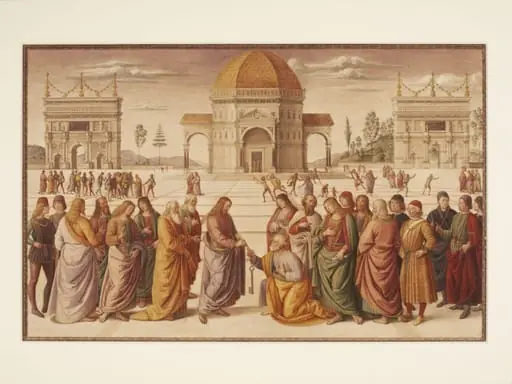 The Delivery of Keys to St Peter
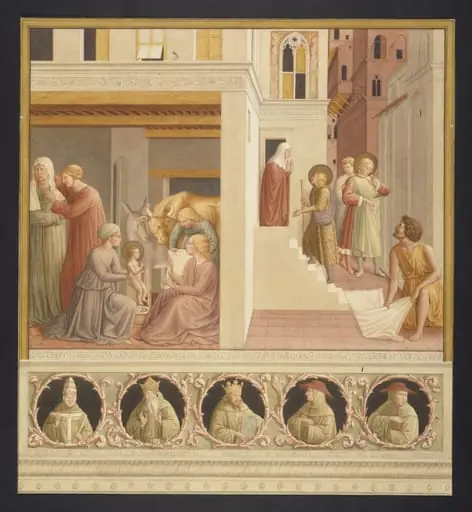 Copy after the cycle of the <i>Life of St Francis</i> (<i>Birth of St Francis</i>), Benozzo Gozzoli in San Francesco, Montefalco
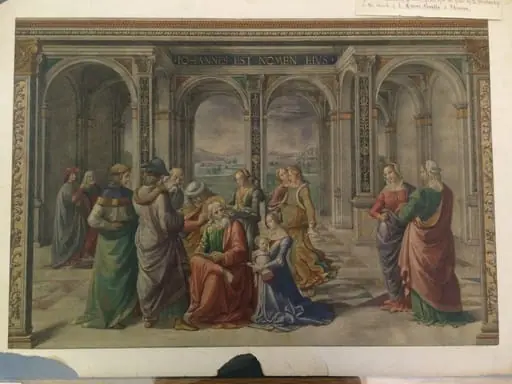 Copy after Zacharias writes down the name of his Son, Domenico Ghirlandaio in the Tornabuoni Chapel, Santa Maria Novella (Florence)
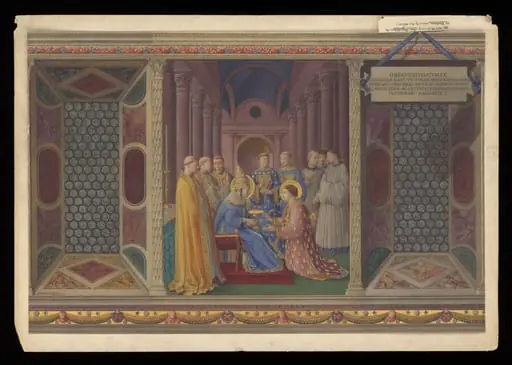 Copy after The Ordination of St Lawrence, Fra Angelico in the Niccoline Chapel (Vatican, Rome)
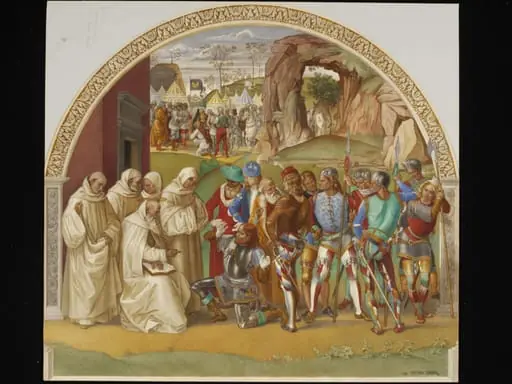 St Benedict and the False King Totila
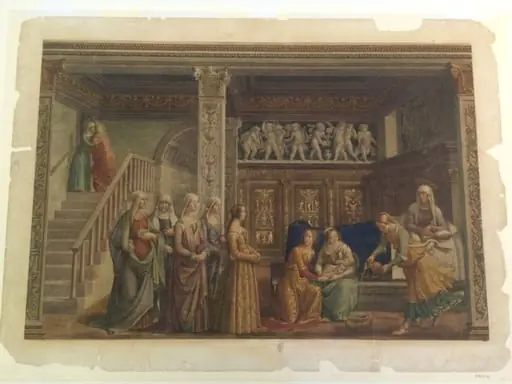 Copy after the Nativity of the Virgin, Domenico Ghirlandaio in the Tornabuoni Chapel, Santa Maria Novella (Florence)
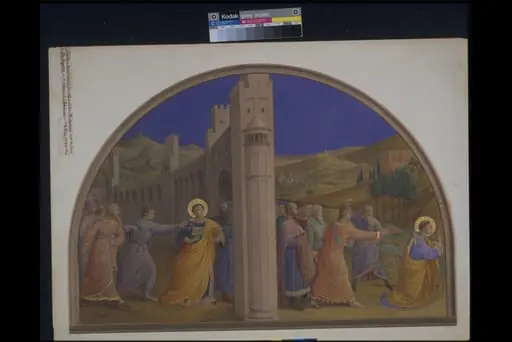 Copy after The Expulsion of St Stephen and The Martyrdom of St Stephen, Fra Angelico in the Niccoline Chapel (Vatican, Rome)