Artwork
Copy after the painting Martyrdom of St Sebastian by Perugino in S. Sebastiano, Panicale.
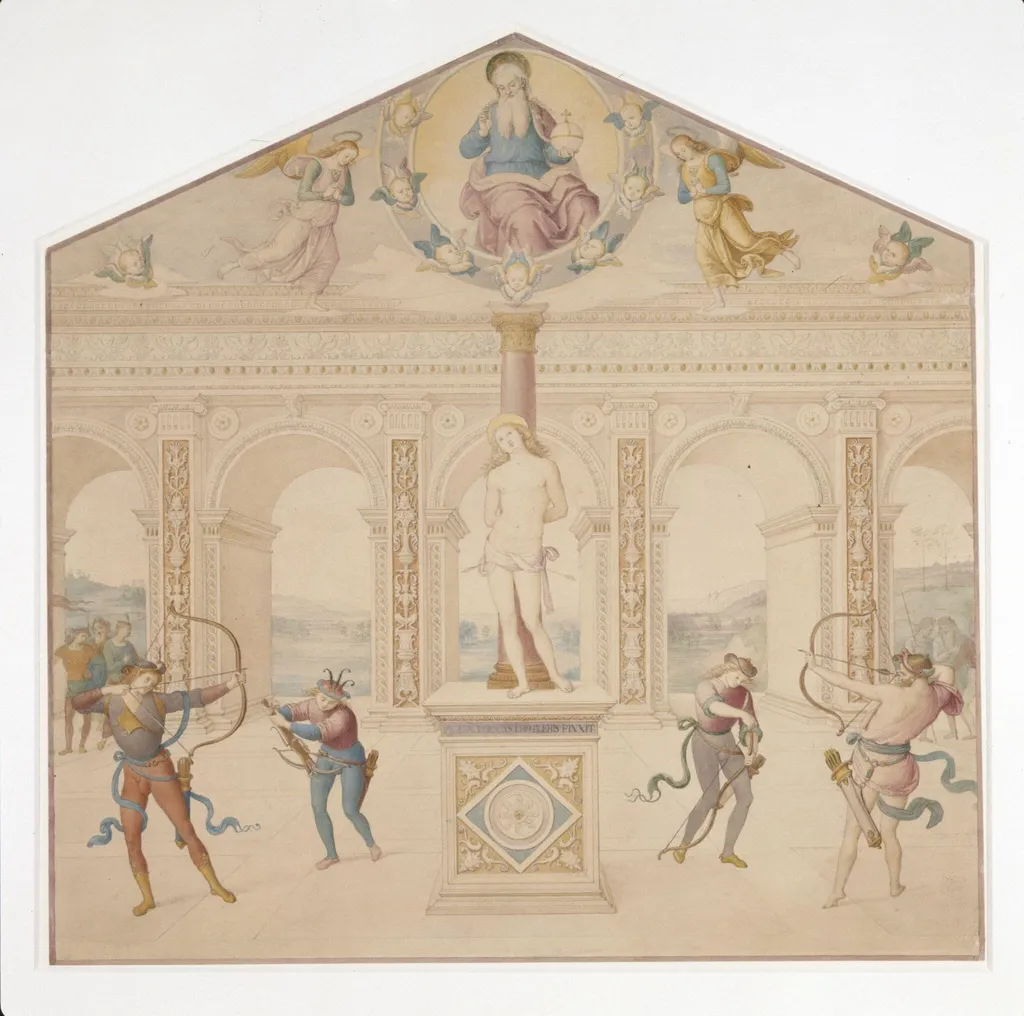
Copy after the painting Martyrdom of St Sebastian by Perugino in S. Sebastiano, Panicale. is a paint painting by the Impressionist artist Cesari Mariannecci. It dates from 1856 and is held in the collection of the Victoria and Albert Museum.
About this work
Overview
This watercolour by Cesari Mariannecci reproduces Perugino’s fresco of the Martyrdom of St Sebastian, created in 1856 for the Arundel Society.
This watercolour by Cesari Mariannecci reproduces Perugino’s fresco of the Martyrdom of St Sebastian, created in 1856 for the Arundel Society. It was among the first colour reproductions the society commissioned, later issued as a chromolithograph by Vincent Brooks. The work was transferred from the National Gallery to the Victoria and Albert Museum in 1995 and displayed there in 1996–97, reflecting its role in 19th-century art documentation.
Subject & Meaning
The scene depicts St Sebastian bound in a niche, pierced by arrows, while a robed figure seated above, likely Christ or a divine authority, is attended by angels. Below, four figures in elaborate garments prepare to shoot, their gestures emphasizing ritualized violence. The composition follows traditional hagiographic iconography, framing martyrdom as both suffering and spiritual triumph, though the tone here is subdued compared to the original fresco.
Technique & Style
Mariannecci employed soft, muted watercolours to replicate Perugino’s composition, deliberately toning down the original’s vividness. Forms are simplified, with delicate brushwork replacing sharp contours. The lighting is diffused, lacking strong chiaroscuro, giving the image a sketchlike quality. This approach prioritized faithful reproduction over dramatic intensity, aligning with the Arundel Society’s goal of archival precision.
History & Provenance
Commissioned in 1856 by the Arundel Society, the watercolour was part of an early effort to preserve and disseminate Italian Renaissance frescoes. Its chromolithographic reproduction, accompanied by a monograph by Austen Henry Layard, marked a milestone in colour printing for art historical study. In 1995, it was moved from the National Gallery to the V&A, where it joined collections focused on reproductive art and 19th-century print culture.
Context
The Arundel Society sought to make significant but inaccessible frescoes available to British artists and scholars through accurate reproductions. Mariannecci’s watercolour emerged during a period of renewed interest in early Italian art, driven by antiquarianism and the rise of museum culture. Its reproduction in chromolithography reflected technological advances that democratized access to art, even as it prioritized fidelity over artistic interpretation.
Legacy
Though not an original work, the watercolour and its chromolithograph served as key references for Victorian audiences studying Perugino’s style. Its preservation in the V&A underscores the historical value of reproductive art in shaping art education and conservation awareness. The piece remains a document of 19th-century practices in art transmission, bridging Renaissance originals and modern print media.
Artist & collection
Artist
In the 1860s, Mariannecci spent years hunched over watercolors in Rome, squinting at Raphael’s frescoes until her brush matched their curves.

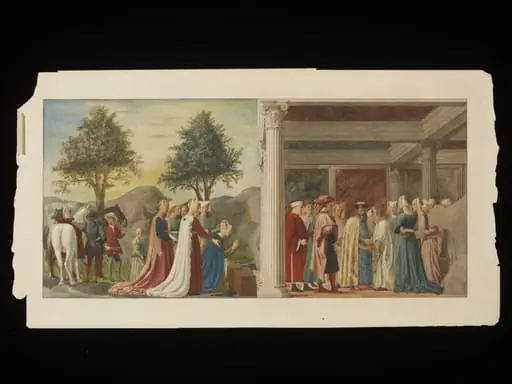 Arundel Society watercolour, Copy after the painting St Helena Finds the True Cross, by Piero della Francesca in San Francesco, Arezzo
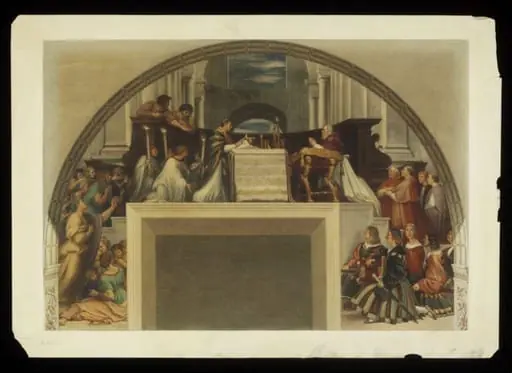 Copy after Raphael’s fresco representing the ‘Miracle of the Mass at Bolsena’ in the Stanza di Eliodoro (Vatican Palace, Rome, 1512-13), 1864.
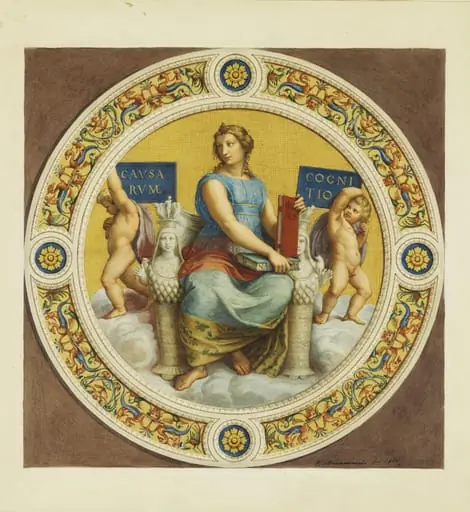 Copy after Raphael’s ceiling fresco representing ‘Philosophy’ in the Stanza della Segnatura (Vatican Palace, Rome,1509-11), 1864
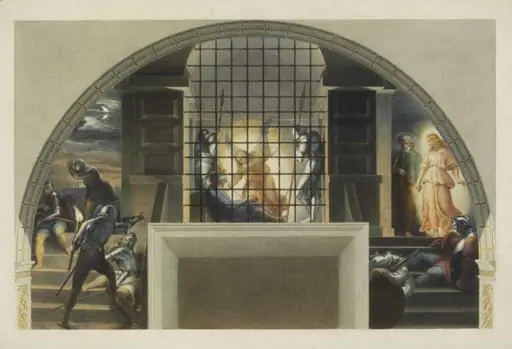 Copy after Raphael’s fresco representing the ‘Deliverance of St Peter from Prison’ in the Stanza di Eliodoro (Vatican Palace, Rome, 1511-12), 1864
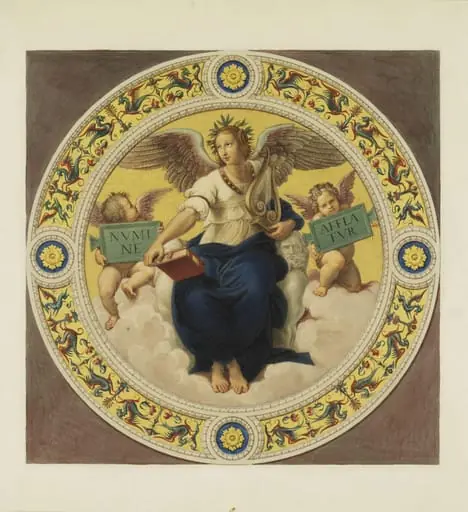 Copy after Raphael’s ceiling fresco representing ‘Poetry’ in the Stanza della Segnatura (Vatican Palace, Rome,1509-11), 1864
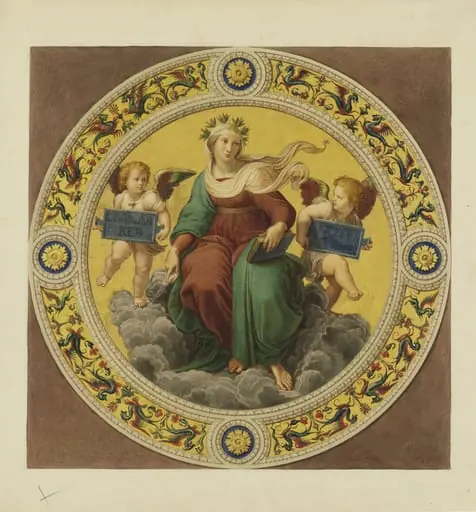 Copy after Raphael’s ceiling fresco representing ‘Theology’ in the Stanza della Segnatura (Vatican Palace, Rome,1508-09), 1864.
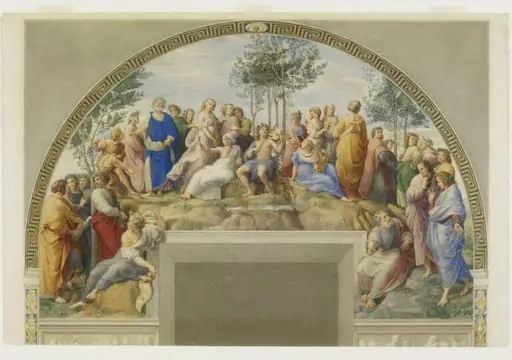 Copy after Raphael’s fresco representing the ‘Poets on Mount Parnassus’ in the Stanza della Segnatura (Vatican Palace, Rome, 1510-11), 1864-66
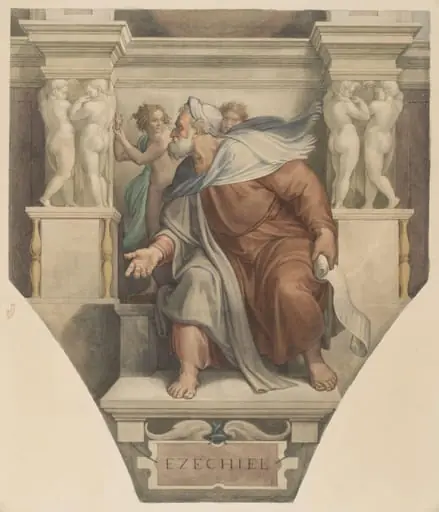 Copy after Michelangelo’s fresco of the ‘Prophet Ezekiel’ on the Sistine Chapel vault (Sistine Chapel, Rome, about 1511)
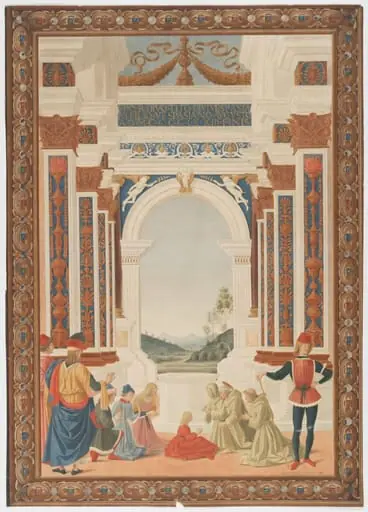 Copy after the painting St Bernard healing a man by Fiorenzo di Lorenzo in the Galleria Nazionale, Perugia.
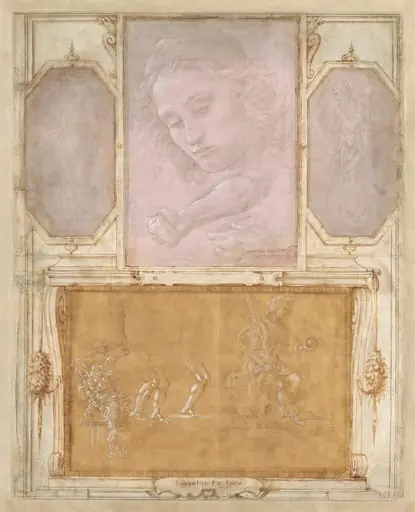 Page from the Collection of Niccolò Gaddi (So-Called "Vasari Page")
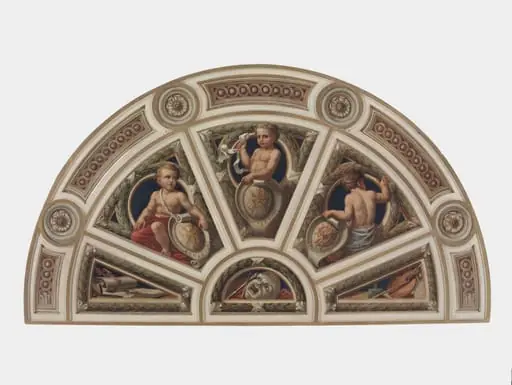 Composition of children
 Aeneas hindres af Venus i sin hævn mod Helena, som har søgt tilflugt ved Cybeles alter
 Allegory of the Union of Painting and Sculpture
 An Elaborate Altar of Colored Marble Ornamented with Sculptures
 Forteza (from the Tarocchi, series B: Cosmic Principles & Virtues, #36)
 Design for terracotta decoration of the quadrangle
 Crowning the Victors at Olympia. Study for a picture in the Rooms of the Society of Arts.
 Rudolf I and Albert I with Pallas
 Clelia crossing the Tiber on a horse
 Joseph Interpreting the Dreams of Pharaoh