Artwork
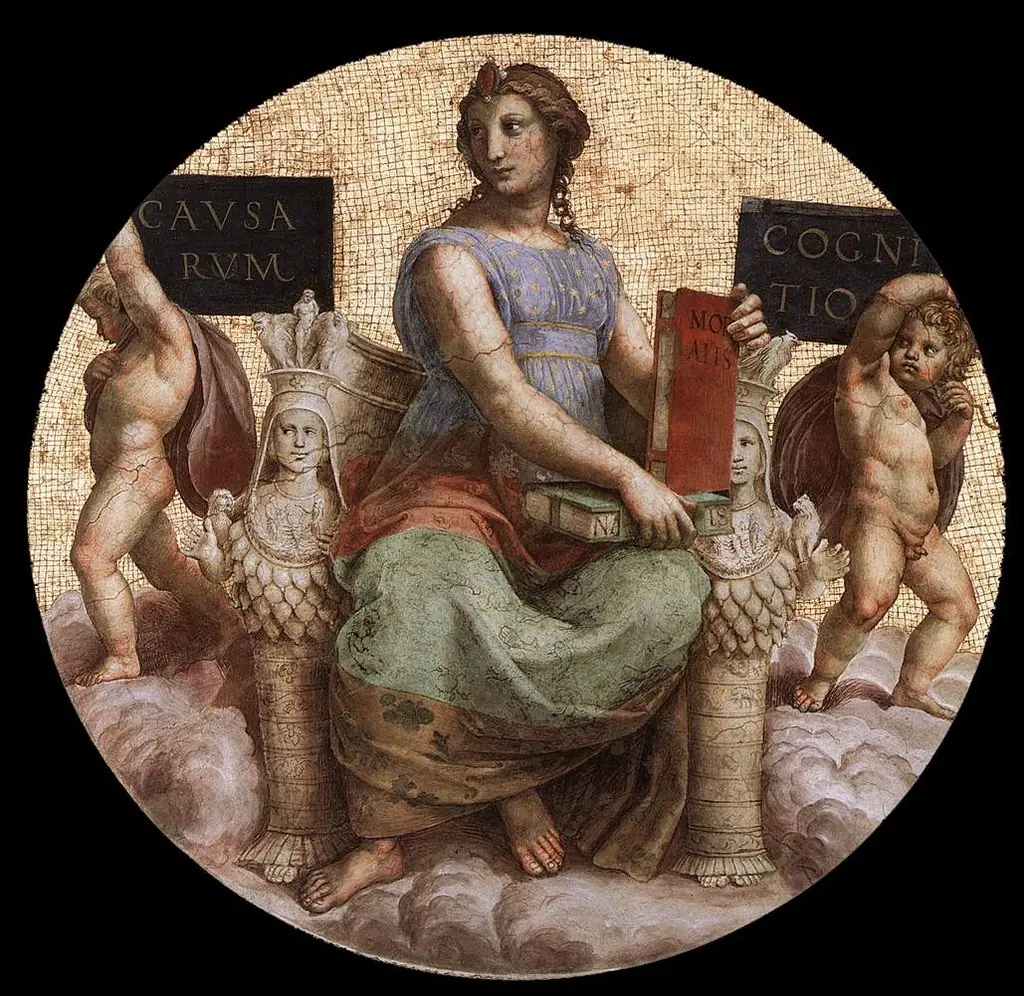
Copy after Raphael’s ceiling fresco representing ‘Philosophy’ in the Stanza della Segnatura (Vatican Palace, Rome,1509-11), 1864
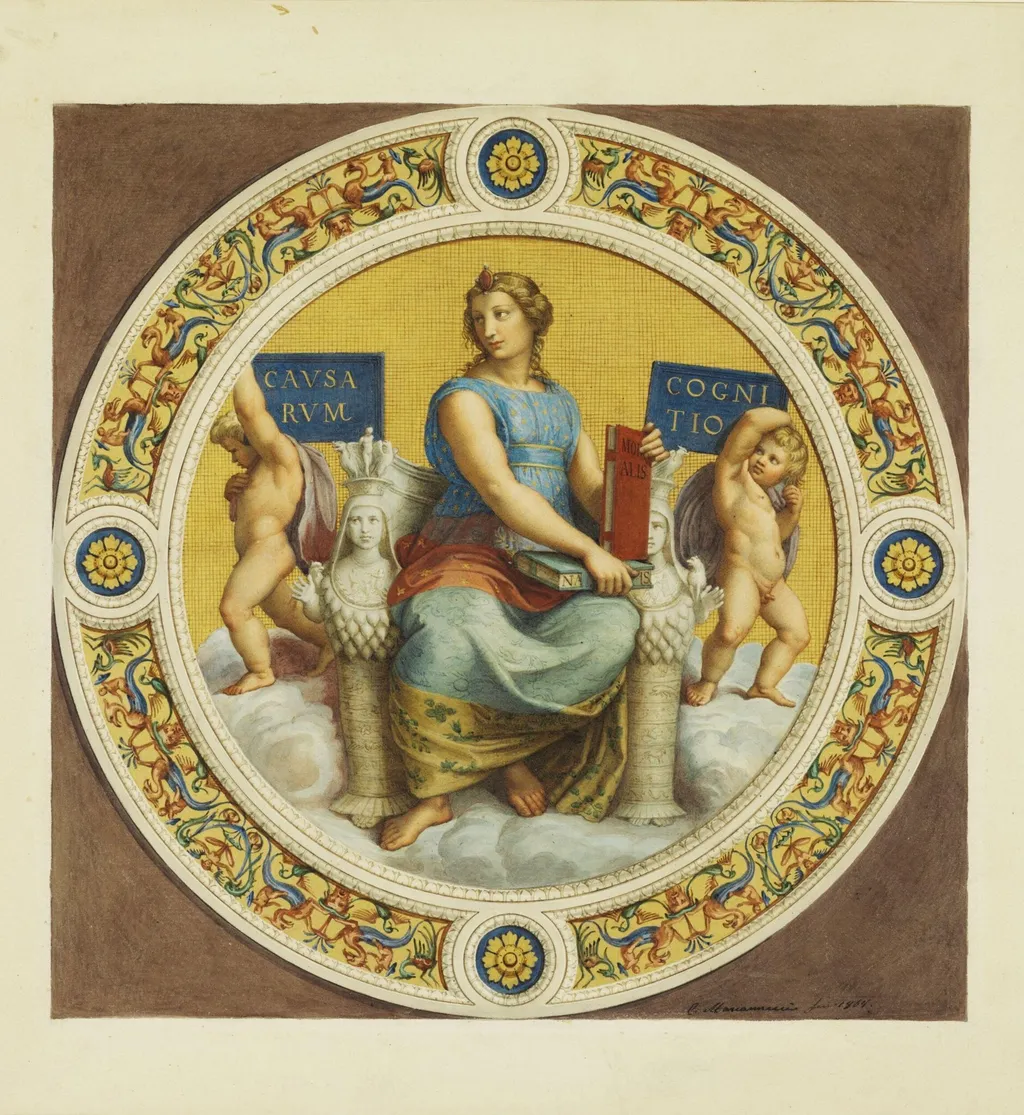
Copy after Raphael’s ceiling fresco representing ‘Philosophy’ in the Stanza della Segnatura (Vatican Palace, Rome,1509-11), 1864 is a watercolor work on paper by the Impressionist artist Cesari Mariannecci. It dates from 1864 and is held in the collection of the Victoria and Albert Museum.
About this work
Cesare Mariannecci’s 1864 watercolour is a careful copy of Raphael’s 1509–11 fresco. The Arundel Society hired him to make these copies. Eight scenes total were copied between 1864 and 1868.
This one later became a printed image in 1867 and 1871. The Arundel Society gave it to the National Gallery, which passed it to the Victoria and Albert Museum in 1993.
Check out the artist Cesare Mariannecci.
Overview
The work was later reproduced as a chromolithograph and eventually entered the V&A’s collection in 1993 after passing through the National Gallery.
This watercolour, created in 1864 by Cesare Mariannecci, is a faithful reproduction of Raphael’s ceiling fresco depicting 'Philosophy' from the Stanza della Segnatura. Commissioned by the Arundel Society, it forms part of a series of eight copies made between 1864 and 1868 of Raphael’s Vatican frescoes. The work was later reproduced as a chromolithograph and eventually entered the V&A’s collection in 1993 after passing through the National Gallery.
Subject & Meaning
The original fresco, painted by Raphael between 1509 and 1511, personifies Philosophy as a serene, seated figure surrounded by classical thinkers. Mariannecci’s copy preserves this allegorical composition, emphasizing the intellectual harmony of ancient thought. The scene reflects Renaissance ideals of reason and classical revival, central to the Vatican’s broader program of cultural renewal under Pope Julius II.
Technique & Style
Mariannecci rendered the fresco in watercolour with meticulous attention to detail, capturing the tonal gradations and linear clarity of Raphael’s design. His technique avoids embellishment, prioritizing accuracy over interpretation. The use of transparent washes and fine linework mirrors the precision expected of documentary reproductions in the 19th-century art historical tradition.
History & Provenance
Commissioned by the Arundel Society in 1864, the watercolour was one of eight copies made by Mariannecci of Raphael’s Vatican frescoes. It was translated into a chromolithograph in Berlin in 1867 and published in London in 1871. After the society’s dissolution in 1897, the original passed to the National Gallery and was transferred to the V&A in 1993, where it remains as part of its collection of 19th-century reproductions.
Context
Raphael’s Stanza della Segnatura was painted for Pope Julius II as part of a larger program to align the papal residence with humanist ideals. The Arundel Society, founded to promote the study of medieval and Renaissance art, sought to preserve and disseminate such works through accurate copies. Mariannecci’s watercolours served as accessible references for scholars and artists before widespread photographic reproduction.
Legacy
Mariannecci’s watercolour stands as a significant example of 19th-century art documentation, reflecting the era’s commitment to preserving cultural heritage through manual reproduction. Its journey from Vatican ceiling to museum archive underscores evolving attitudes toward originality, reproduction, and the role of copies in art historical scholarship.
Artist & collection
Artist
In the 1860s, Mariannecci spent years hunched over watercolors in Rome, squinting at Raphael’s frescoes until her brush matched their curves.

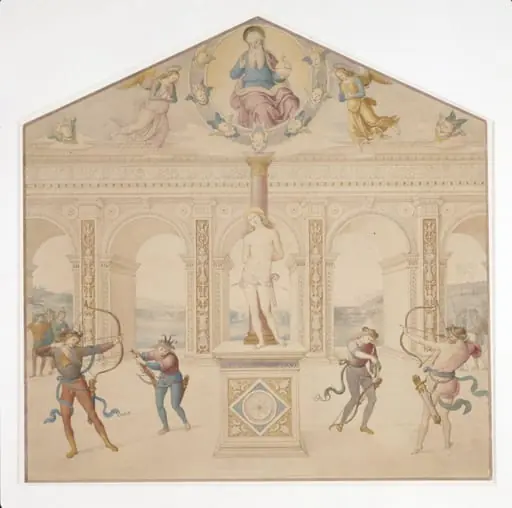 Copy after the painting Martyrdom of St Sebastian by Perugino in S. Sebastiano, Panicale.
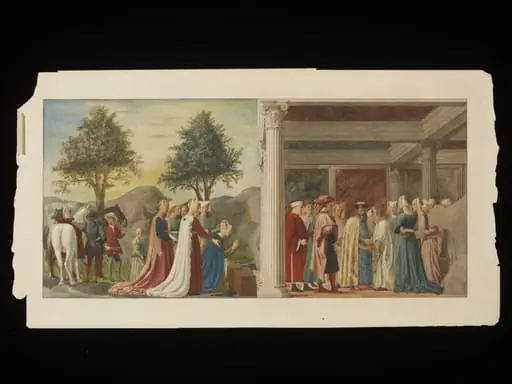 Arundel Society watercolour, Copy after the painting St Helena Finds the True Cross, by Piero della Francesca in San Francesco, Arezzo
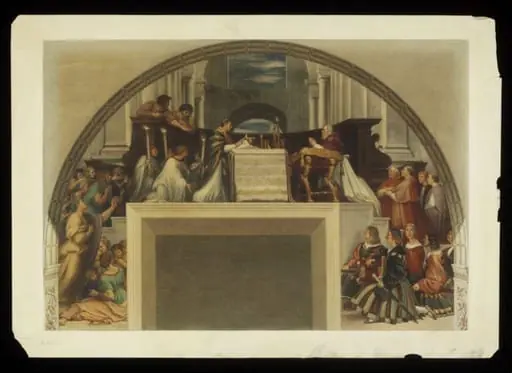 Copy after Raphael’s fresco representing the ‘Miracle of the Mass at Bolsena’ in the Stanza di Eliodoro (Vatican Palace, Rome, 1512-13), 1864.
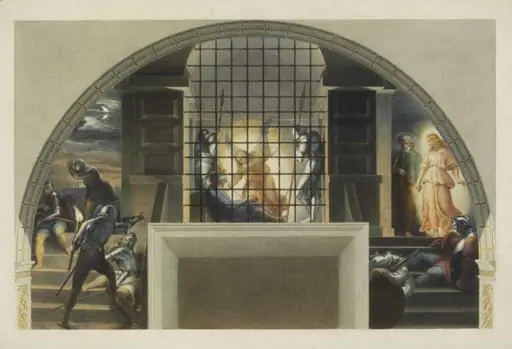 Copy after Raphael’s fresco representing the ‘Deliverance of St Peter from Prison’ in the Stanza di Eliodoro (Vatican Palace, Rome, 1511-12), 1864
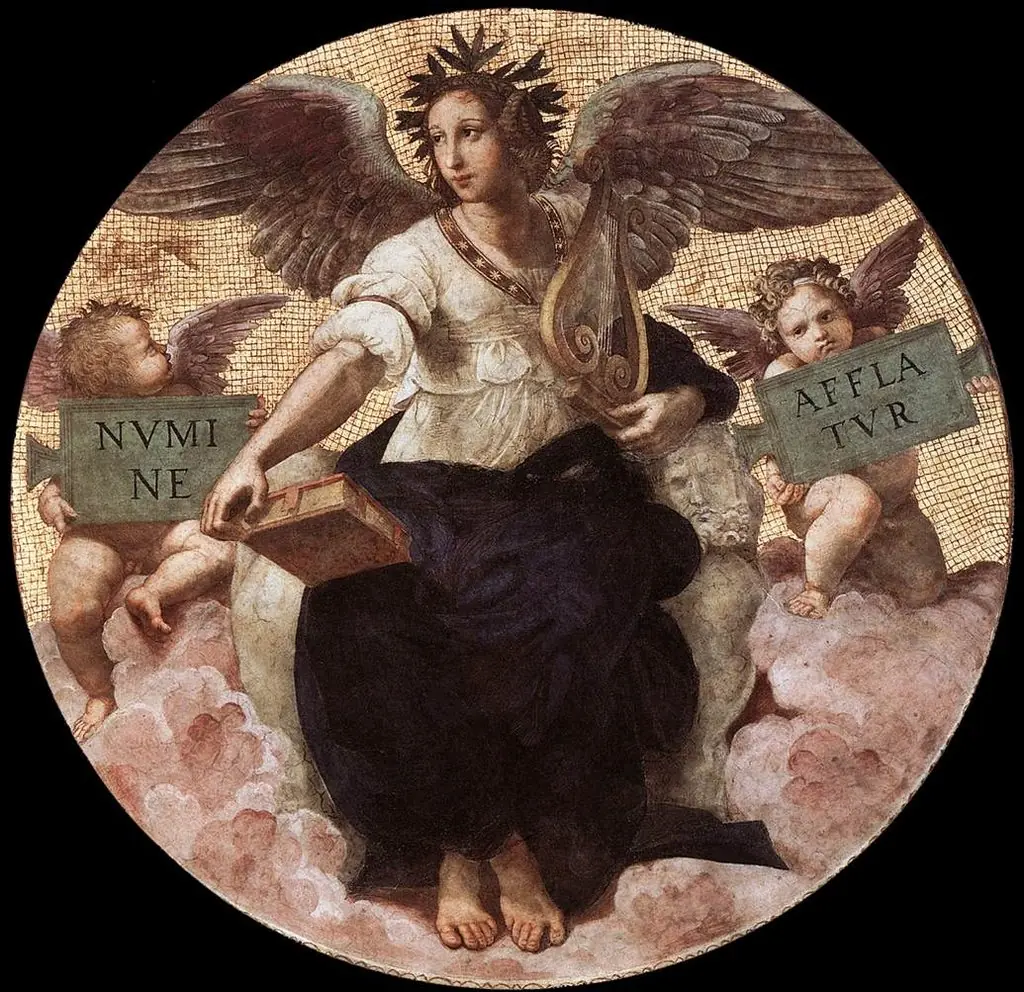
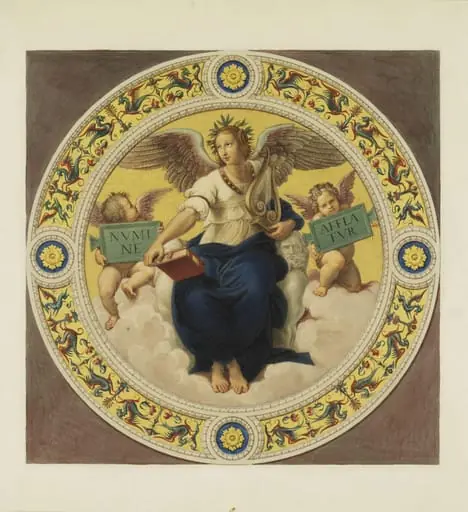 Copy after Raphael’s ceiling fresco representing ‘Poetry’ in the Stanza della Segnatura (Vatican Palace, Rome,1509-11), 1864
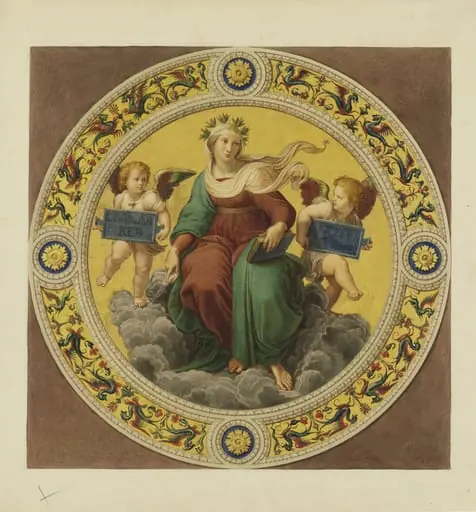 Copy after Raphael’s ceiling fresco representing ‘Theology’ in the Stanza della Segnatura (Vatican Palace, Rome,1508-09), 1864.
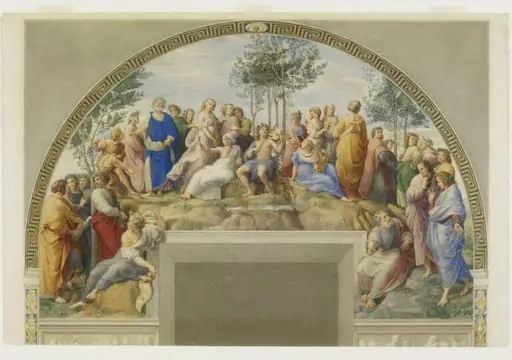 Copy after Raphael’s fresco representing the ‘Poets on Mount Parnassus’ in the Stanza della Segnatura (Vatican Palace, Rome, 1510-11), 1864-66
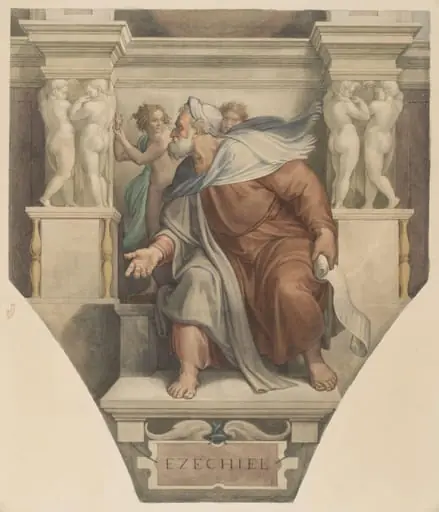 Copy after Michelangelo’s fresco of the ‘Prophet Ezekiel’ on the Sistine Chapel vault (Sistine Chapel, Rome, about 1511)