Artwork
Copy after Raphael’s fresco representing the ‘Deliverance of St Peter from Prison’ in the Stanza di Eliodoro (Vatican Palace, Rome, 1511-12), 1864
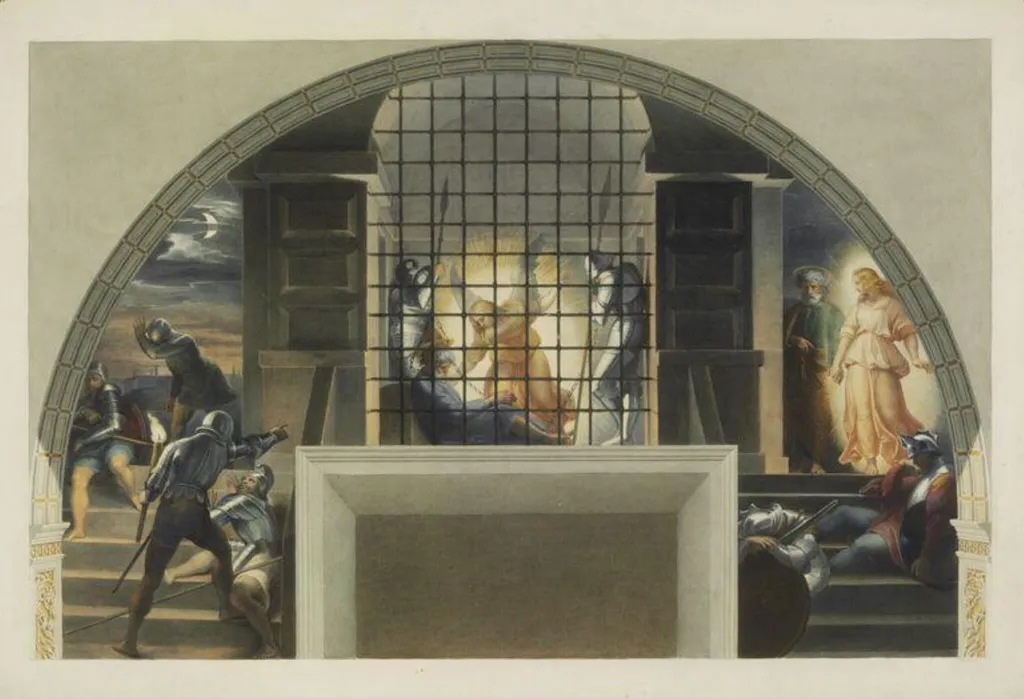
Copy after Raphael’s fresco representing the ‘Deliverance of St Peter from Prison’ in the Stanza di Eliodoro (Vatican Palace, Rome, 1511-12), 1864 is a watercolor work on paper by the Impressionist artist Cesari Mariannecci. It dates from 1864 and is held in the collection of the Victoria and Albert Museum.
About this work
This watercolor is a 1864 copy of Raphael’s Vatican fresco. It shows the moment an angel frees Saint Peter from prison. Mariannecci worked for the Arundel Society, which paid artists to copy great frescoes in the 1860s.
It became a printed chromolithograph in 1865. Later, the National Gallery gave it to the Victoria and Albert Museum in 1993.
Check out the Victoria and Albert Museum.
Overview
This watercolour, created in 1864 by Cesare Mariannecci, is a faithful reproduction of Raphael’s fresco depicting the Deliverance of Saint Peter from Prison.
This watercolour, created in 1864 by Cesare Mariannecci, is a faithful reproduction of Raphael’s fresco depicting the Deliverance of Saint Peter from Prison. Commissioned by the Arundel Society, it was one of eight scenes copied from the Vatican’s Stanze between 1864 and 1868. The work was later transformed into a chromolithograph in 1865 and eventually transferred to the Victoria and Albert Museum in 1993, following its earlier acquisition by the National Gallery.
Subject & Meaning
The scene illustrates the biblical moment when an angel rescues Saint Peter from imprisonment, as described in the Acts of the Apostles. Chains fall away, guards sleep undisturbed, and divine light guides the apostle toward freedom. The composition emphasizes divine intervention over human effort, reflecting the spiritual authority central to Renaissance religious imagery and its later reinterpretation in the 19th century.
Technique & Style
Mariannecci rendered the fresco in watercolour, capturing the tonal range and spatial depth of Raphael’s original with careful washes and precise line work. The technique allowed for subtle gradations of light and shadow, mimicking the fresco’s luminous quality. While faithful to the source, the watercolour medium introduces a softer, more intimate character, distinct from the monumental scale of the Vatican wall painting.
History & Provenance
Commissioned by the Arundel Society in 1864, the watercolour was part of a broader initiative to document and disseminate Renaissance masterpieces. After the Society’s dissolution in 1897, it entered the National Gallery’s collection. In 1993, it was transferred to the Victoria and Albert Museum, where it remains as part of a significant archive of 19th-century copies of Italian frescoes, preserving both artistic and historical context.
Context
Raphael’s fresco, painted between 1511 and 1512 in the Stanza di Eliodoro, was one of several commissions by Pope Julius II to glorify the papacy through classical and biblical themes. The Arundel Society’s project in the 1860s responded to a Victorian interest in preserving and studying Italy’s artistic heritage, especially as original works became increasingly inaccessible to the British public.
Legacy
The watercolour and its chromolithographic reproduction helped circulate Raphael’s imagery beyond Rome, influencing 19th-century artistic education and public taste. As a documented copy, it now serves as a record of how Renaissance works were interpreted and reproduced in the Victorian era, offering insight into the intersection of preservation, reproduction, and cultural transmission.
Artist & collection
Artist
In the 1860s, Mariannecci spent years hunched over watercolors in Rome, squinting at Raphael’s frescoes until her brush matched their curves.

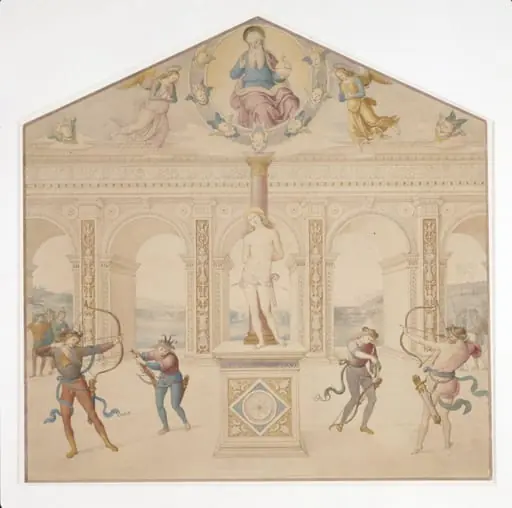 Copy after the painting Martyrdom of St Sebastian by Perugino in S. Sebastiano, Panicale.
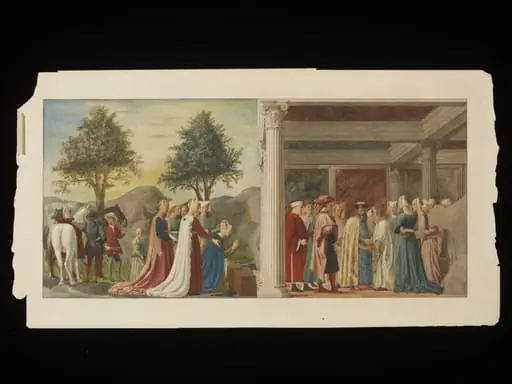 Arundel Society watercolour, Copy after the painting St Helena Finds the True Cross, by Piero della Francesca in San Francesco, Arezzo
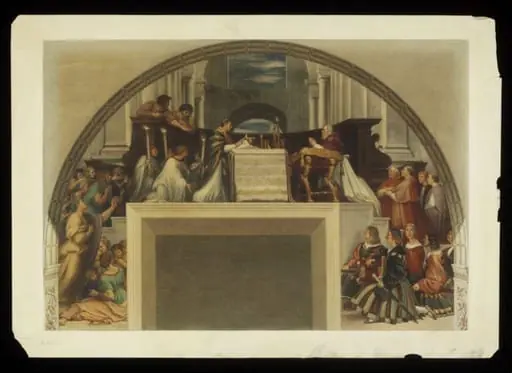 Copy after Raphael’s fresco representing the ‘Miracle of the Mass at Bolsena’ in the Stanza di Eliodoro (Vatican Palace, Rome, 1512-13), 1864.
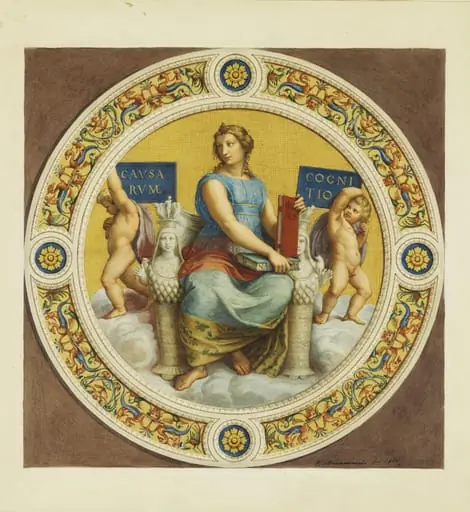 Copy after Raphael’s ceiling fresco representing ‘Philosophy’ in the Stanza della Segnatura (Vatican Palace, Rome,1509-11), 1864
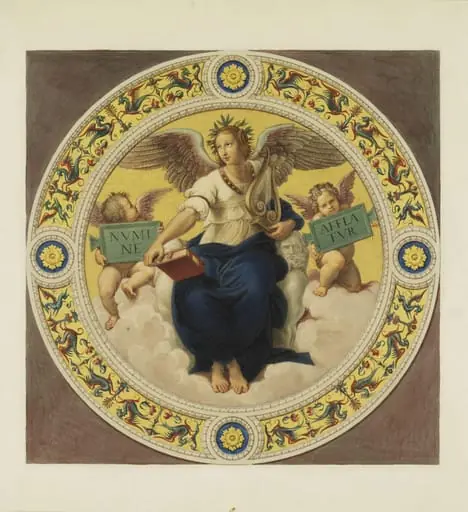 Copy after Raphael’s ceiling fresco representing ‘Poetry’ in the Stanza della Segnatura (Vatican Palace, Rome,1509-11), 1864
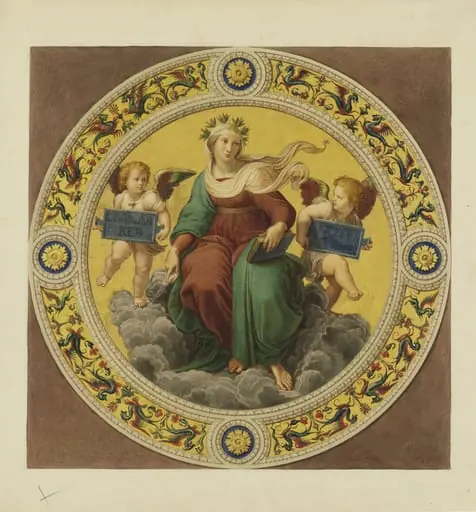 Copy after Raphael’s ceiling fresco representing ‘Theology’ in the Stanza della Segnatura (Vatican Palace, Rome,1508-09), 1864.
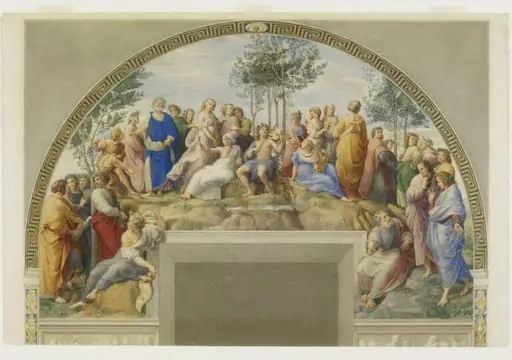 Copy after Raphael’s fresco representing the ‘Poets on Mount Parnassus’ in the Stanza della Segnatura (Vatican Palace, Rome, 1510-11), 1864-66
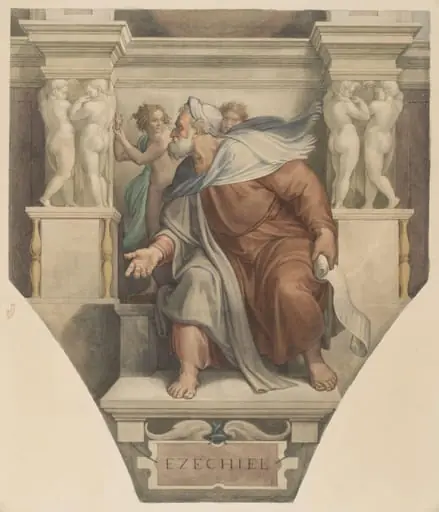 Copy after Michelangelo’s fresco of the ‘Prophet Ezekiel’ on the Sistine Chapel vault (Sistine Chapel, Rome, about 1511)
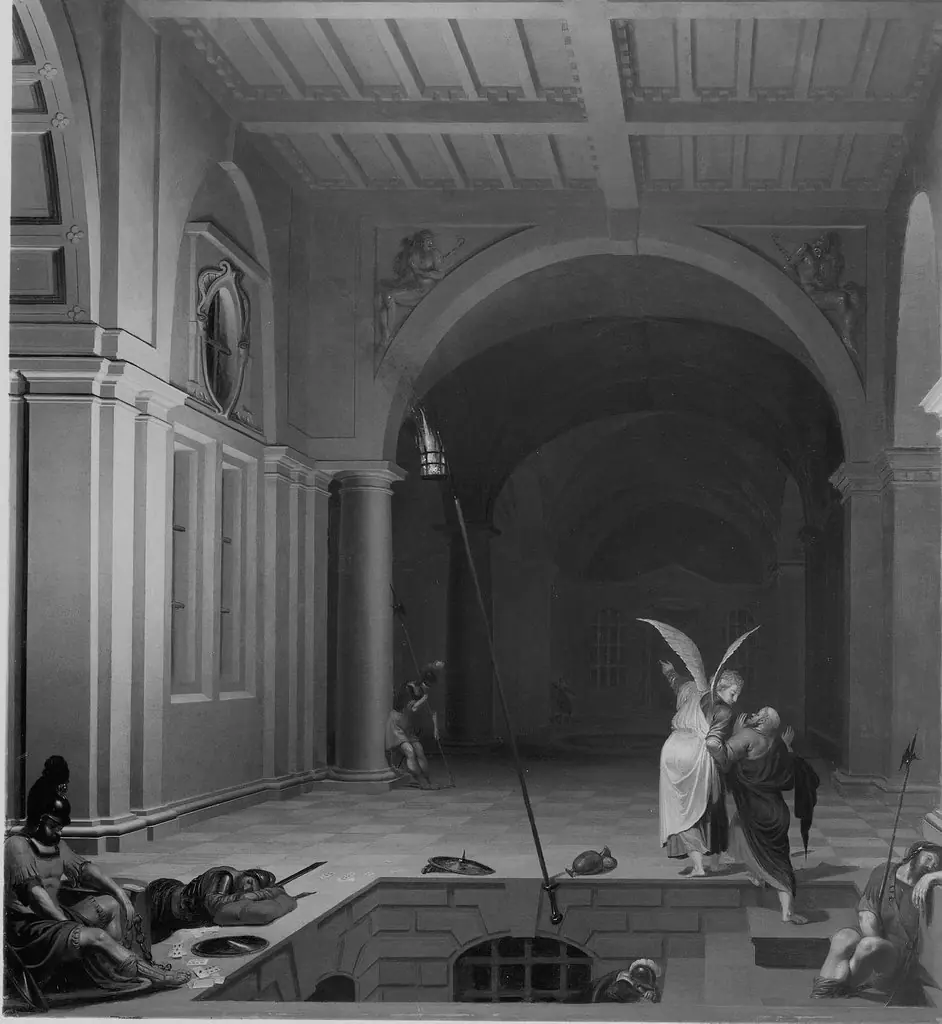 Liberation of Saint Peter from Prison
 The Education of the Virgin
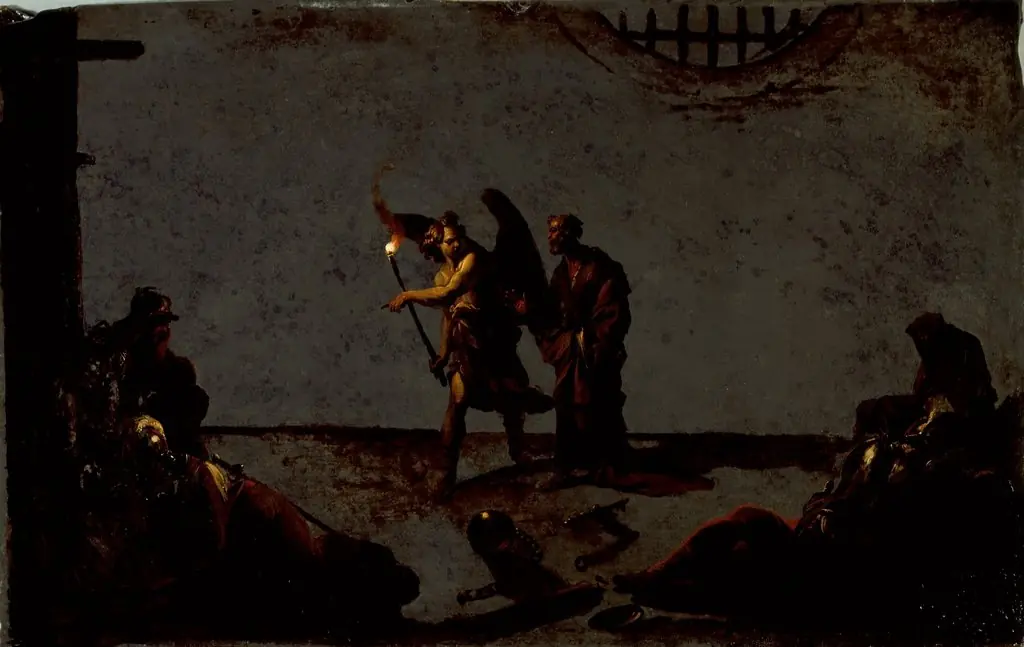 The Liberation of Saint Peter
 The Four Horsemen of the Apocalypse
 The Resurrection of Lazarus
 The Raising of Lazarus
 Diogenes visited by Alexander the Great
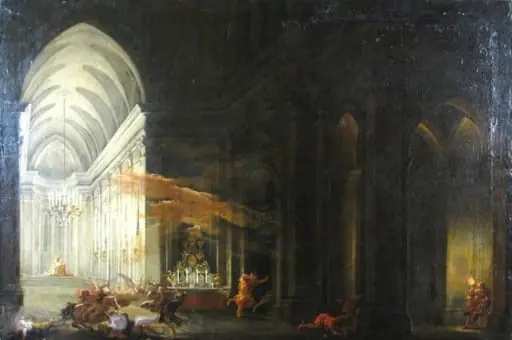 Heliodor biruit de înger
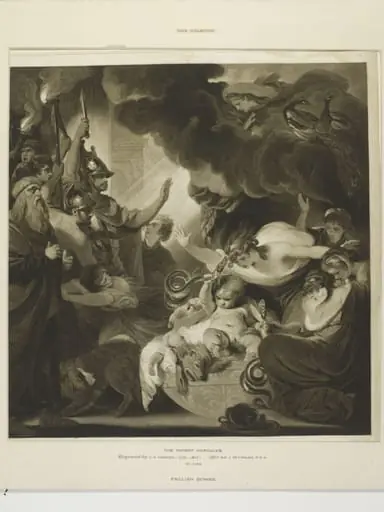 The Infant Hercules
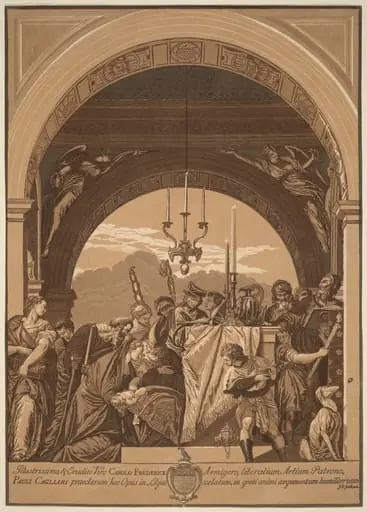 The Presentation in the Temple
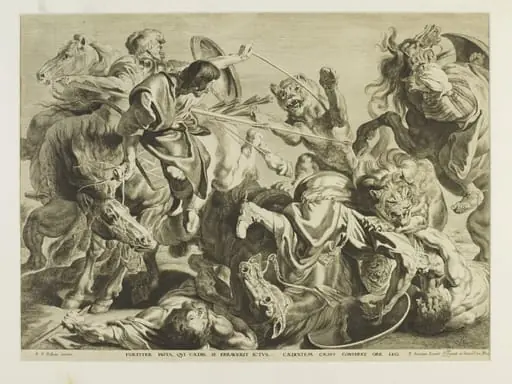 The Hunt of the Lion and Lioness
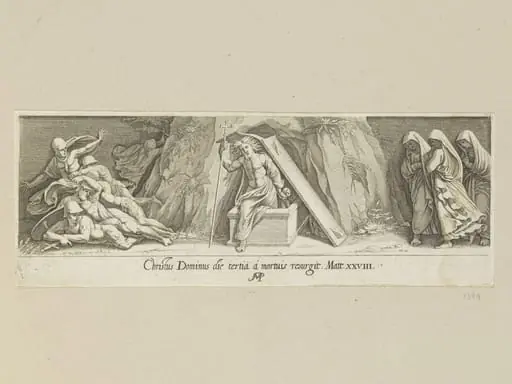 The Resurrection