Artwork
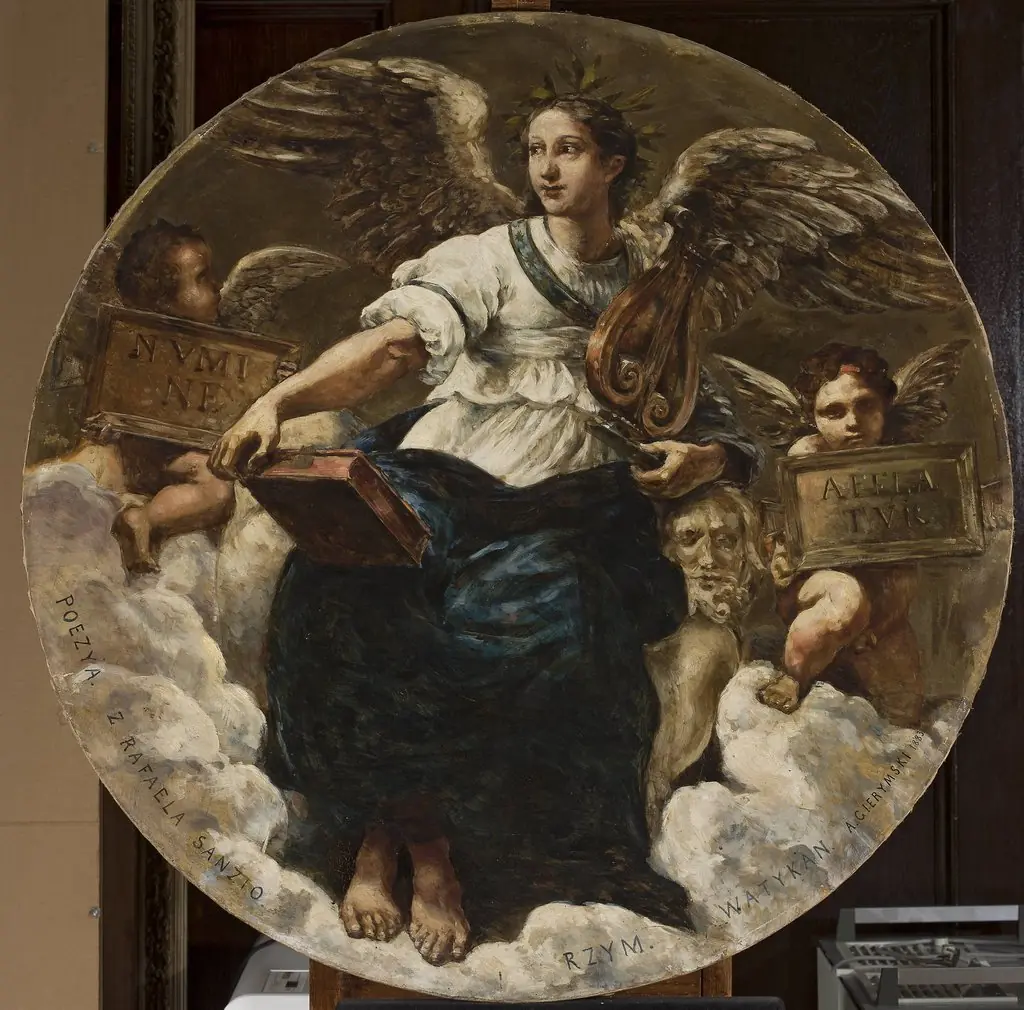
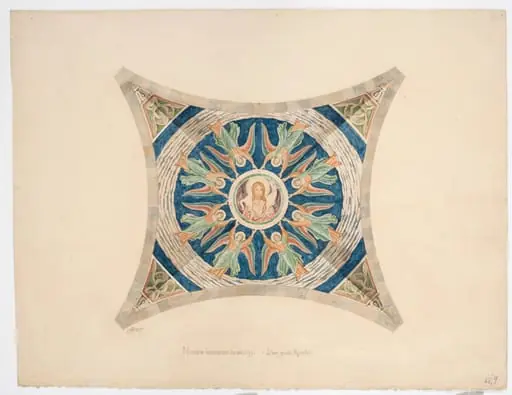
Copy after Raphael’s ceiling fresco representing ‘Poetry’ in the Stanza della Segnatura (Vatican Palace, Rome,1509-11), 1864
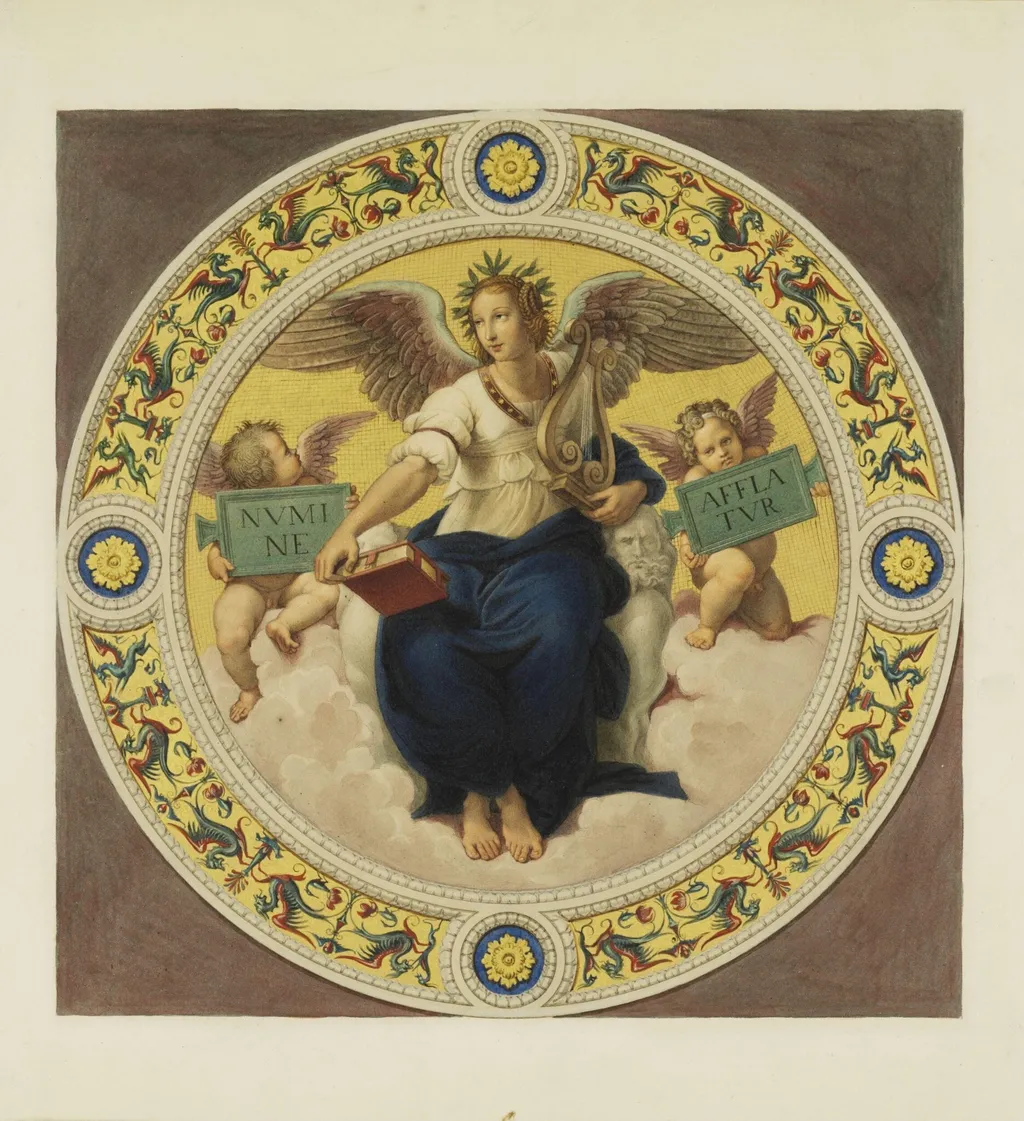
Copy after Raphael’s ceiling fresco representing ‘Poetry’ in the Stanza della Segnatura (Vatican Palace, Rome,1509-11), 1864 is a watercolor work on paper by the Impressionist artist Cesari Mariannecci. It dates from 1864 and is held in the collection of the Victoria and Albert Museum.
About this work
Overview
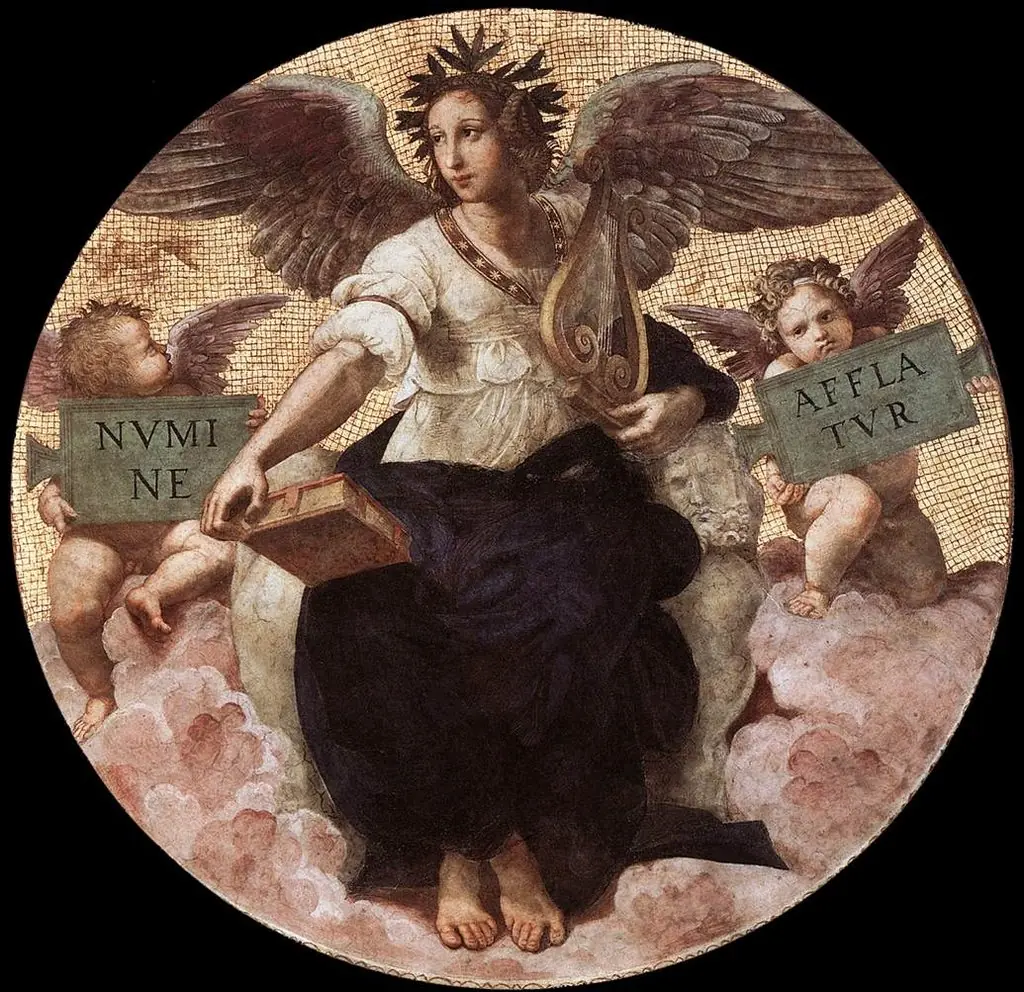
This watercolor, created in 1864, reproduces the medallion that depicts the allegorical figure of Poetry on the ceiling of the Stanza della Segnatura in the Vatican. The original fresco was painted by Raphael between 1509 and 1511 as part of his decoration of the papal apartments.
Subject & Meaning
The image portrays Poetry as a classical allegory, a common Renaissance device that personifies the literary art within a broader program of intellectual virtues. In Raphael’s scheme, Poetry occupies a central place among the four liberal arts, symbolising the harmony of word and imagination.
Technique & Style
Cesare Mariannecci rendered the composition in watercolor, translating the fresco’s color palette and delicate modeling into a portable medium. The work captures the soft tonal transitions and the luminous quality of Raphael’s original, while the watercolor’s transparency offers a distinct, light‑filled interpretation.
History & Provenance
Commissioned by the Arundel Society, Mariannecci produced this copy alongside seven other scenes from the Vatican Stanze between 1864 and 1868.
Commissioned by the Arundel Society, Mariannecci produced this copy alongside seven other scenes from the Vatican Stanze between 1864 and 1868. A chromolithographic version appeared in 1867, printed by Storch and Kramer. After the Arundel Society dissolved in 1897, the watercolor entered the National Gallery’s collection, which transferred it to the Victoria and Albert Museum in 1993, where it remains.
Context
The Stanza della Segnatura was the first of the Vatican papal rooms to be frescoed, begun under Pope Julius II and completed under his successors Leo X and Clement VII. Raphael, leading a team of assistants, executed most of its decoration, integrating theological and humanist themes that reflected the papacy’s cultural ambitions.
Artist & collection
Artist
In the 1860s, Mariannecci spent years hunched over watercolors in Rome, squinting at Raphael’s frescoes until her brush matched their curves.

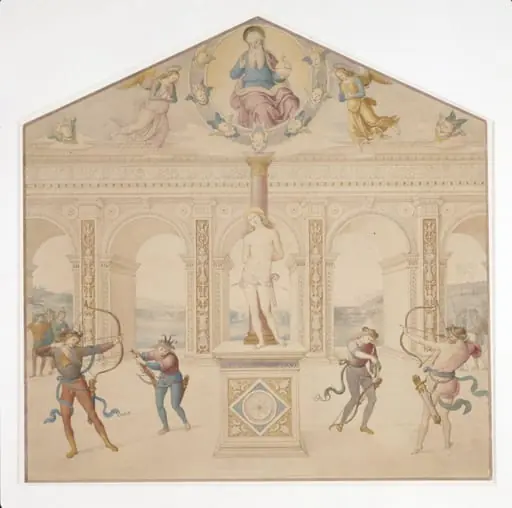 Copy after the painting Martyrdom of St Sebastian by Perugino in S. Sebastiano, Panicale.
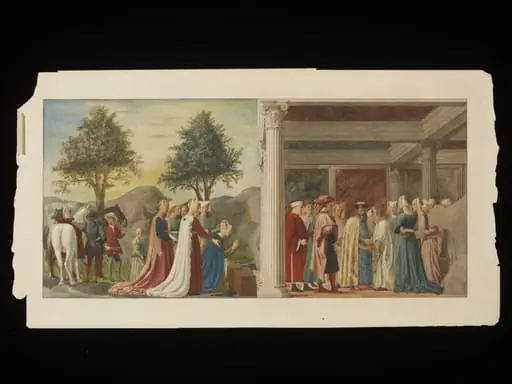 Arundel Society watercolour, Copy after the painting St Helena Finds the True Cross, by Piero della Francesca in San Francesco, Arezzo
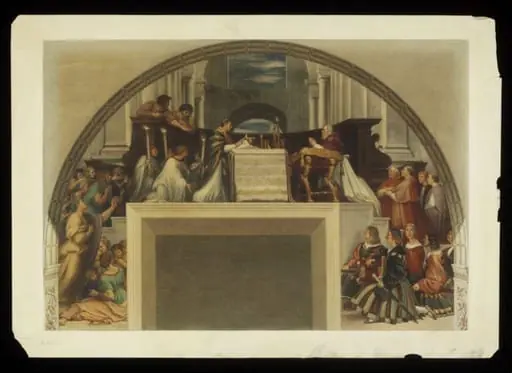 Copy after Raphael’s fresco representing the ‘Miracle of the Mass at Bolsena’ in the Stanza di Eliodoro (Vatican Palace, Rome, 1512-13), 1864.
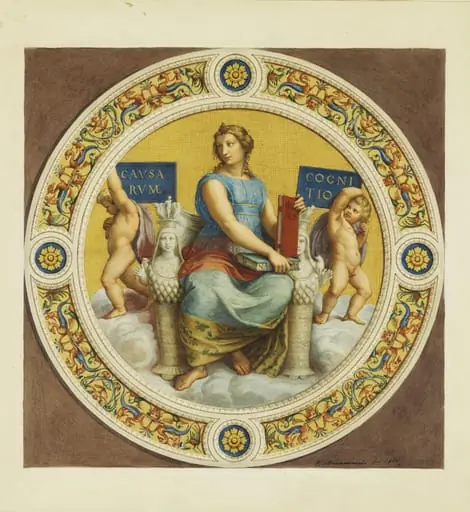 Copy after Raphael’s ceiling fresco representing ‘Philosophy’ in the Stanza della Segnatura (Vatican Palace, Rome,1509-11), 1864
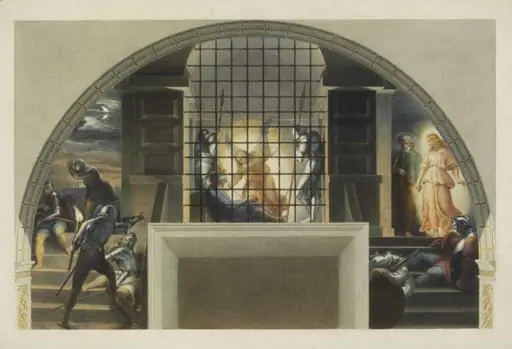 Copy after Raphael’s fresco representing the ‘Deliverance of St Peter from Prison’ in the Stanza di Eliodoro (Vatican Palace, Rome, 1511-12), 1864
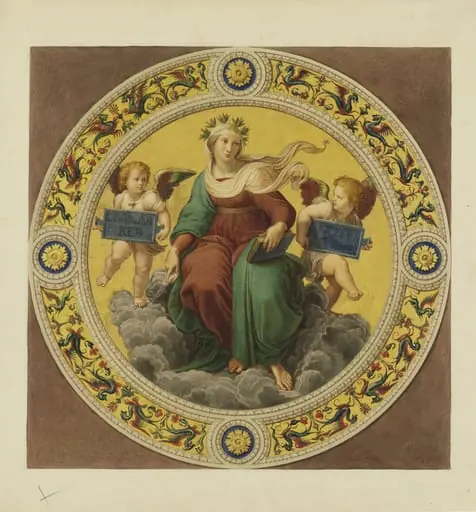 Copy after Raphael’s ceiling fresco representing ‘Theology’ in the Stanza della Segnatura (Vatican Palace, Rome,1508-09), 1864.
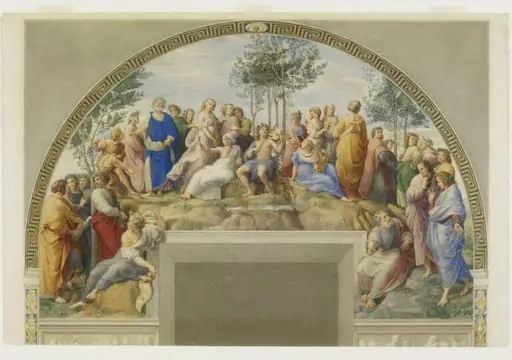 Copy after Raphael’s fresco representing the ‘Poets on Mount Parnassus’ in the Stanza della Segnatura (Vatican Palace, Rome, 1510-11), 1864-66
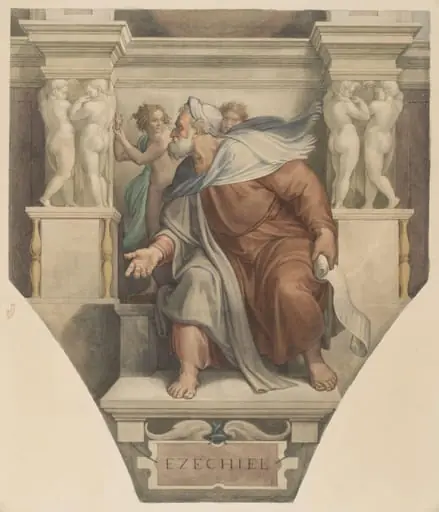 Copy after Michelangelo’s fresco of the ‘Prophet Ezekiel’ on the Sistine Chapel vault (Sistine Chapel, Rome, about 1511)