Artwork
Copy after Raphael’s fresco representing the ‘Expulsion of Heliodorus from the Temple’ in the Stanza di Eliodoro (Vatican Palace, Rome, 1512-14), 1866.
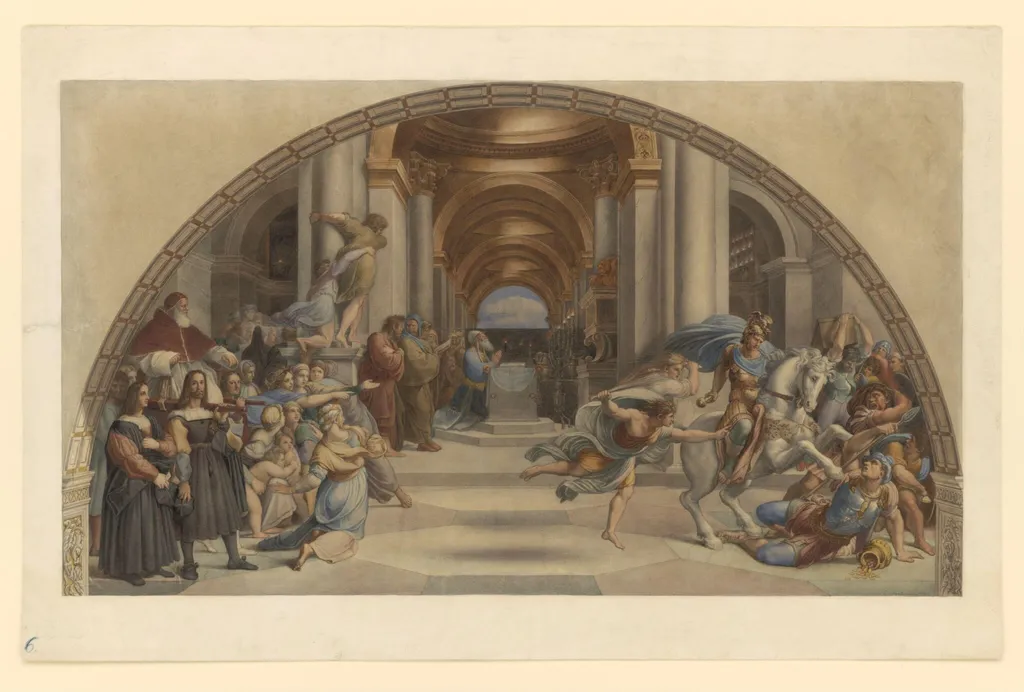
Copy after Raphael’s fresco representing the ‘Expulsion of Heliodorus from the Temple’ in the Stanza di Eliodoro (Vatican Palace, Rome, 1512-14), 1866. is a watercolor work on paper by the Impressionist artist Cesari Mariannecci. It dates from 1866 and is held in the collection of the Victoria and Albert Museum. This watercolour is a copy of Raphael's fresco 'Expulsion of Heliodorus from the Temple', created in 1866 by Cesare Mariannecci.
About this work
This watercolor is a careful copy of Raphael’s fresco. It shows Heliodorus being forced out of the Temple by divine figures. The scene comes straight from Raphael’s 1512–14 painting.
Mariannecci made this in 1866 for the Arundel Society. It was one of eight copies he did that year. The watercolor never became a printed image like the others.
It now lives at the Victoria and Albert Museum.
Overview
This watercolour is a copy of Raphael's fresco 'Expulsion of Heliodorus from the Temple', created in 1866 by Cesare Mariannecci. It replicates the original fresco, executed by Raphael in 1512-14, in the Stanza di Eliodoro of the Vatican Palace.
Subject & Meaning
The scene depicts Heliodorus being expelled from the Temple of Jerusalem by divine intervention, as horsemen and youths sent by God force him out. The narrative is derived from the original fresco, conveying a biblical story through a dramatic representation.
History & Provenance
Commissioned by the Arundel Society in 1866, this watercolour was part of a series of eight copies made by Mariannecci between 1864 and 1868. It was later transferred to the National Gallery and then to the Victoria and Albert Museum in 1993, where it is currently housed.
Technique & Style
The watercolour demonstrates Mariannecci's skill in replicating Raphael's original fresco, capturing the composition and detail of the 16th-century artwork in a meticulous copy.
Artist & collection
Artist
In the 1860s, Mariannecci spent years hunched over watercolors in Rome, squinting at Raphael’s frescoes until her brush matched their curves.

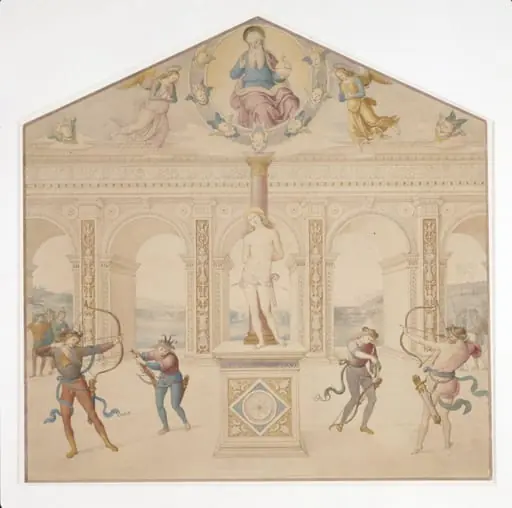 Copy after the painting Martyrdom of St Sebastian by Perugino in S. Sebastiano, Panicale.
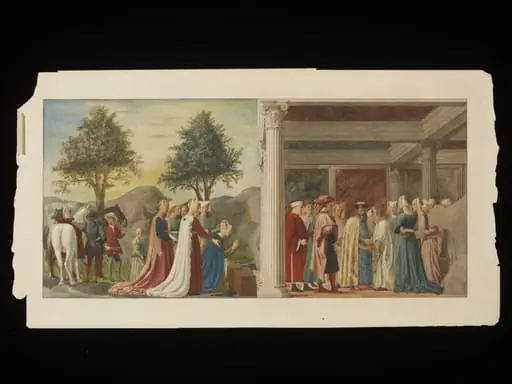 Arundel Society watercolour, Copy after the painting St Helena Finds the True Cross, by Piero della Francesca in San Francesco, Arezzo
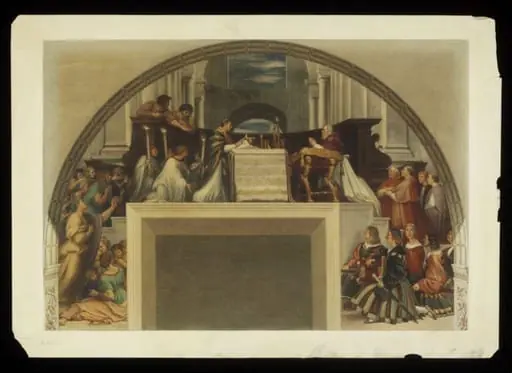 Copy after Raphael’s fresco representing the ‘Miracle of the Mass at Bolsena’ in the Stanza di Eliodoro (Vatican Palace, Rome, 1512-13), 1864.
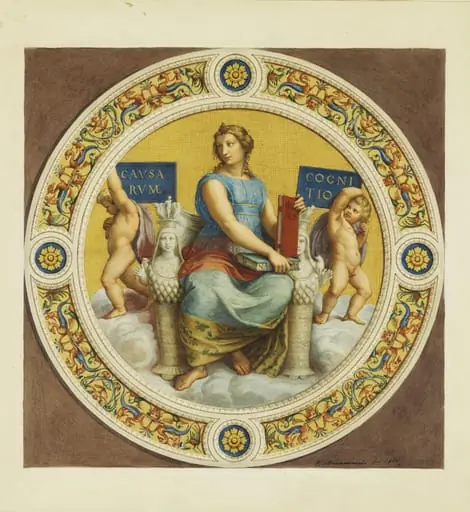 Copy after Raphael’s ceiling fresco representing ‘Philosophy’ in the Stanza della Segnatura (Vatican Palace, Rome,1509-11), 1864
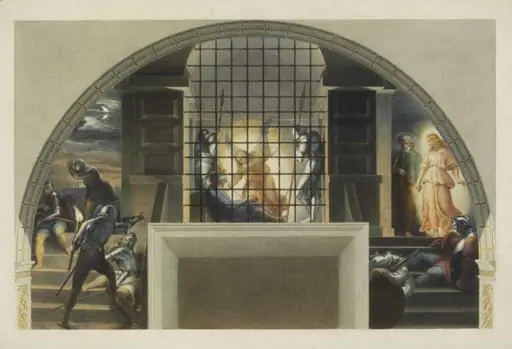 Copy after Raphael’s fresco representing the ‘Deliverance of St Peter from Prison’ in the Stanza di Eliodoro (Vatican Palace, Rome, 1511-12), 1864
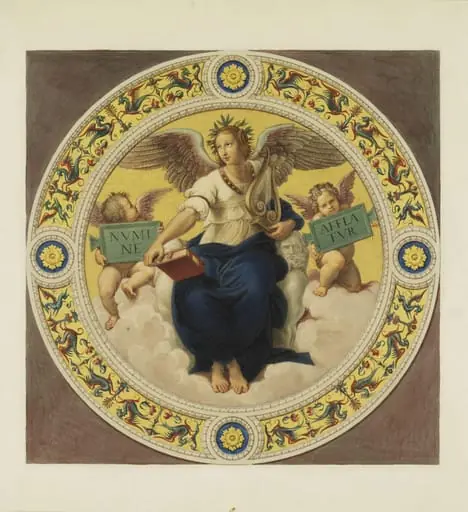 Copy after Raphael’s ceiling fresco representing ‘Poetry’ in the Stanza della Segnatura (Vatican Palace, Rome,1509-11), 1864
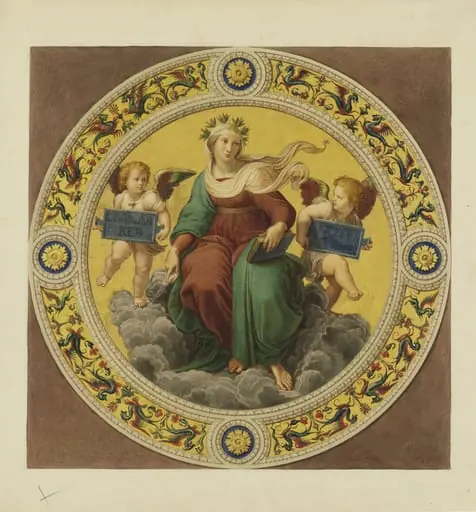 Copy after Raphael’s ceiling fresco representing ‘Theology’ in the Stanza della Segnatura (Vatican Palace, Rome,1508-09), 1864.
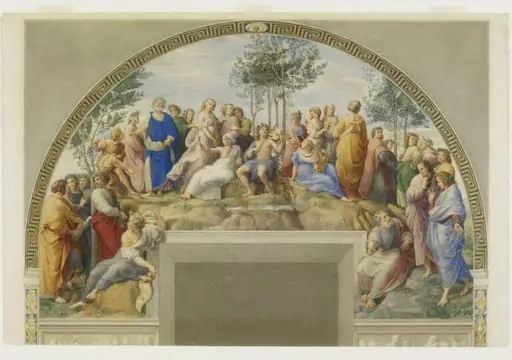 Copy after Raphael’s fresco representing the ‘Poets on Mount Parnassus’ in the Stanza della Segnatura (Vatican Palace, Rome, 1510-11), 1864-66
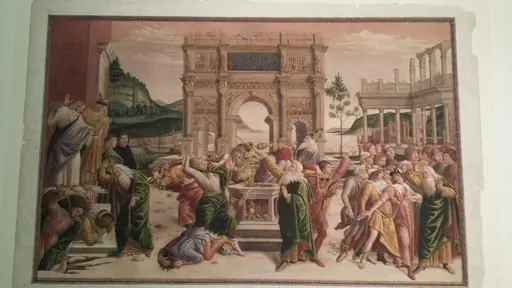 Copy after the Punishment of the Rebels ( Destruction of Koran, Dathan and Abirim ), Sandro Botticelli in the Sistine Chapel (Rome)
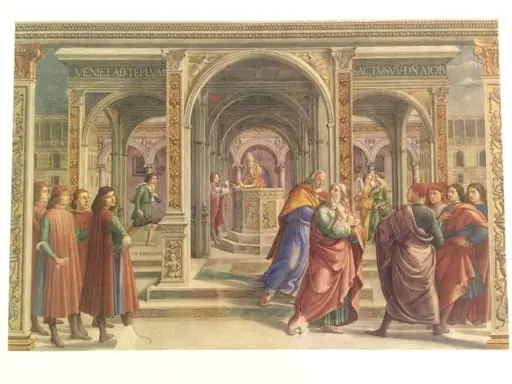 Copy after The Expulsion of Joachim from the Temple, Domenico Ghirlandaio in the Tornabuoni Chapel, Santa Maria Novella (Florence)
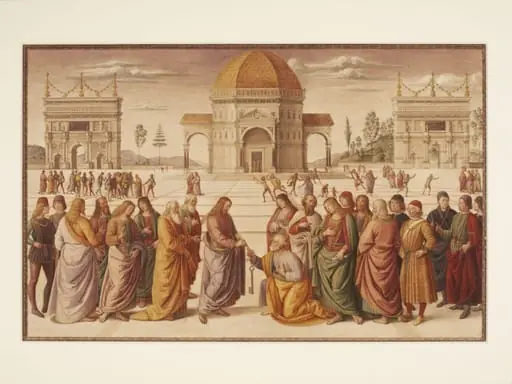 The Delivery of Keys to St Peter
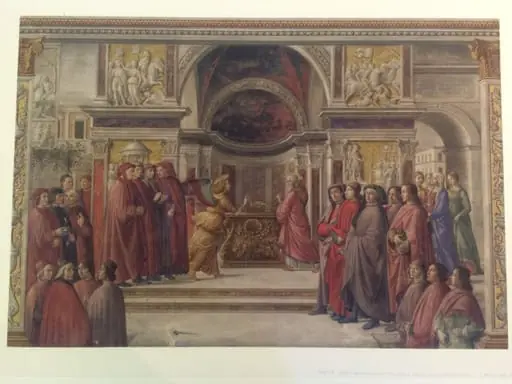 Copy after The Angel Appearing to Zacharias, Domenico Ghirlandaio in the Tornabuoni Chapel, Santa Maria Novella (Florence)
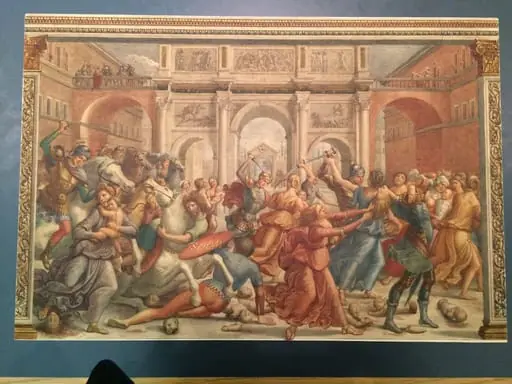 Watercolour, copy after the Massacre of the Innocents, Domenico Ghirlandaio in the Tornabuoni Chapel, Santa Maria Novella (Florence)
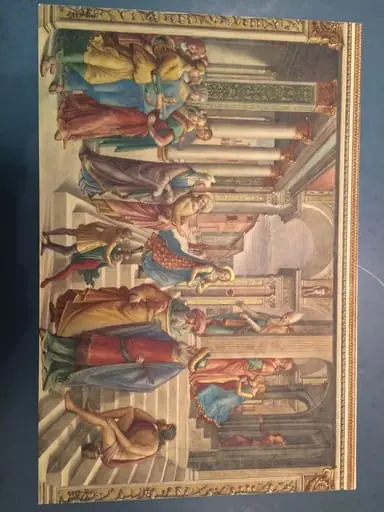 Copy after the Presentation of the Virgin in the temple, Domenico Ghirlandaio in the Tornabuoni Chapel, Santa Maria Novella (Florence)
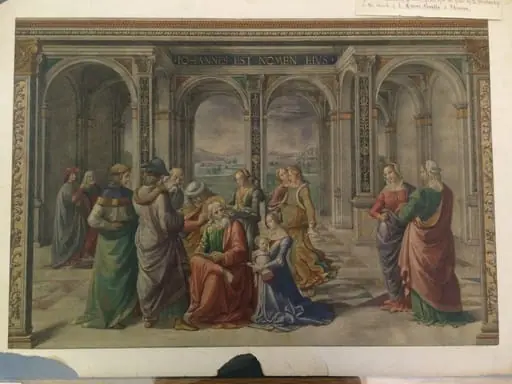 Copy after Zacharias writes down the name of his Son, Domenico Ghirlandaio in the Tornabuoni Chapel, Santa Maria Novella (Florence)
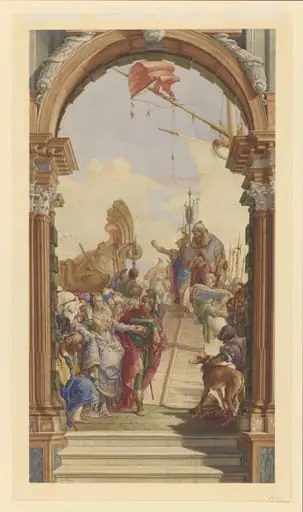 Copy after Giambattista Tiepolo’s fresco of the ‘Meeting of Antony and Cleopatra’ in the Ballroom Palazzo Labia, Venice (1746-1747), 1883.
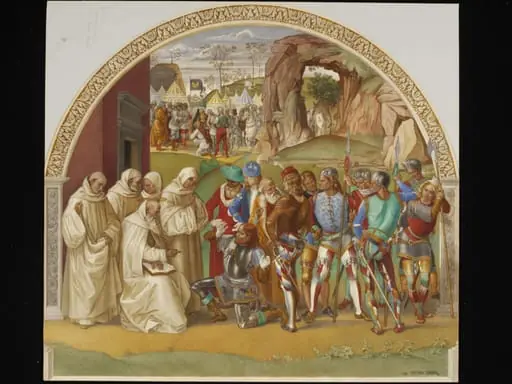 St Benedict and the False King Totila